

 Khizrana Begum
Beauty & Lifestyle Writer
Khizrana Begum writes clear and reader-friendly content covering beauty, lifestyle and related topics.
Read Full Bio of Author →
Khizrana Begum
Beauty & Lifestyle Writer
Khizrana Begum writes clear and reader-friendly content covering beauty, lifestyle and related topics.
Read Full Bio of Author →
 Sameena Begum
Health, Technology & Digital Content Reviewer
Sameena Begum reviews content for clarity, accuracy and overall reader usefulness.
Read Full Bio of Reviewer →
Sameena Begum
Health, Technology & Digital Content Reviewer
Sameena Begum reviews content for clarity, accuracy and overall reader usefulness.
Read Full Bio of Reviewer →
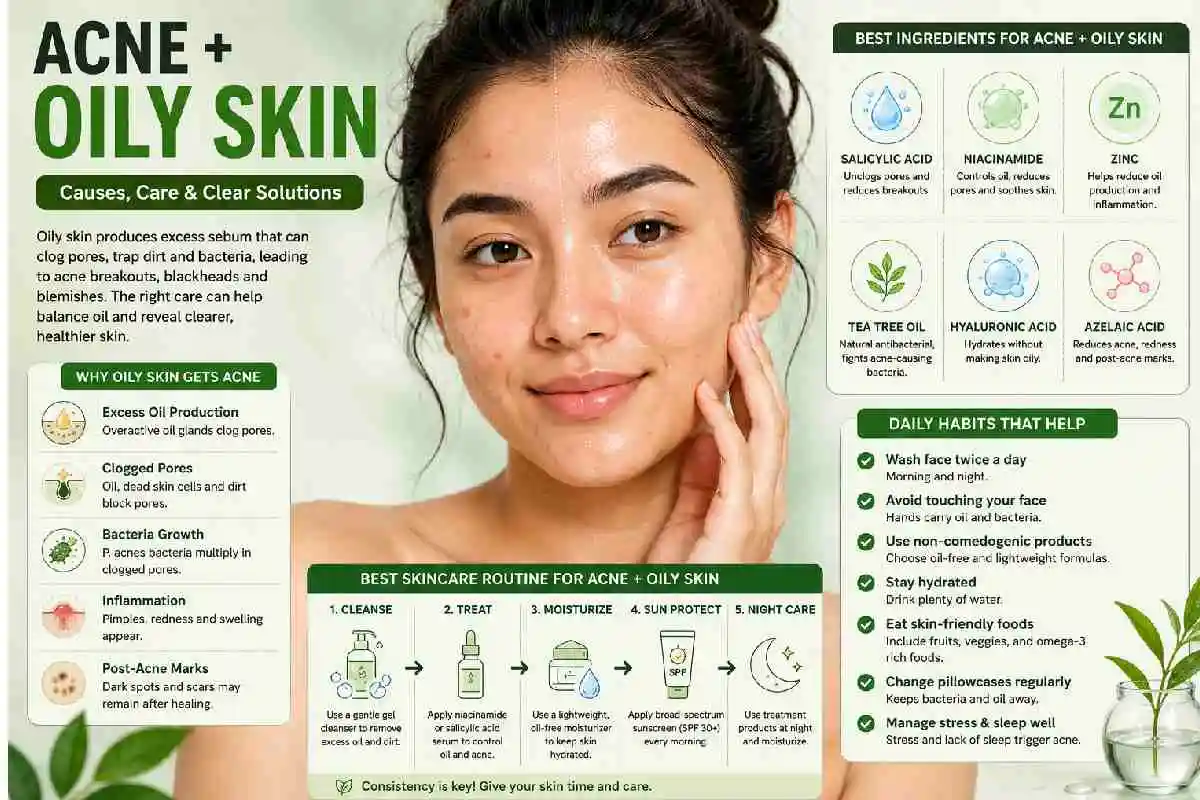
Acne + Oily Skin: If your skin is oily only two hours after cleansing, and you have a blackhead, whitehead, cystic or just plain troublesome breakout, we understand. It can be an issue finding that ideal combination of oil controlling yet non-drying, while controlling the breakout.
Managing breakouts starts with understanding the complete skin care products for oily skin guide for selecting suitable products.
Luckily for you, there‘s actually a ton of products, techniques, and habits that will help reign in your oily and acne-prone skin without any effort at all. Let‘s take a look at how oily skin causes breakouts, and all the natural solutions available to keep your skin clear.
❝
This article is a part of
Skin Care Products for Oily Skin Guide
Understanding Acne + Oily Skin
This is when the sebaceous glands secrete too much sebum. Sebum- Sebum is oil which our skin is naturally supplied with to both waterproof and lubricate our skin. But if this has been over produced it can cause bacteria and dead skin to grow into that mixture and block the pores which can cause outbreaks or ‘pimples’.
Common signs of oily, acne-prone skin include:
- Too much gloss, particularly on the T-Zone
- Bigger pores ( Continually blackheads and whiteheads)
- Recurirng pimples ( 6 per day)
- Acne scarring & post inflammatory hyperpigmentation
- Makeup that easily and quickly slides off
Common Causes of Acne in Oily Skin
| Cause | How It Affects Skin |
| Excess Sebum Production | Clogs pores and traps bacteria |
| Hormonal Changes | Increases oil production |
| Genetics | Can make oily skin more likely |
| Poor Skincare Products | May block pores |
| Stress | Triggers hormonal fluctuations |
| Diet | High-sugar foods may worsen acne in some people |
| Lack of Sleep | Can increase inflammation |
Best Skincare Routine for Oily & Acne Prone skin
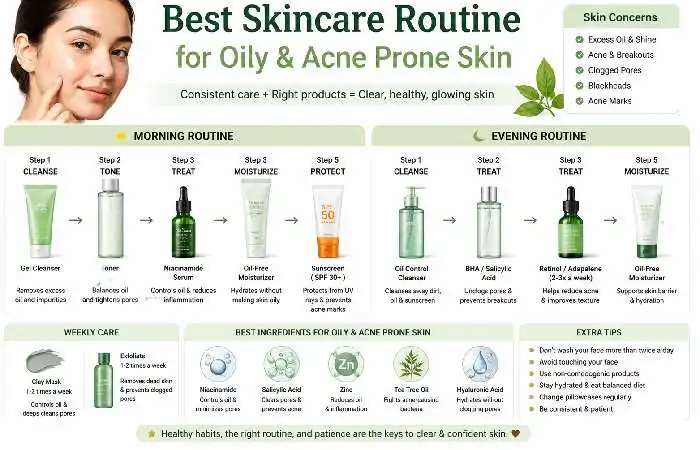
The best cure for nice skin is a consistent skincare routine. Active control should be used in order to control oil production, avoid blocking of pores, and calm inflammation without breaking down the skin‘s barrier.
Morning Skincare Routine
Step 1: Light Cleanser
Use a liquid or gel cleanser to remove excess oils, and not end up
stripped dryness.
Look for:
- Salicylic acid
- Niacinamide
- Zinc
Avoid:
- Harsh soaps
They can also use a highly alcoholic cleaner.
Step 2: Light Weight Toner (Optional)
A toner will help remove oil and prepare skin for treatment products.
Optimal ingredients:
- Witch hazel
- Niacinamide
- Green tea extract
Step 3: Treatment Serum
Opt for a lightweight acne & oil controlling serum.
- Suitable ingredients to look for:
- Niacinamide
- Salicylic acid
- Azelaic acid
Step 4: Moisturise your skin (Oil-free formula)
Most of us often avoid moisturing our skin due to having oily skin but if we are not providing our skin with enough moisture then skin produces more oil.
Choose:
- Gel moisturizers
- Non-comedogenic formulae
- Products containing hyaluronic acid
Step 5: Sunscreen
Sunscreen daily and it is especially important when you are on treatment for acne.
Best options:
- SPF 30 or higher
- Gel sunscreen
- Matte-finish sunscreen
Evening skincare routine
Step 1: Cleanse face
Remove any build-up of dirt, sunscreen and oil.
Step 2: Acne treatments
What you do depends on your specific skin concern, use:
| Ingredient | Benefits |
| Salicylic acid | Clears blocked pores |
| Retinol | Better acne and skin texture |
| Benzoyl Peroxide | Eliminates acne bacteria |
| Azelaic Acid | The redness and post acne marks are diminished |
Step 3: Moisturize
The ideal night repair and moisturizing treatment should use a lighter moisturizing lotion. Following a consistent oily skin care routine improves long-term acne management and skin health.
Weekly Treatments
- Clay mask (weekly 1-2 times)
- Chemical exfoliation (weekly 1-2 times)
- Hydrating sheet mask when needed
Limit your exfoliation to avoid further irritation and stimulation of oil production.
Why Oily Skin Gets More Acne?
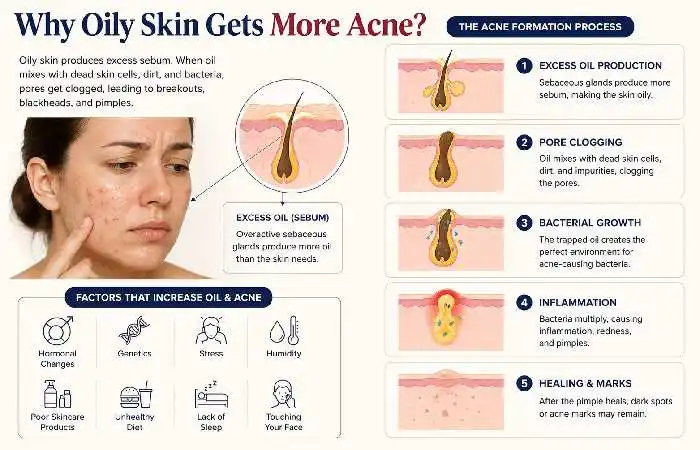
What do most people wonder why oily skin breaks out more? It all has to do with how oil and pore clogging work together.
When sebaceous glands produce excess sebum, oil combines with:
- Dead skin cells
- Dirt
- Sweat
- Bacteria
This blend gets stuck in your pores and that’s perfect for break outs.
The Acne Formation Process
| Stage | What Happens |
| Excess Oil Production | Sebaceous glands become overactive |
| Pore Clogging | Oil mixes with dead skin cells |
| Bacterial Growth | Acne-causing bacteria multiply |
| Inflammation | Red, swollen pimples appear |
| Healing | Acne marks may remain |
Things That Exacerbate acne in oily skin:
Hormones
Oil glands are influenced by changes in hormones.Common triggers:
- Puberty
- Menstrual cycles
- PCOS
- Stress
Humidity
High temperatures, high humidity can stimulate both sebum production and sweating.
Comedogenic products
Heavy creams and oils can block pores, aggravating acne.
Touching your face
Over time, you’re rubbing bacteria and oil all over your face.
Can oily skin delay wrinkling?
Although somewhat counterintuitively, oily skin tends to age more slowly than dry skin, due to the moisture from the sebum.This however, does not mask the fact that proper care of skin needs to be taken.
Some people also benefit from DIY and natural remedies for oily skin to complement their skincare routine.
Best Serums for Oily Skin and Acne Marks
Offers toners that contain strong active ingredients to target pimples, regulate sebaceous glands, and diminish after-blemish marks. Learning about beneficial ingredients for oily skin makes it easier to choose products that target acne effectively.
Niacinamide Serum
Niacinamide. This is one of the best ingredients you can get for oily and acne-prone skin.
Benefits:
- Controls excess oil
- Reduces redness
- Minimizes pores
- Improves skin texture
- Helps fade acne marks
Best For
- Oily skin
- Enlarged pores
- Mild acne
Salicylic Acid Serum
Salicylic acid is a beta-hydroxy acid (BHA) that penetrates deep into pores.
Benefits:
- Removes excess oil
- Clears blackheads
- Prevents clogged pores
- Reduces acne breakouts
Best For
- Blackheads
- Whiteheads
- Active acne
Azelaic Acid Serum
Azelaic acid is excellent for both acne and pigmentation.
Benefits:
- Reduces inflammation
- Fades acne scars
- Improves skin tone
- Helps prevent future breakouts
Best For
- Acne marks
- Sensitive skin
- Redness
Vitamin C Serum
Vitamin C helps brighten the skin and reduce post-acne pigmentation.
Benefits:
- Brightens complexion
- Supports collagen production
- Fades dark spots
- Provides antioxidant protection
Best For
- Acne scars
- Uneven skin tone
Comparison of Popular Acne-Fighting Serums
| Serum Ingredient | Controls Oil | Treats Acne | Fades Marks |
| Niacinamide | ✓✓✓ | ✓✓ | ✓✓ |
| Salicylic Acid | ✓✓✓ | ✓✓✓ | ✓ |
| Azelaic Acid | ✓✓ | ✓✓ | ✓✓✓ |
| Vitamin C | ✓ | ✓ | ✓✓✓ |
| Retinol | ✓✓ | ✓✓✓ | ✓✓✓ |
Before purchasing acne treatments, review trusted skin care buying guides to compare ingredients and formulations.
How to Prevent Breakouts Naturally
- In addition to skin care, everything we do each day impacts the skin.
- Keep Your Face Clean
- Wash your face:
- Morning
- Night
- After heavy sweating
Don’t wash more than twice per day, as too much cleaning will make your skin irritated.
Maintain a Healthy Diet
There is proof to suggest that a high-glycemic diet may impair acne in some people.
Consider reducing:
- Sugary drinks
- Candy
- White bread
- Processed snacks
Focus on:
- Vegetables
- Fruits
- Lean protein
- Whole grains
- Healthy fats
Skin-Friendly Foods
| Food | Benefits |
| Salmon | Omega-3 fatty acids |
| Spinach | Antioxidants |
| Berries | Vitamin C |
| Nuts | Healthy fats |
| Green Tea | Anti-inflammatory compounds |
Stay Hydrated
Water also benefits general condition of the skin and aids the hydration of the skin.
Attempt to spread water consumption evenly across the course of the day. A gentle cleansing routine is essential, so choosing the right cleansers for oily skin can help remove excess oil and impurities.
The skills gained within the course will have a positive influence to the student‘s work, in terms of quality, efficiency, and understanding, thus helping him/her to achieve better results. Consequently, this knowledge will benefit and advance the student‘s professional career.
Manage Stress
- Stress might raise cortisol levels which could cause higher oil production.
- Helpful strategies:
- Exercise
- Meditation
- Yoga
- Walking
- Journaling
Change Pillowcases Frequently
Pillowcases collect:
- Oil
- Sweat
- Dirt
- Bacteria
Changing them every few days may help reduce breakouts.
Avoid Picking Pimples
Picking can:
- Increase inflammation
- Spread bacteria
- Cause scarring
- Slow healing
Instead, use spot treatments recommended for acne-prone skin. Using lightweight moisturizers for oily skin keeps skin hydrated without clogging pores.
Sleep plenty
Try to get 7-9 hours of quality sleep per night.
Sleep supports:
- Skin repair
- Hormonal balance
- Reduced inflammation
Oily Skin vs Acne-Prone Skin
One of the greatest misconceptions out there is that oily skin and acne-prone skin are one and the similar. Though the two situations often go hand in hand, they aren’t the similar thing at all.
Oily Skin
Oily skin is a skin type. It is caused by overproduction. Daily protection with non-comedogenic sunscreens for oily skin helps prevent post-acne pigmentation caused by UV exposure.
Signs include:
- Shiny appearance
- Enlarged pores
- Frequent oil buildup
Some have an oily skin type, but no acne.
Acne-prone Skin
Skin that is acne prone is a skin that is easily to break out.
Characteristics:
- Pimples
- Blackheads
- Whiteheads
- Cystic acne
Even people with skin that is not very oily may get acne.
Selecting the right skin care products for oily skin can reduce breakouts while maintaining the skin’s natural balance.
Oily Skin vs Acne-Prone Skin Comparison
| Feature | Oily Skin | Acne-Prone Skin |
| Excess Oil Production | Yes | Not always |
| Enlarged Pores | Common | Sometimes |
| Blackheads | Often | Common |
| Pimples | Possible | Frequent |
| Clogged Pores | Common | Common |
| Requires Acne Treatment | Not Always | Usually |
| Skin Type or Condition | Skin Type | Skin Condition |
Can You Have Both?
Yes. Many individuals have oily skin and acne-prone skin simultaneously. In fact, excess oil is one of the biggest risk factors for acne development.
Best Ingredients for Acne + Oily Skin
| Ingredient | Benefit |
| Salicylic Acid | Clears clogged pores |
| Niacinamide | Controls oil production |
| Retinol | Improves acne and texture |
| Azelaic Acid | Fades acne marks |
| Hyaluronic Acid | Hydrates without oiliness |
| Zinc | support reduce inflammation |
| Vitamin C | Brightens skin tone |
Conclusion
How to treat Acne + Oily Skin: Regimen? For Acne prone oily skin, it take a combination of using the appropriate ingredients in good skincare regimen and lifestyle changes. This is to bring the oil control back to the skin, without excessive dryness, with proven anti acne ingredients and continue to healthy lifestyle and habits.
A suitable skin-care regimen for those with oily, acne skin could follow some of these rules; cleanse and not over-wash, pick a gentle, non-brightening moist-urisor, always use SPF protection if necessary and use known agents such as niacinimide, salicylic acid, azali c acid or other actives. With any persistence, time and methodical way, means may be attainable.
Your acne treatment plan should adapt with seasonal skin care for oily skin as weather conditions change.