

 Khizrana Begum
Beauty & Lifestyle Writer
Khizrana Begum writes clear and reader-friendly content covering beauty, lifestyle and related topics.
Read Full Bio of Author →
Khizrana Begum
Beauty & Lifestyle Writer
Khizrana Begum writes clear and reader-friendly content covering beauty, lifestyle and related topics.
Read Full Bio of Author →
 Sameena Begum
Health, Technology & Digital Content Reviewer
Sameena Begum reviews content for clarity, accuracy and overall reader usefulness.
Read Full Bio of Reviewer →
Sameena Begum
Health, Technology & Digital Content Reviewer
Sameena Begum reviews content for clarity, accuracy and overall reader usefulness.
Read Full Bio of Reviewer →
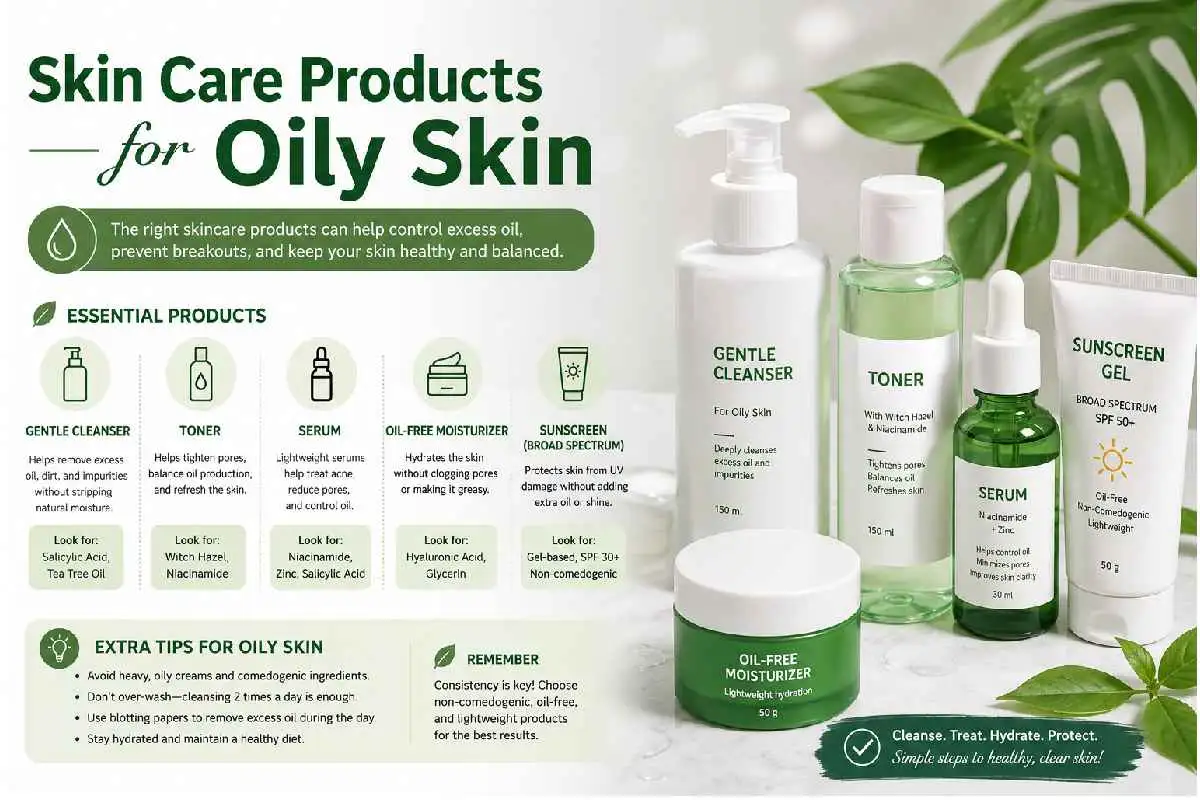
Skin Care Products for Oily Skin: Oily skin is horrid to have, especially when the extra sebum means that your skin looks shiny, you develop spots and blackheads and your pores become blocked. However, there are some good skin care products that will control the amount of oil produced by your skin without stripping away any moisture.
A good skincare routine starts with choosing the right cleansers for oily skin, which help remove excess oil, dirt, and impurities without stripping the skin’s natural moisture barrier.
Use a gentle foaming cleanser containing salicylic acid or niacinamide which will help to control the excess oil, decongest the pores and help to remove bacteria that causes spots. Follow with an alcohol-free toner to clear the skin and tighten the pores.
Many breakout on moisturisers as they think using one will make their skin oilier. This is a common misconception as using a light oil free non-comedogenic moisturizer will hydrate the skin but also control oil production. Good gel based skin care products tend to work very well on those with oily skin.
Another product that I consider to be a requirment is a good SPF. Water resistant, matte/oil free and SPF 30 or higher is the only way to go.
An effective routine, and the ideal product for your skin type, and it is possible for oily skin to stay clear and radiant, without having a shiny finish.
❝
This article is a part of
Skin Care Products for Oily Skin Guide
What causes Oily Skin?
Oily skin is caused by the sebaceous gland producing too much sebum our bodies natural skin oil which keeps everything soft and healthy. Sebum is essential to keep the skin moist and healthy but when over produced causes the skin to look shiny enlarged pores and becomes spot prone and develops blackheads.
There are also other causes for an increase in production; for example, hormones can sometimes cause excess oil to be produced, as in the case of the male acne due to in puberty or hormone imbalance. Also in the case of excess stress the hormones in the body can be effected. Sometimes too harsh an acne treatment can also strip the skin of the natural oils and the skin will over compensate.
There may be some environmental influences found to be more dominant when the skin is very oily, these would include the heat and humidity. Other influences that may have an impact on oil production are lifestyle, such as the type of diet and the level of sleep and stress.
People with oily skin can achieve better results by learning about acne care for oily skin and choosing products that reduce breakouts.
Common Causes of Oily Skin
| Cause | How It Affects the Skin |
| Genetics | Inherited tendency to produce more sebum |
| Hormonal Changes | Increases oil gland activity |
| Hot & Humid Weather | Makes skin appear shinier |
| Stress | Triggers hormone fluctuations |
| Overwashing | Can stimulate extra oil production |
| Poor Skincare Products | May clog pores or irritate skin |
| Diet & Lifestyle | Can influence overall skin health |
The true nature of Oily Skin is that it is a mixture of genetical, hormonal, environmental and undesirable effects of skin care. Being aware of the reasons will enable you to select the appropriate care and grow your skin healthy
Here are the most common causes of oily skin:
1. Genetics
If your parents have oily skin, you are more likely to have bigger or more oil glands on your skin as well. Genetics can play a big part.
2. Hormonal Changes
Hormones have a significant effect on the production of oil. The higher levels of several androgen hormones, for example, can activate the sebaceous glands.
- Common triggers include:
- Puberty
- Menstruation
- Pregnancy
- Menopause
- Hormone fluctuations while under stress
- And flab can also be caused by hormonal imbalance8.
3. Hot & Humid Weather
The oil feels tacky with higher temperatures and humidity, therefore when the temperature is high there is more sweat and sebum being produced.
4. Overwashing or Harsh Skincare
Exfoliants & Cleansers: Strong soaps, alcohol based toner & over washing too often. Your natural moisturizer is getting doused away. Your skin looks oily because then your skin over compensates.
5. Using the Wrong Products
Too many heavy creams, pore-blocking makeups or unsuitable products can contribute to excess oiliness.
Look for:
- Ainless oil free”
- “Non-comedogenic”
- Use gel-based moisturizers
6. Stress
It may reason an increase in cortisol, which could activate glands to goods more oil and make the skin extra prone to pimples.
Protecting oily skin from UV damage is essential, and choosing the right sunscreens for oily skin can help prevent excess shine while providing broad-spectrum protection.
7. Diet
Some people notice increased oiliness from:
- Foods rich in sugar
- Refined carbs
- Excess dairy
- Greasy fast foods
The evidence is inconsistent but diet might influence acne/oil production in some people.
8. Dehydration
If skin is devoid of water, it also may indeed produce excess oil to safeguard the skin. This is the reason that skin that is oily still needs to be kept moist.
9. Certain Medications
Some medications and supplements can change hormones or hydration of the skinand alter the production of oil.
Common Signs of Oily Skin
- Bright face especially T-zone
- Dilated pores
- More common pimples and/or blackheads
- It disappearing and falling down.
- Greasy feeling a few hours after wash.
Tips to Control Oily Skin
- Wash your face lightly morning and night.
- You must use a lightweight, oil-free moisturiser
- Use a sunscreen for oily skin.
- To push clear of scrubbing violently
- Use each the salicylic acid or niacinamide products.
If the oiliness is persistent and causing painful acne, then you should make a dermatologist appointment as oils can be prescribed, such as retinoids or even a hormonal treatment.
Understanding the best ingredients for oily skin can help you select products that control excess oil, minimize breakouts, and support a healthy skin barrier.
Best Ingredients for Oily Skin?
It requires ingredients that balance sebum production without removing essential moisture. High quality, suitable skincare ingredients will not only curb shine but also prevent congestion, helping you achieve clearer skin. Incorporating oil regulating and gently soothing ingredients into your products will show results.
Top Ingredients for Oily Skin
| Ingredient | Benefits for Oily Skin |
| Salicylic Acid | Penetrates pores, removes excess oil, and aids prevent acne. |
| Niacinamide | Controls the production of sebum and minimizes the visage of big pores. |
| Hyaluronic Acid | Provides the skin a light hydrating feel that is not greasy. |
| Zinc PCA | Regulates the production of oil. Has an anti-inflammatory property, known for soothing inflammation. |
| Tea Tree Oil | It has an antibacterial effect – fights bacteria that cause spots. |
| Clay (Kaolin/Bentonite) | Removes extra oil and dirt from skin. |
| Green Tea Extract | Relieves inflammation and offers antioxidant safety. |
How do these ingredients help?
The most appropriate ingredients for oily skin work in harmony to decrease the production of excess oil and hydrate the skin, without attaining it feel greasy. Salicylic acid; for its facility to exfoliate, and clay; acting as an porous, are perfect at maintaining open skin, while reducing the amount of excess sebum. And the addition of niacinamide and zinc PCA; naturally occurring oil regulators, will further reduce the production of sebum.
A good artificial improvement will show after a few weeks of intensive use, leaving the skin softer, less shiny and fresher. All the above ingredients should be slowly introduced, and skin should be patch-tested before application.
Many people with oily skin skip hydration, but selecting the right moisturizers for oily skin can help maintain balance without leaving a greasy feeling.
Ingredients to Avoid
It is good to be aware of the ingredients that may not be suitable for your skin or general needs when selecting personal care, hair care and cosmetic products. Not all ingredients are unsuitable, but many can be irritating, drying, sensitive break- outs or allergenic.
1. Artificial Fragrances
Chemicals are also introduced artificially to give a product a nice smell. Some of these can cause skin irritation, redness and allergic reactions for example in the case of having sensitive skin.
2. Harsh Sulfates
Ingredients like Sodium Lauryl Sulfate (SLS) can remove natural oils from skin and scalp potentially causing dryness and irritation. This process could also damage the skin barrier.
3. Parabens
Parabens. Preservatives. are used in cosmetics to prolong shelf-life. There are some sections of the population that may wish to avoid these due to speculation about their affect on hormone balance but the evidence is inconclusive.
4. Drying Alcohols
Some alcohols, such as Alcohol Denat. It is possible for the alcohols to cause dryness to the skin when placed in large quantities. This may be noticeable in the form of flakiness, tightness and an increase in the amount of oil being produced.
5. Formaldehyde-Releasing Preservatives
These keep the skin from bacteria that would normally cause them to be affected; however they may irritate some sore skin or cause an allergic result in a few people.
Continually read the ingredients labels beforehand and always run a patch test before trying a new product. ‘Gentler’ skin friendly ingredients may better to keep the skin healthier and more calm in the long run.
Morning Skincare Routine for Oily Skin
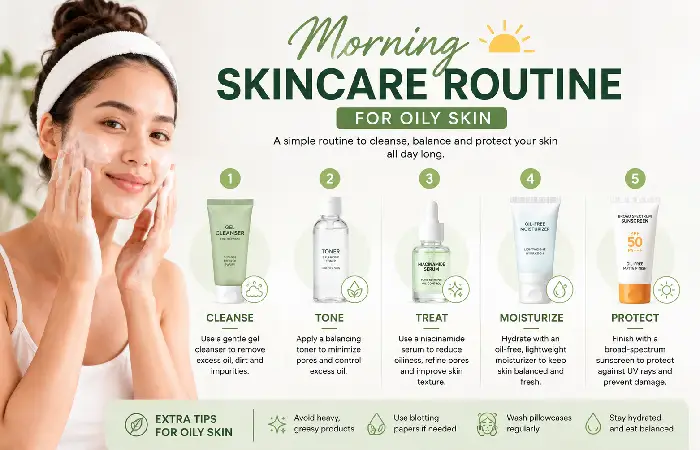
If you have oily skin, it is a good idea to start the day with a morning cleanse and restore routine to benefit keep your oil amounts at bay for longer, and control shine. The trick is to use light, non-comedogenic results which work to give you the right sum of cleanse and refresh without losing your skin‘s natural vapor.
Building a consistent oily skin care routine helps maintain balanced, healthy-looking skin every day.
Why a Morning Routine Matters?
Oily skin over night, enedml cells excrete excess sebum, so one may wake up with an oily “film” on the face due to sleeping. Cleansing the skin in the morning cleanses the excess sebum away helping to prevent pore occlusion and leaving a clean, oil free face ready for makeup application and interaction with the pubic.
Step-by-Step Morning Skincare Routine
| Step | Product Type | Purpose |
| 1 | Gentle Cleanser | Removes excess oil, dirt, and impurities |
| 2 | Alcohol-Free Toner | Balances skin and tightens the appearance of pores |
| 3 | Lightweight Serum | Targets concerns like acne, dullness, or excess oil |
| 4 | Oil-Free Moisturizer | Hydrates without making skin greasy |
| 5 | Sunscreen (SPF 30+) | Protects against UV damage and premature aging |
Recommended Ingredients
| Ingredient | Benefits for Oily Skin |
| Niacinamide | Regulates oil production and minimizes the visibility of pores |
| Salicylic Acid | Aids in unclogging pores and reducing breakouts |
| Hyaluronic Acid | Offers light hydration |
| Zinc | Supports oil control and skin balance |
Oily skin is manageable if you claim a daily morning routine. Cleansing, moisturizing and sun shield will be beneficial in ensuring this skin type stays secure and without shine.
Choosing the right skin care products for oily skin can improve oil control without causing dryness.
Night Skincare Routine for Oily Skin
A good nightly skin care routine can help to control over production of oil, keep the pores clear and allow optimum skin recovery process while you‘re asleep. Use as light weight and non-comedogenic products which don‘t excessively dry out the skin.
Why a Night Routine Matters
Your skin repairs itself while you sleep . Every night your skin is affected by dirt, pollution and oils from throughout the day and leaves your skin fresh, clean and healthy. Using a daily routine can prevent and clear up breakouts, smooth your skin and avoid a shine.
Recommended Night Skincare Routine
| Step | Product Type | Benefits |
| 1 | Gentle Cleanser | Removes dirt, oil, and makeup without stripping skin |
| 2 | Toner (Alcohol-Free) | Balances skin and minimizes the appearance of pores |
| 3 | Serum (Niacinamide or Salicylic Acid) | Controls oil production and helps prevent acne |
| 4 | Lightweight Moisturizer | Provides hydration without making skin greasy |
| 5 | Spot Treatment (Optional) | Targets active pimples and blemishes overnight |
Ingredients to Look For
| Ingredient | Benefit for Oily Skin |
| Niacinamide | Regulates excess sebum and improves skin texture |
| Salicylic Acid | Unclogs pores and reduces acne |
| Hyaluronic Acid | Hydrates without adding oil |
| Green Tea Extract | Soothes inflammation and controls shine |
One simple night-time skincare routine can truly benefit an oily skin. You only need a few products and they don‘t need to be the expensive. Remember to keep the regime simple, use gentle, oil-free formulas (apply slowly in a light layer) and allow your skin to adapt.
Your regimen should also adapt with seasonal skin care for oily skin to address changing weather conditions.
Best Products by Category
That single product that just ‘fits’ is hard to find with hundreds to choose from. The key is to find a product in that category with similar features that meets your needs and offers the most value. Whether you are looking to buy electronics, household products, exercise equipment or personal items, selecting top rated and trusted products will help you make a good buying choice.
Top Product Categories and Recommendations
| Category | Popular Product Type | Key Benefits | Ideal For |
| Smartphones | Flagship Smartphones | Fast performance, great cameras | Daily use, photography |
| Laptops | Ultrabooks | Lightweight, powerful, portable | Students and professionals |
| Home Appliances | Air Fryers | Healthier cooking, convenience | Families and food lovers |
| Fitness | Smartwatches | Activity tracking, health monitoring | Fitness enthusiasts |
| Personal Care | Electric Toothbrushes | Better oral hygiene | Individuals and families |
| Audio | Wireless Earbuds | Portable, high-quality sound | Music and podcast lovers |
How to Choose the Best Product
| Factor | Why It Matters |
| Quality | Ensures durability and long-term value |
| Features | Helps match the product to your needs |
| Reviews | Provides real user experiences |
| Warranty | Offers protection against defects |
| Price | Balances cost with performance |
The best products in each category are those that are of high quality, high performance and yet cost effective also. It is always better to check the features and the customer reviews of the product while taking any decision of purchase as it helps in high long term savings and also reduces the reliance on any third party to get the product utilized well.
Best Product Types for Oily Acne-Prone Skin
People with oily, acne-prone skin want some control of excess oil, pore cleansing, inflammation reduction, and skin barrier shield without the side effects of the irritation. Applicable products will let inflammation to dip while keeping the skin healthy.
Many people complement their regimen with DIY and natural remedies for oily skin using simple household ingredients.
Below are the best product types for oily, acne-prone skin and what to look for.
1. Gel or Foaming Cleanser
A mild, non-alkaline cleanser, gently cleanses the skin by removing dirt, dead cells, excess oil, sweat and bacteria without stripping the skin.
- Best Ingredients
Salicylic acid - Tea tree oil
- Niacinamide
Zinc
Benefits
- Aids in penetrating blocked pores
- Reduces oil film buildup
- Keeps pimples and acne from forming
Avoid
- Harsh soaps.
- Heavily sulphated cleansers
- Face wash with alcohol content.
Best Choice:
Cleansers that are gel based or foamingfor acne-prone skins.
Before making a purchase, it’s helpful to review skin care buying guides to select products suited to oily skin.
2. Salicylic Acid Products
One of the most efficacious ingredients for oily, blemish-prone skin, salicylic acid goes into the depth of the pore.
Benefits
- Picks up oil and dirt instead of just moving it around.
- Clears blackheads and whiteheads
- Blocked eliminates the hormone that, when released, creates pimples.
- Prevents clogging of pores
Product Types
- Cleansers
- Serums
- Spot remedies
- Exfoliants
Ideal Strength:
0.5-2% salicylic acid for routine use on the skin.
3. Oil-Free Moisturisers
Quite a lot of people with spot prone skin do not bother with moisturiser, but no moisturizer is no good! What you put on your skin does matter! Hydration is the key to keep a healthy skin barrier.
Best Moisturiser Types
Gel moisturisers:
Moisturisers that contain water
Lightweight lotions
Look For
Noncomedogenic formulas
Labels without oil:
Hyaluronic acid.
Ceramides
Benefits
- Pore clogging hydrate-free:
- (Prevents overproduction of oil)
- Diminishes skin irritation
4. Niacinamide Serums
Niacinamide is good for oily and blemished skin.
Benefits
- Regulates oil production
- Reduces redness
- Pores are minimised
- Supports the repair of the skin barrier
Recommended Strength:
5%–10% niacinamide serum.
Niacinamide has a proven ability of working effectively on active acne as well as those pesky general acne marks.
5. Non-Comedogenic Sunscreen
You need to make sure you use Sun Cream, especially when you‘re on any kind of acne medication.
Best Sunscreen Types
- Gel suncream
- Matte sunscreen
- Water-based
Look For
- SPF 30+
- Texture, lightweight
- Oil-free products
Benefits
- Prevents dark spots
- Preserves scars from healing acne. Protects against sunbirds
- Choose light formulas heavy sunscreens can block pores.
6. Retinol or Retinoid Products
Retinoids are also effective at controlling the rate of skin cell proliferation and reducing blocked pores.
Benefits
- Aids in curing acne
- Enhances skin texture
- Controls oil over time
Important Tips
- Applying sunscreen every day
- Avoid using it with too numerous and/or overly powerful actions.
- Temporary dryness might be experienced when starting retinol.
7. Clay Masks
Clay masks – absorbs excess oil, pulls dirt and deeply cleanses pores.
Best Clay Types
Kaolin clay: Fuller claim that the sample contains some 6% kaolin clay (see Table 2).
Bentonite clay
Benefits
- Gives a matte look to dull skin and hair not shiny.
- Motivation to use the product: Assists in preventing blackheads
- Eliminates contaminants.
Usage:
1–2 times a week.
Avoid daily use to prevent excessive drying.
8. Benzoyl Peroxide Treatments
Benzoyl peroxide kills the bacteria which cause spots.
Benefits
- Prevents inflamed pimples
- Stops bacterial acne.
- Assists in clearing breakouts
Best For
- Moderate acne.
- Red inflamed spots
Common Strengths:
2.5% –5% for newbies.
It can dry the skin, so it needs moisturising.
9. Lightweight Makeup Products
Apply make-up, if needed, according to a formula that will not block pores.
Look For
- Oil free makeup
- Re: non-comedogenic foundation
- Mineral products
Avoid
- Heavy cream foundations
- Heavy oily products
- It‘s a must remove make up if you go to bed.
10. Acne Spot Treatments
Spot treatments: These have a direct affect on individual pimples.
Effective Ingredients
Salicylic acid
The key group here is the OH groups. We see that the OH creates dual functionality by acting as a nucleophile as well as an acid. Once this beaks it acts like an acid and can react with the base and form salts.
Benzoyl peroxide
Sulfur
Benefits
Decreases inflammation
Facilitates faster healing.
Prevents picking
Apply solely to the affected areas.
Common Mistakes People Make
Everyone makes small errors thery don‘t think about daily, yet these can have a huge impact on their life and career path. Such errors are usually due to a lack of time or information, or the ’‘drifting along’’ that can happen when cheap habits are accepted.
Not Planning Ahead
A very common mistake that most people make is not planning. Whether it is handling money, being organized at work, reaching personal goals, if you have not planned, the outcome will be a lot of stress, wasted time and bad results. When in doubt, take a few minutes to plan ahead and it could save you hours of trouble.
Ignoring Important Details
Well, some tend to forget the unimportant ‘small details’ while concentrating on the emphasis ‘big picture’. These small details are missed dead line, ignoring instructions, neglecting to double checks? These can lead to some avoidable problem. Being specific will help in reducing loss.
Avoiding Learning Opportunities
A further mistake is being inflexible or unwilling to learn new skills. The world is changing very fast and people who are eager to learn new skills according to the change would gain even more skills that would help them to contend with the change.
Making Decisions Based on Emotions
Life is full of emotions. When important decisions such as shopping for a house, panicked or being furious would be good to apply reason and the logics.
People will always make mistakes. We all have to learn from our failure in order to be a successful person in the future career. But knowing when we fails and learn from our mistake, we build confidences, we develop good habits, then we will not be making the same mistakes again.
FAQs About Oily Skin
The Causes of Oily Skin?
Oily skin develops when there is an overproduction of sebum, which is a natural product, produced by the sebaceous glands, to protect and lubricate the skin. Oily skin can be aggravated by genetic or hormonal influences, or be caused or worsen by stress, the climate or other skin and hair care products. Typical signs of a person with oily skin are a shine, bigger pores and spots.
Oily skin–this is a question which requires action on your part. If you are curious whether to moisturize or not, then the answer is ‘yes’. As you might have guessed, you want to moisturize your skin especially when one has oily skin.
Yes, oily skin needs a moisturizer as well. Due to the skin starving from lack of moisture it may cause the skin to produce even more oil. Use a lightweigth, oil free or gel type moisturizer which moisturizes without blocking the pores.
How Frequently Should I Wash Too-Oily Skin?
In the morning and night, the normal amount of drying, from the moment you arise to the time you go to bed. Too many washings can strip oils from the top producing response from the skin to produce excessive sebum. Is Oily Skin Responsible for Pimples?
Oily skin can lead to acne, oil may mix with dead skin cells and clog up the pores where bacteria that causes acne may thrive. Therefore to avoid breakouts avoid using any oil based or non-comedogenic products.
Is Oily Skin a disease?
Not necessarily. However, some argue that because it can be more difficult to care for, oily skin may age more slowly than dry. The additional hydration may also help to diminish the visible appearance of fine lines and wrinkles.
Conclusion
Using the correct products on your skin when you have oily skin can make a vast difference to the way you look and feel. The key is to strike a balance between the amount of moisture in the skin and how much oil you need for your particular skin type, and not to attempt to dry out the skin entirely.
A simple routine is using a mild cleanser, light moisturiser, a targeted serum and sunscreens to help with the shine, pore minimisation, and blocking breakouts. Consistency is important. Oily skin can become clearer, smoother, and healthier with suitable products and a regular skincare regimen.