

Healthy Eating Habits: Simple Ways to Build a Balanced Diet
 Khizrana Begum
Beauty & Lifestyle Writer
Khizrana Begum writes clear and reader-friendly content covering beauty, lifestyle and related topics.
Read Full Bio of Author →
Khizrana Begum
Beauty & Lifestyle Writer
Khizrana Begum writes clear and reader-friendly content covering beauty, lifestyle and related topics.
Read Full Bio of Author →
 Sameena Begum
Health, Technology & Digital Content Reviewer
Sameena Begum reviews content for clarity, accuracy and overall reader usefulness.
Read Full Bio of Reviewer →
Sameena Begum
Health, Technology & Digital Content Reviewer
Sameena Begum reviews content for clarity, accuracy and overall reader usefulness.
Read Full Bio of Reviewer →
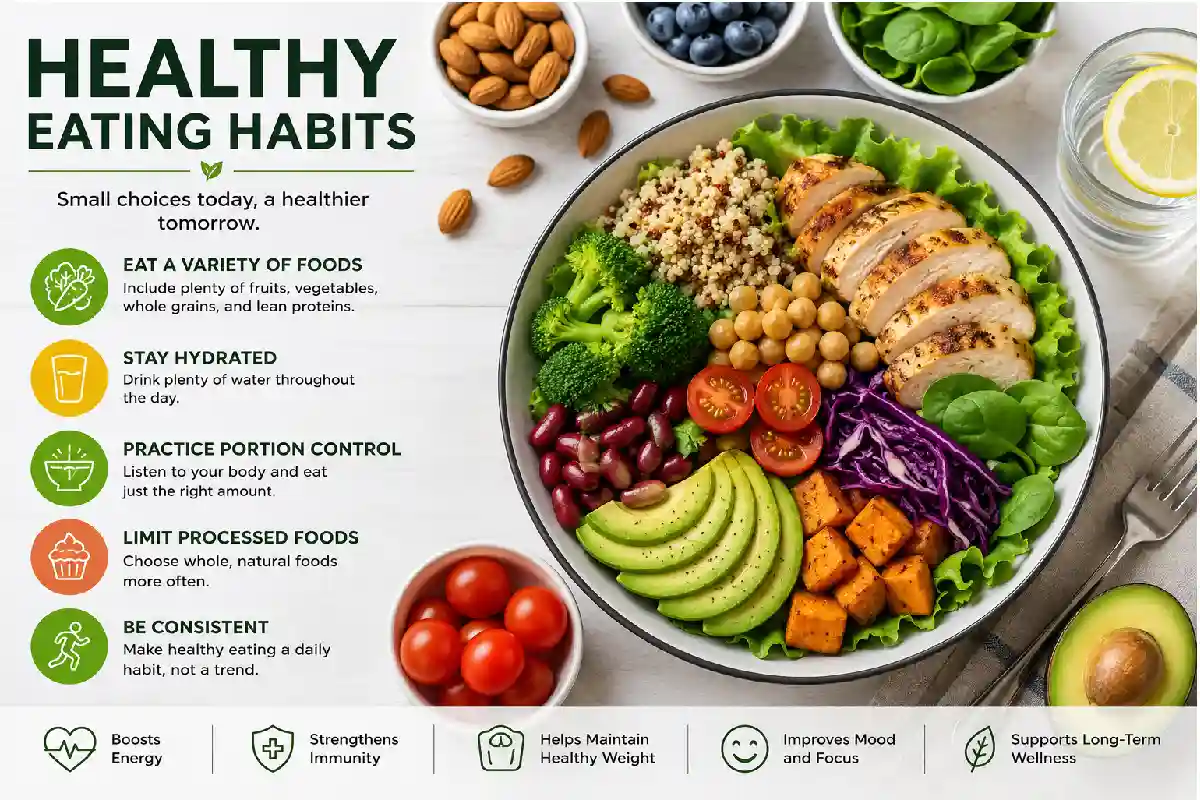
Healthy Eating Habits: Making healthy eating choices doesn’t automatically mean going on diets, eating small portions, or practicing deprivation. The truth is for most people; it’s about implementing a healthy, manageable lifestyle that includes lots of nutritious foods in a reasonable manner, adequate water, and a good deal of flexibility.
This isn’t about a diet being “perfect” everyday for your entire life. It is about the better choices with food everyday.
❝
This article is a part of
Healthy Habits Guide
What Are Healthy Eating Habits?
A nutritious diet consist of everyday foods which in order to provide your body using energy, calories, as well as the appropriate vitamins and minerals. Normally there exist well-balanced and complete foods which come in addition to fruits in addition to veggies, lean protein resources, fats and, quite frankly, gallons of water. Instead of “ideal food”, focus on a “balanced eating”. It doesn’t imply that every meal needs to be “ideal meal”, it will just be one good combination.
Key Principles of Healthy Eating
| Healthy habit | What it means | Simple example |
| Eat a variety of foods | Include different food groups | Vegetables, fruits, grains, protein and dairy or alternatives |
| Choose nutrient-dense foods | Get more nutrients from your food choices | Beans instead of highly processed snacks |
| Watch portions | Avoid routinely eating more than you need | Use a smaller plate when appropriate |
| Eat regularly | Build a consistent meal pattern | Breakfast, lunch and dinner with snacks if needed |
| Stay hydrated | Drink enough fluids throughout the day | Keep water nearby |
| Limit highly processed foods | Don’t make foods high in added sugar, sodium or unhealthy fats everyday staples | Choose whole or minimally processed foods more often |
| Practice mindful eating | Pay attention while eating | Eat without constantly watching your phone |
Build a Balanced Plate
It can be as simple as: including fruits & veggies in every meal and adding a protein and (if it fits your day) something with a whole grain source or other carbohydrate source.A healthy example meal would be:
- Chicken, beans, lentilles, eggs or tofu on the barbecue , or fish
- Rice (the latter can be brown or white); whole wheat bread ; oatmeal, rice or any other grain
- Lots of veg
- A piece of fruit to finish
- Water or a no-sugar drink
You shouldn’t eat this exactly combination at every meal! Keep the diversity going.
Portion Control Tips
Healthy eating is one of the key foundations of a balanced lifestyle and can support consistent wellness habits. Explore our complete healthy habits guide for practical ideas.
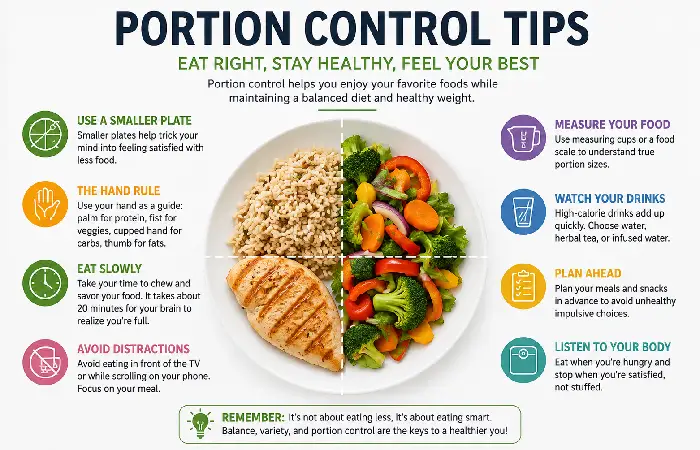
Portion control isn’t eating very little. It’s about becoming more mindful of how much you put on your plate and your body’s own hunger/fullness signals. In order to consume the quantity of calories you’re trying to avoid, sometimes you need to even begin watching the portion of what you consider your”healthy” meal (e.g., salad is no longer a free-for-all).
Easy Portion Control Strategies
- Start with a reasonable serving: If you’re still hungry, you can always get more, it may be difficult to detect when you’ve had too much when you’re initial serving is massive.
- Use smaller plates when helpful: With a smaller plate, a serving of moderate size seems to offer much more without the stress of needing to count everything up.
- Eat slowly: Take some time to savor your food. Eating too fast might not send the same satisfaction signals.
- Don’t eat directly out of big bags: Put it in a bowl or dish so you can see how much you’re stuffing down.
- Focus on liquid calories: Drinking doesn’t provide the feeling of fullness as much as food does, making it easier for you to slip extra calories through sweet beverages or specialty coffee drinks.
- Don’t automatically finish everything: Your plate doesn’t have to remain untouched if you are pleasantly full and have had your fill and want to stop your meal without guilt.
Simple Portion Guide
| Food group | Practical approach |
| Vegetables | Make them a substantial part of meals |
| Fruits | Include a variety throughout the week |
| Protein | Include a source at meals |
| Whole grains/starchy foods | Choose appropriate portions based on your needs |
| Healthy fats | Use moderate amounts |
| Desserts/treat foods | Enjoy occasionally or in reasonable portions |
No One Size Fits All “Serving size requirements differ greatly from a person to another when it comes to age group, size, and lifestyle, as well as to health considerations and specific lifestyle goals. There is no one serving that fits for everyone. ”
Meal Planning Basics
Good nutrition can also support emotional well-being as part of a balanced daily routine. Explore our healthy habits for mental health for helpful guidance.
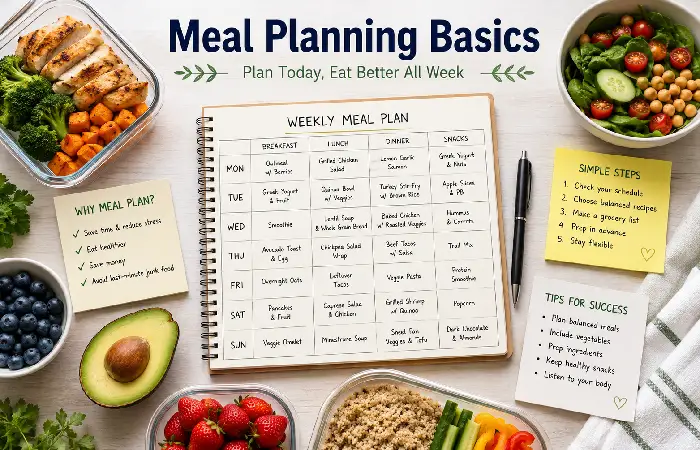
When you’re trying to eat healthy and have a super hectic schedule can be a dream. The advantage isn’t having to look at your empty, starving plate, willing food into appearance. A bit of prep to get ahead can make life easier in the coming few days. It does not take weeks to start planning, a few days a week works fine.
How to Begin with Meal Planning?
Step 1. Look at what you already have:
Before You Shop: Take a stock-take of your freezer, fridge and pantry cupboard – before setting foot in any supermarket. This way you are sure to not only avoid purchasing duplicate items but waste less food by buying too much of something.
Step 2: Choose a few meals.
Choose meals to eat for breakfast, lunch and dinner which are quick, easy and you can eat and enjoy.
Step 3: Make a shopping list.
When it comes to our lists, we sort out which fruits we need, all the veggies, proteins and of course those good carbs and grains and even a few of your favorite snacks!
Balanced eating habits can complement other lifestyle choices when working toward sustainable weight management. Explore our healthy habits for weight management for practical tips.
Step 4: Prepare ingredients.
Wash, cook down beans or grains and setAside the portion sizes of your snacks and or pre portion foods.
Step 5: Keep backup foods available.
Frozen veggies, canned beans, eggs, oats, yogurt, whole grain foods is what can come in handy when you have zero time for cooking.
Sample Weekly Meal Planning Framework
| Meal | Easy options |
| Breakfast | Oatmeal with fruit and nuts |
| Breakfast | Eggs with whole-grain toast and vegetables |
| Lunch | Grain bowl with beans, vegetables and yogurt-based dressing |
| Lunch | Chicken or tofu wrap with vegetables |
| Dinner | Fish or lentils with vegetables and rice |
| Dinner | Vegetable and bean soup with whole-grain bread |
| Snack | Fruit and unsweetened yogurt |
| Snack | Vegetables with hummus |
It should also include reasonable recipes, 20 different ingredients, and a cooking time of 2 hours, which should not be ideal for a busy weekday routine.
Teaching children healthy eating habits early can help them develop positive routines around nutritious foods and balanced meals. Explore our healthy habits for kids for useful ideas.
Make Meal Prep Easier
Ingredients over full dishes are recommended if you want to be more spontaneous.
For example:
- Brown or cook a batch of whole grain.
- Boil or roast fresh vegetables.
- Prepare a source of beans, lentils, or protein.
- Wash and slice all fruit.
- Buy plenty of fruits to stock your pantry and fridge with a variety of snacks!
- Label and cover your food containers securely.
The above combination can then be mixed up during the course of the week.
Healthy Snacking Ideas
Snacks are okay to bridge hunger between meals if there is a need to ward off serious hunger pains but you’re not yet ready for the main meal. The better choice is protein along with fiber or good fat AND another component in the form of fruit or a vegetable, a whole grain food etc.
Understanding how healthy habits are formed can make it easier to turn better food choices into consistent daily routines. Explore our guide to how healthy habits work for more information.
Healthy Snack Ideas
| Snack | Why it’s useful |
| Apple with peanut butter | Fruit plus protein and fat |
| Greek yogurt with berries | Protein plus fruit |
| Carrots with hummus | Vegetables plus plant protein and fat |
| Small amount of nuts with fruit | Healthy fats and fiber |
| Toasted wholegrain bread and avocado. | Whole grains and healthy fats |
| Boiled egg with fruit | Protein and carbohydrates |
| Cottage cheese with fruit | Protein and natural sweetness |
| Oatmeal with nuts and banana | Fiber, healthy fats, and carbohydrates |
| Air-popped popcorn | A simple whole-grain snack |
| Roasted chickpeas | Fiber plus plant-based protein |
Don’t Turn Snacking Into Constant Grazing
Don’t make such a fuss of snacking all the time – just to not keep mindlessly mindlessly grazing for a good chunk of time when you had your fill! Here’s how to take a step back and ask yourself a couple of things before you reach for food:
- Am I physically hungry?
- When was my last meal?
- Will a sensible snack take away the craving?
- Do I have more of a desire to eat because of routine, stress or boredom?
- Or am I just thirsty?
You don’t necessarily need to ban emotional eating. The key issue, really, is to start noticing why and when you reach for food.
Common Nutrition Mistakes
Healthy Eating Tips Get Confusing It’s not uncommon for people to stumble over the eating advice they consume or make common nutrition blunders because it places too much emphasis on individual food items, rules and restrictions and ‘quick fixes’.
Healthy eating works well alongside regular physical activity as part of an active lifestyle. Explore our healthy exercise habits guide for practical ideas.
1. Labeling Foods as Completely “Good” or “Bad”
The truth is, very few individual foods can actually ruin your diet. When eaten in moderation, a varied, balanced diet does allow some space for foods that you simply find delicious! So, instead of having the “I can’t eat THAT attitude”, try a “How often and How much can I eat THAT attitude!”
2. Following Extremely Restrictive Diets
Not to mention the very restrictive plans that can take months to implement and turn food into something that becomes extremely frustrating and even anxiety- inducing to get through your day. Instead, take better habits with you that you can continue eating through the months and years.
3. Ignoring Portion Sizes
Many foods do carry healthy advantages and the ability to still increase our calorie intake! Such as oils, fats, cheeses and nut butters for example which all still add benefits to a healthy diet. However, just need to eat sparingly.
4. Not Eating Enough Protein
Protein contributes to your muscles and may help with a variety of body functions. Try to regularly eat protein-rich foods such as:
- Eggs
- Fish
- Poultry
- Beans
- Lentils
- Tofu
- Yogurt
- Milk or fortified alternatives
- Nuts and seeds
5. Eating Too Few Vegetables and Fruits
Many people out there have gone so extreme in focus on protein or carbs and forget completely the veggies. Get them in the meal itself and not at the tail end!
6. Drinking Too Many Sugary Beverages
Soothing a troubled tummy, sodas, sweetened iced teas, and other drinks with added sugar. Water is the go-to, stop drink to ensure you’re drinking enough of them every day.
7. Believing “Healthy” Labels Automatically Mean Healthy
Just because it has some ‘all natural,’ ‘organic,’ ‘low-fat’ or ‘multigrain’ on the package doesn’t make it a healthy option. You just need to read the nutrition label and the ingredient list to see what you’re actually consuming.
8. Skipping Meals to Compensate for Overeating
If you know you’ve already eaten much more than you’d originally intended don’t reach for that next meal as a response. You’re just setting yourself up for being starving and going to eat less healthy again! One meal won’t mess up your entire diet; just get back to it next time.
Quick Nutrition Mistake Check
| Mistake | Better approach |
| Extreme restriction | Focus on balance |
| Skipping meals regularly | Develop a consistent eating pattern |
| Eating too quickly | Slow down and pay attention |
| Relying heavily on packaged snacks | Add more whole or minimally processed foods |
| Ignoring hydration | Keep water accessible |
| Following every diet trend | Evaluate whether the advice is evidence-based |
| Focusing only on calories | Consider nutrients, portions and overall diet quality |
FAQs
1. What are some tips to get healthier diet?
The most common mistake when starting out is to aim at changing absolutely everything simultaneously. You only need one or two reasonably sized changes to make to your current routines to begin with. Perhaps it’s to eat some vegetables for lunch and dinner daily, or to drink one more glass of water throughout the day (rather than relying on juice or pop), or making up some packed lunches and healthy snacks to take into work or to school. Small and manageable changes that will quickly become habit are generally more easier to adhere to than drastic measures.
2. Is portion control necessary for healthy eating?
Yes, portion control can be helpful, and again, I’m not suggesting that you should go and weight/measure every bite that you consume. Visualizing a standard serving size and being mindful to stop eating because you are satisfied, not stuffed. That’s pretty far right there.
3. Are snacks part of a healthy diet?
That is correct. Snacks can be a part of your healthy eating pattern, as long as you are truly hungry in between meal times, and the foods you select are providing nutrients and a certain feeling of satisfaction versus primarily high calorie, processed snack foods.
4. Should I completely avoid sugar?
You don’t have to kick sugar 100% If you want to cut back on sugar, a healthier goal would be to cut added sugar and still enjoy natural sugar from fruit or dairy products.
5. Is meal planning worth it?
Okay, so for a certain number of us, yes – meal planning can enable better food choices, quickens that grocery store run, and help make sure we’ve all the right kind of grub in our house.
6. Can I eat my favorite foods and still have a healthy diet?
Yeah. Nothing say that a clean meal has to be absolutely no what foods you really appreciate, I know. What we say that the other 80 to or 90 percent are clean things that you are consuming to give that energy as it is truly intended to do.
7. How much water should I drink?
Your needs will depend on the size, activity levels, weather and your food. Slowly and surely drink through out your day. Pay heed to thirst, especially if you consider yourself highly active or if it is warm.
8. Is breakfast necessary for everyone?
Not necessarily. Our eating habits vary. It is the total diet that counts and whether it meets nutritional requirement and goes along with your lifestyle and the life you want to live.
9. What is the easiest healthy eating habit to maintain?
One of the easiest place to start is to make healthy options easy. A prepared pantry keeps your fruits, vegetables, protein choices and all those other whole grains handy so healthy food is also easy food.
Final Thoughts
Create good eating habits based on repetition not perfection. There is no need for a complex diet or to eliminate everything you love to eat.
Stick with the fundamentals – a diet high in nutrients and variety, reasonable portion sizes, meals planned in advance whenever possible, and snacks that will leave you satisfied. Steer clear of typical nutrition traps. And the ultimate healthy lifestyle supporting food plan should adapt to you. Not control you. Flexible! That’s the cherry on top of the cake.