


Foaming Face Cleanser Guide: How It Works, Benefits & Best Ingredients
 Khizrana Begum
Beauty & Lifestyle Writer
Khizrana Begum writes clear and reader-friendly content covering beauty, lifestyle and related topics.
Read Full Bio of Author →
Khizrana Begum
Beauty & Lifestyle Writer
Khizrana Begum writes clear and reader-friendly content covering beauty, lifestyle and related topics.
Read Full Bio of Author →
 Sameena Begum
Health, Technology & Digital Content Reviewer
Sameena Begum reviews content for clarity, accuracy and overall reader usefulness.
Read Full Bio of Reviewer →
Sameena Begum
Health, Technology & Digital Content Reviewer
Sameena Begum reviews content for clarity, accuracy and overall reader usefulness.
Read Full Bio of Reviewer →
Foaming Face Cleanser Guide: A foaming facial wash is a simple way of staying up-to-date on your daily skincare practices. Together with water, the foam develops as a skin care product meant to purge and eliminate oils, sweat, dirt, sunscreen, and other such residue from your day. However, not all foaming cleansers were meant for every skin type.
This will solely be based on your skin type’s oiliness, sensitivity, moisture levels and specific needs. A face wash formulated for oily skin will make you feel clean and refreshed, but if it were intended for dry/sensitive skin, your skin would feel extremely tight.
In this article you will understand why it works, who it should be use for, what ingredients should look out for and its pros and cons, along with other useful tips.
❝
This article is a part of
Cleansing Guide
How Do Foaming Cleansers Work?
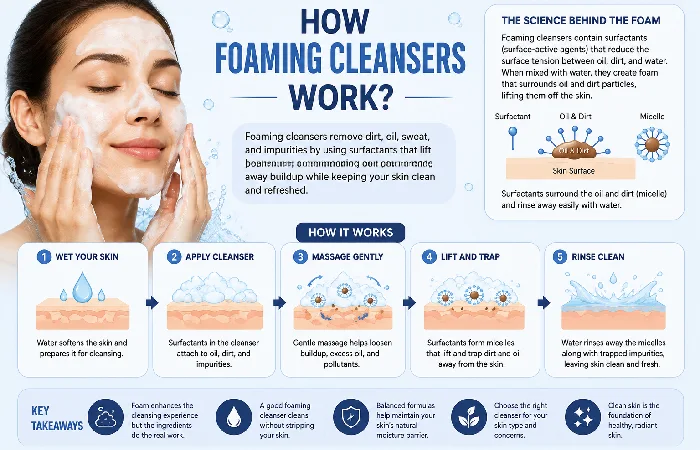
Foaming face cleansers contain cleansing agents know as surfactants. Surfactants are ingredients which aid the removal from your skin what water on its own cannot effectively get rid of which are oil, make-up remains, perspiration and unwanted external grime. By massaging the cleanser into your skin with a little water and the surfactants surround what oil and dirt particles there are which can then easily be rinsed away.
Foam can feel like it is making cleansing more of a light refreshing task.
A good cleansing routine starts with choosing a formula that matches your skin type and daily needs. For a broader overview of cleanser types and skincare basics, explore our complete face cleanser guide.
Foam does not make for a more effective cleaner however as the most foamy of cleansers are not necessarily any better at cleansing then a low-foam or cream type cleanser.
What Happens During Cleansing?
This typically goes through a process of:
- Water loosens the surface of skin.
- Surfactants meet oils/impurities.
- Mild manipulation lifts them away.
- Water washes away cleanser and lifted bits.
- The stage remains set for moisturizing/treatments.
Ultimately the goal is to move away undesirable elements with as minimal interference with the surface of the skin as possible.
| Cleansing action | What it helps remove |
| Surfactant action | Excess oil and surface impurities |
| Gentle massage | Sweat, dirt, and residue |
| Rinsing | Loosened particles and cleanser |
| Moisturizing afterward | Helps support skin comfort and hydration |
Foam Does Not Equal Stronger Cleaning
It is often believed that lots of lather equals a deep clean, but actually this just defines the feel and usage of a cleanser. Extremely squeaky or tight skin after washing can be too stripping of your skin- even if there is a desirable amount of lather! A well formulated foaming cleanser will clean, while still leave the skin feeling comfortable, balanced and non stripped.
Who Should Use Foaming Cleansers?

If you frequently experience breakouts, your choice of cleanser may need to take your skin concerns into account. Explore our face cleanser guide for acne-prone skin for more targeted cleansing advice.
Foaming cleansers are especially a staple with oily, combination or normal skin types. You should use these type of cleansers to prevent excess oil production, to remove sunscreen, sweat or dirt buildup.
Foaming Cleansers for Oily Skin
Foaming cleansers may be beneficial because they help cleanse your oily skin of all surface oil. Look for formulas that help remove oils without making skin completely dry, though, because those don’t make for the healthiest skin overall. Despite the warning against being an aggressive facial washer who takes away all the oil (and can have a very stripping effect), oily skin might best respond to a formulation containing niacinamide, or one with salicylic acid, if your oily skin has breakouts.
Foaming Cleansers for Combination Skin
Combination skin: If you have a combination face whereby you have both oily and dry skin regions simultaneously, then in such a case low pH foam cleansing is what you can opt for times when the T-zone of your face becomes oily while your cheek remainsnormal (although slightly dry). For one week use this mild skin friendly cleansing foam if you get rid of dry and squeaky feel after an oil absorbing foam wash.
Foaming Cleansers for Normal Skin
Generally, skin can tolerate various cleanser textures in. Normal a mild foaming cleanser can make for an easy morning or night. If choosing, pick one that leaves you without a strange feeling on your face when the soap is washed off.
Foaming Cleansers for Dry Skin
Just, be warned again: Foam shouldn’t make all your existing dryness noticeable. If you skin-dry type to begin with-make certain to pick up a moisturizer-packed foam cleaser. Find one filled with glycerine or ceramides in case you can.
Foaming Cleansers for Sensitive Skin
A fragrance-free and mild formula may be helpful, along with reduced risk of irritation for sensitive skin. Try not to select a cleanser just for the lather produced. Apply for a product patch test on a new skincare formulation too, especially if your skin reacts badly to the current cosmetic.
If you prefer a lightweight texture that rinses away easily, a gel formula may be another option to consider. Our gel face cleanser guide explains what to look for in this type of cleanser.
| Skin type | Foaming cleanser suitability | What to look for |
| Oily | Usually suitable | Gentle cleansing, non-stripping formula |
| Combination | Often suitable | Balanced cleansing |
| Normal | Usually suitable | Mild surfactants and comfortable finish |
| Dry | Use carefully | Hydrating, gentle ingredients |
| Sensitive | Choose carefully | Fragrance-free, soothing formula |
Pros and Cons
It’s true that anything- even skin – comes with good and bad. Foam cleansers are beneficial in certain circumstances, but may create dryness or redness in others.
Pros of Foaming Face Cleansers
Cleans surface oil: Foaming cleansers can effectively remove the surface layer of oil and sweat from the skin.
Feels clean: Most people like the clean, fresh feel that a foaming cleanser gives them after use.
Rinse cleanly – As their texture is the lightest, any foaming product should easily rinse from your skin using luke warm water.
They are effective post-workout: Sometimes you sweat a lot in the gym, and the foam will remove all the grease and sweat. They are very appropriate in texture when you have oily skin.
Cons of Foaming Face Cleansers:
Can cause dryness: Excessively strong cleansers can cause the skin to lose all surface oils.
Creates tightness: If your skin is feeling tight right after a cleanser, your cleanser might be overly effective for your skin.
For people who prefer a richer cleansing texture, cream-based formulas can provide a different experience from lightweight gel or foaming products. Explore our cream face cleanser guide for more information.
Can create irritation: Fragrance and several other ingredients found in some foaming cleansers may create irritation in sensitive skin.
If you regularly wear makeup or sunscreen, you may want to consider using more than one cleansing step. Our double cleansing guide explains how this method works and when it may fit into an evening skincare routine.
Not a better or a more effective option than other cleansers: The foamy lather itself does not guarantee that a cleanser will be superior to other types of cleansers.
| Pros | Cons |
| Removes excess oil | May cause dryness |
| Lightweight texture | Can feel stripping |
| Easy to rinse | Some formulas may irritate sensitive skin |
| Refreshing after exercise | Foam does not necessarily mean better cleansing |
| Convenient for daily use | Formula matters more than foam level |
Best Ingredients
Ingredients are More Important than Foam! Focus on a cleanser’s ingredient list rather than foam amount and judge from there how the product could cater to your specific skin type or concern Glycerin
Glycerin is a humectant, which means it can draw water into the skin. It is a common ingredient used in products aiming to help maintain the skin’s moisture content. Using a glycerin-containing foaming cleanser may leave you feeling less tight and dry.
Some skin types can feel dry, tight, or irritated after cleansing, making a gentle formula especially important. If you have easily irritated skin, explore our face cleanser guide for sensitive skin for helpful tips.
Ceramides
Ceramides are natural lipids that play an important part in the maintenance of the skin barrier and commonly make appearance in formulations developed for dry or sensitive skin, and may be helpful if keeping skin barrier function a priority is part of your skin routine.
Niacinamide
It is found in a number of gentle cleansers and is a form of vitamin B3 that may be quite beneficial for oily or combination skin. However, due to the extremely brief amount of time the active makes contact with skin, don’t anticipate the same benefits that would come from using a moisturizing or a serum with this active.
Salicylic acid
A beta hydroxyl acid like salicylic acid can provide an exfoliative benefit, helping to remove excess oil and debris on skin that may cause clogged pores. It is frequently formulated in cleansers marketed towards oily or combination skin, but it should be applied with care for anyone with irritation or dry or sensitive skin.
Aloe Vera
Using an aloe-fied facial cleanser can add an extra step of calm to your existing daily skin regimen. This can complement other milder cleansing agents as a part of your rinse-off cleanser.
Hyaluronic Acid
Commonly regarded as a must-have in moisturizing treatments, HA will additionally add even more moisturizing benefits to your facial cleanser
Heavy fragrances and strong surfactants aren’t for sensitive types. And If your skin is especially dry or has frequent reactions, it may be well-advised to use it with additional caution.
| Ingredient | Potential role | Suitable for |
| Glycerin | Supports hydration | Most skin types |
| Ceramides | Supports skin barrier | Dry or sensitive skin |
| Niacinamide | Supports balanced-looking skin | Oily or combination skin |
| Salicylic acid | Exfoliates and helps unclog pores | Oily or blemish-prone skin |
| Aloe vera | Soothing skincare ingredient | Many skin types |
| Hyaluronic acid | Helps attract moisture | Dry or dehydrated skin |
Daily Cleansing Tips
How to Use the right cleanser properly
- Wash Hands first: Always start by washing your hands, before you bring your hands to your face.
- Take lukewarm water: Really hot water can help dry out your skin.
Lukewarm is the general best option for skin care.
- Use a small amount: Often you don’t need any set amount of Cleanser to use. Go by the product’s instructions for the right amount; you just wantenough tomeltthe oil and dirt around your skin.
- Gently Massage your product in with your fingertips: Don’t scrub your skin harshly, because you don’t need to have it hurt to be cleansed even the slightst.
- Rinse and remove all: Cleanser to roughly even in the crease between the hairline.
- Dry and pat: If you have a towel on hands, gently pat the water from your face. If you only have a hand and a face towel, use another towel or wash it once more, then pat.
- Moisten It: while your face is still a little damp after washing your skin, you must try to put some moisturizer on your face as much as possible to have enough hydration.
- Don’t over clean: The more is not, more not be better… Washing more over time can cause further irritation to your skin if you overdo this on purpose. Especially in the night when cleaning the skin. The skin helps your pores become less congested, take away make up, sunscreen, oil, dead cells and other pollution that occurs to skin as a results of daily accumulation.
Morning vs. Evening Cleansing
Your ideal routine depends on your skin and products.
| Time | Cleansing approach |
| Morning | Gentle cleanse if needed |
| After exercise | Cleanse if sweaty |
| Evening | Thoroughly remove daily buildup |
| After heavy sunscreen/makeup | Use an appropriate cleansing routine |
For very dry or sensitive skin, morning washing with just a lightly foaming product may give your skin less of a workout than a more harsh, repeated wash with foam.
How to Choose the Right Foaming Cleanser?
More than just looking at the labelWhen comparing product options, determine first what your skin type is. Did you know then that you need to account for other concerns such as too oily, acne or comedones, dryness, sensitive skin, etc.? Here is how to effectively narrow down:
Skin type → skincare concern → ingredients → cleansing strength → comfort after washing
E.g. Someone with oily skin, acne prone skin and dirty pores should look for a mild foam cleanser with salicyic acid in it. Oily skin could use low irritation foam cleanser with glycerin, ceramide.
Most important factor is see what actually your skin reacts to. If your skin constantly feel burning, tight skin, flaky or irritated after cleansing then the usage is wrong.
FAQs
Are foaming cleansers good for oily skin?
Yes, a mild foaming cleanser may work for you by helping to wash away surface oil and debris that’s been building up all day. Look for one which can effectively clean without excessively drying out your skin.
Can I use a foaming cleanser everyday?
Well, many foaming cleansers are designed to be used every day. However, it really depends on the type of cleanser and your skin. Stick to product instructions, as well as cut back on application if you feel dryness or tingling.
Are foaming cleansers bad for dry skin?
Not necessarily.
In many cases, it’s quite acceptable to use a very mild, hydrating foaming cleanser on dry skin. Some tougher-cleaning formulas can definitely increase dryness so if that happens, look to something milder or add more of something conditioning.
Does more foam mean a cleanser works better?
No, Foam is simply a type of product formulation not an indicator of performance or better cleansing action.
Should I use a foaming cleanser both morning and night?
It really depends on your skin’s routine.
While some people may benefit from an evening cleanse twice per day others (particularly if they have skin that’s on the dryer or more sensitive side) may wish to start off with a gentler, water-only wash in the AM and something a little more thorough at the PM.
Can foaming cleansers help with acne?
While a cleansing gel, cream or oil alone likely won’t solve your acne problem, a foaming cleanser with a formula featuring acne-fighting ingredients, like salicylic acid, may aid in helping to control oil and to remove pore congestion for acne-prone skin.
Should I use a moisturizer after using a foaming cleanser?
Yes.
Proper application of moisturizer after cleansing is a beneficial part of your routine in supporting healthy hydration for your skin.
Can I use a foaming cleanser to remove makeup?
Although certain foaming cleansers are able to wash off lighter types of makeup, it’s probable that you’ll need to double up with another dedicated first cleanse or make-up remover to deal with heavy/waterproof make-up. Avoid putting and scrubbing around the eye area.
How long do I leave a foaming cleanser on my face?
Most cleanser formulas were designed to work on the skin for just a minute or two then to be rinsed. It really is the most appropriate way for any type of facial cleanser to be used as intended.
That includes a good number of those rich with great bubbling properties.
What should my skin feel like after cleansing?
Clean and comfortable should describe your post-cleansed skin. There should be no burning sensation or feelings of stiffness, or dryness. Slight tightness may be experienced by some with dryer skin types, but tight, burning and/or tingles might signify use of something that you could do well to skip.
Final Thoughts
You might consider incorporating a foaming face wash into your daily ritual if you’re looking for something to help rid your skin of excess oils, sweat, sunscreen, and daily grime. The best approach is to consider your skin type rather than assuming all foaming face washes perform the same: If you have oily or combination skin, you’ll likely find it beneficial in performing a sufficient cleanse without feeling too heavy.
On the other hand, should you suffer from dry or sensitive skin, you may find that you want to instead experiment with gentle, hydrating formulas and monitor very attentively as the skin responds. Actually, a great quality foaming facial wash should not leave your skin feeling excessively taut or excessively tight. Together with the moisturiser, sun lotion as well as the remainder of the skincare regime- this creates the ideal consistent program.