

Cream Face Cleanser Guide: Benefits, Ingredients, How to Use, and Common Mistakes
 Khizrana Begum
Beauty & Lifestyle Writer
Khizrana Begum writes clear and reader-friendly content covering beauty, lifestyle and related topics.
Read Full Bio of Author →
Khizrana Begum
Beauty & Lifestyle Writer
Khizrana Begum writes clear and reader-friendly content covering beauty, lifestyle and related topics.
Read Full Bio of Author →
 Sameena Begum
Health, Technology & Digital Content Reviewer
Sameena Begum reviews content for clarity, accuracy and overall reader usefulness.
Read Full Bio of Reviewer →
Sameena Begum
Health, Technology & Digital Content Reviewer
Sameena Begum reviews content for clarity, accuracy and overall reader usefulness.
Read Full Bio of Reviewer →
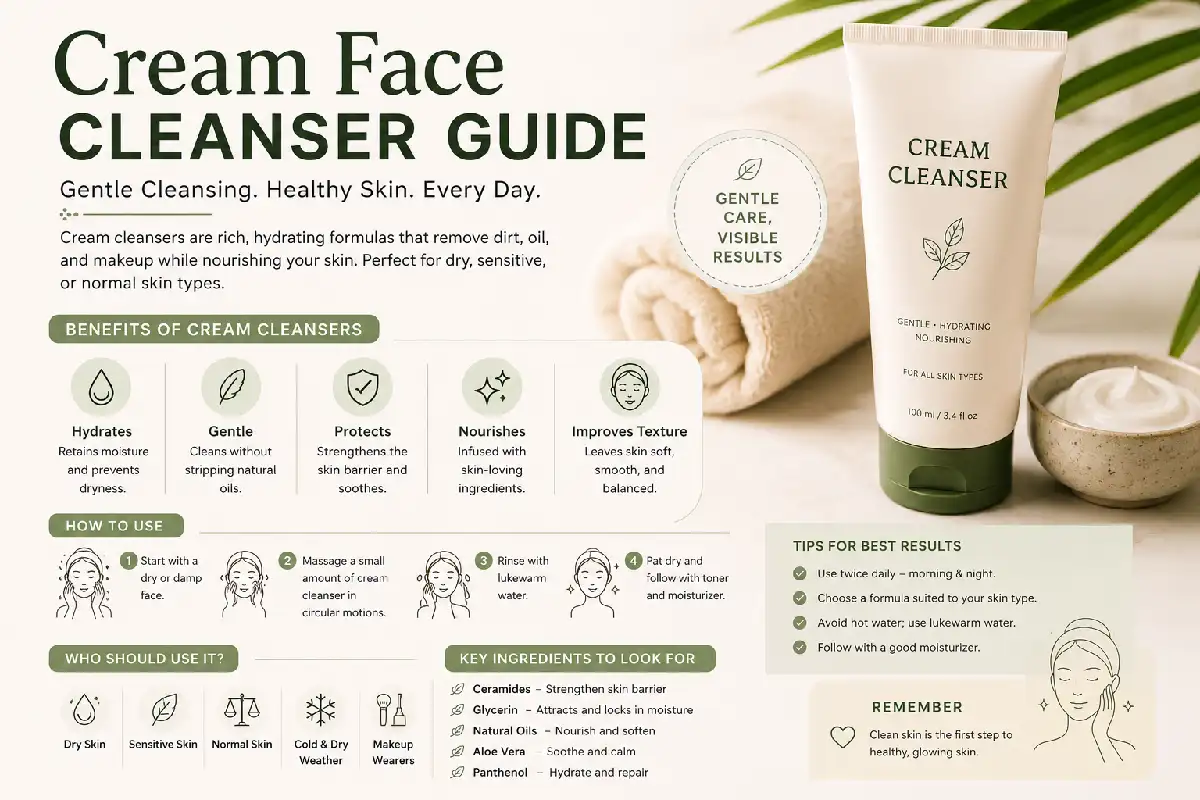
Cream Face Cleanser Guide: Your cleanser must leave your skin clear, smooth, and looking fresh- not stripped, taut, and with an uncanny squeaky-clean feel. This is particularly essential if you have dry or sensitive skin, or skin that’s started to act more delicate with age. That’s where a cream face cleanser can come in handy.
While many common foaming cleansers rely on a lather to cleanse skin, most cream formulas tend to be formulated to deliver a much softer, more hydrating cleansing.
Cream cleansers still effectively remove the typical gunk our skin picks up throughout the day – suncreen, sunscreen, oil, makeup – but unlike some of their frothier cousins, they aim to leave the skin feeling comfortable post-wash. Dermatologists often swear by gentle, fragrance-free options for dry skin, and mature skin can often benefit from formulas that prioritize support for the skin’s hydration and skin barrier.
Ahead, you’ll learn what these are all about, including which types of people can best benefit, which ingredients are worth keeping an eye on, how to best rinse and repeat, and the common skin-washing oops to stay far away from.
❝
This article is a part of
Cleansing Guide
What Is a Cream Face Cleanser?
A cream cleanser is a Facial cleansing product that is cream- or lotion-like in consistency. It gently purifies without the help of over-aggressiveness and foaming. Cream cleanser resembles the texture of lightweight moisturizer more closely than it does soap and is a staple in the skincare routines of those with skin prone to dry irritation when cleansed.
Definition: Skin Barrier
The skin barrier – this is the outermost part of our skin that provides coverage and helps to retain moisture and prevent exposure to irritation. This protective covering helps to maintain its condition, a condition that can show its deterioration and disrepair when your skin feels dry, tight, flaking, burning, or dry to the touch. One reason this may occur is related to the face.
Scrubbing your clean face up.
According to The American Academy of Dermatology, anyone with dry skin should avoid irritating their skin when cleansing and should aim not to apply too much face foam. Those who utilize cream cleansers will find that they contain almost no lathering effect, depending on active ingredients, including emollients like Ceramides and Glycerine, Fatty acids, and oil, to ensure our face feels less stripped at the time that our face gets clear.
| Cleanser Type | Texture | Best Suited For | Typical Feel |
| Cream cleanser | Rich, creamy | Dry, mature, sensitive skin | Soft and comfortable |
| Gel cleanser | Lightweight gel | Normal, combination, oily skin | Fresh and clean |
| Foaming cleanser | Foamy | Oily or combination skin | Thorough, sometimes drying |
| Oil cleanser | Oil/balm | Dry skin, makeup removal | Nourishing |
| Micellar cleanser | Watery | Gentle cleansing, makeup removal | Very lightweight |
A cream cleanser is not necessarily for everybody. The ingredients, perfume, surfactants, and what your skin actually requires should still be taken into account.
Benefits for Dry and Mature Skin
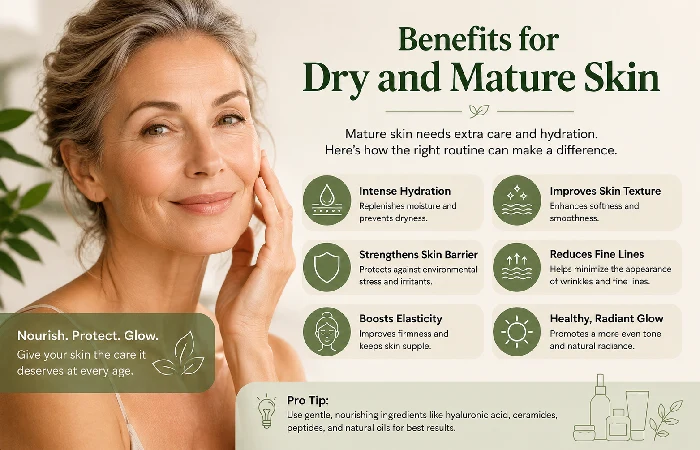
If breakouts are a regular concern, choosing a cleanser designed with acne-prone skin in mind can help you create a more targeted routine. Explore our 1. Helps Reduce the Tight Feeling After Washing
When using traditional cleansers, the feeling of tightness right after is a main issue. That tightness may actually be a result of a harsh cleansing routine. Cream cleansers can be the perfect mild alternative. The American Academy of Dermatology advises fragrance-free products when using cleansers for dry skin and comments that creamier cleansing will help. Our skin doesn’t maintain its natural oils/firmness and is less able to retain water as we get older. Changes in hormones, as well as what our body goes through, could slow the production of the required natural oils and lipids and leave your skin dry. All those issues make mature skin love simple cleansing, without any strong peeling effects, just a soft and gentle clean. If a cream cleanser is done well, the cream may include a few humectants and emollients that prevent the cleansing part from being drying. Humectant agents are substances that bring water toward the skin, as well as hold on to it once there. Glycerine and hyaluronic acid are both frequently used agents of this class. Emollient agents fill the gaps between skin cells and render the skin soft and smooth. Occlusive agents create a film so that skin hydration doesn’t escape. A balanced formulation is a combination of each agent, used in one of each of the three measures discussed here. If you find your skin turning red and easily irritated after use, then it may be in your interest to try one of the above simple cream cleansers. Gel formulas offer a lighter cleansing texture and can be preferred by people who enjoy a fresh, lightweight feel. Learn more about this option in our gel face cleanser guide. Look for labels such as: AAD strictly advocates for the use of fragrance-free products for dry and sensitive skin types. The association also draws a crucial difference between fragrance-free and unscented labels-unscented products may still include fragrance components to combat any unpleasant odors. A great facial cleanser should not leave your face feeling scrubbed raw. If you prefer a cleanser that creates a noticeable lather, our foaming face cleanser guide explains what to consider when choosing a foaming formula. It’s actually a super easy procedure to use a cream cleanser! It doesn’t really take ten elaborate steps. Begin with warm- not hot- water. Extremely hot water- especially if your skin type is already dry- can remove your skin’s natural oils in an unnecessary step and worsen your dryness issues. Apply a small amount of cream cleanser and massage it evenly across the face. Gently take cleanser using the tips of your fingers. Massage cleanser on your face in small circular motions. Concentrate on the areas where sunblock, makeup, perspiration, and dirt build up more. Do not scrub aggressively. Gently rinse your face thoroughly with tepid water until all the cleanser is gone. Rinse the balm with the warm wash cloth. Follow the manufacturer directions on the rich cleansing cream or balm you are using because some of these formulations do not require complete rinse-off, but rather wipe-away. People who regularly use makeup or sunscreen may be interested in using multiple cleansing steps as part of their evening routine. Our double cleansing guide explains how this method works. Gently pat your skin dry with a soft towel. You may leave your skin slightly damp so that the lotion spreads more easily. According to the AAD “Pat yourself dry”. Add your moisturiser fairly soon after a wash. After a whole day of living in sunshine, sunscreen, and layers of accumulated “impurities,” once-daily washing may deliver sufficient “stripping power.” For people with particularly sensitive or dry skin, a gentle cleansing agent in the morning might suffice, however. If your attempt at a double cleanse leaves your skin parched and raw, review your ingredient choices and method. Here, the packaging usually proves to be a little less exciting than its list of components, so let’s take inspiration from ingredients and their effects to pick the best cream face wash for your skin.2. Supports Comfortable Cleansing for Mature Skin
3. Helps Preserve Moisture
4. Can Be Helpful for Sensitive Skin
5. Leaves Skin Feeling Softer
After you rinse your face, you mustn’t feel tightened or roughed up like you were just in battle at the local dermatology convention. If your face automatically tightens or roughens a tiny bit, consider a different cleanser.How to Use Cream Cleansers?

Step 1: Wet Your Face
Step 2: Apply a Small Amount
There really is no need to use a large quantity. It often works well with a very thin layer.Step 3: Massage Gently
Step 4: Rinse Thoroughly
Step 5: Pat, Don’t Rub
Step 6: Moisturize
Good when you have dry or mature skin, put a bit on while skin is still damp; prevents it from becoming too dry!How Often Should You Use a Cream Cleanser?
Best Moisturizing Ingredients
| Ingredient | What It Does | Particularly Useful For |
| Glycerin | Attracts water to the skin | Dry, dehydrated skin |
| Hyaluronic acid | Helps hold water | Dehydrated and mature skin |
| Ceramides | Support the skin barrier | Dry, sensitive, mature skin |
| Squalane | Softens and conditions | Dry and normal skin |
| Shea butter | Provides emollient moisture | Very dry skin |
| Dimethicone | Helps reduce moisture loss | Dry or compromised skin |
| Petrolatum | Strong occlusive effect | Very dry skin |
| Jojoba oil | Softens and conditions | Dry or normal skin |
The AAD lists ingredients including glycerin, hyaluronic acid, dimethicone, jojoba oil, mineral oil, petrolatum, and shea butter among useful moisturizing ingredients for dry skin.
Ceramides
Ceramides are lipids naturally found in the skin barrier. Think of them as part of the “mortar” that helps hold skin cells together.
They are especially interesting for mature and dry skin because natural ceramide levels can change with age.
Glycerin
Glycerin is a tried-and-true humectant. It is something to which moisture is drawn and will help skin maintain its feel. Glycerin is a rather simple ingredient, but that does not for a second mean that it is ineffective.
Hyaluronic Acid
Moisturizing and hydrating ingredient. There is also one type of ingredient known as Hyaluronic Acid, which will offer moisture-binding capabilities and could also have been provided in the formula in the interest of offering the skin hydration. It is a popular provider of moisture to help relieve unpleasant, dry skin and retain water.
Squalane
Squalane is an emollient that will provide a silky, smooth feel to the product. In particular, it would feel nice in a cream or milk-style cleanser.
Niacinamide
Some creamy cleansers will also have niacinamide in the ingredients, otherwise known as a type of vitamin B3; this is particularly useful in many barrier-boosting products such as creams and cleansers.
If your skin is easily irritated or feels uncomfortable after cleansing, a gentler approach may be more suitable. Explore our face cleanser guide for sensitive skin for tips on choosing a mild cleanser.
Ultimately, though, your cleanser being formulated with more ingredients won’t always translate to it working better. For skin that reacts to just about anything, it might actually benefit from fewer ingredients.
Common Mistakes
Even a beautiful cream cleanser can cause problems if it is used incorrectly.
Mistake 1: Scrubbing the Face
Many people think a stronger scrub means cleaner skin.
It doesn’t.
Your face does not need to feel squeaky clean. Excessive rubbing can irritate the skin and make dryness more noticeable.
Mistake 2: Using Hot Water
While hot water is comforting it is harsh on dry skin. Opt for tepid instead and you will really notice the difference it makes to your cleanse.
Mistake 3: Choosing Fragrance Over Function
Pleasantly scented cleansers might feel like a pampering product, but scent is irrelevant to the way a cleanser cleans.
Sensitive or dry skins are usually the most appropriate skin type to start with fragrance-free on.
Mistake 4: Over-Cleansing
Stop washing it until it feels dry, stretched, and so clean!
However, “What does my skin need? It may be that the few ways to clean: wiping sweat, sunscreen, makeup, or the world pollutants.”
Mistake 5: Exfoliating Dry, Flaky Skin
The allure of a scrub for flaky skin will be strong.
That will make it worse.
As a matter of fact, The AAD actually suggests not to rub your flaky skin at all because it is just going to take out even more of the oil.
Cream Cleanser vs. Foaming Cleanser
The choice between cream and foaming cleansers comes down to skin type and personal preference.
| Feature | Cream Cleanser | Foaming Cleanser |
| Texture | Rich and creamy | Light and foamy |
| Dry skin | Usually a good choice | May feel stripping |
| Mature skin | Often suitable | Depends on formula |
| Oily skin | Can work, especially if gentle | Often preferred |
| Sensitive skin | Often suitable | Choose carefully |
| Post-wash feel | Soft and comfortable | Fresh, sometimes tight |
| Exfoliation | Usually minimal | Varies by formula |
There is not one single ‘best’ cleanser on the market. A product that can be perfect for those with oily skin in the form of a lightweight gel can be something that those with dry, mature skin prefer in cream or milk form.
The best form of test is a simple one: how does your skin feel 10-15 minutes after you have washed it?
If the skin feels fine, soft, and balanced, you should be looking to further investigate the product that you are using. If it feels tight, burning, itchy, or way too dry, then re-evaluate your cleanser.
A Simple Cream Cleanser Routine
If you have dry or aging skin, there is no need for complicated routines.
Morning
- Gentle cream cleanser or a water rinse, depending on your skin.
- Hydrating serum, if desired.
- Moisturizer.
- Broad-spectrum sunscreen.
Evening
- Remove makeup or sunscreen if necessary.
- Cream face cleanser.
- Hydrating serum, optional.
- Moisturizer.
So why is sunscreen a daily necessity? UV light causes the skin to age prematurely. However, according to the AAD, sunscreen used should be water-resistant and broad-spectrum with at least an SPF 30.
FAQs
- Is a cream face cleanser good for dry skin?
Yes. Cleans gently and feels pleasant are the benefits when using cream Cleansers, which are often a perfect choice for Dry skin. Choose fragrance–free options and those rich in moisturizers.
- Can mature skin use cream cleansers?
Skin can also be on the dry and a tad sensitive side, so a gentle, hydrating cleanser may be a simple way to slot some extra goodies into your relatively basic setup; seek out ceramides, glycerin, and hyaluronic acid within cleansers.
- Can I use a cream cleanser every day?
For many products, gentle cream cleansers are to be used daily. But how often this will be depends on the other cleansing formulas you choose, as well as your specific skin and what’s being left behind in your routine in the end.
- Do cream cleansers remove makeup?
The lighter makeup may come away with some, but most cream cleansers are not able to cope with heavy, waterproof makeup. It’s best to take off heavy and waterproof makeup using a makeup remover or cleansing balm, then follow with cleansing as specified.
Final Thoughts
For cream cleansers, we really love that squeaky-clean feeling, and this is the happy medium between a cleanse you actually see happen and giving your skin a break and making sure that not too much of your skin’s natural barrier function is taken away. These are both super important to you, but both extra important for anyone that have dry and or moremature types of skin. With ingredients from glycerine, hyaluronic acid, ceramides, to enriching emollients, we have formulated so many of our products to be fragrance-free, making our cleansers feel less like a cleansing and more of a daily beauty ritual.