

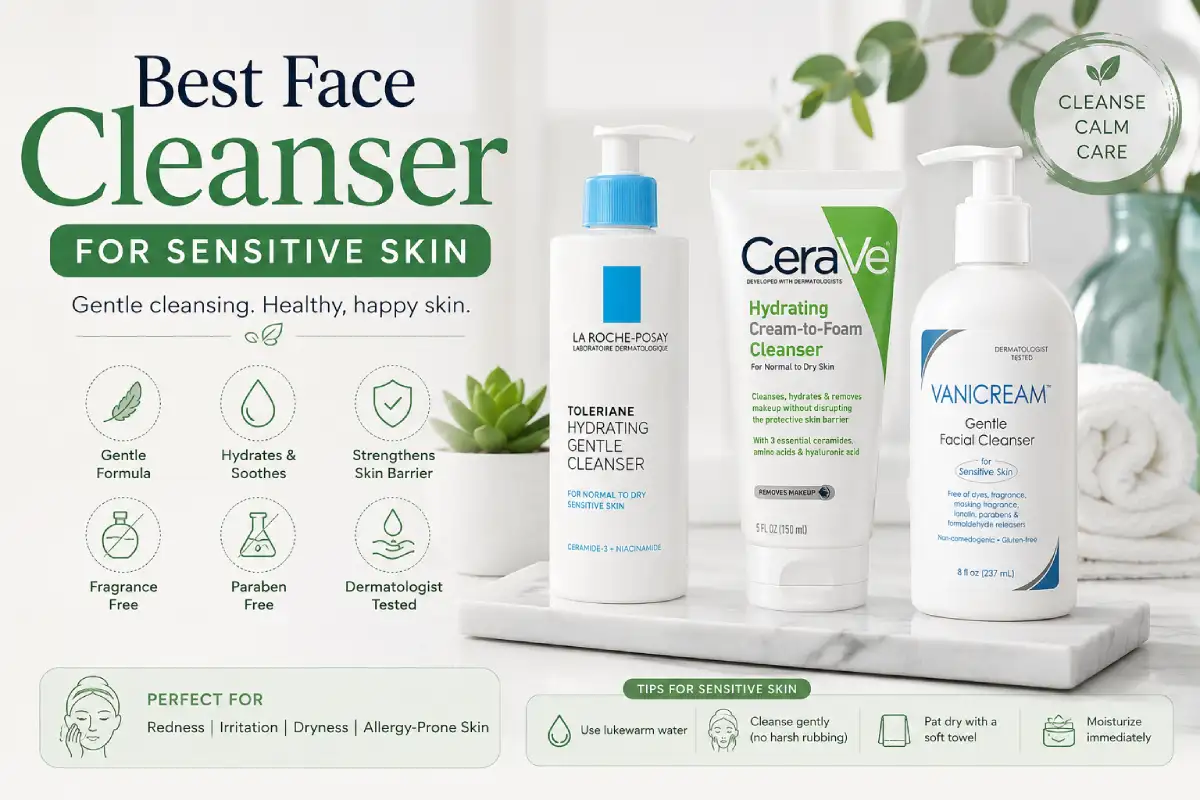
Best Face Cleanser for Sensitive Skin: Gentle & Effective Options
 Khizrana Begum
Beauty & Lifestyle Writer
Khizrana Begum writes clear and reader-friendly content covering beauty, lifestyle and related topics.
Read Full Bio of Author →
Khizrana Begum
Beauty & Lifestyle Writer
Khizrana Begum writes clear and reader-friendly content covering beauty, lifestyle and related topics.
Read Full Bio of Author →
 Sameena Begum
Health, Technology & Digital Content Reviewer
Sameena Begum reviews content for clarity, accuracy and overall reader usefulness.
Read Full Bio of Reviewer →
Sameena Begum
Health, Technology & Digital Content Reviewer
Sameena Begum reviews content for clarity, accuracy and overall reader usefulness.
Read Full Bio of Reviewer →
For sensitive skin, the seemingly basic process of cleansing our faces can feel complicated. What feels amazing on one person’s skin can irritate someone else by making their skin red, tight, stinging, or forming little bumps; then perhaps the ‘best’ face cleanser for sensitive skin becomes less about the price tag and more about your own skin’s capabilities and triggers. Essentially, a facial cleanser can help you shed sweat, oil, sunblock, and makeup to lift away the grime of the day but shouldn’t leave your face feeling tight or stripped of moisture.
Dermatologists tend to prescribe non-scrubbing, non-abrasive cleansers and tepid temperatures for these concerns.
In terms of composition, long ingredient panels and multiple ‘active’ ingredients can be too much; sometimes, less is more.
❝
This article is a part of
Cleansing Guide
What Is Sensitive Skin?

Sensitive skin is the type of skin that over-reacts readily to internal and external stimuli or skincare products. Those people with this kind of skin condition tend to feel that the product “burns”, itches, or stings; the skin becomes itchy, dry, flaky, or irritated.
It isn’t the same thing as dry skin. Dryness actually describes the lack of moisture, whereas sensitive skin measures the degree to which the skin reacts to something. Both can happen together because the breakdown of the skin barrier will lead to greater skin reactivity.
| Skin concern | Common feeling or appearance | What to look for in a cleanser |
| Sensitive skin | Burning, redness, pricking sensation | Mild and fragrance-free |
| Dry sensitive skin | Dullness, peeling, and dryness. | Lather or soothing moisturiser |
| Oily sensitive skin | Oily with irritation | A mild, non-stripping gel wash |
| Combination sensitive skin | My T-zone is oily, but my cheeks are dry. | Gentle And Balanced Cleanser |
| Reactive skin | Occasional redness or irritation | Fragrance-free, minimalist formula. |
The idea is to avoid skin that feels “squeaky clean”. This feeling could even be an indicator that, when cleaning, your skin’s natural protective oils are gone.
Signs of Sensitive Skin
Having sensitivity awareness might have an impact when it comes to choosing your cosmetic products. The reason you might be having a sensitivity is that your face has a reaction to face washes, moisturiser, sun protection, or any other skin care products, for that matter.
Choosing the right cleanser is an important part of a gentle and consistent skincare routine. For a broader overview of cleanser types, ingredients, and cleansing tips, explore our complete face cleanser guide.
Common signs include:
- Redness after washing
- Burning or stinging
- Itching or tingling
- Dry, flaky patches
- A tight feeling after cleansing
- Increased reaction to fragrances
- Small bumps after introducing new products
- Skin that becomes uncomfortable in hot or cold weather
- Frequent irritation after exfoliation
For some people, this sensitivity to products won’t show up with every use. It only reveals itself when your skin barrier is diminished, caused by over-exfoliating, or as a response to the sun, air, washing your face too much, or other irritating substances.
If you regularly experience the symptoms described above (a burning, red, puffy, sore, itching face and/or lingering face rashes or red bumps for what looks like no obvious reason) and jump to the conclusion that you have “sensitive” skin, maybe it’s time to consult a professional!
What Makes the Best Face Cleanser for Sensitive Skin?
No one cleanser can tackle every type of sensitive skin out there; try to find one that focuses on being cleansing yet supportive for your skin’s natural barriers.
If you are dealing with frequent breakouts, it is helpful to consider your skin’s specific needs when choosing a cleanser. Explore our face cleanser guide for acne-prone skin for more targeted cleansing information.
A good sensitive-skin cleanser should ideally:
- Clean without leaving the skin tight
- Be fragrance-free
- Avoid unnecessary harsh ingredients
- Use mild cleansing agents
- Have a comfortable texture
- Be easy to rinse
- Avoid aggressive scrubbing particles
- Support rather than disrupt the skin barrier
The National Eczema Association’s recommended products include cleansing formulas formulated to be mild, soap-free, fragrance-free, and moisturizing. Their product directory considers formulation details and ingredients as part of their Seal of Acceptance evaluation.
Cream, Gel, or Milk Cleanser?
The texture matters, but your skin’s response matters more.
Cream cleansers: Many are good for dry, even severely reactive skin for the reason that it seems to soften all over the face.
A lightweight gel formula may be preferred by people who want a fresh cleansing experience without a heavy texture. Our Gentle Cleansing Ingredients
Ingredients are a good starting place when you’re in the market for a sensitive skin cleanser. Humectants attract and hold moisture—glycerin does both! It is an excellent ingredient in hydrating cleansers and can “pull the moisture out,” leaving skin with a much better finish and leaving skin feeling less dry and ‘tight’ Hyaluronic acid is a humectant similar in function to the previous mention. It attracts water to the skin and has the benefit of making the cleanser less stripping. Ceramides. This is a lipid that naturally occurs in the skin’s barrier. Ceramide cleansers can be a good choice when the skin type needs mild cleansing that also caters to the skin’s barrier. Panthenol, Pro-vitamin B5, or d-panthenol, as it’s also known, is used quite often in products for skin conditioning. Micronized oatmeal-or colloid oatmeal as it is also sometimes called-is basically an ultra finely ground oat used for skin application; it’s something of a staple on many anti-itch/dry skin creams and lotions. Surfactants are cleaning agents that act to emulsify skin debris, oil, sunscreen, and grime to easily wash it away. If your skin tends to feel dry or tight after washing, a cream-based cleanser may offer a different cleansing experience. Explore our cream face cleanser guide for more information about richer cleanser formulas. This isn’t saying every one is bad, just saying that if you have very sensitive skin, ultra-potent or overly stripping cleansers should be your last choice. For instance, there are suggestions by the National Eczema Association of products that use cleansing systems which are very mild. Additionally, these suggestions contain substances like glycerin, hyaluronic acid, ceramides, niacinamide, and panthenol.
Glycerin
Hyaluronic Acid
Ceramides
Panthenol
Colloidal Oatmeal
Mild Surfactants
| Ingredient | Why it may be useful |
| Glycerin | Helps attract moisture |
| Hyaluronic acid | Supports hydration |
| Ceramides | Supports the skin barrier |
| Panthenol | Helps condition and moisturize |
| Colloidal oatmeal | Commonly used in soothing formulas. |
| Mild surfactants | Remove dirt and oil without aggressive cleansing. |
Furthermore, please remember that any product that is everybody’s favourite could be one that causes YOUR problems. Highly individual as sensitive skin can be, always listen to what your skin tells you!
Fragrance-Free vs Scented Products
Sensitive skin consumers must use extreme caution in this section, however. Pleasant perfumes may make a cleanser feel pampered, but cleansers do not need fragrance to work. If you have reactive skin, selecting an unscented formula is often a better first experiment.
Make an additional note to distinguish between fragrance-free and unscented.
Generally, fragrance-free refers to products created without adding fragrance. On the other hand, an unscented product may still have fragrant components and simply contain ingredients to cover up another’s smell. When deciding to use something in effort to reduce an occurrence of skin reaction, it is advisable to stick with fragrance-free rather than unscented products (American Academy of Dermatology). Similar caution should be extended to both natural and floral elements and extracts.
Foaming formulas can provide a thorough-feeling cleanse, but the right product depends on your individual skin needs. Our foaming face cleanser guide covers important considerations when choosing a foaming cleanser.
Natural does not always mean safe or non-irritating.
If you often have difficulty adjusting to a product, try to select a simply fragrance-free formula, instead of one with a lengthy list of botanical ingredients that possess aromatherapy characteristics.
Cleansing Without Irritation
I think even the greatest cleanser can irritate if you lather up to vigorous
If you use makeup or sunscreen regularly, you may be considering a multi-step cleansing routine. Learn how this approach works with our double cleansing guide and consider whether it fits your skincare routine.
The technique matters.
1. Use Lukewarm Water
Hot water can increase dryness and irritation. A lukewarm one will be far better for sensitive skin. A lukewarm temperature for your water is highly recommended by the National Eczema Association if you have sensitive skin that’s prone to eczema.
2. Use Your Fingertips
Lightly wash the face with fingertips. The use of rough cleansing cloths, mitts, pads, or any of your skin’s other cleansing instruments like sponges or brushes is not advised if they create irritation for your face.
3. Do Not Scrub
Even though you scrub your face harder, this will not be cleaner than scrubbing your face lightly. If you scrub your face for too long or too hard, sensitive skin might feel more pain
4. Rinse Thoroughly
It’s thought that leaving cleansing residue on the skin could lead to sensitivity and irritation, if your skin is prone to this.
5. Pat, Don’t Rub
After rinsing, gently pat your face with a clean, soft towel.
6. Moisturize Soon After
Lock in moisture and build up the barrier. This is perfect for the dry and sensitive types.
How Often Should Sensitive Skin Be Cleansed?
There is no requirement for repeated washing of your face throughout the day. For some, evening cleansing is all that your face needs, especially if you have very dry, sensitive skin. It is acceptable for some to cleanse both in the morning and the evening, though this is to be decided depending on how your skin takes to the process. The AAD states that individuals with dry or sensitive skin might well find a more basic single cleanse sufficient at the end of the night.
Ingredients and Product Features to Approach Carefully
Having sensitive skin doesn’t mean cutting all active ingredients, but packing a punch with strong ingredients at one go might be a shock your skin struggles to process, as irritating to the skin
Be cautious with:
- Strong fragrance
- Essential oils
- Abrasive scrubs
- Very strong exfoliating acids
- High-alcohol formulas
- Harsh cleansing systems
- Strongly scented botanical blends
According to the AAD, those of you with rosacea or ultra-sensitive skin may have ingredient sensitivities to the following list (to name just a few), such as: fragrance, alcohol, menthol, camphor, glycolic acid, lactic acid, sodium lauryl sulfate. Even though sensitive skin can really show off an array of allergies-none of us are personally allergic to all of these!
Patch Testing Tips
Patch testing is truly one of the best habits to adopt when your skin seems to flare up at the drop of a hat. The American Academy of Dermatology suggests to patch test any new skincare product on a small section of your skin before slathering the product all over your entire face.
When it comes to leave-on products, dermatologists suggest trying a tiny amount twice a day for 7 to 10 days. When it comes to products that are typically washed off the skin, like cleansers, dermatologists advise leaving a small amount of the product on the patch of skin for roughly five minutes or simply according to instructions.
A simple approach is:
- Choose a small area such as the inner arm.
- Apply a normal amount of the cleanser.
- Follow its usual rinse-off instructions.
- Watch for redness, itching, swelling, burning, or other unusual reactions.
- Stop using it if a reaction develops.
Patch testing By a dermatologist Formal medical patch testing can be undertaken by a dermatologist where allergic contact dermatitis is suspected and it’s difficult to find the cause.
How to Choose a Cleanser Based on Your Skin Type
| Your skin type | Cleanser style to consider | Main goal |
| Dry + sensitive | Cream or lotion cleanser | Clean without stripping |
| Oily + sensitive | Mild gel cleanser | Remove excess oil gently |
| Combination + sensitive | Lightweight hydrating cleanser | Balance comfort and cleansing |
| Very reactive | Minimal-ingredient fragrance-free cleanser | Reduce potential triggers |
| Redness-prone | Gentle, fragrance-free cleanser | Minimize irritation |
Don’t feel pressured to choose a cleanser because it is marketed as “deep cleansing.” For sensitive skin, comfortable cleansing is usually more valuable than aggressive cleansing.
A Simple Sensitive-Skin Cleansing Routine
A simple routine can look like this:
Morning:
Rinse with water or use a gentle cleanser if needed → moisturizer → broad-spectrum sunscreen.
Evening:
Mild cleanser moisturizer
If you use makeup or waterproof sunblock, you can do further cleansing without resorting to vigorous rubbing.
AAD advises us that we do not do the additional cleansing hard in a rub, otherwise you will destroy your skin.
Common Mistakes to Avoid
Washing Too Frequently
Only wash when necessary and only as much as needed; too much washing may further dry and roughen sensitive skin.
Choosing a Cleanser for Its Fragrance
Although they smell lovely, not all good-smelling cleansers are really good for your skin, and they may not be as beneficial.
Scrubbing to Remove Oil
Still needs careful consideration for sensitive oily skin. Removing every pore of oil from the skin may be too harsh.
Changing Products Too Quickly
Let your skin adjust to the response. Keep changing cosmetic item, can not find out the cause of sensitivity.
Using Too Many Actives
Your cleanser might already contain many exfoliating agents and/or other actives. Having too many potent treatments in other parts of your routine can lead to more frequent redness and irritation.
FAQs
What is the best face cleanser for sensitive skin?
The cleanser will effectively get rid of all dirt, oil, sunscreen, and makeup from your face and will leave your skin not irritated and tight but comfortable, with or without redness – either will be okay. The cleanser probably wouldn’t be bad on any type of skin if long as it doesn’t have too much of a smell, is gentle in its action and not overly alkaline.
Is a fragrance-free cleanser better for sensitive skin?
Most often. Believe it or not, fragrance may actually cause an allergic reaction or rash in some individuals. For especially sensitive patients, most dermatologists will advise you to purchase and use products marked “Fragrance Free” rather than “Unscented”.
Can sensitive skin use a foaming cleanser?
Yes, as long as the formula is mild and your skin can tolerate it. Foaming in and of itself isn’t bad for you; what matters is the composition, as well as the feeling of the formulation as a whole on your skin afterward.
Should sensitive skin use a cleanser twice a day?
Perhaps. In the case of sensitive or very dry skin, many people will experience skin irritation and might prefer to cleanse just once a day. Indeed, the AAD states that in the case of sensitive or very dry skin, it may be sufficient to cleanse just once a day (i.e at evening).
Final Thoughts
When searching for the right face cleanser for sensitive skin, it mostly comes down to listening to your skin. We are looking for a cleanser that doesn’t necessarily foam intensely, doesn’t have a strong perfume, and doesn’t clean your skin so deeply that it leaves your skin stripped. We are simply looking for a cleanser that does the job and leaves your skin at peace.