


Face Powder: Types, Benefits, How to Apply, and Tips for a Smooth Finish
Last Updated: September 18, 2026
Face Powder: A Light yet Strong Product to Complete Your Makeup. It provides shine control, medium coverage, and a long-lasting effect, and keeps your makeup in good shape longer. So, the right type of face powder is worth the money, as it can give you a look ranging from a gentle finish for everyday use to a stronger matte finish. You only need to test the makeup powder and try different quantities of makeup powder.
What is Face Powder?
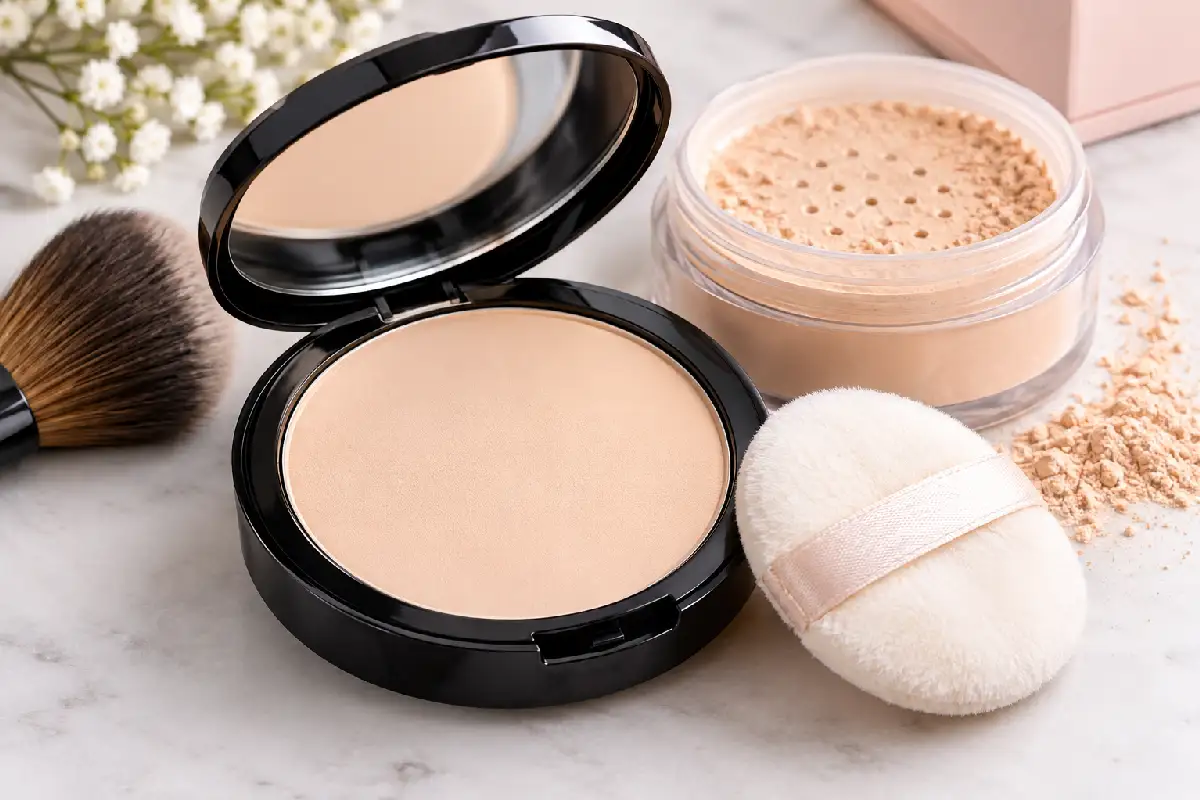
What is face powder? Face powder is a pressed, loose, or cake makeup product that is used on the face to set a makeup look, mattify, or set to the desired finish. Powder can be used over the top of foundation and concealer, but lighter powders can also be worn without foundation or concealer.
Face powders can offer a light coverage on the skin, or they can be used to add some coverage to your complexion, color correct your skin, or just create a soft focus effect.
A good powder should be able to sit on top of your foundation without feeling heavy on the skin. It doesn’t mean the face powder needs to be all over your face, just enough to set the makeup.
Main benefits of face powder
- Helps control excess shine and oil.
- Sets liquid and cream makeup.
- Can increase makeup longevity.
- Creates a smoother-looking finish.
- Reduces the appearance of excessive shine in photographs.
- Can provide light additional coverage.
- Helps prevent concealer from settling into fine lines when applied carefully.
| Powder benefit | What it does |
| Oil control | Absorbs some surface oil and reduces shine |
| Makeup setting | Helps foundation and concealer stay in place |
| Smoothing effect | Gives the complexion a more even-looking finish |
| Extra coverage | Some powders add sheer to medium coverage. |
| Finishing | Can create matte, natural, or soft-focus effects |
Types of Face Powder
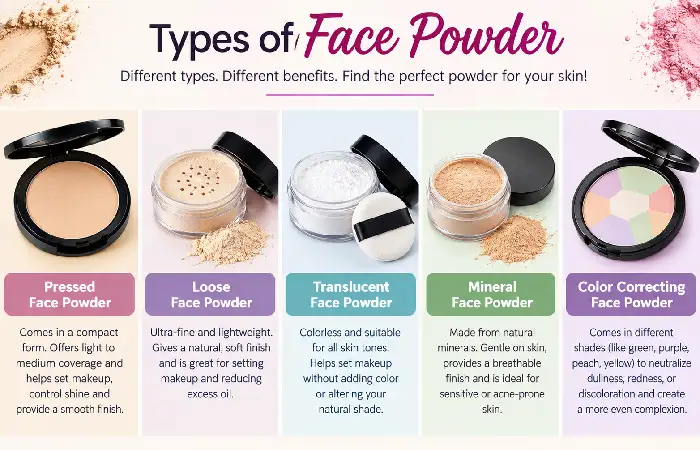
Not every face powder is designed to do the same job. Understanding the different types makes choosing one much easier.
Loose Powder
Loose powder is usually ground very finely and loosely stored in a container that has a sifter top. These powders are used to set foundations, mattify skin, and for techniques such as lightly baking under the eye area. Due to the particles being so small, loose powder can be used to achieve a soft and smooth appearance.
Pressed Powder
Use it with a brush or sponge; a pressed powder has a solid pan that allows you to take it with you for easy retouching throughout the day. Some pressed powders are opaque while others are sheer to the touch.
Translucent Powder
Translucent powder, as the name states, won’t usually give you much color at all. It can be helpful to set your makeup if you want to keep the color of your foundation intact. Just note that not all “translucent” powders appear without color on every skin tone!
Finishing Powder
Finishing powder is generally used toward the end of a makeup routine to refine the overall appearance. It may contain finely milled particles that create a soft-focus effect.
Setting Powder
Setting powder is primarily intended to help liquid or cream makeup stay in place. It is particularly useful around areas that become oily or where makeup tends to crease.
Loose Powder vs Pressed Powder
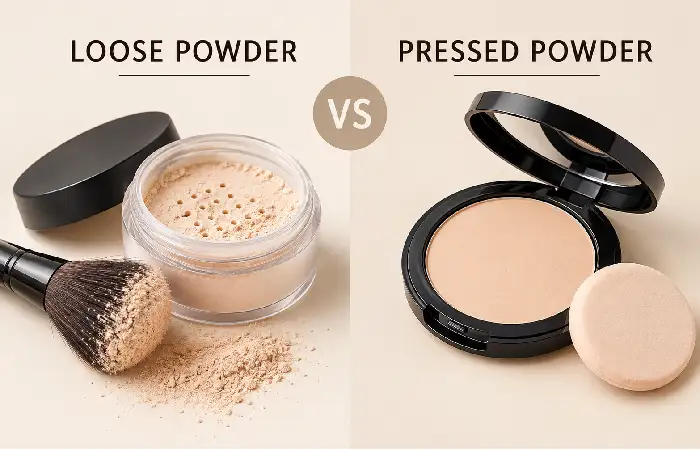
Both formulas can set makeup effectively, but they have different advantages.
| Feature | Loose Powder | Pressed Powder |
| Texture | Very fine and lightweight | Compact and solid |
| Best for | Setting makeup at home | Touch-ups and everyday use |
| Application | Brush, puff, or sponge | Brush or sponge |
| Portability | Less convenient | Very convenient |
| Coverage | Usually sheer | Can range from sheer to fuller |
| Oil control | Often excellent | Depends on formula |
If you are building your makeup at home and want a finely milled setting product, loose powder can be useful. If convenience matters most, pressed powder is easier to carry in a handbag or makeup pouch.
How to Apply Face Powder?
Don’t put face powder on the entire face-only where you need it. Pat on your skincare, and allow it to set. Now apply your foundation and concealer as usual. Then take a little bit of powder on a soft brush or puff.
To achieve a natural, casual look, pat or sweep powder onto oily skin areas: forehead, nose, and chin. Apply with a light touch – a little dab under the eyes. The more you apply, the more it emphasizes fine lines and rough skin.
Simple application steps
- Complete your foundation and concealer.
- Remove excess product from the brush or puff.
- Apply a thin layer to oily areas first.
- Lightly set the under-eye area if necessary.
- Blend around the edges so there are no visible patches.
- Add a little more only where makeup needs extra setting.
A useful trick is to press rather than repeatedly rub the powder into the skin. This helps avoid disturbing the foundation underneath.
How to Choose Face Powder?
Decide based on your skin type, your preferred finish, how much coverage you want, and how you wear your makeup.
For Oily Skin
Look for a lightweight powder that minimizes oil. Choose a matte or natural-matte consistency to counteract shine if you don’t want to layer on product.
For dry skin
Avoid automatically covering the whole face with a heavy matte powder. A finely milled, lightweight formula applied only where necessary can maintain a more comfortable appearance.
For combination skin
You may need different levels of powder in different areas. Set the oily T-zone while leaving naturally dry areas with little or no powder.
For sensitive skin
A simple formula with ingredients your skin already tolerates may be preferable. Patch testing new cosmetics can be useful if your skin tends to react easily.
| Skin type | Powder characteristics to consider |
| Oily | Oil-control, matte or natural-matte |
| Dry | Lightweight, finely milled, minimal powder |
| Combination | Targeted application |
| Normal | Most finishes can work. |
| Sensitive | Simple, well-tolerated formula |
Also pay attention to shade. A tinted powder should complement your complexion and foundation rather than creating a visibly lighter or darker layer.
How to Prevent Cakey Makeup?
How to avoid cakey makeup: Cakey makeup generally looks like patchiness, unevenness, a lot of texture, and a visible buildup of product. It’s worth noting that face powders themselves aren’t the cause: adding too much product, dry skin, and layering too many complexion products all play a role.
- Prep the skin well. If you have very dry skin, foundation and powders can stick to flaky patches, while excessive skincare layering before makeup can lead to sliding, pilling, and patchiness.
- Apply in a light layer and let your products set for a few minutes.
- When excess powder gathers around the nose and eyes, gently pat away the powder with a clean brush or press over a layer of powder with a partially damp makeup sponge.
Final tips for a natural finish
- Use less powder than you think you need.
- Concentrate powder on areas that actually become oily.
- Avoid repeatedly layering powder throughout the day.
- Choose a formula that suits your skin type.
- Do not use a very matte powder everywhere if your skin is dry.
- Blend carefully around the hairline and jaw.
- Use a clean brush or puff regularly.
Final Thoughts
The best face powder shouldn’t be obvious on skin. When you get the finish, tone, and application combo right, powder can assist your makeup in looking smoother, more uniform, and longer-lasting without turning the final look away from the appearance of your skin. How? Simple: Use the right powder for your skin type, don’t go overboard with application, and layer gradually only where necessary.