


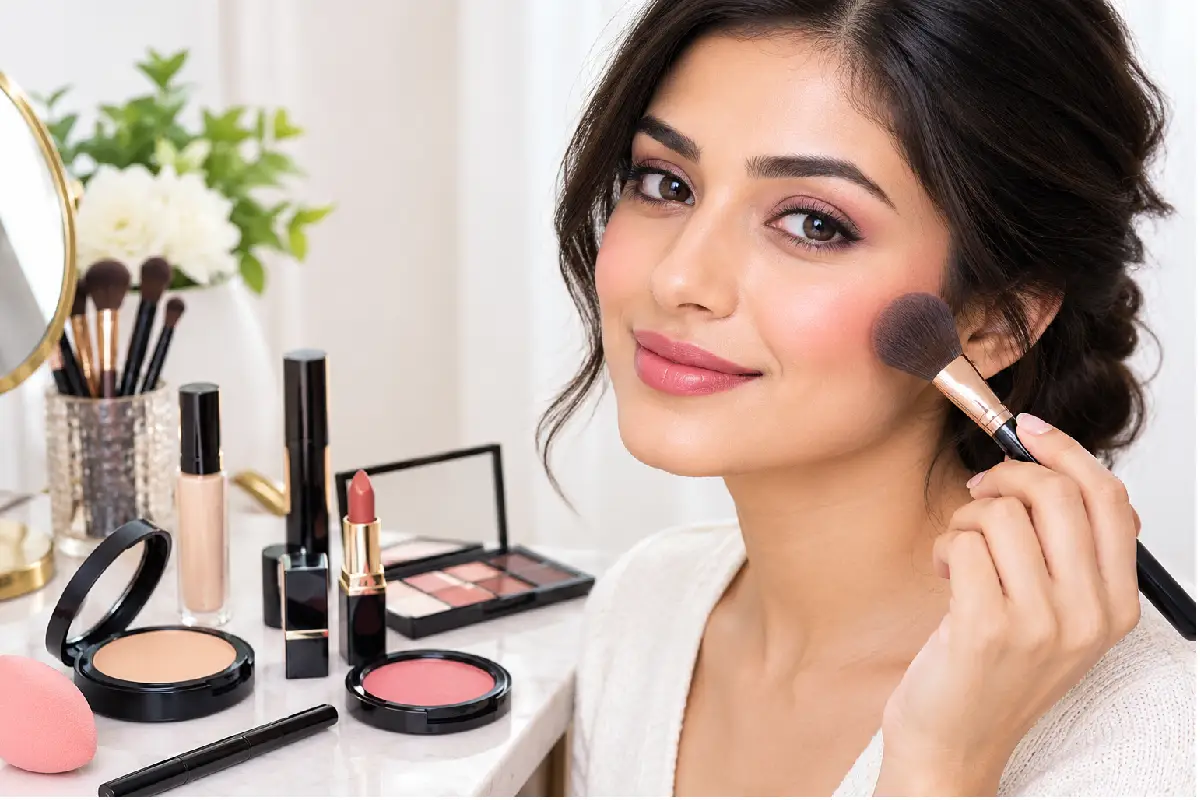
Face Makeup: A Complete Guide for Beginners
Last Updated: September 17, 2026
Face makeup is one of the easiest and most effective ways to create an even skin tone and bring out your best features. No matter if you’re new to makeup or just want a more simplified look for every day, now that you know the purpose of different makeup products and how to apply them in the correct order, you’re on your way! A face makeup routine doesn’t have to require a dozen different products; beginners can start with a few basic essentials and then learn some easy makeup application techniques and start experimenting with different finishes and colors.
What is Face Makeup?
Face makeup is a makeup item meant to enhance, improve, perfect, and add color to the skin on the face by concealing imperfections, adding color & vibrance, and contouring & defining. It can be as simple as a tinted moisturizer and concealer or as detailed as a full-face look comprising foundation, base, contour, blush, bronzer, and highlighter. It all depends on the makeup look you want to achieve and the amount of time that you want to spend.
Face makeup can be done in a natural, effortless manner with only a few products, or it can be more glam with 12 different products to add to your routine.
Main Purposes of Face Makeup
| Purpose | Common Products |
| Even out complexion | Foundation, skin tint |
| Cover imperfections | Concealer |
| Reduce shine | Setting powder |
| Add warmth | Bronzer |
| Add color | Blush |
| Define facial features | Contour |
| Add glow | Highlighter |
| Help makeup last | Setting spray |
When applying face makeup, use it to enhance your skin and not to substitute it. Make sure you have clean and moisturized skin, as the area will support makeup application.
Essential Face Makeup Products
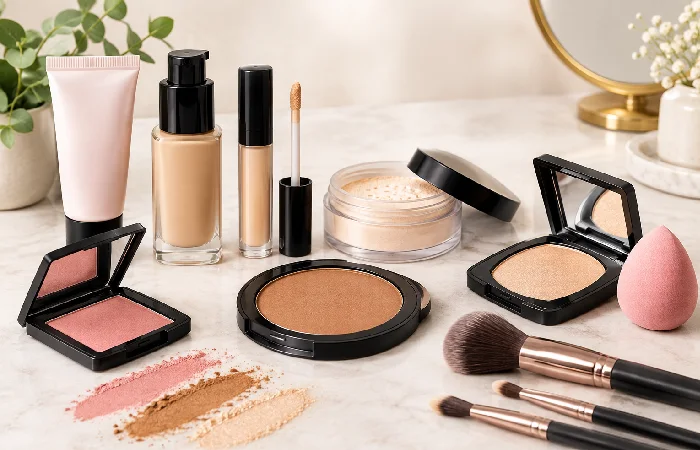
The Basics of Face Makeup: You don’t need all makeup products to have a flawless look. Newbies can start with a minimal collection over time with products that give the most visible outcomes.
1. Primer
Primer is a step prior to applying makeup to the face. It can be used to modify the surface of your skin to make your face appear more even and allow your makeup to last longer. Various primers are formulated to address specific issues like oiliness, dryness, enlarged pores, or unevenness of the skin’s texture.
Primer is not necessary. If your foundation performs well on your skin and your makeup stays in place all day, you may not need a primer.
2. Foundation
Foundation: Foundation helps to achieve a more uniform skin tone. Foundations come in liquid, cream, powder, and stick formulations. Foundation may help to achieve the following coverage:
- Sheer
- Light
- Medium
- Full
If you are just starting out, then a light- or medium-coverage, buildable foundation that you can apply where required may be easier to start with.
3. Concealer
While it can be used around the mouth and nose, it is also perfect for directly addressing particular problem areas, as it is more pigmented than foundation. It is also often applied underneath the eyes for an instant lift around the face, and to even out blemishes or pigmentation.
4. Setting Powder
Loose or pressed powder to set your makeup. Powder can minimize excess shine and set cream/liquid products. Use loose or pressed powder to set foundation or concealer. In generally people with oilier skin want to use powder on their t-zone areas that tend to shine while people with dry skin opt for less powder to appear more natural.
5. Blush
Blush adds life and color to the cheeks and face. This makeup product comes in powder, cream, liquid and stick. Cream and liquid blushes will have a dewy finish, while powder blush may be used for the traditional appearance or to create a softer matte finish.
6. Bronzer
Bronzer adds warmth to the complexion. Typically applied over the high points where the sun would otherwise naturally warm the face (e.g., forehead, cheeks, jaw line). Both bronzer and contour are used to add depth but don’t serve the same purpose.
Bronzer typically adds warmth to the face and contour is meant to mimic more defined shadows.
7. Contour
A contour product can be used to draw the eye to areas like the jawline, cheekbones, or sides of the nose. Contour is not necessary, especially for a beginner makeup user-using foundation, concealer, blush, and bronzer will already create some dimension.
8. Highlighter
Highlighter adds brightness to specific areas of the face, such as the tops of cheekbones, bridge of the nose, or cupid’s bow. For a more natural makeup for everyday, you can lightly add highlighter.
9. Setting Spray
A setting spray is usually used near the end of the makeup process and may be formulated to add moisture and smooth the powder (if used), to add a specific finish, or to extend the wear of makeup.
Beginner Face Makeup Kit
| Product | Beginner Priority | Main Purpose |
| Primer | Optional | Prepares the makeup surface |
| Foundation or skin tint | Essential | Evens complexion |
| Concealer | Essential | Targets specific areas |
| Powder | Useful | Controls shine and sets makeup |
| Blush | Essential | Adds cheek color |
| Bronzer | Optional | Adds warmth |
| Contour | Optional | Adds definition |
| Highlighter | Optional | Adds glow |
| Setting spray | Optional | Helps finish the look |
Face Makeup Step by Step
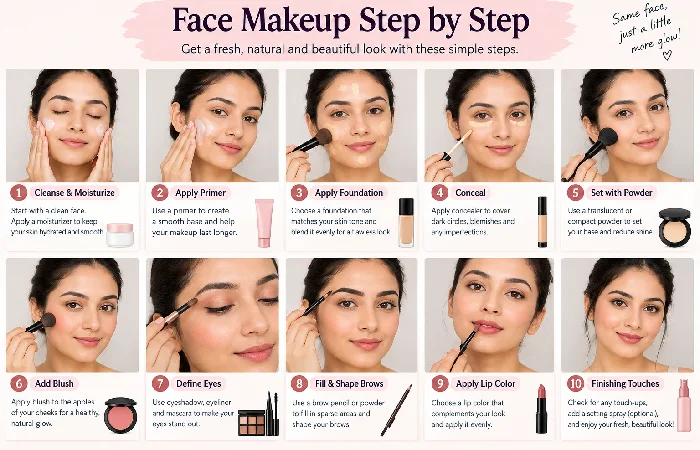
The sequence of applying your face makeup can influence how the makeup blends together and the overall finished result.
Step 1: Prime your skin.
Wash your face with a good cleanser and, as always, follow up with your usual skincare.
Moisturizers play an important role in your makeup routine, especially when your skin is dry and feeling tight. Don’t forget to add a sunblock to your skincare routine during the daytime. Wait for a while before you apply your makeup.
Step 2: Use a Primer.
If utilizing a primer or face lotion, it needs to be used after you apply an ultra-thin layer of the product to areas of the face where you want the key benefits of the primer.
Let it sit for a minute to enable it to settle before you use face items, such as a foundation.
Step 3: Apply Foundation/Complexion Tint:
Dot foundation on your face and blend it in well. Use your finger, a foundation sponge or a brush. Dot on a little bit of foundation to begin with then add other layers until you reach your desired coverage.
For the most part, you will only require a little product to make the look appear beautiful and unrefined.
Begin with a little and expand from that point until you get the look you like.
Step 4: Use Concealer
Apply concealer simply to areas where you desire additional coverage or brightness. Mix the sides to ensure you do not get a natural line in between the face with concealer and the face without it.
When you use concealer to hide a mark, very gently pat the item so you do not brush away all of the coverage you have actually already applied with the item.
Step 5: Rub in a small amount of powder on face areas prone to creases or sparkling in the sunlight, if essential.
Also, avoid applying a large quantity of powder to the entire face by utilizing your favored technique; face powder needs to be figured out by your skin type and also desired impact.
Step 6: Make use of blush.
Add a little blush to the cheeks and also delight in your look. When applying makeup, apply a little bit at a time. It is much easier to add extra when required; otherwise, you may have a hard time taking away excess makeup.
Step 7: Make use of bronzer to provide a cozy look
Make use of bronzer to provide a cozy look by utilizing a tiny amount around the forehead, cheek area, as well as jawline.
Blend correctly so you look natural.
Step 8: Use contour
Use contour for structure if you are using makeup to contour the face to make it look healthier. If you are making use of makeup, use a percentage to look natural.
Step 9: Use highlighter
Use highlighter to accomplish a natural appearance by putting a percentage of highlighter on selected high points of the face.
Do not put more than a percentage on the face to get a natural appearance.
Step 10: Use a mattifying product
If you are using make-up and want to mattify the face, use a mattifying product. In some cases, you can get a natural look from using a lot of highlighters. Use the item according to the producer’s directions, and let your face completely dry before you do anything extra with it.
Basic Application Order
| Stage | Product |
| 1 | Skincare and sunscreen |
| 2 | Primer |
| 3 | Foundation or skin tint |
| 4 | Concealer |
| 5 | Setting powder |
| 6 | Bronzer |
| 7 | Contour |
| 8 | Blush |
| 9 | Highlighter |
| 10 | Setting spray |
Certain products are best applied first, although the precise order may differ, especially when working with powder and cream products. An easy rule of thumb: Put liquid and cream products on first, then powders.
How to Select Face Makeup Products?
Makeup can be very perplexing because it comes in many different formulas, finishes, shades and coverage levels.
Consider Coverage
| Coverage | Appearance | Suitable For |
| Sheer | Very natural | Everyday makeup |
| Light | Skin remains visible | Minimal makeup |
| Medium | More even complexion | Everyday or occasion makeup |
| Full | Maximum coverage | Glamorous looks or specific coverage needs |
Consider Finish
Common foundation and complexion finishes include:
- Matte
- Natural
- Satin
- Dewy
- Radiant
Look at the Formula
Matte formulas tend to minimize shine, while dewier formulas can give a more luminous look. Natural and satin tend to sit between them.
Try the Formula
Certain formulas may behave differently on the skin.
Liquid makeup is available in many finishes, and cream products can give a rich, blendable texture. Powder formulas are great for controlling shine and can be especially useful for those who prefer a lightweight texture.
Match the foundation to the face carefully
Think about skin depth and undertone when selecting a foundation. Choosing a foundation that’s only similar to the surface color but not the right undertone may look totally different from the neck.
Test a shade along the jawline whenever possible and view it in natural light.
Face Makeup for Different Skin Types
You may want to explore different makeup textures and finishes based on your skin type. For dry skin
For dry skin,
Consider skincare and makeup base products with a natural or radiant finish. Helpful considerations include:
- Moisturizing before makeup
- Choosing hydrating formulas
- Using thin layers
- Avoiding excessive powder
- Applying cream blush for a fresh finish
When makeup keeps putting dry spots in the same place, more foundation usually isn’t the answer. Skin prep, lighter application.
Oily Skin
With an oily complexion, skin will be extra shiny, especially on the forehead, nose, and chin.
Suggestions:
- Use lighter coverage products
- Use primer on problem areas
- Set oily areas with powder
- Select long-wearing products
Use powder or blotting products as needed
Heavy makeup isn’t always going to keep oil at bay.
Combination Skin
With a combination skin type, different areas may need different treatments. For instance, there may be oilier areas with drier or normal-looking cheeks.
Strategize your use of products instead of using the same application all over your face. Heavy powder on oily zones, lightweight on drier areas.
Normal Skin
Most makeup formulas can be tolerated with normal skin. Build coverage, determine your desired finish, and choose what feels comfortable and best meets your needs.
Sensitive Skin
With sensitive skin, try a new product sparingly. Read labels, use it as directed, and don’t apply it where skin is damaged or in a compromised condition unless told to do so.
Skin Type and Makeup Approach
| Skin Type | Useful Makeup Approach |
| Dry | Hydrating formulas, minimal powder |
| Oily | Lightweight formulas, targeted powder |
| Combination | Different products for different areas |
| Normal | Choose based on finish and preference |
| Sensitive | Simple routine and careful product selection |
Face Makeup According to Skin Tone
Color undertones: Skin tone relates to the lightness or darkness of your skin. The undertone is the pigment that exists underneath the surface.
- Typical undertones
- Warm Undertones
- Cool Undertones
- Neutral undertones
Your skin will have a slightly more yellow appearance with tan or even gold splotches.
Blush Colors for Different Skin Tones: Cool or bluish skin tones will have cool undertones, which may include red.
Neutral undertones: Your skin will have a neutral color that may be nearly impossible to distinguish from pinkish or yellow tones.
For neutral skin tones, neutral foundation shades are a natural choice.
Choosing Blush by Skin Depth
| Complexion Depth | Blush Colors to Explore |
| Fair | Soft pink, peach, rose |
| Light-medium | Peach, coral, rose |
| Medium | Warm pink, terracotta, berry |
| Deep | Berry, plum, terracotta, rich coral |
These are starting points rather than strict rules. Personal preference and the intensity of the product also influence the final appearance.
Different Types of Face Makeup
Below are different types of face makeup based on purpose and finish.
Natural makeup
Natural makeup aims to achieve an even, fresh, healthy complexion without a heavy-looking coverage. A tint, concealer, blush, and a touch of highlighter may suffice.
Everyday makeup
Everyday makeup is usually set to be practical and comfortable for daily work. A foundation or skin tint, concealer, powders, blush, and lip color may constitute the everyday makeup look.
Minimal makeup
Minimal makeup involves using the minimal number of products in makeup. For instance, concealer may only be used for precise spots rather than an all-over foundation.
Soft glam makeup
Soft glam typically uses more obvious coverage for the complexion with seamless blending between different formulas and products. Medium coverage, bronzer, blush, light contouring, and limited highlighting are some features.
Full glam makeup
Full glam is a slightly more thoughtful application of coverage, definition, and finishing products. It involves more deliberate products and application for the complexion. Any powders, highlighters, and contour products can be used to achieve a full glam look.
Dewy makeup
Dewy makeup aims to create a luminous appearance. Using a product that hydrates, restores the skin, and enhances the skin’s glow will help to create this look. You can also use a cream or liquid blush or highlighter.
Matte makeup
Matte makeup is for making the patches of the face that have a glowy or shinier appearance less apparent. A powder and/or mattifying product can be used
Face Makeup Styles Compared
| Makeup Type | Coverage | Finish | Typical Use |
| Natural | Light | Natural | Daily |
| Minimal | Light | Natural | Quick routines |
| Everyday | Light-medium | Natural/satin | Regular activities |
| Soft glam | Medium | Satin/radiant | Events |
| Full glam | Medium-full | Matte/radiant | Formal occasions |
| Dewy | Light-medium | Radiant | Fresh looks |
| Matte | Medium-full | Matte | Long-wear or defined looks |
Face Makeup for Beginners
Many newbies spend a lot of money purchasing numerous items before having learned the basics. Practice a simple routine that is easy to do and that will give you great results.
Start With Five Products
A practical beginner kit can include:
- Foundation or skin tint
- Concealer
- Blush
- Powder
- Bronzer
If you want to, you can always add additional items like primer, highlighter, setting spray, and contour later.
Learn Blending First
Blending is one of the most important face makeup skills. Instead of repeatedly adding product, spend time softening the edges of each layer. The goal is for products to transition smoothly into the surrounding complexion.
Use Less Product
A common beginner mistake is assuming more product creates a better result. In many cases, starting with a small amount provides greater control. You can always build coverage gradually.
Use the Right Tools
Choose the Right Applicator: Many makeup items can be used with your fingers, though a brush or sponge can give you more precision.
| Tool | Common Uses |
| Foundation brush | Foundation |
| Makeup sponge | Blending foundation and concealer |
| Powder brush | Setting powder |
| Blush brush | Blush |
| Angled brush | Contour or bronzer |
| Small highlighting brush | Highlighter |
Clean the tools you use to apply makeup regularly, according to the makeup products you are using.
We all need practice
practice makes perfect – and that applies to beauty too.
Testing in All Lights
Before you set your face, be sure to see what you look like in all sorts of light, including natural light.
Have Several Tricks Up Your Sleeve
Trying out several makeup techniques will take you more time than having 1 or 2 backup looks in your repertoire. A five-minute makeup look for beginners might be primer, SPF, face tint, concealer, blush, and powder.
Typical Face Problems: Even professional makeup artists sometimes have issues.
Common Face Makeup Problems
If you’re creating a “Face Makeup – Common Problems” section, these are the main issues worth covering:
| Common Problem | Why It Happens | Simple Solution |
| Foundation Looks Cakey | Too much product, dry skin, or heavy layers | Use thin layers and moisturize before makeup |
| Foundation Separates | Excess oil, incompatible products, or skincare underneath | Let skincare absorb and use products with compatible formulas |
| Makeup Looks Patchy | Uneven skin texture or poorly blended products | Prep the skin and blend foundation evenly |
| Foundation Oxidizes | Formula reacts with skin oils or air | Test the shade and allow it to settle before choosing |
| Concealer Creases | Too much product or natural facial movement | Apply a small amount and lightly set with powder |
| Makeup Becomes Oily | Excess sebum, especially in the T-zone | Use lightweight products and set oily areas |
| Makeup Looks Too Dry | Dehydrated skin or excessive powder | Moisturize well and reduce powder |
| Wrong Foundation Shade | Shade tested under unsuitable lighting | Test along the jawline in natural light |
| Blush Looks Too Strong | Too much pigment applied at once | Start with a small amount and build gradually |
| Contour Looks Harsh | Dark product or insufficient blending | Use a softer shade and blend the edges |
| Powder Looks Heavy | Too much powder or repeated touch-ups | Apply a thin layer only where needed |
| Makeup Fades Quickly | Oil, sweat, humidity, or inadequate preparation | Use a suitable primer and setting spray |
| Flashback in Photos | Some makeup products contain reflective ingredients | Check products before photography or events |
| Skin Texture Looks More Visible | Heavy makeup settles into pores and fine lines | Use lighter layers and avoid over-powdering |
| Makeup Transfers | Foundation or concealer hasn’t set properly | Allow layers to dry and lightly set them |
Frequently Asked Questions About Face Makeup
What should a beginner put on face makeup?
You don’t have to have a professional makeup kit to get a great face makeup routine. For a beginner, you want a basic face makeup kit with foundation/skin tint, concealer, blush, powder, and maybe a bronzer.
How do I start face makeup?
I suggest you begin your face makeup with these steps:
1. Primer – optional
2. Tinted moisturizer/ Skin Tint
3. Foundation
4. Concealer
5. Face powder
6. Bronzer (contour)
7. Blush – optional
How should I start my foundation?
For many people, they put on foundation first and then move on to the concealer, because then you’ll be able to see exactly how much coverage you need. Others use concealer first (under their foundation), or some techniques.
What does a beginner need for makeup?
- Foundation, tinted moisturizer, or CC cream.
- Concealer.
- Mascara.
- Lip balm, gloss, or lipstick.
- Brow gel or pencil.
- Optional blush.
- Optional eyeshadow.
How do I know my foundation color?
Use your face depth and undertones when choosing your foundation and tests shades along your jawline where possible with natural light, and the color that disappears into the skin is your correct match.
How much foundation do I need?
Use a little bit of product in thin layers and build it up over the areas you want the most coverage. Every product will be slightly different in what it needs and how much coverage you require.
Do I need makeup every day?
No, you don’t have to wear makeup; you can wear no makeup, foundation only, a skin tint, concealer, or foundation and concealer, or makeup.
Why put foundation second?
Most people put on foundation first, then concealer. Some people put on concealer first, especially around their eyes.
What is the difference between contour and bronzer?
It all comes down to the look you’re going for — bronzer will leave your face looking luminous, while contour will help you sculpt and give your face depth and dimension.
When should I wear powder?
If you need to get rid of shine or set your face and makeup products like liquid and cream foundation and concealers, then you need powder but if you have dry skin you may not need it.
How do I look more natural?
Light layers, choosing colours that match your skin tone and undertone, blending well and not using too much product are the keys to a natural look.
How do I stop my face from looking cakey?
Prepare skin, avoid applying too much product, build your coverage and set makeup carefully with powder. Use face products suited to your skin type for best results.
Can I apply face makeup with my fingers?
Yes, some products can be applied with fingers in addition to a sponge or brush.
Final Words
Face makeup doesn’t have to be a complicated step to achieve a gorgeous face look. The key to simple face makeup is to learn to use your products sparingly and to blend them in thoroughly. Just a few face makeup products can be applied immediately; you don’t need to buy more until you are comfortable with your existing products. Once you have a great face makeup, you can add contour, highlight, bronzer, blush, and many other finishes. Just as with makeup on your face, your face makeup routine is a personal decision; just ensure it is right for your skin, budget, and abilities.