


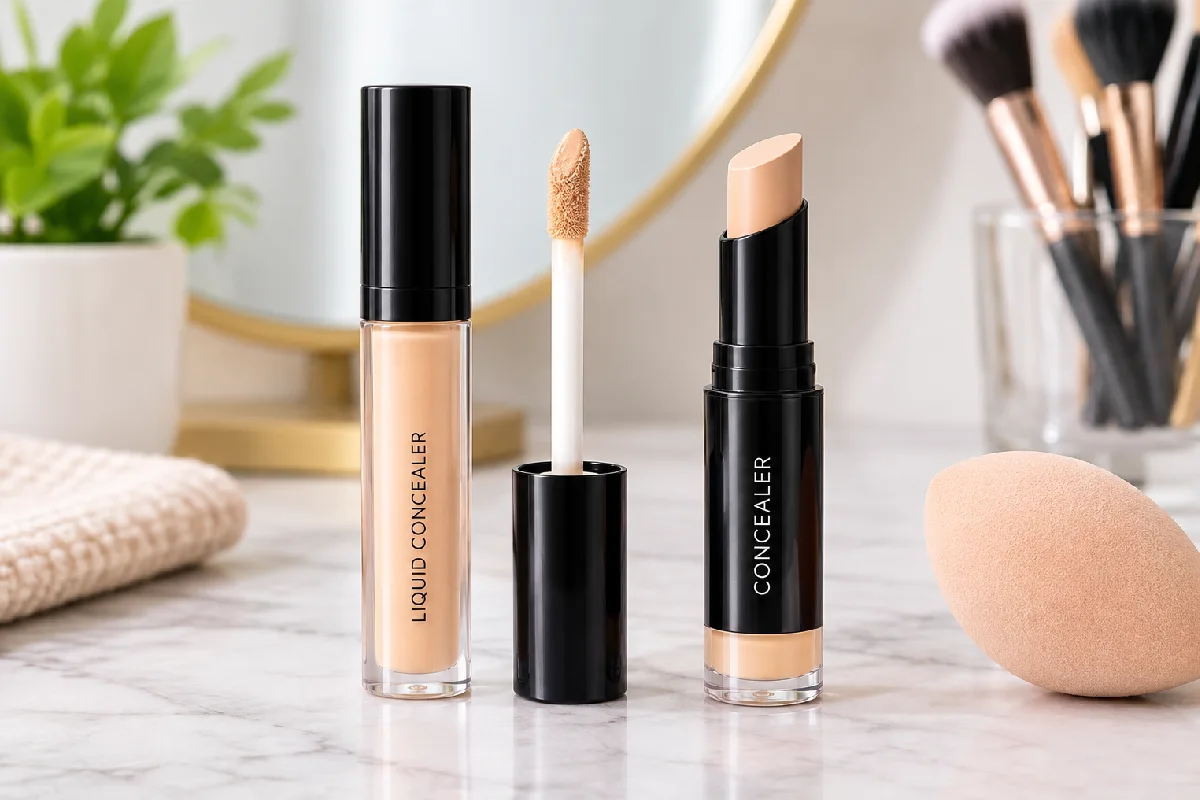
Concealer: A Complete Guide to Choosing, Matching, and Applying Concealer
Last Updated: September 18, 2026
Concealer is the one thing that can really change your makeup for the better. Concealer can help cover and highlight, mask and disguise certain areas of your face, hide the dark circles under your eyes, and so much more. And unlike foundation that is generally applied over large areas of the skin, concealer is used in the areas where you need it most.
It’s not as simple as purchasing the lightest shade or applying a heavier layer. The trick is suited to your skin’s tone, undertone, where you plan to apply it, your skin type, and your coverage requirements.
1. What Is Concealer?
Concealer makeup is used to hide pimples, age spots, black circles, Bumps, pores, and Other blemishes that are Conspicuous on the Skin. Concealer is Thicker than Foundation; it is usually used to cover only small areas.
Most concealers are used on areas such as around the eyes and mouth, on blemishes, around the nose, and areas of irregular pigmentation. For highlighting, you can use a Concealer to add brightness to the middle of the face or as a natural kind of shadow.
Concealers are available in a range of consistencies, including liquid, crème, stick, and pot, and a range of finishes from matte to natural or luminous.
| Concealer Feature | What It Means |
| Coverage | How much discoloration or imperfection it can hide |
| Finish | How the product looks after application |
| Texture | How thick, creamy, or lightweight it feels. |
| Undertone | The subtle warm, cool, or neutral tone underneath your skin color |
| Longevity | How well it stays in place throughout the day |
The oversight to avoid is assuming all concealers work for everyone. What may be a lightweight, flawlessly appearing concealer under the eyes might not work as well when trying to hide a blemish that is greasy.
2. Concealer vs Foundation
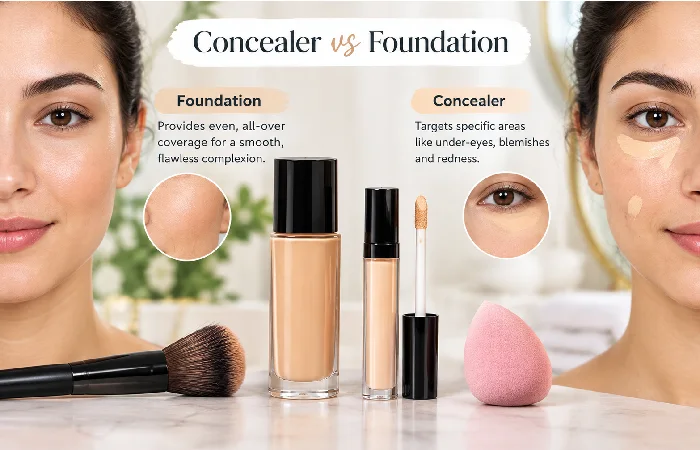
While foundation and concealer may be interchangeable in some situations, they serve different purposes. Foundation helps to even out the appearance of the skin across the face, while concealer generally is used to hide specific areas or add brightness.
Traditionally, you tend to apply foundation over larger parts of the face, while concealer is dabbed onto specific areas (usually after applying foundation) so you do not have to use a high-coverage product over the whole face.
| Difference | Concealer | Foundation |
| Main purpose | Targeted coverage and brightening | Overall complexion evening |
| Coverage | Usually medium to high in concentrated areas | Light to full |
| Application | Smaller areas | Larger areas |
| Common uses | Dark circles, spots, redness | Overall skin tone |
| Texture | Often thicker or more pigmented | Usually more spreadable |
Using both does not mean you need heavy makeup. In fact, applying foundation sparingly and adding concealer only where needed can create a more natural-looking finish.
3. Types of Concealer
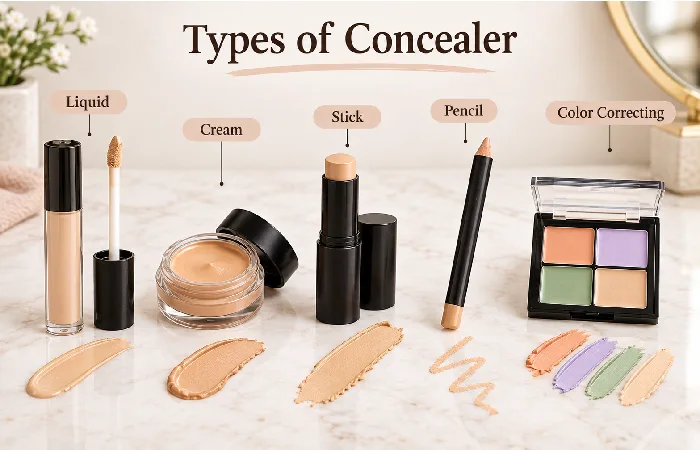
There isn’t one best type of concealer for all skin types or for every use. There are various types of concealers formulated for different needs.
Liquid Concealer
Liquid is possibly the most versatile. It can be light to use daily, but build it for more coverage. And it is definitely a good choice for your eye area as many liquids blend out effortlessly and aren’t too heavy.
Cream Concealer
Cream concealers, on the other hand, will be thicker and can offer more coverage. This one may do the trick if you need to hide pigmentation or a noticeable spot.
Stick Concealer
Can I Use Stick Concealer Under Eyes? No, stick concealers are small and portable. They are also thick, making them suitable for application over specific areas, although some formulas can be a little dry.
Color-Correcting Concealer
Color correctors even out and cancel out any problematic colors prior to regular concealer. For instance, a peach- or orange-based concealer can be used to offset blue- or purple-appearing discoloration, and a green-based concealer can be used to cancel out any visible redness. Don’t overdo it – most color correction is only a light layer.
4. How to Choose Concealer Shade?
This is all a lot simpler when you’ve already thought about what you are trying to achieve with your concealer. When you’re applying concealer to cover a spot, the most natural way of covering a blemish is to select a color that is close to your skin color. To reflect and lift the darkness below your eyes, a color lighter than your skin color is likely to be the best.
Your undertone matters too.
- Warm undertones: Often appear golden, yellow, or peachy.
- Cool undertones: Often have pink, red, or bluish hints.
- Neutral undertones: Tend to sit somewhere between warm and cool.
For dark circles, shade selection may require an additional step. If the darkness looks blue or purple, a suitable peachy corrector may help neutralize it before concealer.
| Goal | Shade Approach |
| Cover acne or spots | Close to your skin tone |
| Cover redness | Skin-matching concealer or suitable corrector |
| Brighten under eyes | Slightly lighter than your complexion |
| Correct dark circles | Use a suitable color corrector first. |
| Highlight | A little lighter, used sparingly |
Whenever you can, try out concealer in natural daylight. The lighting at a counter can alter the way a shade looks compared with the real world.
5. How to Use Concealer?
As a guideline, on a clean, moisturized face, it’s always best to use sparing amounts of concealer. Build up gradually. Spot Conceal: Gently stipple with a small fluffy make-up brush, wet make-up sponge, or clean fingertip.
Under Eye Circles: Dot sparingly – don’t fully conceal dark shadows underneath the eye area.
Lightly drag out with a damp make-up sponge or clean fingertip to blend in. Blemish: Dot using a clean fingertip or makeup brush along edges and gently tap in to blend.
A simple application order is:
Moisturizer → primer, if desired → foundation → concealer → setting powder, if needed.
Remember that more product does not automatically mean better coverage. Thin layers usually look more natural and are less likely to become cakey.
6. Concealer for Dark Circles
There are many different causes and types of dark circles, so the makeup techniques are subjective. A peach or salmon corrector can cancel out blue, purple, or grayish circles. Strawberry, Red-Orange. If your darkness is very deep, super cool, and undertoned, go for an orange or red-orange. Use a concealer that matches your skin or a shade lighter to cancel out the darkness.
The eye area is designed to flex and move with a smile and a blink, and using too much product underneath your eye can make it more apparent as the day wears on. When it comes to “no-makeup” makeup, only those darkest areas need to be covered – not your entire eye.
7. How to Prevent Concealer From Creasing?
Creasing happens when concealer settles into natural folds and fine lines, especially around the eyes. Some movement is completely normal, but the effect can be reduced.
Use Less Product
One of the simplest solutions is using less concealer. A thick layer gives creases more product to collect.
Moisturize First
Dry under-eye skin can make makeup appear uneven. Apply a lightweight moisturizer or eye-area product and allow it to absorb before applying makeup.
Blend Thoroughly
Take a moment to blend the edges. Uneven layers can become more noticeable as the makeup wears.
Set Strategically
Melt Away: When concealer drifts throughout the day, some loose setting powder on a hand of a generous rub can keep it in place. Lightly press the powder on under the eye without pushing on the skin for the best results. Look Over. If concealer sort of creased into a fine line, use your finger to softly tap it away before setting.
Final Thoughts
Concealer is one of those makeup products where quite a bit of the magic is in the application and not just the product. Using the correct shade, blended coverage, and product consistency can take or break your final look. To look even more gorgeous with everyday makeup, start by dotting a small amount of concealer on your face and build coverage just where needed.