


The Complete Guide to Face Cleanser: Choosing the Best Cleanser for Every Skin Type
 Khizrana Begum
Beauty & Lifestyle Writer
Khizrana Begum writes clear and reader-friendly content covering beauty, lifestyle and related topics.
Read Full Bio of Author →
Khizrana Begum
Beauty & Lifestyle Writer
Khizrana Begum writes clear and reader-friendly content covering beauty, lifestyle and related topics.
Read Full Bio of Author →
 Sameena Begum
Health, Technology & Digital Content Reviewer
Sameena Begum reviews content for clarity, accuracy and overall reader usefulness.
Read Full Bio of Reviewer →
Sameena Begum
Health, Technology & Digital Content Reviewer
Sameena Begum reviews content for clarity, accuracy and overall reader usefulness.
Read Full Bio of Reviewer →
The Complete Guide to Face Cleanser: The face cleanser is perhaps the most crucial piece of skincare you might ever want to acquire; irrespective of how pricey, your moisturizer or serum are, what matters is that you start with a spotless skin. When properly selected, it not only eliminates make-up, dirt, oil and sweat, but as well, helps remove pollutants accumulated in the atmosphere and in the process it is sure not to ruin your skin barrier.
Many of us fall under the snare of suffering acne, dryness, inflammation, oiliness or a dulled appearance of skin, mostly owing to not cleansing our skin and make-ups properly. In this detailed write-up we’re discussing about all that comprises a cleanser so you acquire optimum results when using a face wash.
❝
This article is a part of
Cleansing Guide
What is a face cleanser?
A face cleanser is skincare used to wash away impurities and debris from your face’s skin. As opposed to natural bar cleaning products, the skin cleansers have been specifically created to cleans the facial skin while not taking away vital oils which the latter generally secrete.
So, a face cleanser primarily aims at – cleansing skin dirt as well as sweat, deleting oil and the dead skin, take out grime and protectants and last but not the least, make your facial skin ready for other important product applications; this eventually makes your skin feel comfy, refreshed and balanced as not taut and irritated.
Face Cleanser vs Face Wash
Many people use these terms interchangeably, but there are subtle differences.
| Product | Main Purpose |
| Face Cleanser | Gently removes impurities while maintaining moisture |
| Face Wash | Usually creates foam and provides deeper cleansing |
In reality, many modern products function as both a cleanser and a face wash.
Why Cleansing is the Foundation of Healthy Skin?
Healthy skin starts with proper cleansing. Throughout the day, your skin collects:
- Sweat
- Oil
- Dead skin cells
- Dust
- Pollution particles
- Bacteria
- Makeup residue
- Sunscreen buildup
These residues not only make the skin dirty they may cause skin diseases as they block the pore on your face.
The Benefits Of Using Clean Skin Before Other cosmetic products:-
Clean skin allows:
- Better absorption of serums
- More effective moisturizers
- Improved sunscreen performance
- Reduced acne breakouts
- Healthier skin barrier function
What happens to your skin when you don’t wash it ?
“You basically don’t rinse away pore-clogging oily residue, dead skin cell build-up in the pores, bacteria to feed off that, environmental pollutants like smog and smoke. You may find your skin has less-than-ideal cell turn over, leading to a lack luster complexion and even premature aging as those irritating pollutants sit there on the skin longer” says our expert dermatologist.
Clogged pores – where dirty pores trap oil and dead skin buildup.
Bacteria – Bacteria are free to replicate and multiply in dirty pores.
Dull looking skin – A build up of dead skin on the surface of your skin can prevent your natural glow. Dull skin also leads to your face looking prematurely aged.
How Face Cleansers Work?
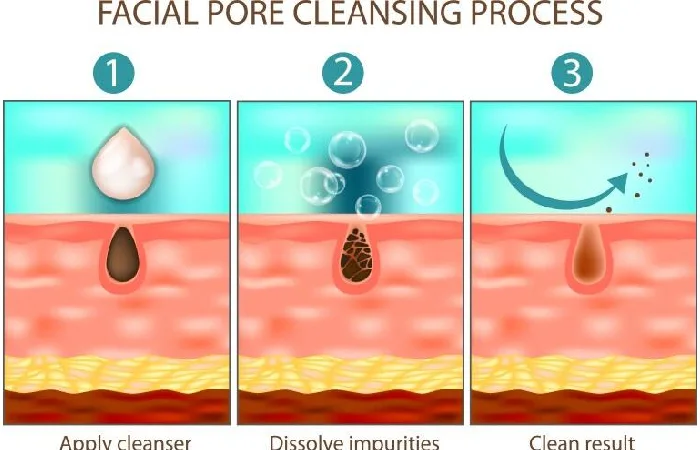
If you are dealing with frequent breakouts, choosing a cleanser suited to your skin concerns can make your routine more targeted. Explore our face cleanser for acne-prone skin guide for practical cleansing tips.
The basic mechanics of a face wash include the help of cleasning ingredients called surfactants.
What are surfactants?
Ingredients that connect both the oil and water elements so both can get clean at the same time.
This allows cleansers to:
- Lift dirt from skin
- Break down oil
- Remove makeup
- Wash impurities away with water
The Science Behind Cleansing
When you massage cleanser onto your face:
- Surfactants surround oil particles
- Dirt becomes suspended
- Water rinses away impurities
This process cleans the skin without aggressive scrubbing.
Why pH Matters?
Your healthy skin should have a pH range of roughly 4.7 – 5.5.
Using a cleanser at a balanced pH defends your skin barrier, prevents irritation, and retains moisture.
The texture of a cleanser can also affect how it feels on the skin and how easily it fits into your daily routine. If you prefer a lightweight formula, explore our gel face cleanser guide for more information.
Using a face cleanser every day has many advantages both immediate and long-term.
It cleanses daily buildup.
Every day, your skin is exposed to pollutants and dirt and sweat. Cleansing prevents the dirt from becoming an irritation on the skin
Helps Prevent Acne
Keeping pores clear reduces the likelihood of:
- Blackheads
- Whiteheads
- Pimples
- Congested pores
Optimizes The Skin barrier
Those with dry or dehydrated skin may prefer a richer cleansing experience that helps avoid an overly tight feeling after washing. Our cream face cleanser guide explains what to consider when choosing this type of cleanser.
A Suitable face cleanser does not deprive the skin of its moist, balancing the pH.
Optimal Product Absorption
When dirt is removed from the surface of the face, it easily absorbs products applied topically.
Creates A More luminous Complexion
By washing down dull dead skins cells or congestion on the surface area of the face, this reveals newer younger looking skin tones.
Minimizes Surface Excess Oil
A face cleanser removes excess surface oil without over-drying your skin by disrupting the sebaceous glands that produce oil.
Boosts skin texture.
Skin appears smoother as a result of routine face cleanser usage over time.
What are Different Type of Face Cleansers ?
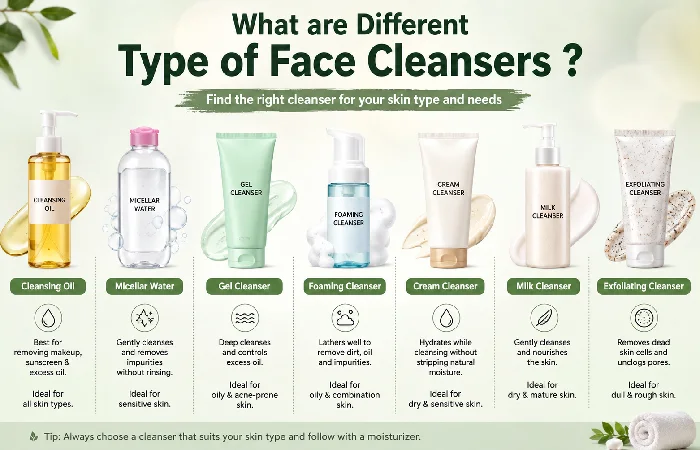
Foaming cleansers can provide a refreshing cleansing experience and are available in formulas designed for different skin types. Learn more through our Gel Face Cleansers
Gel face cleanser have a silky-light transparent feel. Best For Benefits cleansers make lots of lather. Best For Benefits Potential Drawback Some formulas can be drying. Witch has creamy, luxurious and hydrating textures. If you wear makeup or sunscreen regularly, a single cleansing step may not always feel sufficient. Our double cleansing guide explains how this two-step approach can be incorporated into a skincare routine. Best For Benefits These provide extremely gentle cleansing. Best For Oil cleansers breakdown make-up & sunscreen. Benefits Ideal For Nearly all skin types. Micellar Water These cleansing micro-particles is micellar water. Benefits Best For I starts off in balm form and melts down to an oil. Benefits Activated with water before use. Benefits Factors such as your skin type will help you get there when selecting a cleanser . Figure Out Your Skin Type: This is essential: Your answers help determine the ideal cleanser. People who: may require deeper cleansing. There are distinct cleaning demands for all forms of skin. Facade Wash for Oily Skin Sebum overflow creates facial skin oily. Sensitive skin may react more easily to certain ingredients, fragrances, or overly aggressive cleansing. If your skin needs a gentler approach, explore our face cleanser guide for sensitive skin for helpful tips. Look For Avoid Dry Skin cleanser What helps dry skin? Dry skin is defined by having a lack of both the moisture and oils to adequately protect itself. Look For Avoid For Combined Skin: This facial skin type have a dry as well as a greasy part. Best Choices Sensitive skin tends to react. Look For Avoid Face Cleanser for aging skin As skin matures it tends to get drier. Look For Acne-Prone Skin Skincare for acne-prone skin should focus on clearing pore blockages. Key Ingredients Redness and Rosacea Soothes, calms and gently cleanses the skin. Recommended ingredients Hyperpigmentation Though a cleanser will not help to eliminate dark spots by themselves, certain ingredients can provide support. Look For Skin Dehydrated Dehydrated Skin refers to skin that needs water Best Ingredients Dull Skin Brightening cleansers could aid in removing dead skin residue. Useful ingredients The best ingredients to look for depend on what you want to achieve for your skin. Benefits One of the most effective humectants. Benefits Essential lipids naturally found in skin. Benefits A beta hydroxy acid. Benefits A versatile skincare ingredient. Benefits Known for soothing irritated skin. Benefits Also known as Pro-Vitamin B5. Benefits An antioxidant. Protects skin, Soothes irritation. Some ingredients may be problematic for various skin types. Overuse of Fragrance. Fragrance is a common irritant. Risk High Levels of Alcohol Some alcohols can dry the skin. Potential Problems Harsh Physical Scrubs Large abrasive particles may create micro-tears. Examples Strong Essential Oils These may irritate sensitive skin. Examples include: There’s not much point buying the top-quality cleansers if you don’t apply it right – this guide will change the way you wash your face. You don’t want to transfer nasty bacteria onto your face. Try to avoid super hot water, as it can compromise your skin barrier. Apply to clean hands and use enough product to cover your face – a 10 cent coin is usually sufficient. Use circular motions for 60 seconds 5. Rinse Thoroughly Remove all residue. Use a clean towel. Avoid rubbing. Lock in hydration immediately. “You can’t cleanse the same way both day and night,” he says. Morning cleansing removes: Morning Routine Example Nighttime cleansing is more important. It removes: Evening Routine Example Double cleansing involves two cleansing steps. Step One Use an oil-based cleanser. Removes Step Two Use a water-based cleanser. Removes Double cleansing is especially helpful if you: Some people with: may prefer a single gentle cleanse. Many skincare problems result from cleansing mistakes. Overwashing Washing too often can damage the skin barrier. Signs Using Hot Water Hot water strips natural oils. Scrubbing Too Hard Intensive cleansing may be irritating. Choosing the Wrong Cleanser Applying the wrong formula makes skin worse. Skipping Night Cleansing Wearing makeup and sunscreen to bed can cause breakouts. Not Moisturizing After Cleansing Always hydrate after cleansing. Using Dirty Towels Dirty towels can spread bacteria onto the skin. Frequency is determined by skin type and lifestyle. Most People Cleansing twice daily is most effective. Morning Washes away the residual debris accumulated throughout the night. Evening Removes daily pollutants. Oily Skin Typically benefits from cleansing twice a day. Dry Skin Some people might choose water in the morning and cleanser in the evening. After Exercise Always wash up after sweating profusely. 1. Myth: Squeaky Clean Skin Is Healthy Fact: Clean that squeaks usually means overly cleans. 2. Myth: You don’t need to moisturize If You Have Oily skin Fact: Moisturizer helps any skin type. 3. Myth: Your acne IS related to ‘Dirty skin’ FactHormone imbalances, sebum(oil), an infection, and even the process of inflammation cause all acne issues. 4. Myth: Stronger Cleansers ‘work better’ Fact: Generally speaking milder cleanser’s achieve better overall long term results. 5. Myth: Only Natural Ingredient’s Work best on Your Skin Fact: The all natural tag doesn’t automatically mean that your product wont cause sensitive reddenness, lesions or even allergies. So don’t automatically think a product which only consists of essential oils would necessarily be good for your skin. Fact: Washing your face will actually make your acne much worse! It strips your skins natural protective barriers and forces your sebaceous glands to compensate and therefore produce more oil to compensate. This will also only stimulate further acne outbreaks The cornerstone of any great routine is effective cleansing, as it preps your skin for other beneficial treatment products. Here’s how to approach the rest of the steps in the skincare routine after you’ve completed Step One: Morning Evening Morning Evening Morning Evening Should I be using certain type of cleanser daily? A non-stripping balancing cleanser would typically suit skin type best. Can I use face wash AM and PM? Yes, doctors generally advise that you cleanse two times a day. Do I need a face wash if I am not Wearing makeup. Yes, you wash sweat, sun screen and oils and pollutions. Will face wash remove my acne? Washing will do not cure but with face washes listed with active ingredients that will minimize breaks. Wash my face after I workout? Yes, because sweat and oil can block pores. Are all-natural washes best? Natural does not always mean the best! Look for a formula that is effective regardless of whether the ingredients were formulated synthetic or are natural derived. Will my face wash help with dark spots? The majority of brightening washes will contribute to your skin’s overall tone, however you most likely will require treatment products to address pigmentation. How should my skin feel after washing? Clean, comfortable, and refreshed — not dry, tight or red. Should I use the same face cleanser all year round? You can, although some switch to richer cleansers to help the skin barrier during winter, and will opt for more lightweight formulas during the summer months. When will I see results using the new facial cleanser? Users will feel clean and comfortable as soon as use it. Customers that tend to have acne or oily skin may not see results for several weeks. More than just washing your face, a cleanser is a critical component of any thorough skincare regimen. From eliminating debris from the day while respecting the skin barrier and preventing dehydration, any skin type, whether oily, dry, sensitive, combination, acne-prone or mature can see improvements in their complexion just from incorporating an effective facial wash designed for them into their routines. Once you know what ingredients you are looking for, the right way to apply a cleanser, and how to prevent mistakes, you’ll be armed to create a routine that will result in healthy, happy skin for years to come.
Foam Cleansers
Cream Cleansers
Lotion Cleansers
Oil Cleansers
Balm Cleansers
Powder Cleansers
How to Choose the Right Face Cleanser?
Face Cleanser for Different Skin Types
Face Cleanser for Common Skin Concerns
Key Ingredients to Look For
Hyaluronic Acid
Glycerin
Ceramides
Salicylic Acid
Niacinamide
Aloe Vera
Panthenol
Green Tea Extract
Benefits Ingredients to Avoid
Strong Sulphates-these may strip skin oils, such as Sodium Lauryl Sulfate (SLS).
How to Wash Your Face Correctly?
Morning vs Evening Cleansing Routine
Morning Cleansing
Evening Cleansing
Double Cleansing Explained
Who Should Double Cleanse?
Who May Not Need Double Cleansing?
Common Face Cleansing Mistakes
How Often Should You Use a Face Cleanser?
Face Cleanser Myths and Facts
6. Myth: Frequent washing will encourage acneBuilding a Skincare Routine Starting with Cleansing
Step One: The Cleanser
Step Two: The Toner (Optional)
Step Three: The Serum
• This layer can treat everything from fine lines, brightness or breakouts-think vitamin C serum, hyaluronic acid serum or niacinamide serum
• Applying to dry or slightly dewy skin immediately after Toner (if used), or just Cleanser, give several minutes for serum to soak in.Step Four: The Moisturizer
Step Five: The Sunscreen
Sample Routine For Oily Skin
Sample Routine for Dry Skin
Sample Routine for Sensitive Skin
Questions often asked about face cleansers
Final thoughts