

The Complete Hair Care Routine Guide for Healthy, Strong, and Beautiful Hair
 Khizrana Begum
Beauty & Lifestyle Writer
Khizrana Begum writes clear and reader-friendly content covering beauty, lifestyle and related topics.
Read Full Bio of Author →
Khizrana Begum
Beauty & Lifestyle Writer
Khizrana Begum writes clear and reader-friendly content covering beauty, lifestyle and related topics.
Read Full Bio of Author →
 Sameena Begum
Health, Technology & Digital Content Reviewer
Sameena Begum reviews content for clarity, accuracy and overall reader usefulness.
Read Full Bio of Reviewer →
Sameena Begum
Health, Technology & Digital Content Reviewer
Sameena Begum reviews content for clarity, accuracy and overall reader usefulness.
Read Full Bio of Reviewer →
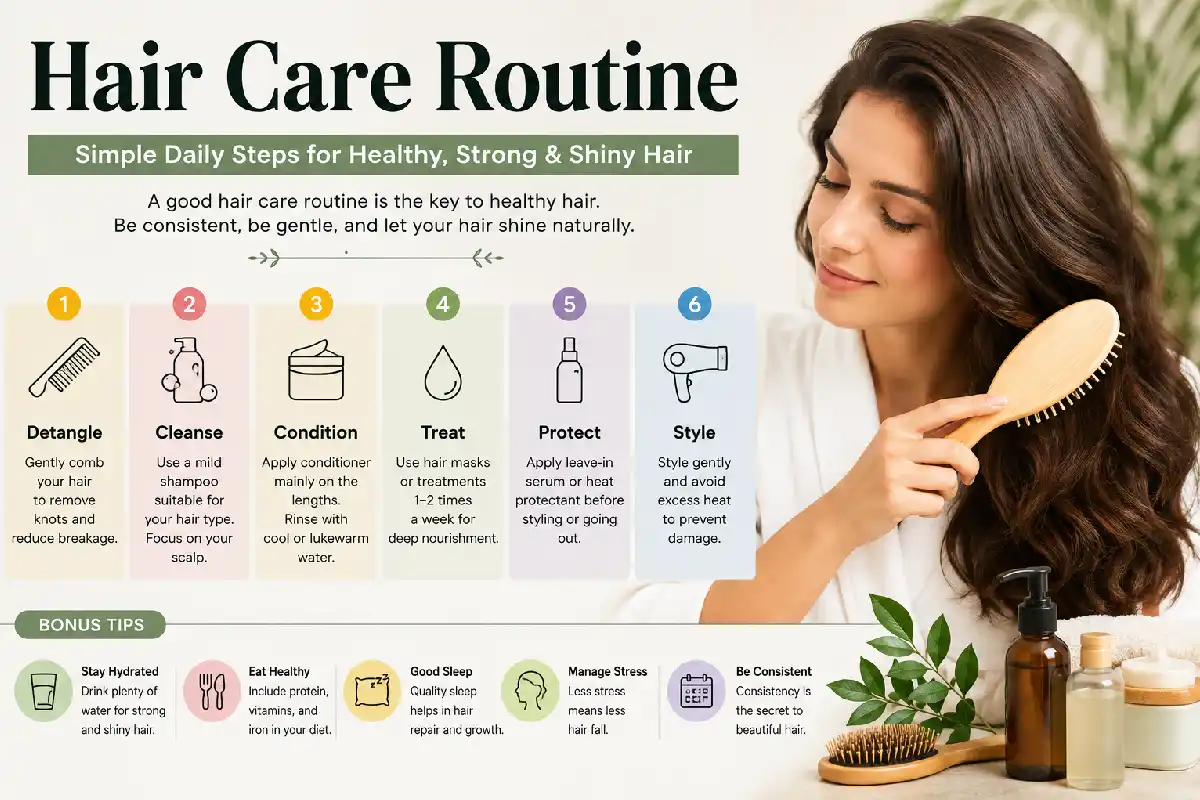
Hair Care Routine – Having a head full of healthy hair not only adds to your decorative looks, but is also an indication of proper scalp hygiene and nutrition on our behalf, to nourish ourselves and preserve our hair from damage caused by everyday life. Straight, wavy, curly or kinky – we all benefit immensely from healthy hair grooming routines.
Lots of people spend their hard-earned money buying luxurious hair products in search of quick results. Yet, developing healthy hair isn’t an overnight process. It is based on regular care routines, choice of hair care products suitable to your hair type and texture, a healthy diet, and routines which limit damage to your hair over a prolonged period.
Each day our hair is subject to a great deal of stress from a range of varying sources. Heat styling, hard water, the sun, pollution, chemical hair treatments, and even everyday stress -all of these stressors strip our hair shafts, making them weak and prone to breakage. If not taken care of the right way, it makes hair susceptible to all the typical hair problems, including dry ends, splits and breakage, dandruff, hair loss, dull texture, and many more.
Your hairstyle does much more than just protect hair against the sun.
It comprises identifying your hair type needs, taking care of the scalp, nourishing the hair adequately, and avoiding any hair damage while taking into account seasonal factors and your lifestyle.
With this guide, we’ll bring you a practical and customized hair care routine to make your hair grow healthily, to eliminate your hair problems, and to make your hair soft, shinier, and much more manageable at all times.
Hair care needs can vary based on different hair types and individual grooming habits. For more specific advice, explore our hair care routine for men to build a routine that suits men’s hair care needs.
❝
This article is a part of
Hair Care Routine Guide
What is a Hair Care Routine?
When we talk about our Hair Care Routine, it refers to the practices of cleanliness, conditioning, moisturising, and the health of our scalp & hair in general, which include those activities conducted on a daily, weekly, and at some other specific frequency in time.
Routine is more in the nature of precautions rather than acting like a cure, i.e, it prevents hair fall, dandruff, or dryness from forming rather than fighting them.
Women may have different hair care needs depending on hair length, styling habits, and hair concerns. Our hair care routine for women provides practical guidance for maintaining healthy-looking and manageable hair.
A complete routine generally includes:
- Cleansing
- Conditioning
- Moisturizing
- Nourishing
- Scalp care
- Heat protection
- Damage prevention
- Regular trimming
- Healthy nutrition
Think of it as skincare—but for your hair and scalp.
Understanding Your Hair Type Before Building a Routine
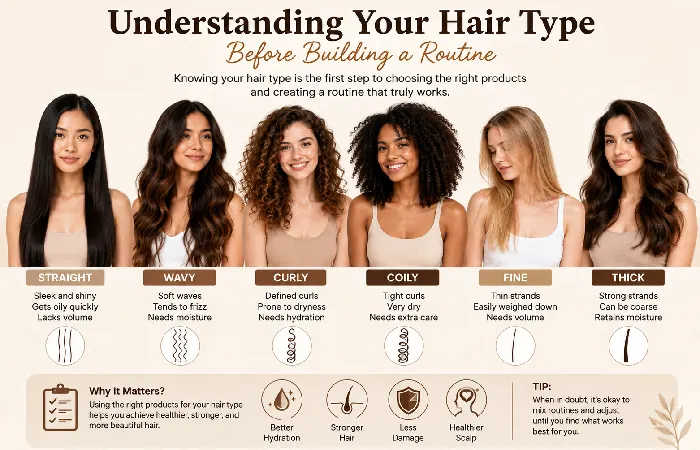
Before you buy certain products and before you jump on the latest hair bandwagon, you must understand the nature of your hair. Different hair reacts differently due to its texture, thickness, its condition, scalp condition, and how porous it is. What works best for one will not necessarily work for the other.
Knowing your hair type helps you know what products are beneficial and what are not.
Why Hair Type Matters
Hair type influences:
- How often you should wash your hair
- Which shampoo works best
- How much conditioner is needed
- Whether oils are beneficial
- Which styling methods are safest
- How much moisture your hair requires
Not giving into your hair’s type can cause your hair to build up product, get too dry or too oily and frizzed, as well as damage from breakage.
Main Hair Types
Hair texture is generally classified into four categories.
Straight Hair
Straight hair has little to no natural curl pattern.
If your hair feels dry, brittle, or weakened by heat and chemical treatments, explore our hair care routine for damaged hair for tips on improving your overall hair care routine.
Characteristics include:
- Smooth appearance
- Reflects light easily
- Naturally shiny
- Oil travels quickly from scalp to ends
- Can become greasy faster than other hair types
Those with straight hair should consider using weightless formulas that don’t build up.
Wavy Hair
Wavy hair forms loose “S”-shaped patterns.
It often has:
- Moderate volume
- Natural texture
- Some frizz
- Balanced oil distribution
- Good styling versatility
The product is light and moisturiser-based; the products for wavy hair enhance your hair so they don’t weigh it down.
Curly Hair
Curly hair forms defined spirals or ringlets.
Characteristics include:
- Dry ends
- Higher tendency to frizz
- Less natural oil reaching the hair shaft
- Needs frequent hydration
- Requires gentle handling
Moisture is the foundation of curly hair care.
Coily Hair
Coily or tightly curled hair has the smallest curl pattern.
It usually has:
- Maximum shrinkage
- High dryness
- Very delicate strands
- High moisture needs
- Greater risk of breakage
Coily hair really requires deep conditioning and protective styling more than many other hair types.
Hair Thickness
Hair thickness simply refers to the width of an individual strand.
Fine Hair
Fine hair:
- Feels soft
- Lacks volume
- Gets oily quickly
- Breaks easily
- Needs lightweight products
Medium Hair
Medium hair is considered balanced.
Color-treated hair often requires extra care to maintain its appearance and manage dryness. Follow our hair care routine for color-treated hair for helpful ways to care for colored hair.
It usually offers:
- Good strength
- Easy styling
- Moderate volume
- Better tolerance to styling products
Thick Hair
Thick hair generally:
- Has greater volume
- Requires more hydration
- Takes longer to dry
- Can become frizzy if not moisturized properly
Hair Porosity
Hair porosity refers to the extent to which your hair is able to absorb and retain moisture.
Low Porosity
Hair cuticles remain tightly closed.
If you have fine or thin hair, choosing the right products and routine can help prevent unnecessary buildup. Explore our hair care routine for thin hair for guidance tailored to thinner hair.
Characteristics:
- Water sits on the surface
- Products absorb slowly
- Lightweight products perform better
Medium Porosity
The ideal balance.
Hair:
- Retains moisture well
- Accepts treatments easily
- Requires moderate maintenance
High Porosity
Cuticles remain open.
Hair:
- Absorbs water quickly
- Loses moisture rapidly
- Needs protein and hydration regularly
Scalp Types
Healthy hair starts with a healthy scalp.
Oily Scalp
Signs include:
- Greasy roots
- Flat hair
- Frequent washing required
Dry Scalp
Symptoms include:
- Tight feeling
- Flakes
- Itching
- Irritation
Combination Scalp
Often:
- Oily near roots
- Dry at ends
Sensitive Scalp
Requires:
- Mild shampoos
- Fragrance-free products
- Gentle cleansing
Comparison Table: Hair Types and Care Needs
| Hair Type | Main Characteristics | Biggest Challenge | Best Care Focus |
| Straight | Smooth, shiny | Oiliness | Lightweight cleansing |
| Wavy | Soft waves | Frizz | Moisture balance |
| Curly | Spiral curls | Dryness | Hydration |
| Coily | Tight curls | Breakage | Deep moisture |
Why a Consistent Hair Care Routine Matters?
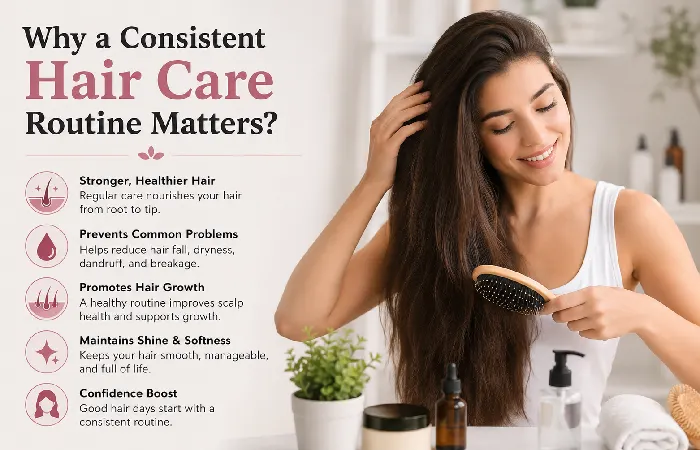
What’s really good and healthy hair will flourish steadily with sustained consistency – rather than the use of some type of get-rid-of-all fixes. This sustains a good balance of healthy oils on the scalp, thickens as well as strengthens the shaft of your hair, and minimizes breakages from your routine issues. There are many fast fixes to acquire a truly balanced and over-oily or too dry scalp.
Promotes Stronger Hair Growth
The more it really grows out of the roots – not tips! But this needs to be nourished with careful attention given to cleaning follicles to encourage a very natural fullness & fullness of healthy roots; get rid of the natural scalp oils; pollution of your environment; dead cells and the buildup of beauty product residues clogging follicles- clean growth!
Reduces Hair Breakage
Hair often appears to “stop growing” when it is actually breaking faster than it grows.
For those focused on maintaining healthier, stronger-looking hair, our hair care routine for hair growth covers practical habits that can support your overall hair care goals.
A consistent routine:
- Improves elasticity
- Prevents split ends
- Reduces mechanical damage
- Maintains moisture
Healthy strands maintain their structure longer, enabling hair to become longer over time.
Maintains Moisture Balance
The proper mixture of moisture and natural oil is necessary for healthy hair.
Too little moisture leads to:
- Rough texture
- Frizz
- Split ends
- Brittleness
Excess products may cause hair to feel greasy and dull.
The maintenance of a balance in your hair is provided by the maintenance of a moderate cleansing policy.
Protects Against Environmental Damage
Hair is constantly exposed to:
- UV rays
- Dust
- Pollution
- Humidity
- Wind
- Hard water
- Heat styling
Daily care helps create a protective barrier against these stressors.
Improves Hair Appearance
Healthy hair naturally becomes:
- Shinier
- Softer
- Easier to style
- Less frizzy
- More manageable
Rather than relying on styling products to mask damage, a consistent routine improves the hair’s natural beauty.
Daily Hair Care Routine Essentials
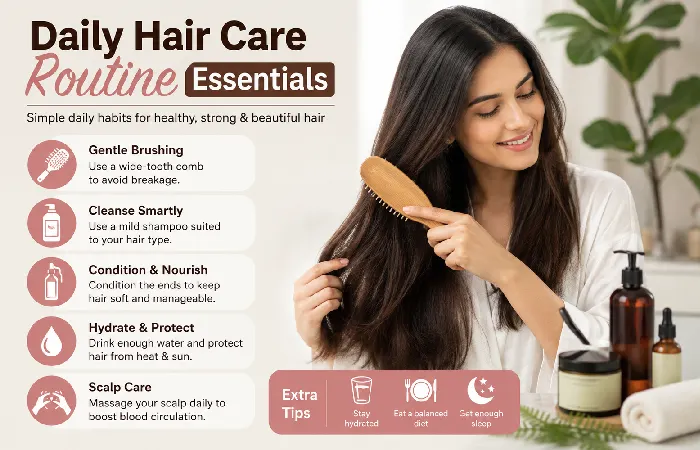
What you do each day really affects a lot in the future of your hair. The routine you follow every day can sometimes be so effective that you do treatment once in a while.
1. Brush Gently
This also helps to spread the natural oils evenly down each strand of hair. This can create beautiful shiny hair and will minimise tangles. Avoid over-brushing: this is especially important when hair is wet as wet hair strands are weaker than dry hair strands and stretch rather than break.
2. Protect Hair While Sleeping
This could lead to breakage and fuzziness as a result. Invest in a silk and/or satin pillowcases in order to reduce tangling, retain your moisture and reduce friction to your strands! Lots of curly, long-haired women may want to loosely ponytail hair once you lay your head down.
3. Keep Hair Hydrated
For hair that feels coarse and a little dry and hard to manage too, apply a little bit of lightweight leave-in conditioner, hair serum or spray to sufficiently hydrate your hair between wash days without leaving it greasy
4. Avoid Excessive Heat Styling
Your outer cuticle can be compromised from constant use of styling tools that use heat. (Straightener, the curling wand, and the blow dryer).
Whenever possible:
- Allow hair to air dry.
- Use lower heat settings.
- Apply a heat protectant before styling.
Weekly Hair Care Routine for Healthier Hair
Our treatments go beyond daily upkeep once a week.
Oil Your Hair
Your hair will remain well-oiled and softer after application, prior to your washing up.
Popular choices include:
- Coconut oil
- Argan oil
- Almond oil
- Jojoba oil
- Rosemary-infused oil (when used appropriately)
Gently massage your head for 5 to 10 minutes to promote sleep and soothe the blood.
Deep Condition
A deep condition can provide moisture and enhance elasticity within your hair strands.
Depending on your hair type:
- Fine hair: Once every two weeks
- Straight hair: Weekly if dry
- Curly hair: Once or twice weekly
- Coily hair: Weekly
Clarify When Needed
Build up of shampoo will also make your hair look dull and flat, and weigh it down. For build-up problems, use a clarifying shampoo every 3 or 4 weeks.
Trim Split Ends
Consistent trimmings every 8 to 12 weeks stop split ends from working their way higher up the hair shaft. Trimmings will not make hair grow faster, but they will assist in keeping the length healthy.
Weekly Hair Care Schedule
| Day | Recommended Routine |
| Monday | Gentle cleansing and conditioning |
| Tuesday | Light scalp massage and serum |
| Wednesday | Hydration with leave-in conditioner |
| Thursday | Protective hairstyle |
| Friday | Hair oil massage |
| Saturday | Shampoo + deep conditioning |
| Sunday | Air dry and rest from heat styling |
How to Wash Your Hair the Right Way?
Hair washing is when your scalp and hair are cleaned to remove dirt, oil, sweat, pollution, dead skin, and hair products, to maintain moisture in the hair. Many of you probably think that it is easy to wash, but if you wash it incorrectly, then you may feel a dry and irritated scalp, frizzy hair, extremely oily hair, and hair breakage. Try to learn it correctly, and then you will have the healthiest scalp and shining hair.
Why is Proper Hair Washing Important?
Your scalp is continuously producing small amounts of sebum (the body’s natural oil). This oil is very nutritious and conditioning for your hair and scalp, but the reasons your hair looks flat and greasy are: oil, dust, sweat, and products. Rinsing your hair allows you to remove impurities.
Benefits of washing your hair correctly include:
- Removes dirt and environmental pollutants
- Maintains a healthy scalp environment
- Prevents product buildup
- Reduces dandruff caused by excess oil
- Keeps hair soft and manageable
- Improves the effectiveness of conditioners and treatments
Step 1: Brush Before Washing
Comb your hair after each shower to keep hair in top condition. Why It Works: This gets rid of pesky extra, shedding hairs you’ll lose anyway, and the snagging while you rinse helps your shampoo to work its way in.
Wide-tooth comb: Good for anyone with curly and textured hair. Paddle brush: For anyone with straight and wavy hair.
Step 2: Wet Hair Thoroughly
Wet hair; rinse off hot in the end. This can aid the warm water in penetrating through dirt and making your pores loosen slightly, so they take shampoo with greater effect.
There are, however, risks to this procedure – if you take an incredibly scorching wash, you risk eradicating the oil that usually coats our follicles, which can leave a dry scalp.
Step 3: Use the Right Amount of Shampoo
Most people use too much shampoo by a mile
General guideline:
- Short hair: Coin-sized amount
- Medium hair: Nickel-sized amount
- Long hair: Quarter-sized amount
Don’t shampoo excessively. Work a bit more oil and product from your hair by washing just once more with a gentler product.
Step 4: Focus on the Scalp
I think the best kind of Shampoo would not be based on strands but mostly on roots.
Using your fingertips:
- Massage gently
- Avoid scratching with fingernails
- Work in circular motions
- Cover the entire scalp
As you’re washing the shampoo out all down your lengths, the actual washing has tended to get that.
Step 5: Rinse Thoroughly
Build-up weight and Frown: Excessive leftover un-rinsed build-up will pull your hair down and kill your shine, so rinse, rinse, and rinse again and rinse again until the last little atom of your hair!
How Often Should You Wash Your Hair?
When and how often do you have to clean it? Let the texture of the skin and hair condition your answer, as well as the environment where you are presently residing. Living pattern too is one of the causes for consideration while washing your hair.
| Hair Type | Recommended Washing Frequency |
| Oily Hair | Every 1–2 days |
| Straight Hair | Every 2–3 days |
| Wavy Hair | Every 2–4 days |
| Curly Hair | Every 4–7 days |
| Coily Hair | Every 5–10 days |
| Color-Treated Hair | 2–3 times weekly |
Remember, there is no universal schedule. Follow how your scalp feels; don’t just follow the trend.
Choosing the Best Shampoo and Conditioner
Shampoo can help get rid of accumulated dirt, grime, and other substances from your hair and scalp. After washing all the gunk off, we apply the conditioner that helps restore some needed moisture to hair, seal our hair shaft, making it less complicated to brush and also much less tangled. It additionally makes hair softer, decreases frizz, and helps hair have a greater tendency to be easily brushed.
What Makes a Good Shampoo?
An effective shampoo should:
- Cleanse without over-drying
- Maintain scalp balance
- Match your hair type
- Rinse easily
- Leave hair feeling fresh but not stripped
Ingredients to Look For
For Dry Hair
Beneficial ingredients include:
- Argan oil
- Shea butter
- Aloe vera
- Glycerin
- Coconut oil
- Panthenol
They’re key when you need to restore moisture and a softer feel.
For Oily Hair
Look for:
- Tea tree oil
- Salicylic acid
- Charcoal
- Green tea extract
- Clay-based cleansers
They have a mattifying effect too and control excessive sebum levels in a non-drying manner.
For Damaged Hair
Choose products containing:
- Keratin
- Silk proteins
- Amino acids
- Ceramides
- Rice protein
Key Ingredients reinforce and replenish the hair for better movement and elasticity.
Ingredients to Avoid (When Possible)
Other individuals may discover this blend too harsh if you have dry or sensitive skin/hair/etc:
- High concentrations of sulfates
- Excessive drying alcohols
- Heavy waxes
- Strong artificial fragrances
- Formaldehyde-releasing preservatives
Every item on our list is truly original, and is likely to behave in one of many ways; see the results when applied to hair – including your very own – on screen below.
Shampoo Ingredient Comparison
| Ingredient | Main Benefit | Best For |
| Aloe Vera | Hydration | Dry Hair |
| Tea Tree Oil | Oil Control | Oily Scalp |
| Keratin | Strength | Damaged Hair |
| Biotin | Sustains Hair Strength | Weak Hair |
| Coconut Oil | Moisture | Curly Hair |
| Argan Oil | Luster and tenderness | Frizzy Hair |
| Salicylic Acid | Exfoliation | Scalp prone to dandruff |
Deep Conditioning and Hair Masks
This deeper conditioning treatment helps to get inside the hair cuticle to restore lost moisture and to help add definition and more moisturizing intensity to the hair. The Hair Mask is an intense treatment that helps restore the hair, strengthen it, and add shine.
Why Deep Conditioning Matters?
Deep conditioning helps:
- Restore lost moisture
- Improve elasticity
- Reduce breakage
- Repair heat damage
- Smooth rough cuticles
- Enhance shine
How to Deep Condition Properly?
- Wash hair with shampoo.
- Use hands to squeeze excess water out as much as possible.
- Rub mask evenly throughout hair.
- Focus on mid-lengths and ends of hair.
- Allow to sit for 10–30 minutes.
- Wash hair with cool water.
DIY Hair Masks
Banana and Honey Mask
Benefits:
- Softens hair
- Reduces dryness
- Adds shine
Yogurt and Aloe Vera Mask
Excellent for:
- Dry scalp
- Frizz
- Mild irritation
Avocado and Olive Oil Mask
High in essential nutrients like natural fats and vitamins – perfect for repairing dry, damaged hair.
Hair Oiling: Benefits and Best Practices
Hair oiling is the ritual of adding nourishing oils to your hair strands and also your scalp before washing or along with the treatment that should help to minimize water loss in your hair, improve the health and softening of your hair.
Benefits of Hair Oiling
Regular oiling can:
- Reduce dryness
- Improve scalp comfort
- Enhance shine
- Minimize breakage
- Improve manageability
- Protect hair during washing
Oiling does make my hair look healthier, but is there a real fact that it grows it more?
Popular Hair Oils
Coconut Oil
Great for preventing protein loss in the wash and helps to protect your hair.
Argan Oil
This light leave-in is antioxidant-rich and will make frizzy and dry hair perfect.
Jojoba Oil
Similar to natural sebum from the scalp, suitable for most hair types.
Almond Oil
Contains Vitamin E, useful for a stronger softening sensation.
Rosemary Oil
Frequently applied diluted in a carrier oil. Some have shown potential for hair growth in some individuals with repeated use.
Best Practices
- Massage onto scalp.
- Gently spread on dry hair,
- 5-10 minutes, and wait at least 30 minutes.
- Wash off the next morning.
- Do not put too much on, though!
Scalp Care for Healthy Hair Growth
Why the Scalp Matters?
Healthy hair begins beneath the surface.
Each scalp has a huge amount of hair-producing hair follicles. When your scalp becomes inflamed, plugged up, too oily, or dry, then the quality of hair may be affected.
Healthy Scalp Habits
Keep the Scalp Clean
Wash regularly according to your scalp type.
Massage Regularly
Gentle scalp massage can help circulation and may be therapeutic in reducing tension on the muscles
Exfoliate Occasionally
Scalp exfoliation removes:
- Dead skin
- Product buildup
- Excess oil
Once to twice a month may suffice.
Stay Hydrated
You need water in the skin all over the body, including your scalp.
Avoid Product Overload
Using too much styling product to the scalp can block hair follicles and cause build up.
Heat Protection and Safe Styling Habits
Hair stylers for heat are capable of doing magic on your mane; overuse can gradually decrease the strength of the hair cuticle with regular usage!
Why is Heat Protection Essential?
When used, they form a fine shield on your hair separating it from heating tools.
They help:
- Reduce moisture loss
- Minimize split ends
- Lower heat damage
- Improve smoothness
Safe Styling Tips
- Always apply heat protectant first.
- Use the lowest effective temperature.
- Avoid repeatedly passing tools over the same section.
- Allow hair to air dry whenever possible.
- Limit heat styling to special occasions if possible.
Recommended Temperature Guidelines
| Hair Type | Suggested Temperature |
| Fine Hair | 120–150°C |
| Medium Hair | 150–180°C |
| Thick Hair | 180–210°C |
Detangling Without Causing Breakage
It may sound basic, but one of the number one causes of physical hair damage comes in the form of incorrect hair detangling.
Best Detangling Method
- Use a leave-in conditioner or detangling spray.
- Separate hair into sections.
- Begin at the ends.
- Work upward gradually.
- Hold each section near the roots while detangling.
- Be patient.
Best Tools
Wide-Tooth Comb
Best for use with wet hair and on curls.
Detangling Brush
Designed to glide through knots with less pulling.
Paddle Brush
Works well for straight and long hair during dry styling.
Hair Washing Mistakes to Avoid
| Mistake | Why It’s Harmful | Better Alternative |
| Using very hot water | Causes dryness and frizz | Use lukewarm water |
| Applying conditioner to scalp | Can make roots greasy | Apply from mid-length to ends |
| Scrubbing with fingernails | Irritates the scalp | Massage gently with fingertips |
| Washing too frequently | Strips natural oils | Follow your hair type’s needs |
| Sleeping with soaking wet hair | Increases friction and breakage | Dry hair partially before bed |
| Overusing dry shampoo | Causes buildup | Use only between wash days |
Hair Care Routine by Hair Type
Each hair type have their own uniqueness, so will also be the all of their treatment for cleansing, conditioning, moisturizing, and styling etc. Understanding the distinctions will help you select the best procedure that makes your hair gleam.
Hair Care Routine for Straight Hair
Characteristics
Why is it so oily that they have straight hair? They have straight hair; that’s why oil can run smoothly into the hair. That’s why it’s oily and shiny a long way down the hair.
Recommended Routine
Daily
- Brush gently to work through your natural oils.
- Swipe a light serum through ends on more days as necessary.
- Try not to handle hair too often to keep oils off.
2–3 Times Per Week
- Use a light shampoo to wash hair.
- Apply conditioner midway to ends only.
Weekly
- Using clarifying shampoos if your hair regularly.
- Use a light moisturising mask per week.
.
Best Products
- Volumizing shampoo
- Lightweight conditioner
- Silicone-free serum
- Dry shampoo for oily roots
Hair Care Routine for Wavy Hair
Characteristics
Wavy hair is pretty much somewhere in between straight and curly. Its natural bounce does just about half your work for you until humidity or the air decides to be nasty & frame your head with an unruly halo.
Recommended Routine
- Every 2-4 days.
- Sulfate-free shampoo
- light curl cream or leave-in, air dry if possible
- Scrunch softly to help waves form.
Weekly Care
- Deep condition one time a week.
- Use a wide-tooth comb on wet hair.
Hair Care Routine for Curly Hair
Characteristics
Normally, Natural Curly hair along with all the different kinds of hair textures, finds it a struggle to find a good way to moisturize because the oil just trickles all the way down spiraled hair like us more slowly
Daily Care
- Mist curls with water or leave-in conditioner.
- Don’t brush dry curls.
Wash Routine
- Wash your hair once or twice a week.
- Heavy duty moisturizer with every wash
- Apply to curly hair on wet hair.
Weekly Care
- Deep condition every week.
- Use a satin bonnet or silk pillowcase while sleeping.
Hair Care Routine for Coily Hair
Characteristics
A great amount of conditioning is key for Coily hair, as is soft treatment of your locks. This is actually the finest form of curly hair. Since these aren’t oil-producing, oil cannot access its own tips.
Recommended Routine
- Wash every 7–10 days.
- Use moisturizing shampoo.
- Deep condition every wash day.
- Apply leave-in conditioner.
- Seal moisture with natural oil or butter.
Protective Styles
Through the protective style choices that you make, manipulation can be avoided and moisture loss can be prevented.
Examples include:
- Twists
- Braids
- Buns
- Cornrows (without excessive tension)
Comparison Table: Hair Care by Hair Type
| Hair Type | Wash Frequency | Conditioner | Weekly Treatment | Main Focus |
| Straight | Every 2–3 days | Lightweight | Clarifying shampoo | Oil control |
| Wavy | Every 2–4 days | Hydrating | Deep conditioning | Frizz management |
| Curly | Every 4–7 days | Rich conditioner | Moisture mask | Hydration |
| Coily | Every 7–10 days | Intensive conditioner | Protein + moisture | Breakage prevention |
Hair Care Routine by Hair Concern
Although hair type alone may not be relevant, hair concern is extremely important. If there is any of the listed concerns or simply there are such problems – please try to modify your approach; the following hair problems may yield the greatest results.
Hair Fall
Possible Causes
- Stress
- Hormonal changes
- Nutritional deficiencies
- Tight hairstyles
- Certain medical conditions
- Seasonal shedding
Routine
- Stimulate your scalp a few times per week
- Use a mild shampoo.
- Minimize heat styling.
- Ensure proper intake of protein foods.
- Rest for at least seven hours.
- Seek medical attention if your hair falls suddenly in patches or in large amounts.
Dry Hair
Signs
- Rough texture
- Split ends
- Lack of shine
- Frizz
Recommended Care
- Wash less frequently.
- Wash using a moisturizing shampoo. Rinse.
- Apply a leave-in conditioner.
- Deep condition weekly.
- Avoid excessive heat.
Oily Hair
Signs
- Greasy roots
- Flat appearance
- Frequent washing required
Care Tips
- Use lightweight shampoo.
- Avoid heavy conditioners on the scalp.
- Wash according to scalp needs.
- Clean hairbrushes regularly.
Frizzy Hair
The main cause of frizz is open cuticles, which prevent moisture from getting into the hair.
Solutions include:
- Hydrating conditioner
- Anti-frizz serum
- Microfiber towel
- Silk pillowcase
- Heat protection
Dandruff
Oil in excess, too much oil on the skin or scalp, too dry, or excess yeast on the scalp.
Routine:
- Apply as directed on the container.
- Keep the scalp clean.
- Do not scratch the head.
- For flakes caused by dry scalp, moisturize the dry areas.
- Should the situation not improve, ask help from the doctor.
Damaged Hair
Anyone with hair damaged by color, bleaching, chemical processes, or heated styling needs repair!
Include:
- Protein treatments (occasionally)
- Deep conditioners
- Bond-building products (if appropriate)
- Reduced heat exposure
- Regular trims
Seasonal Hair Care Tips
The hair care requirements vary for each season. Temperature, weather, and humidity level has an impact on both scalp and the hair.
Summer Hair Care
Challenges:
- UV exposure
- Sweat
- Chlorine
- Salt water
- Humidity
Tips:
- Remember a hat when out in the sun.
- Rinse hair after a swim.
- Try UV-protected hair products.
- Add extra moisture using a leave-in conditioner.
Winter Hair Care
The cool air and room heating often have the ability to make hair look and feel fragile.
Recommendations:
- Deep condition weekly.
- Wash your hair less often if your scalp drys out.
- Avoid very hot showers.
- Use nourishing oils on the ends.
Monsoon Hair Care
High humidity causes more frizz in the hair and may also worsen some skin issues affecting the scalp.
Best Practices:
- It needs to be completely dry when you begin styling.
- If you get caught in the rain or it’s very damp and sweaty, then you should wash it.
- Use a light product that includes an anti-frizz ingredient.
- Ensure that products don’t leave residue on hair tools or brushes
Spring and Autumn Care
These transition seasons are a good time to:
- Trim split ends.
- Reassess your products.
- Fight seasonal shedding with a healthy meal plan and soothing hair treatment.
Nutrition and Lifestyle for Healthy Hair
Healthy hair still begins with some level of care on the inside – your hair follicles are receiving adequate nutrients and hydration from the get-go.
Protein
The basic part of hair is protein, also known as keratin.
Following are the lists of food for eating and there sources contains many Proteins are:
- Eggs
- Fish
- Chicken
- Lentils
- Beans
- Greek yogurt
- Tofu
Iron
Iron supports oxygen delivery to hair follicles.
Sources:
- Spinach
- Red meat
- Pumpkin seeds
- Chickpeas
- Fortified cereals
Omega-3 Fatty Acids
Healthy fats support scalp health.
Sources:
- Salmon
- Walnuts
- Chia seeds
- Flaxseeds
Vitamin C
It’s important for making collagen and for the absorption of iron.
Foods include:
- Oranges
- Kiwi
- Bell peppers
- Strawberries
- Broccoli
Zinc
Zinc helps normal growth of hair as well as repairing the tissues.
Sources:
- Nuts
- Seeds
- Shellfish
- Whole grains
Water
Hydration is Important For scalp and hair moisture; Try to drink plenty of fluids throughout the day, depending on how much water the situation needs based on how hot it is where u are and how many miles a day or hour you are doing.
Hair-Healthy Foods
| Nutrient | Food Sources | Benefits |
| Protein | Eggs, Chicken, Lentils | Builds hair structure |
| Iron | Spinach, Beef, Beans | Supports hair follicles |
| Zinc | Pumpkin Seeds, Nuts | Hair repair |
| Vitamin C | Citrus Fruits, Berries | Collagen production |
| Omega-3 | Salmon and flaxseed | Feeding the scalp |
| Vitamin E | Almonds. Sunflower seeds | Protection Antioxidant |
Common Hair Care Mistakes to Avoid
You’ll find that there are certain affordable treatments that you can get for hair that counteract years of neglect.
- Washing Too Often
Wash not so much: can lose natural oils, more prone to those who have dry and wavy hair.
- Using Very Hot Water
Hot water can also make the scalp and hair cuticle dry and coarse.
- Skipping Conditioner
Conditioner increases hair moisture level and improves silkness and combats with frizz.
- Brushing Wet Hair Aggressively
Your hair is also more elastic when wet and thus more easily snapped. Comb it with a wide-toothed comb and gentle strokes.
- Overusing Heat Tools
High heat over long periods of time is bad for hair
Natural vs Professional Hair Care Products
While natural treatments and professional hair products both have their strengths. Sometimes it just makes sense to be an ingredient opportunist and steal what is great from both ends! Natural can moisturize and smooth; Professional will fix.
Natural Hair Care Products
Advantages
- Often contain plant-based ingredients
- Suitable for simple maintenance
- May be cost-effective
Limitations
- Results can vary
- Shorter shelf life
- Not always standardized
Professional Hair Care Products
Advantages
- Formulated for specific concerns
- Consistent ingredient concentrations
- Often supported by research and testing
Limitations
- Usually more expensive
- Some products may contain ingredients that certain individuals prefer to avoid.
Comparison Table
| Feature | Natural Products | Professional Products |
| Ingredients | Plant-based | Scientifically formulated |
| Cost | Often lower | Usually higher |
| Consistency | Can vary | Standardized |
| Targeted Results | General care | Specific concerns |
| Shelf Life | Shorter | Longer |
| Best For | Basic maintenance | Repair and specialized treatment |
Sample Personalized Routine
| Frequency | Routine |
| Daily | Gentle brushing, scalp protection, leave-in conditioner if needed |
| 2–3 Times Weekly | Shampoo and conditioner |
| Weekly | Hair oil massage and deep conditioning |
| Monthly | Clarifying shampoo and scalp exfoliation (if needed) |
| Every 8–12 Weeks | Trim split ends |
Frequently Asked Questions About Hair Care Routines
- How often should I wash my hair?
Type of Scalp. Type of Hair. Activity Level of Scalp. Type Of product applied to hair. Scalps that are oily scalp; they have more washes than Oilyscalp.
- Does trimming hair make it grow faster?
Actually, hair starts from the root and grows. So all we need to cut is the very tip of our hair to fix splitting. It will make our hair look as healthy and beautiful as new.
- Should I oil my hair before every wash?
Not necessarily true! Some hair types absolutely love oiling pre-wash, but other hair types may like occasional pre-wash oiling and will depend entirely on your hair type and desires.
- Is air drying better than blow drying?
Yes, that’s good for health hair growth where you get high protein and a well-balanced diet and zinc, iron, vitamin and good fats.
- Can diet affect hair health?
Yes, healthy diets, Rich in Proteins and zinc, as well as containing iron and fat good For Healthy Hairy Growth
Final Thoughts
The foundation of proper hair care can be summed up as the slow and steady effort you make towards your needs rather than a trendy move or adding products to an endless closet is basically going to be composed of these basic but critical steps: consistent and Gentle Cleansing, Conditioning,
A Regularly Chosen Deep Conditioning treatment, Focus on Your Scalp, Diet & Water, Avoiding Stressors. Patience is key here, because healthy hair isn’t produced in an hour or a day. Healthy hair is really an act of making and consistently choosing something small and intentional with your wellness, your look, and your hair.