

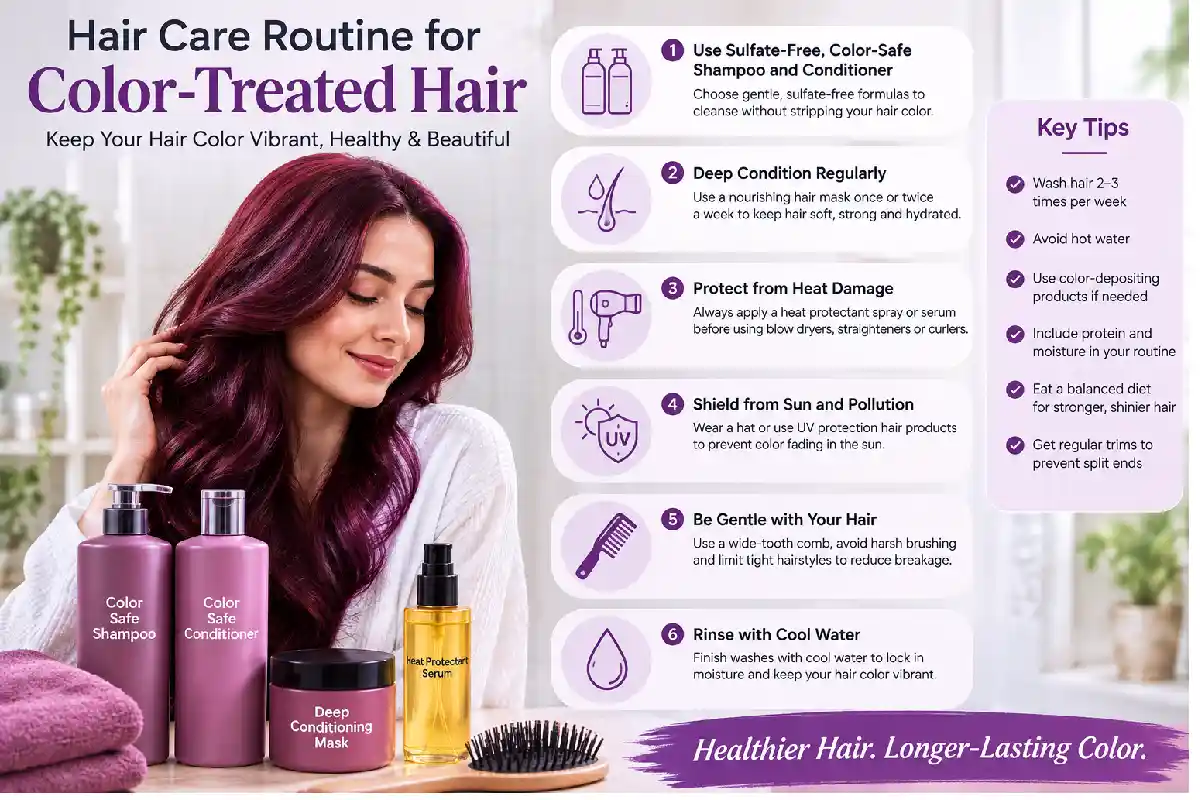
Hair Care Routine for Color-Treated Hair
 Khizrana Begum
Beauty & Lifestyle Writer
Khizrana Begum writes clear and reader-friendly content covering beauty, lifestyle and related topics.
Read Full Bio of Author →
Khizrana Begum
Beauty & Lifestyle Writer
Khizrana Begum writes clear and reader-friendly content covering beauty, lifestyle and related topics.
Read Full Bio of Author →
 Sameena Begum
Health, Technology & Digital Content Reviewer
Sameena Begum reviews content for clarity, accuracy and overall reader usefulness.
Read Full Bio of Reviewer →
Sameena Begum
Health, Technology & Digital Content Reviewer
Sameena Begum reviews content for clarity, accuracy and overall reader usefulness.
Read Full Bio of Reviewer →
Hair Care Routine for Color-Treated Hair: Have you dropped time, money (not to mention a significant level of expectation) on a gorgeous hair color that fades, then completely looks faded after a few rounds in the shower? Colored hair actually requires more TLC (and more effective products) than natural hair, thanks to increased sensitivity and a tendency to dry out post-chemical processing.
The great news? It doesn’t necessarily have to involve a super complicated regimen: With a little care and attention to the kinds of hair-washing, heat-protecting, and moisturizing products that you’re using, along with a few tricks for the hair shampooing schedule, your color should remain looking bold, bright, and beautiful, and your hair should remain soft and strong!
The following color-treated hair care routine works to protect your hair color while maximizing hair health.
❝
This article is a part of
Hair Care Routine Guide
Caring for Dyed Hair
Color treatment is helped by an extra-gentle hair care regime. Hair colour can have an impact on the outer protective cuticle of the hair fibre, rendering hair liable to loss of moisture and exposure to outside environmental factors. Washing your hair excessively, using hot water, heat stylers, and products that are not beneficial to dyed hair will make these issues much worse.
The first thing to remember to prevent washing your hair is to avoid washing if at all possible. If your scalp permits, then once every two to three days should help to decrease the constant assault from shampoos and water. People with an oily scalp will have to wash more frequently than people with a dry or curly scalp. Avoid hot water – just wash your hair using moderate heat water for the best possible results.
Color-treated hair benefits from a consistent routine that focuses on cleansing, conditioning, moisture, and minimizing unnecessary damage. For a broader overview of daily hair care, explore our complete hair care routine guide.
Simple Care Habits for Dyed Hair
| Hair-care habit | Why it matters |
| Wash with lukewarm water | Helps reduce dryness |
| Use a gentle shampoo | Minimizes unnecessary stripping |
| Condition after washing | Adds moisture and improves manageability |
| Detangle gently | Reduces breakage |
| Limit excessive heat | Helps prevent dryness and damage |
| Protect hair from strong sun | Helps reduce environmental color fading |
| Trim damaged ends | Keeps hair looking healthier |
Use your brush or fingers to begin by working from the bottom of your hair up. For hair that is susceptible to tangles on even dry days, try using a broad-tooth comb on your wet hair. While you do still need to shampoo your colored scalp at every wash, there is no need to work too aggressively when it comes to the scalp-simply finger-massage the shampoo with your fingertips rather than scratch it through with your nails.
Men who color their hair may also need to adjust their grooming habits to protect the condition and appearance of their hair. Our hair care routine for men provides practical guidance for maintaining healthy-looking hair.
Sulfate-Free Hair Products
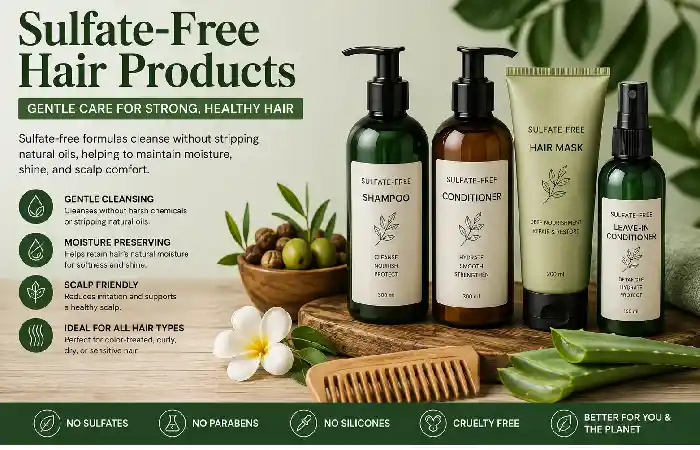
One of the many suggestions on the subject of color-treated hair is to select a sulfate-free shampoo. Sulfates act as a cleansing agent and are basically known as the part of the shampoo that causes the shampoo to lather, but while Sulfate-free shampoo can indeed effectively cleanse and strip the buildup from the hair, many sulfite shampoo makes your hair feel a tiny bit harsh but very, very dry from processed hair.
Sulfate-free shampoo will work great if your colored hair feels like it’s dry or coarse, and color gets washed out easily after you color. The sulfate shouldn’t be for everyone, just taking texture, type of scalp, and styling into consideration.
Women may use different styling and coloring techniques that can affect hair condition over time. Explore our hair care routine for women for additional tips on building a consistent routine.
Look for products designed for:
- Color or chemically processed hair
- Dry or damaged hair
- Moisture retention in dry or damaged hair
- Cleansing (Gentle)
Ingredients Worth Considering
| Ingredient/category | Potential benefit |
| Glycerin | Helps attract moisture |
| Panthenol | Helps improve softness and conditioning |
| Ceramides | Support the hair’s protective barrier |
| Hydrolyzed proteins | Can improve the feel and strength of damaged hair |
| Fatty alcohols | Help provide softness and slip |
| Conditioning agents | Make detangling easier |
A shampoo can cause your scalp to feel irritated, overly greasy, and caked with residue – but that doesn’t mean it isn’t formulated for colored hair, after all.
Frequent coloring can contribute to dryness, brittleness, and breakage, especially when combined with heat styling or chemical treatments. If your hair is already showing signs of stress, our hair care routine for damaged hair offers helpful care strategies.
Preventing Color Fade
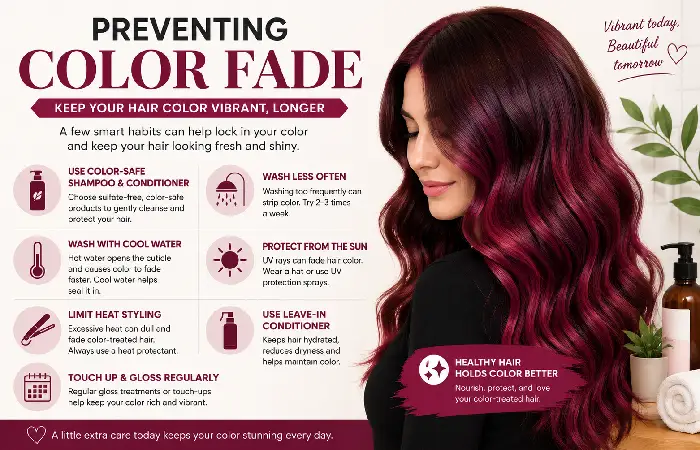
Fading is okay. “Fading of hair dye is an inevitable occurrence. Not every shade out there will last precisely the same for the lifespan of the hairstyle; nonetheless, you need to try to do no less than an effort not to let that go too quickly. “I think that among the simplest solutions to help safeguard and conserve color is avoiding shampooing your hair excessively,” suggests D.
“We’ll rinse oil, dirt, sweat, also as residue of product from hair, though each washing also can slowly compromise some hair shades gradually.”
Try these habits:
Fine or thin hair can require a lighter approach to styling and product selection, particularly when the hair is color-treated. Explore our hair care routine for thin hair for practical tips for finer strands.
* Use lukwarm water for showers they can get extremely hot-!
* Try not to wash your hair as often, and do not use shampoo too much.
* use only those products designed for color-treated hair.
* Protect your hair from long exposure to sun.
*Minimize frequently high temperature setting with styling iron and so on
*Comply with advice provided by your colorist
Swimming can also affect colored hair. Water quality “The chlorinated water you swim in and the minerals present can actually dull out certain colors, or in some cases, impart a tone that shouldn’t be there in colors you really don’t want one,” explain masters hair stylists. “Prevention can be achieved by wearing a swim cap for those swimming more than a few times a week and rinsing thoroughly with clean water immediately after a swim. A clarifying or ‘swimmer’ shampoo once in a great while might also work to lift residue from your hair, although over-washing these products can be drying.”
What Can Make Hair Color Fade Faster?
| Factor | Possible effect |
| Frequent shampooing | Faster loss of some color |
| Hot water | Can increase dryness and may contribute to fading |
| Excessive heat styling | Can worsen dryness and damage |
| UV exposure | May dull or alter color |
| Chlorinated water | May affect color and hair condition |
| Harsh cleansing products | Can leave processed hair dry |
Deep Conditioning Schedule
The more you color treat your hair, the more it is likely to be a good idea to condition regularly. If your hair becomes dry or wiry from coloring then conditioning regularly will help to keep it soft. Use your regular conditioner most of the times you wash your hair, ensuring to condition only from mid-lengths to the ends.
For extra conditioning add hair mask or deep conditioner to your shower routine once in a while.
Maintaining the condition of your hair is also important when working toward healthier, stronger-looking strands. Our hair care routine for hair growth covers useful habits that can complement a consistent color-care routine.
For most of us, once a week would be sufficient to begin with, hair that becomes easily dry/curly and extremely processed may benefit from something a bit more frequent while fine hair may need conditioning very infrequently otherwise you could risk it being weighted down.
Example Weekly Schedule
| Day | Routine |
| Monday | Gentle shampoo + conditioner |
| Tuesday | No wash; gentle styling |
| Wednesday | Gentle shampoo + conditioner |
| Thursday | No wash |
| Friday | Gentle shampoo + conditioner |
| Saturday | Deep-conditioning treatment |
| Sunday | Rest day or scalp-focused care |
This doesn’t mean that you necessarily have to stick to this daily hairstyle regimen strictly. Change it according to how quickly you’re experiencing oily hair, your texture, lifestyle orscalp.
Apply deep conditioner mainly to the lengths and ends if your scalp tends to become oily. Leave it on according to the product directions rather than assuming that longer always means better.
Heat Protection Essentials
Probably the number one thing you need to watch when maintaining color treated hair is heat styling. For the most part blow dryers, straightening irons and hot irons just set coloring hair out to turn to a frizzy, rough, dry mess! Of course it doesn’t mean that you cannot ever use heat styling.
We are suggesting that we plan how we use it.
If you blow dry your hair, make sure that it is conditioned then spray it with a heat protecting spray and then proceed as usual.
Better Heat-Styling Habits
- Use the lowest effective temperature.
- Never go over the same section of hair multiple times with a flat iron. • Don’t use a straightener or curling iron on wet hair, unless it’s designed for that specific use. • Let hair air dry to a certain extent if you can.
- Use heat protectant.
- Give your hair breaks from the heat of Styling Tools. • Consider cutting back the heat on Styling If your hair is already severely dry or breaking – the result you’ll experience after taking breaks on styling tool heat will probably astonish you!
Maintaining Shine and Softness
Color-treated hair can lose its natural-looking shine when the cuticle becomes rough or the strands become dehydrated. Shine isn’t simply about adding an oil or serum. It also depends on the condition and smoothness of the hair surface.
Condition regularly. Don’t rub your hair harshly with a towel; handle wet hair with care.
Don’t rub the hair harshly with the towel; squeeze the extra water out. It is recommended to use a microfiber towel or a soft t-shirt in order to reduce friction.
You could also use a light leave-in conditioner for softness and to avoid tangles. Small amounts of hair serum or hair oil may give your split ends a cleaner finish.
Morning and Night Routine
Morning
- Detangle gently.
- Apply a small amount of leave-in conditioner if needed.
- Use a lightweight serum on dry ends when appropriate.
- Minimize unnecessary heat styling.
Night
- Gently brush or comb through the hair.
- Avoid sleeping with soaking-wet hair.
- Consider a loose hairstyle to reduce friction.
- Keep the hair away from rough or snagging accessories.
Regular trims can also help maintain a polished appearance. Trimming won’t make hair grow faster, but removing badly split ends can prevent them from traveling farther up the hair shaft.
A Practical Hair Care Routine for Color-Treated Hair
A good routine doesn’t need dozens of products. Start with the basics and add products only when you actually need them.
| Routine step | How often |
| Gentle shampoo | As needed, often 2–3 times weekly |
| Conditioner | After every shampoo |
| Leave-in conditioner | As needed |
| Deep conditioner/hair mask | About once weekly |
| Heat protectant | Every time heat is used |
| Clarifying treatment | Occasionally, if buildup occurs |
| Hair trim | As needed based on damage and style |
Remember that these are general guidelines rather than strict rules. An oily scalp, dry curls, fine hair, frequent workouts, or heavy product use can all change how often you need to wash your hair.
Common Mistakes With Color-Treated Hair
Even expensive hair products may be canceled out by habits that damage hair over time. Washing too frequently. If you don’t need daily washes, shampooing more than ever may hurt the color.
So What If It Feels Great At the Moment?
This wash-hot practice is not great for already-dry hair.
If you use shampoo without a conditioner, you can leave colored hair rough and hard to brush or comb. Heat up if you’re curling, straightening… without protection—your hair gets drier and more brittle by being exposed to this. If you over-abuse your clarifier, it was nice for cleansing, but if you’ve got dyed hair, you may strip it if you use a clarifier too much… ignoring that it all starts at the crown… You have to have a healthy scalp for good hair growth. I have many clients who don’t realize hair care goes beyond the ends.
FAQs
What is the ideal frequency for washing your dyed hair?
Most people wash color-treated hair two to three times a week, but this can vary based on your skin and scalp and if it’s oily as well so it is just what works best for you.
Is sulfate-free better for dyed hair?
Sulfate-free cleaners can be helpful for those who want a gentle formula that will still work for those with hair that is already dry or is damaged from the coloring process. But if your scalp or hair is very sensitive, please discuss with a professional colorist and use what works best for you.
Can I Use Hair Oil on Colored Hair?
Yes. Using a little bit of some sort of conditioner-type oil will help your hair to look healthier and can reduce its tendency to be dry in appearance and feel. So if you’re having issues with your oily scalp, you’ll want to try not to apply oil to that as much as you might to your ends, and the ends of your hair can dry out quickly after a color appointment. Weekly once is usually good for deep conditioning for most color-treated hair.
Does heat harm colored hair?
Yes, use heat protection for hair if you can do so without overapplying to colored and fragile strands. Keep heat application at its lowest possible degree whenever achievable—especially on severely damaged, color-treated hair to prevent split ends and further breakage, and strain to limit excessive heat on your hair, whether from dryers or styling tools.
Final Thoughts
Healthy Hair is always the best hair. A good routine for colored hair isn’t overly complex, so you won’t need to build a massive collection. Washing and caring for your hair properly, the right washing practices, protection against heat, and deep treatments will be critical in keeping dyed hair feeling and looking great. Follow what works best, and if you notice your hair is uncomfortably dry or itchy when you wash, go see your hair care professional or your dermatology department.