

Effective Stress Management Techniques for a Healthier and Happier Life
 Khizrana Begum
Beauty & Lifestyle Writer
Khizrana Begum writes clear and reader-friendly content covering beauty, lifestyle and related topics.
Read Full Bio of Author →
Khizrana Begum
Beauty & Lifestyle Writer
Khizrana Begum writes clear and reader-friendly content covering beauty, lifestyle and related topics.
Read Full Bio of Author →
 Sameena Begum
Health, Technology & Digital Content Reviewer
Sameena Begum reviews content for clarity, accuracy and overall reader usefulness.
Read Full Bio of Reviewer →
Sameena Begum
Health, Technology & Digital Content Reviewer
Sameena Begum reviews content for clarity, accuracy and overall reader usefulness.
Read Full Bio of Reviewer →
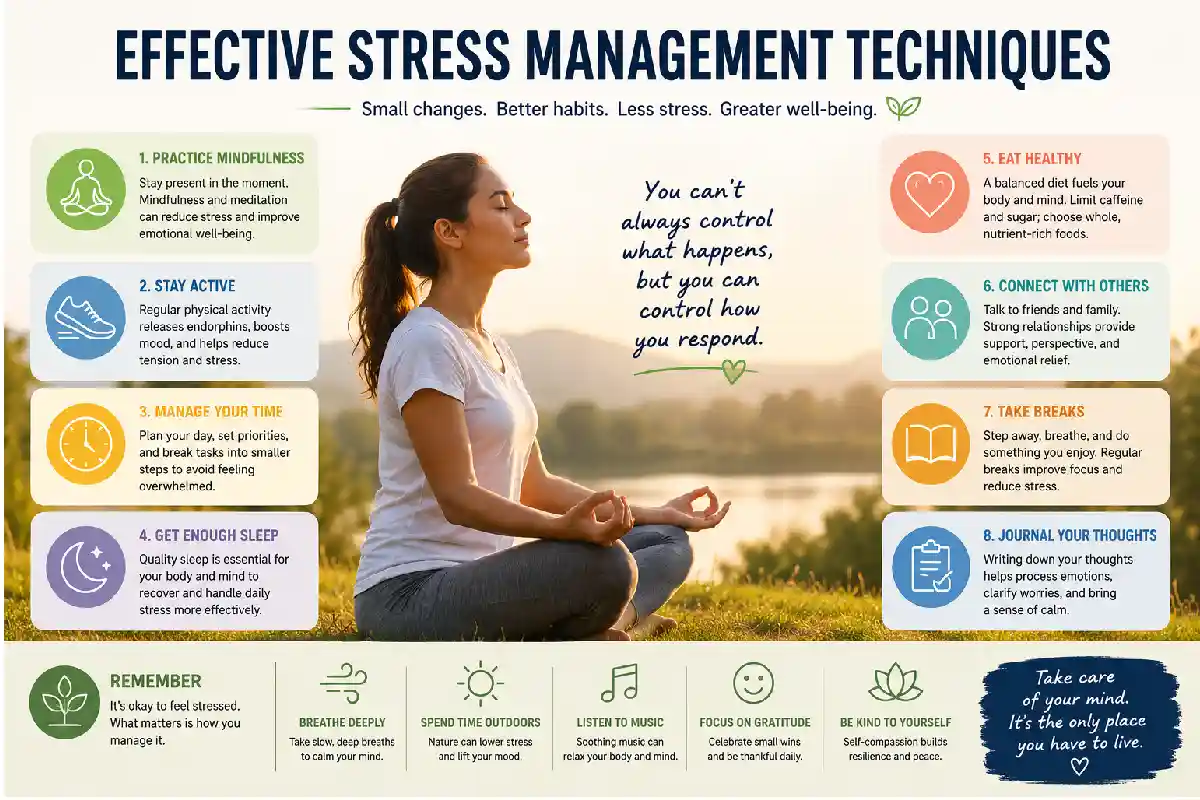
Effective Stress Management Techniques – Today, many of us have stress as a regular factor. Stress may manifest as professional demands; the strain of money; home commitments,; an assortment of private problems. While it could bring us to have higher performance in modest amounts, excessive stress causes lethargy, anxiety, issues with sleeping, and can certainly have disastrous physical repercussions.
However, stress could be appropriately contained by knowledge its triggers as well as adoption of good handling strategies you would increase your mental, well-being and standard of living.
This guide presents straightforward as well as effective stress reduction tactics for you to remain, calm plus strong even in everyday situations.
❝
This article is a part of
Mental Wellness Guide
Understanding Stress and Its Effects
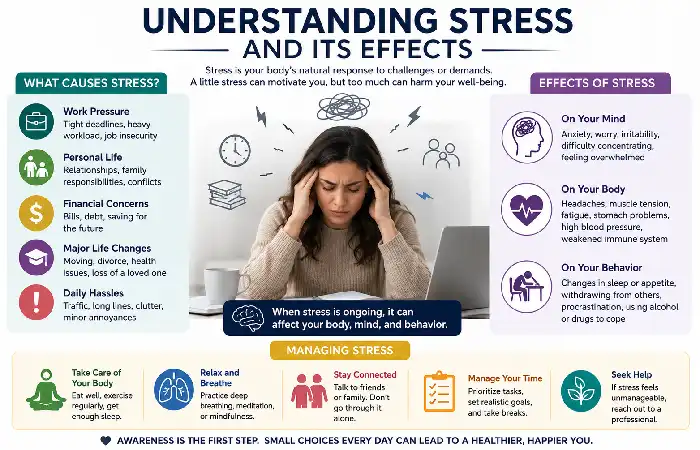
Actually, stress is simply your body’s natural reaction when uncomfortable or complex situations come our way. As soon as you feel that you are no longer coping, your body goes ahead to send in some hormone (s), of which adrenalin and cortisol are among, the release of hormones that get our bodies prepared for this ‘fight-or-flight’ response.
Managing stress becomes easier when it’s part of a complete mental and emotional health approach that supports both your mind and body.
However beneficial in emergency, continued exposure to stressful conditions is harmful
Physical Effects of Stress
| Physical Symptoms | Description |
| Headaches | Frequent tension headaches |
| Fatigue | Constant tiredness and low energy |
| Muscle Tension | Stiffness in neck, shoulders, and back |
| Sleep Problems | Difficulty falling or staying asleep |
| Digestive Issues | Stomach pain, nausea, or indigestion |
| Increased Heart Rate | Elevated blood pressure and pulse |
Emotional Effects of Stress
| Emotional Symptoms | Impact |
| Anxiety | Constant worrying |
| Irritability | Increased frustration |
| Mood Swings | Emotional instability |
| Lack of Focus | Difficulty concentrating |
| Low Motivation | Reduced productivity |
Early recognition of these symptoms is the first move towards successfully combatting stress.
Common Causes of Stress
Developing emotional resilience can help you recover more quickly from stressful situations and adapt to life’s challenges.
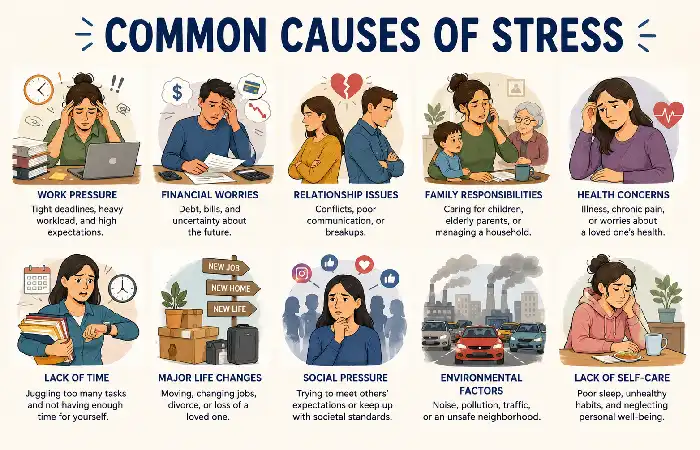
The causes of stress could be coming from various areas of life. Knowing what exactly you triggers could assist you to discover appropriate solutions to treat.
Workplace Stress
Many people experience stress due to:
- Heavy workloads
- Tight deadlines
- Job insecurity
- Lack of work-life balance
- Workplace conflicts
Financial Concerns
Money-related issues often create long-term stress, including:
- Debt
- Rising living expenses
- Unexpected emergencies
- Savings concerns
Relationship Challenges
Personal relationships can contribute to emotional strain through:
- Family disagreements
- Marital conflicts
- Social isolation
- Communication issues
Health Problems
Mental stress comes with chronic health condition, injury and health concerns.
Significant Life Adjustments
These include a move or a recent divorce, birth, marriage, or the change to a new job.
Quick Stress Trigger Assessment
| Stress Source | Low | Moderate | High |
| Work | □ | □ | □ |
| Finances | □ | □ | □ |
| Relationships | □ | □ | □ |
| Health | □ | □ | □ |
| Lifestyle | □ | □ | □ |
Being able to identify what factors contribute the most to the current amount of stress in your life allows you to effectively solve these issues directly.
Relaxation Techniques
Methods that help to calmly the nervous system and buffer the damaging impact of stress hormones in natural way:
Regularly practicing mindfulness is one of the most effective ways to reduce stress and improve emotional well-being.
Deep Breathing: Control your breathing Deep slow breathing is one of the simplest of the all.
4-4-4 Breathing Method
- Inhale for 4 seconds
- Hold for 4 seconds
- Exhale for 4 seconds
- Repeat for 5 minutes
Benefits include:
- Reduced anxiety
- Lower heart rate
- Improved focus
- Better emotional control
Progressive Muscle Relaxation
Here, individual sets of muscles at various locations throughout your body must contract and relax.
A consistent self-care routine can lower stress levels by supporting relaxation, healthy habits, and emotional balance.
Steps:
- Start with your feet.
- Tighten muscles for 5 seconds.
- Release slowly.
- Move upward through the body.
This technique is useful in relieving stress that may lead to muscle tightness.
Meditation
It also helps cultivate mental alertness and equanimity.
Benefits of Meditation
| Benefit | Impact |
| Better Focus | Increased concentration |
| Reduced Anxiety | Calmer mindset |
| Improved Sleep | Better rest quality |
Emotional Well-being
Stronger resilience. Even 10 to 15 minutes a day has been shown to effectively reduce most of your stress.
Mindfulness: This is the practice of being fully and non-judgmentally present to your moment-to-moment experience. Some ways you can be mindfully mindful are Be mindfully aware of where your feet are in relation to the earth;
Walking in nature; View what you see and don’t take your thoughts with you; Pay attention to your listening and hear with your entire body; Visualizations: Imagine peaceful places such as;
- A beach
- Mountain landscape
- Quiet forest
- Garden retreat
Visualization assists in turning focus away from stressors, thereby inducing calm.
Prioritizing quality sleep for mental health helps your body recover from stress and improves focus, mood, and resilience.
Time Management Strategies
One cause of stress and overwhelm in everyday life stems from bad time management skills. You don’t manage your tasks and your day. Taking control of the organization in your day could bring you relief.
Prioritize Important Tasks
Use the Eisenhower Matrix:
| Urgent | Not Urgent |
| Do Now | Schedule |
| Delegate | Eliminate |
This method helps focus energy on what truly matters.
Create Daily To-Do Lists
A structured task list provides clarity and direction.
Effective lists should:
- Include realistic goals
- Prioritize top tasks
- Break large projects into smaller steps
Use Time Blocking
Time blocking involves assigning specific periods for different activities.
Example:
| Time | Activity |
| 7:00 AM | Exercise |
| 8:00 AM | Work Preparation |
| 9:00 AM – 12:00 PM | Focused Work |
| 1:00 PM – 3:00 PM | Meetings |
| 4:00 PM | Personal Tasks |
This method creates fewer disruptions and enhances the focus on activities.
1) Learn to say no.
There are numerous studies that reveal how we are too often stretched between to-do tasks and commitments, which results in an array of health problems, including stress. Setting boundaries- and sticking to them- is a great approach for protecting time and vitality.
Strengthening your emotional intelligence skills can help you recognize stress triggers, manage emotions effectively, and respond calmly under pressure.
2) Stop multitasking.
Many people will assert that “multi-tasking is the essence of success, as the one who keeps themselves occupied with multiple assignments per task becomes more successful.”
However, it is a well-known fact that if one tries to fulfill two tasks per time, a mistake either happens one time or the next time. To avoid this from taking place, let us focus to one thing.
3) Go to the Gym
Physical activities such as working out, sports, dancing or jogging have all proved themselves to be among the effective ways in which nature manages tension. Working out allows the release of natural “feel-good” neurochemicals, also regarded as endorphins, the body’s naturally occurring stress reducers.
Exercise and Stress Relief
| Benefit | Result |
| Endorphin Release | Improved mood |
| Better Sleep | Increased recovery |
| Improved Focus | Enhanced productivity |
| Reduced Anxiety | Calmer mental state |
| Increased Energy | Better daily performance |
Walking
A simple 20-30 minute walk can:
- Lower cortisol levels
- Improve circulation
- Clear the mind
- Enhance creativity
Yoga
Yoga combines movement, breathing, and mindfulness.
Benefits include:
- Increased flexibility
- Improved relaxation
- Reduced anxiety
- Better sleep quality
Strength Training
Resistance exercises help release physical tension while boosting confidence and mental resilience.
Cardiovascular Activities
Popular stress-relieving cardio exercises include:
- Running
- Cycling
- Swimming
- Dancing
- Hiking
Exercise Comparison Table
| Exercise Type | Stress Relief Level | Time Needed |
| Walking | Moderate | 20-30 Minutes |
| Yoga | High | 20-60 Minutes |
| Running | High | 20-45 Minutes |
| Strength Training | Moderate-High | 30-60 Minutes |
| Swimming | High | 30-60 Minutes |
Consistency matters more than intensity when using exercise for stress management.
Lifestyle Habits for a Healthy You,
- Less Stress Healthier daily habits support you for more long-lasting relief
- Stress is closely associated with your sleep.
- Getting more of quality sleep.
- Create a regularly established schedule.
- No screen usage two hours before bedtime.
- Make sure your bedroom is dark and cool.
- No coffee after lunch and you won’t consume caffeine 6 hours before you hit the sheets
- Eat a diet of high-quality foods
- Fuel your brain with nutrient-filled foods for better emotional state and brain function
Stress-Friendly Foods
| Food | Benefit |
| Leafy Greens | Rich in magnesium |
| Nuts | Healthy fats and protein |
| Berries | Antioxidants |
| Fatty Fish | Omega-3 fatty acids |
| Whole Grains | Stable energy levels |
Remain Properly Hydrated
Even mild dehydration causes a more significant sense of fatigue and distress.
Consume Less Alcohol and Caffeine
While you can feel a fleeting boost from these beverages, high amounts can aggravate your symptoms and impact your sleep patterns.
Seek Social Support and Emotional Well-being
Strong connections play an immense role in buffering stress.
Open up to Someone You Trust
Sharing concerns can:
- Reduce emotional burden
- Provide new perspectives
- Strengthen relationships
Spend your time around positive people The right social circle helps improve mood and your ability to feel the emotional weight of whatever’s going on.
Join Community Activities
Participating in:
- Clubs
- Volunteer groups
- Fitness classes
- Social gatherings
Reduces lonely feelings, combats anxiety, has been found to be beneficial to the well-being of its users
Building a Stress Management Plan
A comprehensive stress management program is one that could change your life drastically with lasting results.
Step 1- Identify What Sets You Off
Write down a list of all instances or events that tend to put you off.
Step 2- Evaluate your strategies for handling it
Did it or didn’t it make your problem better or worse with the strategies that you have been relying on
Step 3- Implement The Tools Select A Strategy
Examples:
- Daily exercise
- Meditation
- Time management
- Better sleep habits
Step 4: Create attainable goals
You could also be, for example, to, walk 30 min on a daily base sleep for 7-8 hours a night meditate 10 min every morning,
Step 5: Check Progress
Track:
- Mood changes
- Stress levels
- Sleep quality
- Productivity
Sample Weekly Stress Management Plan
| Activity | Frequency |
| Walking | Daily |
| Meditation | Daily |
| Strength Training | 3 Times Weekly |
| Social Connection | Weekly |
| Journaling | Daily |
| Digital Detox | Weekly |
Comparison of Popular Stress Management Techniques
| Technique | Ease of Use | Effectiveness | Cost |
| Deep Breathing | Very Easy | High | Free |
| Meditation | Easy | High | Free |
| Exercise | Moderate | Very High | Low |
| Yoga | Moderate | High | Low-Medium |
| Time Management | Easy | High | Free |
| Journaling | Very Easy | Moderate | Low |
| Counseling | Moderate | Very High | Medium-High |
Layering several approaches may lead to an optimal approach.
Summary
Stress can not be avoided in life, however, it doesn’t need to manage your life. Identifying your tension triggers, rehearsing relaxation abilities, taking care of time appropriately, participating in regular exercise, and taking part in healthy lifestyle practices can go a long way in helping you handle the difficulties that appear on a day-to-day basis.
The secret to effective tension monitoring is dedication. Every single action taken over the long term will certainly bring about some amazing effects for both your psychological and also physical state. Start with one or two approaches that seem within your reach, grow these methods in a steady way, and produce a plan for handling stress that will serve to assist you in getting through this day without any stress.