

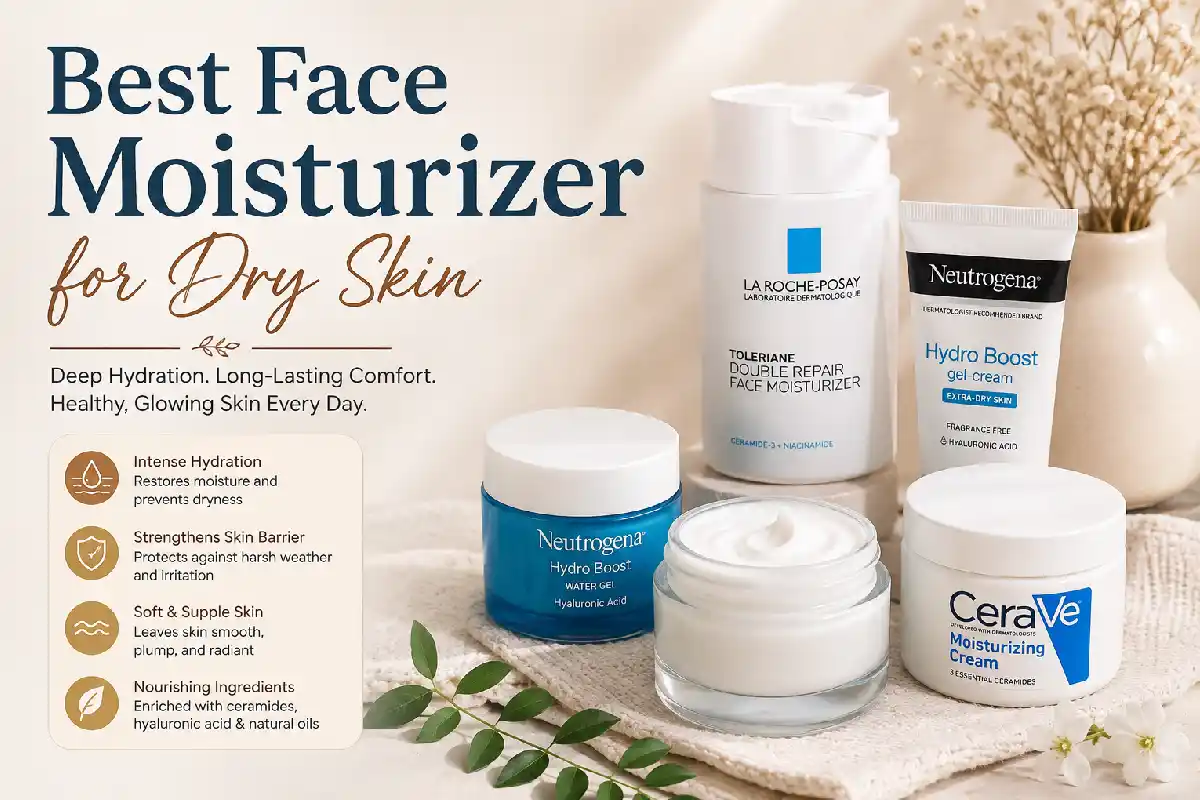
Best Face Moisturizer for Dry Skin: How to Choose the Right One for Deep, Lasting Hydration
 Khizrana Begum
Beauty & Lifestyle Writer
Khizrana Begum writes clear and reader-friendly content covering beauty, lifestyle and related topics.
Read Full Bio of Author →
Khizrana Begum
Beauty & Lifestyle Writer
Khizrana Begum writes clear and reader-friendly content covering beauty, lifestyle and related topics.
Read Full Bio of Author →
 Sameena Begum
Health, Technology & Digital Content Reviewer
Sameena Begum reviews content for clarity, accuracy and overall reader usefulness.
Read Full Bio of Reviewer →
Sameena Begum
Health, Technology & Digital Content Reviewer
Sameena Begum reviews content for clarity, accuracy and overall reader usefulness.
Read Full Bio of Reviewer →
Best Face Moisturizer for Dry Skin: Is your face left feeling tight after washing it? Or perhaps you find yourself battling dry patches and flaking, a rough texture, and foundation that accentuates every dry bit. These may be a few of the signs your skin may need a little something more then just an everyday moisturizer.
Instead of just making skin feel soft for a few hours, a face moisturizer that is suitable for dry skin should support reduce the loss of moisture from the skin.
Keeping the skin barrier functioning as needed for you. Your skin should also continue feeling comfortable all day long. Luckily selecting the right one isn’t rocket science. Understanding which ingredients to include on your want/don’t want list as well as which form (lotion or cream) and what habits might actually be making dry skin symptoms more prominent will assist with making this skin saver choice much more manageable.
❝
This article is a part of
Moisturizing Guide
Why Dry Skin Needs Extra Hydration?
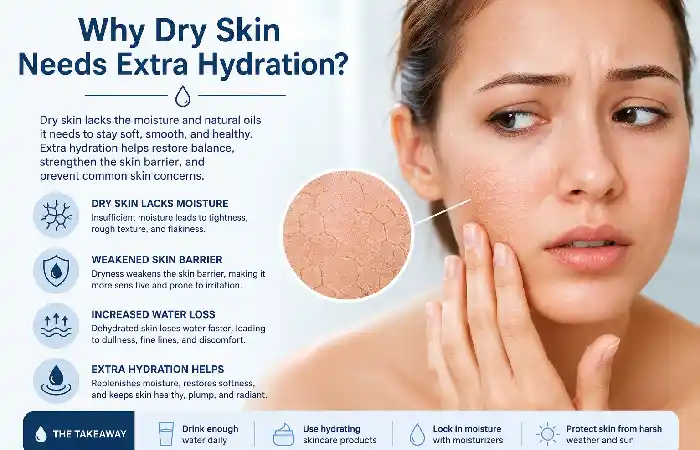
Dry skin often needs consistent hydration and a moisturizer suited to its specific needs. For a broader overview of choosing the right product, explore our complete face moisturizer guide.
For skin that feels dry, a complete loss of natural oils could mean your skin isn’t storing enough moisture. This makes skin more fragile as it may reduce skin’s natural defense, which results in easily losing its essential moisture. And that’s why dry skin looks and feels tight, flaky, rough and itchy, prone to cracks, easily irritated by outdoor elements like wind and cold weather (lack of humidity), hot showers, excessive skin cleaning and too much scrubbing and even some kinds of beauty product. The right moisturizer helps to replenish, protect moisture and support your skin barrier.
What Does a Moisturizer Actually Do?
The face moisturizing functions in three groups of ingredients:
| Ingredient Type | What It Does | Common Examples |
| Humectants | Draw water toward the skin | Hyaluronic acid, glycerin, urea |
| Emollients | Smooth rough areas and soften skin | Squalane, fatty acids, ceramides |
| Occlusives | Reduce moisture loss | Petrolatum, mineral oil, shea butter |
The optimal face moisturizer for dry skin may involve more than one-or a few-of these types. Glycerin helps attract moisture, ceramides help strengthen your skin barrier, and the occlusive keeps that moisture contained.
People with combination or changing skin needs may also want to understand how moisturizers work for oily skin. Explore our face moisturizers for oily skin for practical skincare tips.
Signs Your Skin May Need More Moisture
You could have dry skin if you frequently notice:
- A tautness after cleansing
- Flaky or peeling skin
- A rough or uneven texture
- Subtle increase of lines
- Dull and flat looking skin
- Slight redness or irritation/sensitivity
- Patchy or heavy makeup
A tight sensation after windy or chilly days
Another important thing to note is that dry and dehydrated is not quite the same thing, because dry means lack of oil while dehydration means lack of water ( even oily skin could be dehydrated).
Best Moisturizing Ingredients
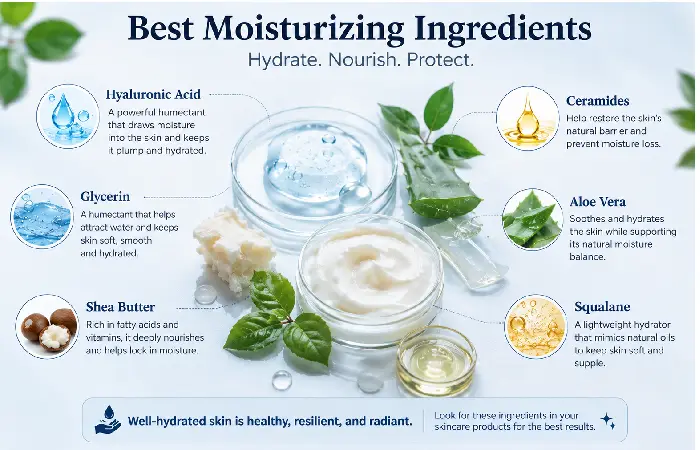
Sun protection is especially important when building a daily skincare routine alongside proper hydration. Explore our face moisturizers with SPF for helpful guidance on combining moisture and sun protection.
When buying a moisturizer, take a look past the buzz words “ultra-hydrating” and “deep moisture” to examine the ingredient list of your lotion of choice. Certain moisturizing ingredients are of particular use to those with dry skin.
1. Ceramides
These are lipids that naturally occur within your skin barrier and will help to support barrier function, which will reduce water loss through skin when used in moisturizer products. These will be great for you if your skin feels dry and rough, or is prone to sensitivity
2. Hyaluronic Acid
Hyaluronic acid as a humectant. It is a humectant, which means that it’s responsible for attracting and retaining water in a humectant-moisturizer combination product, but you still may need richer hydrating properties to truly soothe and replenish the driest skin types alone. Combine a humectant with a more emollient moisturizing ingredients if your skin is extremely dry.
3. Glycerin
Another humectant (like Glycerin) this is the staple ingredient in many cheap moisturizers.
I prefer to use this one when I need something moisturizing but not overly heavy and sticky.
4. Squalane
Squalane softens and smooths your skin. This makes them a healthy selection for those who crave a hydrating but not quite too rich moisturiser.
5. Shea Butter
Shea butter delivers emollient and occlusive properties. It can feel really comfortable on ultra-dry areas, for sure. But just because it’s an occlusive doesn’t mean everyone is better off slathered in a truly rich recipe. The best face moisturizer for your skin, simply put, will be a comforting one you will happily wear as often as possible.
6. Petrolatum
Perhaps the best occlusive for blocking trans-epidermal water loss (TEWL) is Petrolatum, especially if you’re particularly dehydrated below the surface level of the skin. Lots of people see Petrolatum-containing compounds at their favourite all-rounder when it comes to night time and finds anything richer may be too heavy to sport during the day.
Lightweight formulas can be useful for delivering hydration without leaving dry skin feeling overly heavy. Explore our gel cream moisturizer guide to learn more about this type of formula.
7. Urea
The effects of Urea are mostly in the form of a humectant and skin softener. In smaller amounts, it aids hydration and softens flakiness; in larger amounts, it is a stronger skin exfoliant depending on formulation
Moisturizing Ingredients at a Glance
| Ingredient | Main Benefit | Best For |
| Ceramides | Supports skin barrier | Very dry or sensitive skin |
| Glycerin | Attracts moisture | Everyday hydration |
| Hyaluronic acid | Helps bind water | Dehydrated-feeling skin |
| Squalane | Softens skin | Dry and normal skin |
| Shea butter | Nourishes and seals moisture | Very dry skin |
| Petrolatum | Reduces moisture loss | Extremely dry areas |
| Urea | Hydrates and softens | Dry, rough skin |
Cream vs Lotion Moisturizers
Should dry skin use a cream or a lotion is one of the most frequently asked questions of them all. Simply, yes, creams are usually heavier than lotions and are good for dry or very dry skin, while lotions may be enough for mildly dry skin. Normally, creams tend to have a higher proportion of water, oils and other emollient ingredients than lotions.
Dry skin can benefit from a consistent nighttime skincare routine focused on maintaining moisture and comfort. Explore our nighttime face moisturizer guide for practical routine ideas.
Cream Moisturizers
Creams usually have a richer texture than lotions and typically contain more oil or emollients. A good option for you if your skin… Feels tight all day often flaky rough in the winter you require day-long moisture is uncomfortable after washing If your nighttime skincare regimen involves a decadent cream, that will help as well.
Lotion Moisturizers
Lotions are typically a bit thinner and spread really nicely. If your skin is only slightly dry or you aren’t fond of the texture of something more solid lotion is going to be your best friend. If it’s hot or humid out also probably a good call.
Cream vs Lotion Comparison
| Feature | Cream | Lotion |
| Texture | Rich and thick | Lightweight |
| Moisture level | Usually higher | Usually moderate |
| Best for | Dry to very dry skin | Mild to moderately dry skin |
| Feel | More nourishing | Lighter |
| Best time | Often nighttime | Daytime or warmer weather |
| Absorption | Usually slower | Usually faster |
For very dry skin types, it does not have to be one or the other. Often a lightweight lotion in the morning works best with a creamier version before you go to bed.
Daily Moisturizing Routine
But finding products isn’t the only thing that you need to consider. We are all busy so there must be a more uncomplicated way to add moisturizer into our routines. Believe it or not, less is more when it comes to moisturizers.
Morning Routine
Begin your day with a cleanser that is kind and if cleansing dries you out like the Sahara then use lukewarm water in the morning alone!
Next:
- Cleanse softly
- Put on an hydrating serum if you use one.
- Put on face moisturising.
- Set up your sunscreen.
You may want to put a light mist of moisturizer over your skin while it is still a little damp to ease off the tight, dry feeling. It will also make the product easier to blend in.
Evening Routine
You could really concentrate on your barrier in the evening routine.
If you prefer simpler skincare choices, natural moisturizer options may be worth considering based on your skin’s needs. Explore our natural face moisturizer guide for helpful tips and information.
Just to recap here’s a simple evening routine;
Gentle cleanser → hydrating treatment → moisturizer
If you have quite dry skin, you might want to consider using a more substantial cream at night. Apply 10 of your favorite creams if you want the most moisturizing of moisturizer options and to apply this cream over the top you simply want to take a thin layer of your occlusive and apply it over your day moisturizer 6 slugging your skin. Its not suitable for everyone as slugging could clog up your pores if your skin is very oily 5 apply your over moisturizer at your chosen location depending on the weather conditions 6 Apply the over moisturizer as is
How Often Should You Moisturize?
Most with dry facial skin can moisturize at least twice daily, if not more, but you can moisturize any time you think your skin is dry or tight.
| Situation | What to Do |
| After cleansing | Moisturize promptly |
| Cold weather | Use a richer cream |
| Hot weather | Choose a lighter lotion or gel-cream |
| Before bed | Use a nourishing moisturizer |
| After exfoliation | Focus on gentle barrier-supporting hydration |
| Very dry patches | Consider a richer cream or occlusive layer |
Don’t Forget Your Neck
It’s not just your face that is put to the stress of the climate! As far as your moisturiser and sunscreen application comes into play, use as far down your neck as is fitting – your neck can really dry out at different points of the year when it gets a little cooler or more arid!
Mistakes That Worsen Dry Skin
The problem may not always be the moisturizer. It may be the ritual that surrounds the moisturizer.
1. Using Very Hot Water
The relief from a long hot shower can definitely feel wonderful, however the hot water can strip a lot of your’s skin’s oils and make your’s skin even more dry as a result! Use Lukewarm Water When it’s possible use cool or lukewarm water to rinse your face off.
2. Over-Cleansing
Your skin should not “squeaky clean” when you rinse your face.
Tight, stripped feeling skin is a sign that the cleanser might be taking away the healthy oils of your skin. Don’t over clean with an harsh cleanser.
3. Skipping Moisturizer Because Your Skin Feels Oily
Actually, dry skin can sometimes be overly oily in reaction to dryness or irritation.
(Seriously?
Weird right?)
So, if you are actually dry/in need of water don’t cut your moisturizer because it’s shiny-ness shows up.
Simply opt for a more comfortable texture!
4. Exfoliating Too Often
A great way to combat dull skin and a flaky texture, overdoing this could leave you more susceptible to a damaged barrier though. And if the skin on your face already feels tight, dry and a bit irritated and flaky – more exfoliator won’t actually help!
5. Choosing Fragranced Products
The smell doesn’t really make the product cause damage, it’s more that some skin types (particularly more sensitive or damaged ones) can get irritaiton from fragrance. If you have skin that reacts quickly stick to a unscented (fragrance-free) moisturiser.
6. Applying Moisturizer Only When Skin Feels Dry
Avoid postponing until the skin is uneasy as the greater is a thin cream of moisture used at frequent intervals it can be very useful as the mass of cream applied at large intervals can be.
7. Changing Products Too Often
Be patient. Give a new skincare product a chance to see how your skin reacts unless there is any extreme irritation. Frequent product changing can confuse your skin, and then, how you can tell whether something does good for skin or not.
How to Choose the Best Face Moisturizer for Dry Skin?
Your skin deserves it; don’t let “luxury” define your moisturizer purchase. What to look for:
Humectants like glycerin or hyaluronic acid; barrier-building ingredients like ceramides; emollients like squalane or fatty acids; occlusives when you need more serious locking in if your skin desperately needs moisture; a texture you’re likely to enjoy applying regularly; fragrance-free if your skin is super sensitive
It is not necessary to find a bottle that includes each one of those things. A well-formulated simple moisturizer containing just hydrating and skin barrier supporting components can be fine.
Quick Buying Guide
| Your Skin Concern | What to Look For |
| Mild dryness | Lightweight lotion or cream |
| Severe dryness | Rich cream with occlusives |
| Flaking | Humectants + emollients |
| Sensitive dry skin | Fragrance-free, gentle formula |
| Rough texture | Hydrating ingredients + gentle skin-softening ingredients |
| Winter dryness | Richer cream or balm |
| Daytime use | Comfortable, non-greasy moisturizer |
| Nighttime use | Rich barrier-supporting cream 15 |
FAQ
What is the best face moisturizer for dry skin?
The right product for you depends on the skin you have, but an excellent moisturizer will consist of the three types of moisturizing ingredients, that is to say humectants, emollients and barrier-strengthening ingredients, typically including ceramides, glycerin, hyaluronic acid, and squalane. In the case of severely dry skin, a thick cream may actually be superior to an emollient lotion.
Is cream better than lotion for dry skin?
For Cream: This kind of moisturizer is richer than the lotion and offers an increased amount of nourishment which last long with a strong ability to lock down most of moisture into the skin, hence an excellent choice for the dry skin type. This lotion is quite OK for light dryness, and may work quite comfortable on the sensitive skins in weather conditions when the air is moist or when temperatures are warmer.
How often should I moisturize dry skin?
Begin with the basics – for example, use it both in the morning and evening; apply it two times a day. You can also use it when your skin feels dry, tight.
Should I apply moisturizer to wet or dry skin?
Moisturiser “Trapping in moisture If your skin is slightly damp (after you’ve gently dried your face following cleansing – avoid applying anything on dripping wet skin!), your moisturiser helps to effectively trap in hydration. In fact some say the absorption of your moisturiser feels so good on a slightly damp surface,” says Dr Lancer.
Can people with dry skin use hyaluronic acid?
Yes. Additionally, hyaluronic acid is actually a humectant – it basically grabs water and pulls it toward your skin. A smart solution is to top off dry skin with hyaluronic acid serum using a quality moisturizer to ‘lock’ the moisture in.
Is a fragrance-free moisturizer better for dry skin?
A fragrance-free version of any body cream is, though, best if you suffer with sensitive or reactive skin.
Fragrances are of course not a big deal to everyone; but the fewer potential irritants, the easier any routine is to manage.
Can moisturizer get rid of dry skin permanently?
Moisturizing skin will assist in soothing and supporting your healthy barrier, however it will not be able to fundamentally change your skin type in the long term.
In addition dry can creep back if the environment, washing routine, Medications, or some other variable influences skin conditions.
Why does my skin still feel dry after moisturizing?
What may cause such issues? It can be a light moisturizer, harsh cleanse, too few ingredients supporting the barrier. Skin barrier and redness that is accompanied with dryness, itching, peeling, burning or rash may suggest see a dermatologist.
Should I use a separate moisturizer at night?
But some people, who can’t tolerate the extra heft during the day and have a truly oily or Combination skin, can choose to get this benefit from their night- time cream and go with a lighter formulation in the morning that is conducive for easy absorption under make-up and sun-protection cream.
Final Thoughts
The best face moisturizer for dry skin doesn’t need to be the latest craze or have an impressive array of ingredients. It needs to answer the question: What will consistently keep my dry skin from feeling flaky and tight? The answer typically falls into a few categories.
Here, we’ll break down the basics for your best bet.
So you’ll walk away armed with knowledge on what to keep your eye out for and with- what to leave on shelves altogether! If you deal with dry skin, you know there isn’t one miracle ingredient out there that solves it all. Whether the skin issue is as common as the changing of seasons or an underlying condition or environmental exposure… one of these simple tips may be enough to find your relief. It begins with… You actually starting with a cleanser that is actually gentle enough not to remove excess moisture from dry and sensitive skin types.
Avoid scalding water, moisturize often and don’t shy away from ingredients that can help-you just need to know what those ingredients are… What to look for… (ceramides, hyaluronic acid, glyceren, squalane, and occlusives, for example.)
Ultimately – a simple routine of what looks like nothing on shelves, can do more for you because of its ease- of… -use… Don’t assume simple solutions will disappoint; your dry skin is waiting to get comfy!