

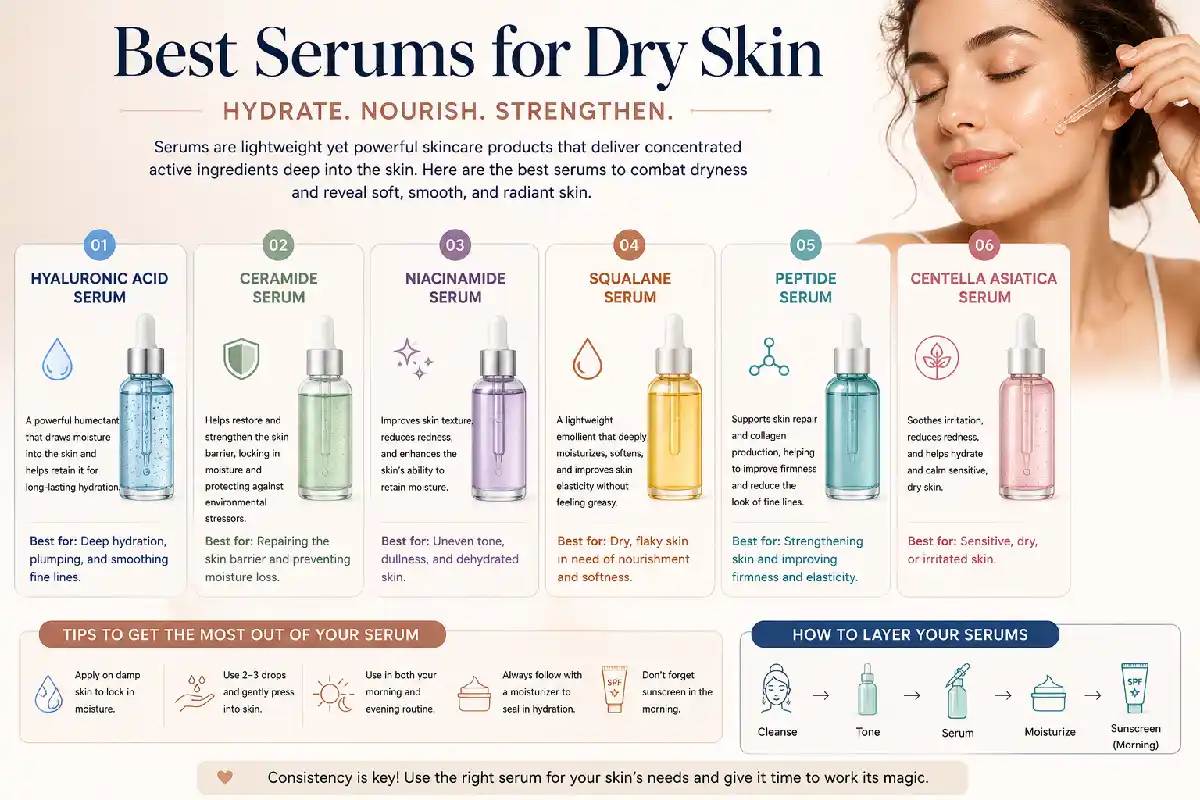
Best Serums for Dry Skin: Top Hydrating Ingredients for Soft & Healthy Skin
 Khizrana Begum
Beauty & Lifestyle Writer
Khizrana Begum writes clear and reader-friendly content covering beauty, lifestyle and related topics.
Read Full Bio of Author →
Khizrana Begum
Beauty & Lifestyle Writer
Khizrana Begum writes clear and reader-friendly content covering beauty, lifestyle and related topics.
Read Full Bio of Author →
 Sameena Begum
Health, Technology & Digital Content Reviewer
Sameena Begum reviews content for clarity, accuracy and overall reader usefulness.
Read Full Bio of Reviewer →
Sameena Begum
Health, Technology & Digital Content Reviewer
Sameena Begum reviews content for clarity, accuracy and overall reader usefulness.
Read Full Bio of Reviewer →
Best Serums for Dry Skin – Skin can become tight, flaky, rough, and it also feels unpleasant and itchy. While skin moisturizers will keep your skin from getting rough, they aren’t always going to hydrate skin as it really needs. A serum can make a huge difference.
Serums are highly concentrated forms of active ingredients that will penetrate your skin and work on hydrating, plumping, nourishing and helping with dehydration and a weak skin barrier.
If your skin feels rough even with moisturiser, we’ve got the solution for you! We’ll go through the role of serums in treating dry skin, what ingredients you should look for in the best serums for dry skin and finally how to choose the most suitable serum.
❝
This article is a part of
Dry Skin Care Guide
Why Dry Skin Needs a Serum?
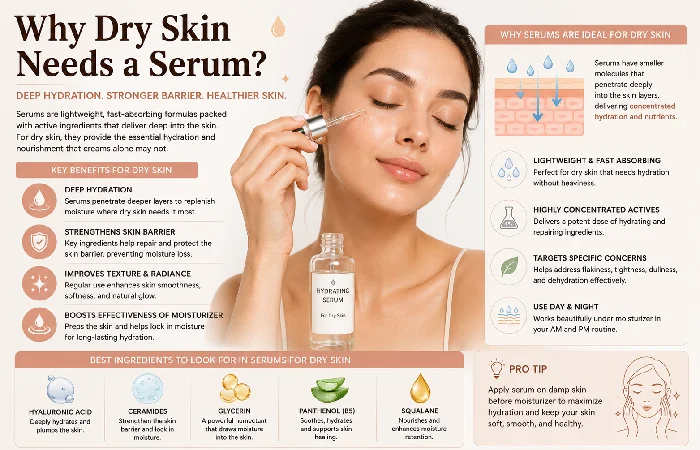
The best skin care products for dry skin work together to restore hydration, strengthen the skin barrier, and improve overall skin health.
Dry skin is skin that is low in both moisture and the natural oils needed for protection. Some of the triggers of dry skin include the climate and weather, air conditioning, the aging process, harsh soaps, and environmental irritants.
A quality serum helps by:
- Delivering concentrated hydration
- Strengthening the skin barrier
- Reducing flakiness and rough patches
- Increased skin elasticity
- Making moisturizers more efficacious.
- For healthier looking and radiant skin.
Instead of the usual heavy creams that tend to sit on the surface, the light, fast-absorbing serums make them the perfect element to your morning as well as nighttime skin-care routine.
What Does a Serum Do?
A serum is a light-textured product, concentrated in actives. Since molecules are smaller in serums than they are in most moisturizers, they will go deeper in the skin.
Apply your serum before one of the best moisturizers for dry skin to help seal in hydration and keep your skin soft throughout the day.
Benefits of Using a Serum
| Benefit | How It Helps Dry Skin |
| Deep Hydration | Delivers moisture beneath the skin surface |
| Barrier Repair | Supports healthy skin function |
| Improved Texture | Smooths rough and flaky patches |
| Anti-Aging Support | Reduces fine lines caused by dehydration |
| Better Absorption | Works well under moisturizers |
| Skin Brightening | Improves dull and tired-looking skin |
The serum is your treatment stage and the moisturizers the sealer stage of your routine.
Always begin with a gentle cleanser for dry skin so your serum can absorb more effectively into clean skin.
Key Ingredients to Look for in Serums for Dry Skin
And since all moisturizing serums aren’t made alike, the following key ingredients might just help you make a more intelligent purchase.
| Ingredient | Primary Benefit |
| Hyaluronic Acid | Attracts and holds water |
| Ceramides | Strengthen skin barrier |
| Peptides | Improve elasticity and repair |
| Glycerin | Draws moisture into skin |
| Squalane | Provides lightweight nourishment |
| Panthenol | Soothes irritation |
| Niacinamide | Supports barrier function |
| Aloe Vera | Calms and hydrates |
The best combinations often use more than one of these elements.
For the best results, include serums as part of your daily skincare routine for dry skin to provide consistent hydration and nourishment.
Hyaluronic Acid Serums
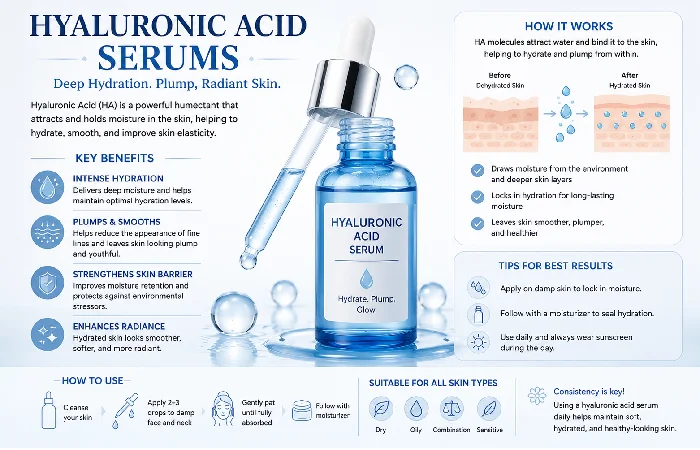
Hyaluronic Acid: one of the most loved ingredients to tackle dry skin-and we see why.
Hyaluronic acid – Despite the name, it does not exfoliate. It’s a component naturally found in the skin and can hold 1,000 times its weight in water.
Choosing serums with clinically proven ingredients for dry skin can help improve moisture retention while soothing dryness and irritation.
Benefits of Hyaluronic Acid
- Instantly hydrates skin
- Reduces tightness
- Improves skin plumpness
- Softens fine lines caused by dehydration
- Suitable for most skin types
Best For
- Dehydrated skin
- Seasonal dryness
- Dull complexion
- Fine lines from moisture loss
How to Use It
If your skin is prone to irritation, explore our guide to dry skin care for sensitive skin for gentle serum recommendations and skincare tips.
Using hyaluronic acid serum on slightly wet skin locks in extra hydration. Right after this apply moisturizer.
Pros and Cons
| Pros | Cons |
| Lightweight texture | Needs moisturizer afterward |
| Fast absorption | Can feel sticky in some formulas |
| Suitable for sensitive skin | Results depend on humidity levels |
| Immediate hydration | Not enough alone for very dry skin |
Hyaluronic acid remains one of the best daily hydration ingredients available.
Ceramide-Based Serums
Despite what the name may suggest hyaluronic acid doesn’t actually exfoliate the skin. It is, in fact, naturally present in the skin where it acts to hold on to up to one thousand times it’s own weight in water.
Why Ceramides Matter?
Think of your skin’s barrier like a shield. Ceramides will maintain hydration and also keep external irritants out of your skin.
Benefits of Ceramide Serums
- Restore damaged skin barrier
- Prevent water loss
- Reduce dryness and irritation
- Improve skin resilience
- Support long-term hydration
Best For
- Extremely dry skin
- Sensitive skin
- Mature skin
- Compromised skin barrier
Ceramide Serum Advantages
| Feature | Benefit |
| Barrier Repair | Helps skin heal faster |
| Long-Term Hydration | Retains moisture longer |
| Sensitive Skin Friendly | Low irritation risk |
| Anti-Aging Support | Improves skin elasticity |
The Use of Ceramide Serums. Certain dermatologists recommend a ceramide-infused serum if you’re already prone to dryness and have developed dry winter skin.
Peptide Serums
Peptides-small strings of amino acids-help stimulate the body’s ability to make collagen and promote the healing of skin.
While most often touted as an anti-aging treatment, most peptide serums can be fantastic for dry skin due to their ability to keep the skin looking stronger and hydrated.
Benefits of Peptides
- Support collagen production
- Improve skin firmness
- Strengthen the skin barrier
- Reduce fine lines
- Enhance hydration
Who Should Use Peptide Serums?
Peptide serums are particularly beneficial for:
- Mature skin
- Dry skin with wrinkles
- Skin showing signs of aging
- Those wanting preventative skincare
Peptides vs Hyaluronic Acid
| Feature | Peptides | Hyaluronic Acid |
| Main Function | Repair & Firmness | Hydration |
| Anti-Aging Benefits | High | Moderate |
| Immediate Results | Moderate | Fast |
| Long-Term Benefits | Excellent | Good |
| Barrier Support | Strong | Moderate |
A lot of skincare experts suggests using both ingredients together for maximum benefits.
Other Beneficial Serum Ingredients for Dry Skin
Squalane
This liquid gem is virtually identical to the natural oils in your skin, it leaves you hydrated but without feeling like a greaseball.
Benefits include:
- Deep moisturization
- Softening rough patches
- Improved skin elasticity
- Reduced moisture loss
Niacinamide
Plus it works to help soothe the skinbarrier as it works to help calm redness and irritation.
Benefits:
- Barrier strengthening
- Reduced sensitivity
- Improved texture
- Better moisture retention
Panthenol
Also referred to as Provitamin B5, panthenol provides skin calming benefits and moisture.
Benefits:
- Calms irritation
- Promotes healing
- Increases hydration
- Softens skin
Comparison of Popular Serum Types for Dry Skin
| Serum Type | Hydration Level | Barrier Repair | Anti-Aging Benefits | Best For |
| Hyaluronic Acid | Excellent | Moderate | Moderate | Daily hydration |
| Ceramide Serum | Very High | Excellent | Good | Damaged barrier |
| Peptide Serum | High | High | Excellent | Aging dry skin |
| Squalane Serum | High | High | Moderate | Dry sensitive skin |
| Niacinamide Serum | Moderate | High | Good | Barrier support |
| Panthenol Serum | High | Good | Moderate | Irritated skin |
How to Layer Serums?
Lots of us multi-serum application but then how should we apply?
The general rule is:
Apply from thinnest to thickest consistency.
Recommended Routine for Dry Skin
- Gentle cleanser
- Hydrating toner (optional)
- Hyaluronic acid serum
- Peptide or ceramide serum
- Moisturizer
- Sunscreen (morning routine)
Example Morning Routine
| Step | Product Type |
| 1 | Cleanser |
| 2 | Hyaluronic Acid Serum |
| 3 | Ceramide Serum |
| 4 | Moisturizer |
| 5 | Sunscreen |
Example Night Routine
| Step | Product Type |
| 1 | Cleanser |
| 2 | Hyaluronic Acid Serum |
| 3 | Peptide Serum |
| 4 | Rich Moisturizer |
Getting the application order for your products right helps ensure proper absorption, meaning you’ll reap the best benefits.
Choosing the Right Formula
The best serum depends on your skin’s unique needs.
If Your Skin Feels Tight
Choose:
- Hyaluronic acid
- Glycerin
- Panthenol
If Your Barrier Is Damaged
Choose:
- Ceramides
- Niacinamide
- Fatty acids
If You Have Dry Mature Skin
Choose:
- Peptides
- Ceramides
- Hyaluronic acid
If Your Skin Is Sensitive
Choose:
- Ceramides
- Panthenol
- Aloe vera
Quick Selection Guide
| Skin Concern | Recommended Serum |
| Flakiness | Ceramide Serum |
| Dehydration | Hyaluronic Acid Serum |
| Fine Lines | Peptide Serum |
| Sensitivity | Panthenol Serum |
| Barrier Damage | Ceramide + Niacinamide |
| Rough Texture | Squalane Serum |
Common Mistakes When Using Serums
Even with a perfect serum, it just won’t do its thing if it is not applied in the proper manner.
Applying Too Much Product
A few drops are usually enough.
Skipping Moisturizer
Serums offer the cure but usually a moisturizer comes afterwards for the seal.
Using Harsh Cleansers
Harsh surfactants can lead to drying and diminished effects of serum.
Inconsistent Use
Results improve with regular application over several weeks.
Ignoring Sunscreen
Hydrated skin still requires daily sun protection.
Tips to Maximize Serum Results
- Apply to slightly damp skin.
- Use consistently morning and night.
- Follow with moisturizer.
- Avoid extremely hot water.
- Drink adequate water daily.
- Use a humidifier during dry seasons.
- Choose fragrance-free formulas if you have sensitive skin.
A lot of minor adjustments can make a large difference in comfort and appearance of your skin
Final Thoughts
When selecting an effective serum to treat dry skin it all starts with showing some appreciation for your skin type as opposed to being swayed by what the newest beauty trend dictates. From that the best hero ingredients your serum is likely to pack will either be hyaluronic acid for some much needed boost in hydration, ceramides to enhance the skin barrier to hold moisture and peptides to target the longer term aim of strengthening and firming. A combo of hydrating and barrier reinforcing will more than likely prove effective.
You should find yourself enjoying a nicely plumped glow with skin that’s comfy, well-hydrated and feels great on when using on a regular basis.
Your top artillery in getting comfortable, happy, well-hydrated skin: an effective serum packed full of hyaluronic acid for an instant blast of hydration, ceramides to support barrier health or peptides for longer term firmer, anti-ageing effects.