


Skin Care for Dry Skin: Complete Guide to Hydrated and Healthy Skin
 Khizrana Begum
Beauty & Lifestyle Writer
Khizrana Begum writes clear and reader-friendly content covering beauty, lifestyle and related topics.
Read Full Bio of Author →
Khizrana Begum
Beauty & Lifestyle Writer
Khizrana Begum writes clear and reader-friendly content covering beauty, lifestyle and related topics.
Read Full Bio of Author →
 Sameena Begum
Health, Technology & Digital Content Reviewer
Sameena Begum reviews content for clarity, accuracy and overall reader usefulness.
Read Full Bio of Reviewer →
Sameena Begum
Health, Technology & Digital Content Reviewer
Sameena Begum reviews content for clarity, accuracy and overall reader usefulness.
Read Full Bio of Reviewer →
Skin Care for Dry Skin: Dry skin is the annoying kind that can never seem to keep its issues at bay. What start out as minor post-wash tightness one morning might progress to a dull, flaky, rough and irritated feeling just a couple of days later. Foundation just won’t sit and a slick of moisturizer may evaporate in mere moments.
You might even start to notice that your most treasured face wash leaves a tightness behind!
Good news! Dry skin typically improves with a better understanding of what it’s thirsty for – often not necessarily a more expensive routine. Typically, it is about the type of product that you choose, order of application, and a few innocent missteps that exacerbate the dryness you’re dealing with.
In this guide, you’ll learn about dry skin – what causes it, how to tell if you have it, which ingredients to consider, which ingredients to steer clear of, best practices for your morning and evening routines, considerations based on season, recommendations for products and much more!
❝
This article is a part of
Dry Skin Care Guide
At a Glance: What Dry Skin Needs?
| Need | Why It Matters | Best Approach |
| Gentle cleansing | Don’t stripping skin’s natural oil | Look for a soft, no or low-sudsing facial cleanser. |
| Deep hydration | Adds water to the skin | Concentrate on the humectants: glycerine and hyaluronic acid. |
| Barrier repair | Locks moisture in | A few options include ceramides, squalane, fatty acids and cholesterol |
| Overnight nourishment | Night Time Is Skin’s Repair Time | Switch to a thicker cream or sleeping mask |
| Sun protection | Dryness becomes more acute with sun damage | Start your day with broad-spectrum SPF |
| Consistency | Regular skin care makes dry skin happy | Keep the routine simple and regular |
What Causes Dry Skin?

Keeping your skin hydrated starts with choosing one of the best moisturizers for dry skin to strengthen the skin barrier and lock in lasting moisture.
Dry skin basically refers to that skin that simply doesn’t absorb any more water than it can’t possibly absorb. Sometimes it’s only temporary – for instance, weather shifts or over washing can cause the skin’s moisture level to drop. Sometimes chronic skin dry is also an indication of your skin’s age, nature, locale or any skin concerns.
Common causes of dry skin
| Cause | How It Affects Skin |
| Temperature, humidity, dryness. | The skin loses moisture with less humidity |
| Hot showers | Sunlight’s harmful effects to skin |
| Harsh cleansers | High potency surfactants weaken the skin barrier |
| Over-exfoliation | The rough brushing makes your outer skin layer thinner |
| Aging | We don’t get as oily as we once were |
| Indoor heating or AC | Air to dries you out and makes your skin crack |
| Dehydration | Dryness can make skin tight |
| Skin conditions | The redness and swelling cause itching when skin gets dry |
| Certain medications | This causes dry, itchy skin |
| Sun exposure | UV rays weaken the barrier and increase water loss |
The skin barrier connection
The outermost part of your skin works like a wall. A wall that is strong ensures your moisture stay put, and impurities are held out. When it becomes compromised, the skin feels tight, irritated, and can become more reactive.
A gentle cleanser for dry skin removes dirt and impurities without stripping away your skin’s natural oils.
That’s why treating dry skin isn’t only about lathering on a cream, it involves helping to restore and protect the skin barrier so the skin itself can maintain hydration.
All in all, a dose of oil, water, and barrier care can be beneficial for dry skin.
How to Identify Dry Skin?
How To Identify Dry/ Dehydrated Skin Dry skin isn’t always noticeable on the surface immediately. Some of people don’t have dry skin they have only dehydrated skin and there are others who have both.
Signs of dry skin
- Tight feeling after cleansing
- Flaky or scaly patches
- Rough texture
- Dull appearance
- Fine lines look more visible
- Itchiness
- Stinging with some products
- Makeup clinging to dry areas
- Redness in certain spots
Dry skin vs. dehydrated skin
| Feature | Dry Skin | Dehydrated Skin |
| Main issue | Lack of oil | Lack of water |
| Skin type? | Usually a skin type | Usually a temporary condition |
| Feel | Rough, tight, flaky | Tight, tired, dull |
| Can also be oily? | Usually no | Yes, even oily skin can be dehydrated |
| Best help | Rich creams, oils, barrier repair | Hydrating serums, water-based products, good moisturizer |
However, it can simultaneously be your skin to be both dehydrated and dry! That is rather usual (after all most of us live through winter months and have already gotten hit with strong skincare products).
Simple self-check
Your skin is tight after washing your face , appears a bit sallow and you’re prone to dryness and flakiness on and around your cheeks, the tip of your nose, and the corners of your lips. If it is already becoming irritated and stinging to products that never previously affected your skin, your barrier will also benefit from support.
Essential Skin Care Steps for Dry Skin
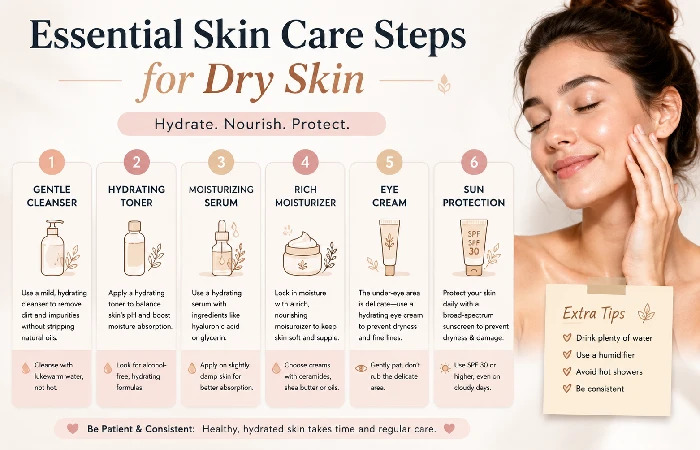
For consistent results, follow a daily skincare routine for dry skin that includes cleansing, moisturizing, and sun protection.
Your dry skin everyday regime needs to be mild, moisturizing and also regular. Much less is a lot more regarding regimen. These need to be reliable.
Step 1: Use a gentle cleanser
Your skin can have a “clean” feeling that isnt just squeaky clean If you feel your skin tight and “clean” after washing, your cleanser might be too potent or might be stripping essential natural oils.
Look for:
- Cream cleanser
- Hydrating gel cleanser
- Non-foaming cleanser
- Fragrance-free formulas
Steer clear of those cleansers that immediately make your face feel tight
Step 2: Apply hydrating products on damp skin
Don’t leave skin too long after cleansing. Skin hydrators work effectively because a small amount of water is sealed on skin with skin tonics and essences.
Step 3: Use a moisturizer with barrier support
Your moisturizer has to get a lot more accomplished than feel great if you suffer from dry skin.. It has to trap moisture in and make your skin’s natural protection stronger.
Adding serums for dry skin can provide an extra boost of hydration while helping improve the skin’s texture and overall appearance.
Look for:
- Ceramides
- Glycerin
- Hyaluronic acid
- Squalane
- Panthenol
- Shea butter
- Fatty acids
- Cholesterol
Step 4: Seal extra dry spots
If a place is a little dry apply a bit of occlusived product over the top of your moisturiser over night . This will seal the moisture.
Examples:
- Petrolatum-based balm
- Healing ointment
- Rich sleeping cream
Step 5: Use sunscreen every morning
Even dry skin needs sun protection. Exposure to the sun may even exacerbate dryness, red, and coarse texture.
Choose:
- Broad-spectrum SPF 30 or higher
- Moisturizing sunscreen
- Cream or lotion texture
Step 6: Exfoliate carefully
A simple scrub could be a part of your regimen, however, don’t overdo exfoliation too fiercely. Exfoliation on a superior level will damage your skin’s defensive functions and cause dryness and dehydration.
Learning about the most effective ingredients for dry skin can help you choose products that soothe dryness and support a healthier skin barrier.
Use exfoliation sparingly:
- Once a week or less if your skin is very dry or sensitive
- Prefer gentle chemical exfoliants over rough scrubs
- Stop if the skin becomes red, raw, or stingy
Best Ingredients for Dry Skin
More than the glittery packaging, is the ingredients that the cream contains. If your skin is dry, we prefer to use formulas that can moisturise, soften, and help repair the skin barrier
| Ingredient | What It Does | Why It Helps Dry Skin |
| Glycerin | Draws water into skin | Great daily hydrator |
| Hyaluronic acid | Retain moisture in the skin. | Skin is left feeling fuller and more supple. |
| Ceramides | Restore your protective barrier | Dry less |
| Squalane | conditions the hair, adding moisture | Lightweight yet Filling |
| Shea butter | Rich emollient | Helps smooth rough patches |
| Petrolatum | Seals in moisture | Excellent for very dry areas |
| Panthenol | Soothes and hydrates | Good for sensitive dry skin |
| Urea | Hydrates and softens rough skin | Helpful for flaky texture |
| Lactic acid | Gentle exfoliation + hydration | Can improve roughness when used carefully |
| Niacinamide | Supports barrier and tone | Can help strengthen dry, irritated skin |
| Fatty acids | Support skin structure | Improve softness and comfort |
| Cholesterol | Barrier repair helper | Works well with ceramides and fatty acids |
Best ingredient combinations
Typically, the best dry-skin formulas combine:
- Hyaluronic acid OR glycerin (Humectant)
- Squalane OR shea butter (Emollient)
- Petrolatum or Dimethicone (Occlusive)
- Ceramides (Barrier repairing)
- That combination is stronger than using only one type of ingredient.
Why ceramides matter so much
These skin lipids ceramides can prove to be very helpful when the skin barrier is compromised as ceramides can help to restore the skin barrier. For people with dry skin, this may mean the skin’s moisture-retention skills dramatically improve and irritancy can decrease.
Why glycerin is underrated
Glycerin is so useful for helping with dry skin – simple, reliable and way gentler than so many trendier actives it pulls moisture to your skin then keeps it there. Honestly, plenty of dry skin types flourish much more with a high concentration of glycerin than they do in some heady luxury cream packed with fragrance.
If your skin is easily irritated, explore our guide to dry and sensitive skin care for gentle products and skincare tips tailored to delicate skin.
Ingredients to Avoid
Dry skin does not mean that you should avoid absolutely every active ingredient indefinitely, But there are certain ingredients and habits that can actually exacerbate dry skin, especially if they are used frequently.
| Ingredient/Practice | Why to Be Careful |
| Alcohol denat. | Can be drying and irritating |
| Strong sulfates | May strip skin oils |
| Fragrance | Can irritate sensitive dry skin |
| Harsh scrubs | Can damage the skin barrier |
| Strong astringents | May increase tightness and flaking |
| Too many acids | Over-exfoliation can worsen dryness |
| Retinoids without support | Can cause peeling and irritation |
| Hot water | Strips protective oils |
| Frequent cleansing | Removes too much moisture |
| Over-washing face | Makes the barrier weaker over time |
A balanced view on actives
Not everything people try to stay away from is actually a problem, though. “You might be able to get away with retinol on dry skin if you’re very gentle, don’t overdo it, go lightly around sensitive areas, and keep other powerful actives to a minimum. Even with chemical exfoliants, a gentle acid, used in moderation, may provide some help for texture issues but usually aggressive treatments are not best for a dry skin type.”
Morning Skin Care Routine for Dry Skin
“Keep moisture out during the day and also make sure to protect the skin on your face with this morning ritual that will not make your life complicated, and will also feel soothing,” according to our expert skin therapist at the Facial Co.
Simple morning routine
- Cleanse lightly or just rinse with water
- Use hydrating toner/serum.
- Use cream moisturizer.
- Use sun screen.
- Once the products absorb use makeup.
Morning routine breakdown
- Cleanse gently
If you have ultra-dry skin, skip the lather at breakfast – even lukewarm water might be sufficient. If you applied richer products before bed, a minimal amount of a gentle wash won’t do any harm.
- Hydrate
Add a serum like Hyaluronic Acid, Panthenol or Glycerin (which is for before lock down so it locks moisture inside)!
- Moisturize
Opt for a cream, not an extremely thin gel-unless you know that your skin loves the texture of gel-creams, which are somewhere in between. Typically, drier skin types feel much more comfortable in richer creams.
- Sunscreen
Opt for moisturizing sunscreens that don’t leave you with tight or chalky skin. Should a sunscreen cause tight feeling to your dry skin, consider buying sensitive skin sunscreen options.
Morning routine table
| Step | Best Type for Dry Skin | Goal |
| Cleanse | Gentle cleanser or water rinse | Avoid stripping |
| Hydrate | Serum with glycerin or HA | Add water |
| Moisturize | Cream with ceramides or squalane | Lock moisture in |
| Protect | SPF 30+ sunscreen | Prevent damage |
Helpful morning tip
Use products on your still-slightly-damp skin. This tiny act can be a game-changer for people in more ways than they’d ever anticipate.
Night Skin Care Routine for Dry Skin
Nighttime is also when repair happens. During the night, water escapes from your skin, and for that reason the evening routine is the most opportune moment to help replace lost moisture to rebuild your skin barrier.
Simple night routine
- Take off your make up and sun cream
- Gently Wash the skin
- Apply a moisturising serum
- Follow up with a nourishing cream moisturiser
- Seal with an occlusive if needed
- Use targeted treatments carefully
Night routine breakdown
- Remove makeup and sunscreen
A cleansing balm, micellar water or oil wash can work here. No vigorous rubbing needed.
- Cleanse again, lightly
Optional Second Cleansing You may want to consider doing a second clean in the morning, if you wear makeup or sunscreen on an daily basis. Make this second cleanse light and quick.
- Hydrating serum
So this will be a great time for things like a hyaluronic acid or a glycerin.
- Rich moisturizer
Choose one that includes ceramides, fatty acids, panthenol, and shea butter.
- Occlusive layer if needed
For very dry areas, apply a thin layer of balm or ointment over your moisturizer.
- Targeted treatment
When using retinol or acids, apply them separately at first. For the most part, dry skin improves when you ease into active treatments.
Night routine table
| Step | Best Product Type | Why It Helps |
| Makeup removal | Balm or micellar water | Protects skin from rubbing |
| Cleanser | Gentle cream cleanser | Prevents dryness |
| Serum | Hydrating serum | Adds moisture |
| Moisturizer | Rich cream | Repairs barrier |
| Sealant | Ointment or balm | Prevents water loss |
A comforting night routine idea
If your skin feels really dry, treat the night like you’re feeding the skin as opposed to treating the skin. If I reframe it that way then I’ll make better decisions: less actives, more moisture, more barrier.
Common Dry Skin Mistakes
Sometimes dry skin really is not improving, all because of routine accidentally compromising the condition.
Mistake 1: Using a foaming cleanser that is too strong
Your cleanser likely feels far too much when your skin feels tight after use. That feeling of tightness doesn’t equate with cleanliness. Usually, it’s the skin barrier expressing that there is trouble!
Mistake 2: Skipping moisturizer because skin feels oily in spots
For some reason there may still be some parts of our face including the t zone of your forehead or cheeks that are shining. Don’t let your face being this one area of moisture and not apply some moisturiser.
Mistake 3: Over-exfoliating
Overdoing your exfoliation routine can take your dry skin from dry, to angry and dry. This also means more redness, flaking and sensitive skin.
Mistake 4: Using hot water
Although water is relaxing, it can dry out your skin a lot quicker than warm water
Mistake 5: Applying products on fully dry skin only
Some moisturizers do absorb better into damp rather than fully dry skin
Mistake 6: Using too many active ingredients at once
Retinoids, acids, vitamin C, scrubs and pimple poppers can work in others settings, but dry skin generally won’t tolerate this kind of work.
Mistake 7: Ignoring the body
Dry skin can be a bother beyond just the face: a lot of folks also need assistance on the neck, elbows, arms, hands and legs in addition to dry skin and the lips!
Mistake 8: Not changing routines with the season
Summer and winter routines are probably not going to be the same. Helps with severe dry patches, the lips, sealing at night,
Seasonal Skin Care Tips
The weather can impact the state of our skin. What may have been effective for you during one season may have to be tweaked a bit in the next season.
Winter skin care tips
Winter is usually the hardest season for dry skin.
- Use a richer moisturizer
- Add a balm or ointment at night
- Avoid long hot showers
- Use a humidifier if indoor air is dry
- Reduce exfoliation
- Keep sunscreen in the routine
Summer skin care tips
Despite summer, the air can really suck the moisture right out of your skin – AC and constant washing only exacerbate it.
- Use a lighter cream if heavy formulas feel uncomfortable
- Do not skip moisturizer
- Choose a sunscreen that feels comfortable enough to wear daily
- Gently Rinse Sweat Instead Of Over-Washing
- Stay hydrating especially if you’re an outdoor-person.
Monsoon or humid weather tips
Even humidity can make dry skin feel less tight. However, whether through the air conditioning at home or even just too much soap, dryness will continue.
- Keep the routine simple
- Use a balanced moisturizer, not a very heavy one if your skin feels sticky
- Watch for fungal irritation if products are too occlusive in humid weather
- Do not remove moisturizer just because the weather is sticky
Seasonal comparison table
| Season | Main Dry Skin Problem | Best Adjustment |
| Winter | Moisture loss | Richer cream, less exfoliation |
| Summer | Sun and AC dryness | Lightweight hydration + SPF |
| Monsoon | Sticky air, indoor dryness | Balanced moisturizer, simple routine |
Best Products for Dry Skin
Not all the time your “most” viewed product is going to be the expensive one. The “best” products in the case of dry skin usually consist of one that cleanses well, hydrate’s, and repairs the skin barrier.
- Gentle cleanser
A cream or milky cleanser is often ideal. It should clean without leaving the face squeaky.
- Hydrating serum
Look for serums with glycerin, hyaluronic acid, panthenol, or beta-glucan.
- Barrier-repair moisturizer
For those with very dry skin, this is one thing I would tell you has the most benefits! “We look for moisturizers with ingredients such as ceramides, emollients and occlusives.”
- Occlusive balm
Good for severe dry patches, forlips, and for nighttime sealing.
- Sunscreen with a moisturizing finish
Wear the comfortable sunscreen.
- Overnight cream or sleeping mask
Best for skin when you really want to get some relief for dryness or flakiness.
Product comparison table
| Product Type | Best For | Texture | Key Ingredients to Look For |
| Cleanser | Daily cleansing | Creamy & nongagling | Glycerol, ceramides, gentleness. |
| Serum | Extra hydration | Lightweight | Hyaluronic acid + panthenol + glycerin |
| Moisturizer | Barrier support | Rich lotion or a dab of cream | Ceramide, Squalane, and Shea Butter |
| Balm/Ointment | Very dry spots | Thick, sealing | Petrolatum Lanolin Dimethicone |
| Sunscreen | Daytime protection | Creamy SPF | Moisturizingbase, broad spectrum filters |
| Sleeping mask | Night repair | Rich and comforting | ceramides, peptides, oils |
How to choose the right moisturizer?
Choose based on your dryness level:
| Dryness Level | Best Texture | What to Look For |
| Mild dry skin | Moisturizer | glycerine, hyaluronic acid, squalane |
| Moderate dry skin | Cream | Pantothenic acid and the fatty acids called ceramides |
| Very dry skin | A thick lotion or salve | Petrolatum, Shea Butter, cholesterol, Ceramides |
| Sensitive dry skin | Fragrance-free cream | Barrier Support, few ingredients |
What matters more than the brand
For dry skin: When your skin is dehydrated, it’s what’s under the brand name that matters. A plain, unscented moisturizing cream formulated with ceramides is much more beneficial for the skin than something overly fragranced with a lot of potent active ingredients.
Face Care Extras That Help Dry Skin
Fast dry skin can recover, supported outside the basic routine.
Drink enough water
Although not a cure all, keeping ourselves properly hydrated aids the body. Skin-care makes more of a difference as a whole if the body as a whole feels better.
Use a humidifier
Dry Air on skin not so hot. Dry air on skin could cause your skin condition to flare. Try a room humidifier.
Avoid long showers
You should also opt for shorter, warm showers over a steamy one so as not to over-dry out your already parched complexion.
Pat the skin dry
A hard towel will make it worse so give yourself a light slap.
Protect hands and lips
Hands and lips often show dryness first. Keep the handbag essentials a hand cream and a lip balm are both tiny treats but they pack a punch.
Be gentle with towels and masks
Harsh products and anything that has a tendency to “rub” skin away will just aggravate the existing roughness.
Sample Full Routine for Dry Skin
Here is a simple routine layout that many dry skin types can handle well.
Morning
- Gentle rinse or cleanser
- Hydrating serum
- Moisturizer
- Sunscreen
Night
- Makeup/sunscreen removal
- Gentle cleanser
- Hydrating serum
- Rich moisturizer
- Occlusive on dry areas
Weekly
- Gentle exfoliation once, if needed
- A nourishing mask or sleeping cream
- Check for products that sting or dry you out
Simple routine table
| Time | Routine Goal | Example Focus |
| Morning | Protect and hydrate | Hydration + SPF |
| Night | Repair and seal | Moisture + barrier repair |
| Weekly | Improve texture gently | Light exfoliation + nourishment |
Frequently Asked Questions
1. What is the best skin care routine for dry skin?
In morning, softly cleanse and then use the mosturiser (if skin requires it to feel more comfortable before applying heavy moisturiser) then heavy Moisturiser and the day cream with SP. At bedtime have a good repair regime with some barrier support products.
2. Can dry skin be cured?
For the most part, even if your dry skin comes along with a condition such as eczema, or a continued issue within the environment that causes dryness you’ll be able to manage this easily over the longer run.
3. Is oil enough for dry skin?
Oil helps with sealing moisture, but you may need water-based hydration and barrier protecting ingredients for dry skin as well.
4. Should dry skin use exfoliation?
Yeah, and probably do so very gently. You don’t want to overdo it or you may only end up with more dryness. The occasional gentle exfoliation should do.
5. Can oily skin also be dry?
Yeah. Your skin may still be oily and yet have dehydrated or dry parts. The condition of your skin is not equivalent to the hydration level of the skin.
6. Is HA suitable for dry skin?
Yes it is a humectant and it pulls other moisturizer to you skin and make it hydrate.
7. Are ceramides good for dry skin?
Extremely well, ceramides bind the skins barrier together making it more harder to lose any of its moisture
8. Which type of sunscreen should i use to treat dry skin?
There are some sunscreens which helps keep your skin moisturizing when you are out in sun too.
9. Why is my skin so tight when I wash?
The tight feeling typically indicates you are over-stripping your skin barrier either by a harsh cleanser or by simply not providing moisture after washing.
10. What is the fastest way to calm dry skin?
A hydrating cleanser topped with a moisturizing serum on wet skin and a heavy cream is your secret to supple skin. Don’t forget an occlusive balm if you suffer from an exceedingly dry spot.
Final Thoughts
Dry skin benefits from nourishment and support rather than overhauling and restriction. Most people with dry skin actually just need a break from the treatments that might have been depleting them, a change in the way they moisturize, and an increase in skin barrier management. The best routine for dry skin often involves less intensity and a more rhythmic approach. Daily sunscreen and a good moisturizer can make a significant improvement, and once your dry skin has calmed, other factors, including make-up application will fall into place.