


Best Skincare Ingredients for Combination Skin: Top Ingredients for Balanced, Healthy Skin
 Khizrana Begum
Beauty & Lifestyle Writer
Khizrana Begum writes clear and reader-friendly content covering beauty, lifestyle and related topics.
Read Full Bio of Author →
Khizrana Begum
Beauty & Lifestyle Writer
Khizrana Begum writes clear and reader-friendly content covering beauty, lifestyle and related topics.
Read Full Bio of Author →
 Sameena Begum
Health, Technology & Digital Content Reviewer
Sameena Begum reviews content for clarity, accuracy and overall reader usefulness.
Read Full Bio of Reviewer →
Sameena Begum
Health, Technology & Digital Content Reviewer
Sameena Begum reviews content for clarity, accuracy and overall reader usefulness.
Read Full Bio of Reviewer →
Best Skincare Ingredients for Combination Skin – Small wonder it is difficult to shop for combo skin. Oily – If you experience oily skin, you might get an oily shine on the T-zone (forehead, nose, and chin) of your face throughout the day, but have dry or even normal cheeks. An ultra rich moisturizer might create a clogs and an extra shine on your T-zone while an intense acne treatment might make the sensitive, dry regions in your cheeks dry and even inflamed.
Thankfully, nowadays there are many new ingredients that effectively manage your oil production, your hydration, and support your overall healthy skin, barrier function, and don’t create new problems.
Learn more about combination skin to understand which ingredients work best for balancing oily and dry areas.
Find below some of the best-in-class ingredients to shop for combination skin, according to board-certified dermatologists. We will review what these do and when you should look for them.
❝
This article is a part of
Combination Skin Care Guide
The Skin-Boosting Power of Ingredients
Combination skin calls for balance-not the kind of thing you’d find in extreme makeup. Rather than addressing every region as if it’s oily or dry, combine ingredients that help manage the various regions on your face.
When you’re in the market for a skin-care item, here are the perks you’ll experience:
- Controls excess oil
- Hydrates dry areas
- Reduces acne breakouts
- Improves skin texture
- Strengthens the skin barrier
- Brightens uneven skin tone
- Reduces early signs of aging
Characteristics of Combination Skin
| Oily Areas | Dry Areas |
| Shiny forehead | Tight cheeks |
| Enlarged pores | Flaky skin |
| Blackheads | Rough patches |
| Acne breakouts | Mild sensitivity |
Niacinamide
If acne is a concern, discover how to manage combination skin with acne using effective skincare ingredients.
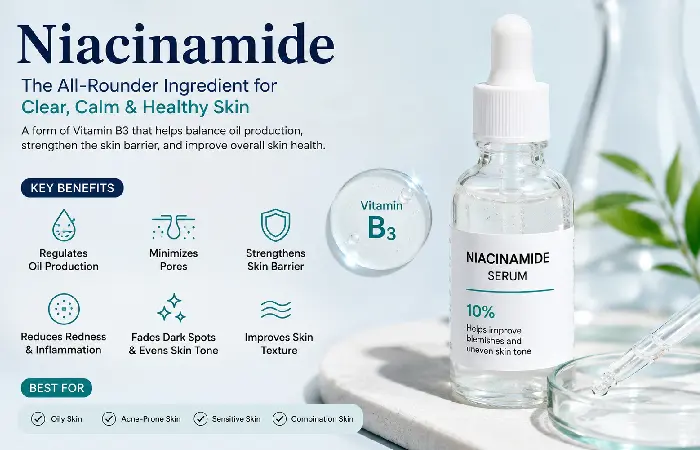
Niacinamide – our ultimate multitasking skin super hero (seriously, all skin types can benefit from this one) We know what combo skin type is going to thank us first. The Niacinamide is the answer to stripping away all oils on combo and greasy skin types – it works in harmony to ensure skin is kept happy, and the hydration and barrier-boosting properties won’t leave skin feeling stripped and raw – it soothes!
Benefits:
- Controls excess oil
- Reduces enlarged pores
- Calms redness
- Improves skin barrier
- Fades acne marks
- Reduces inflammation
- Supports collagen production
Best Concentration
| Skin Concern | Recommended Strength |
| Beginner | 2–5% |
| Oil control | 5% |
| Acne-prone skin | 5–10% |
| Hyperpigmentation | 5–10% |
Who Should Use It?
Niacinamide is ideal for:
- Oily T-zone
- Enlarged pores
- Acne-prone skin
- Sensitive skin
- Uneven skin tone
It can be used both morning and night.
Hyaluronic Acid
Most of the people think that for oily skin, we should stay away from moisturizing.
Pair the right ingredients with the best skincare routine for combination skin for healthier-looking skin.
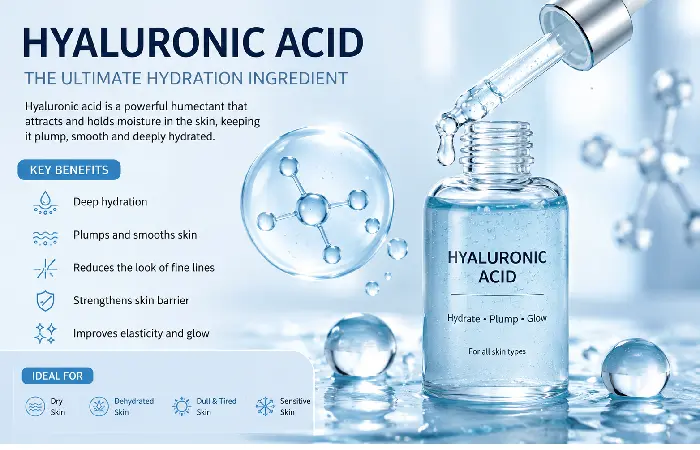
This is actually among the top misconceptions around! Combination skin, for example, begins to look oilier when your skin gets dehydrated due to its creation of oil. If you’re looking for an oil free answer to the issues that comes with dehydration, then hyaluronic acid will lure hydration into your skin without all the greasiness.
Benefits
- Deep hydration
- Lightweight texture
- Smooths fine lines
- Improves elasticity
- Plumps dry areas
- Supports skin repair
Molecular Sizes
| Type | Benefit |
| High Molecular Weight | Surface hydration |
| Low Molecular Weight | Deeper hydration |
| Multi-weight Formula | Best overall hydration |
Tips for Use
- Apply on slightly damp skin.
- Follow with moisturizer.
- Use twice daily.
Ceramides
These natural fats are located on your skin’s outer layer, and they hold skin cells in place like cement to stop moisture from escaping. For combination skin, an eroded skin barrier typically happens when someone has cleansed their skin too aggressively or is using anti-acne products.
Not sure of your skin type? Compare combination skin vs dry skin before choosing active ingredients.
Benefits
- Repairs damaged barrier
- Locks in moisture
- Reduces irritation
- Protects against environmental damage
- Improves skin softness
Signs You Need Ceramides
- Dry patches
- Tightness after cleansing
- Sensitive skin
- Flaky cheeks
- Redness
Best Used With
| Ingredient | Why They Pair Well |
| Hyaluronic Acid | Better hydration |
| Niacinamide | Barrier repair |
| Peptides | Anti-aging |
| Glycerin | Moisture retention |
Salicylic Acid
BHA – an oil-soluble, beta-hydroxy acid – salicylic acid dives down into the pores to melt away oil, dead skin, and gunk. On combination skin, it primarily benefits the oily T-zone, preventing and helping manage breakouts.
Complete your beauty routine with these makeup tips for combination skin for a smooth, balanced finish.
Benefits
- Clears clogged pores
- Reduces blackheads
- Prevents acne
- Controls excess oil
- Smooths skin texture
- Exfoliates gently
Best Strength
| Product | Strength |
| Cleanser | 0.5–2% |
| Toner | 1–2% |
| Serum | 2% |
| Spot Treatment | 2% |
How Often?
Avoid these common combination skin mistakes to get the most benefit from your skincare products.
Beginners should start two or three times weekly before increasing frequency.
Avoid Overuse
Too much salicylic acid may cause:
- Dryness
- Irritation
- Peeling
- Barrier damage
Vitamin C
Vitamin C is a powerful antioxidant that brightens skin and protects against environmental damage.
Combination skin, for example can be suffered from with all these different symptoms such as dark spots on skin or dull complexions or a few spots which form an acne on face.
Vitamin C helps address all of these concerns.
Benefits
- Brightens complexion
- Fades pigmentation
- Protects against pollution
- Boosts collagen
- Improves skin texture
- Enhances sunscreen protection
Popular Forms
| Type | Stability |
| L-Ascorbic Acid | Highest potency |
| Sodium Ascorbyl Phosphate | Gentle |
| Magnesium Ascorbyl Phosphate | Hydrating |
| Ethyl Ascorbic Acid | Stable |
Morning Routine
Vitamin C works best during the daytime when paired with sunscreen.
Peptides
This is why peptides – tiny little amino acid chains – essentially tell the skin to produce more collagen and elastin. And, although often known for their anti-aging effects, they’re critical to the health of your young and elastic skin.
Benefits
- Improves firmness
- Supports collagen production
- Smooths fine lines
- Strengthens skin barrier
- Enhances elasticity
- Helps skin recover
Types of Peptides
| Type | Main Benefit |
| Signal Peptides | Collagen production |
| Carrier Peptides | Skin repair |
| Enzyme Inhibitor Peptides | Reduce wrinkle formation |
| Neurotransmitter Peptides | Smooth expression lines |
Peptides are great allies to hyaluronic acid and ceramides.
Here’s the scoop on layering…Do these ingredients layer together?
Absolutely!
The good news is that many of these powerhouses will pair with each other.
They simply must be introduced into your routine with some caution.
| Morning Routine | Evening Routine |
| Gentle cleanser | Gentle cleanser |
| Vitamin C | Niacinamide |
| Hyaluronic Acid | Salicylic Acid (2–3 nights/week) |
| Moisturizer with Ceramides | Ceramide Moisturizer |
| Sunscreen SPF 30+ | Peptide Serum |
Ingredient Guide by Skin Concern
| Concern | Best Ingredient |
| Oily T-zone | Niacinamide |
| Dry cheeks | Hyaluronic Acid |
| Weak skin barrier | Ceramides |
| Blackheads | Salicylic Acid |
| Dullness | Vitamin C |
| Fine lines | Peptides |
Common Ingredient Pairings
| Combination | Benefit |
| Niacinamide + Hyaluronic Acid | Balanced hydration and oil control |
| Ceramides + Hyaluronic Acid | Long-lasting moisture |
| Vitamin C + Sunscreen | Enhanced antioxidant protection |
| Peptides + Ceramides | Stronger, healthier skin barrier |
| Niacinamide + Peptides | Improved skin texture and firmness |
Introduce ingredients gradually.
While most ingredients can be tolerated in products well, it’s a smart move to not introduce many new active ingredients to your routine at one time. Try adding one product at a time and observing how your skin reacts to it for a few weeks before introducing the next. This strategy is the least irritating way to go about it and helps you discern what’s working best for you.
When it comes to purchasing products:Choose fragrance-free if you have sensitive skin. Opt for gels and light lotions during the day, and thick creams with ceremides to your cheeks in the evening, if you have particularly dry skin. Take care not to over wash – both dry and oily skins react negatively.
Always, always wearbroad-spectrum protection throughout the day, particularly while using active ingredients.
How not to
| Mistake | Better Approach |
| Using harsh cleansers twice daily | Use a gentle, pH-balanced cleanser |
| Applying salicylic acid every day immediately | Start with 2–3 times per week |
| Skipping moisturizer because of oily areas | Use a lightweight, non-comedogenic moisturizer |
| Layering too many active ingredients at once | Introduce products gradually |
| Ignoring sunscreen | Apply SPF 30 or higher every morning |
Sample Daily Routine for Combination Skin
| Step | Morning | Evening |
| Cleanse | Gentle cleanser | Gentle cleanser |
| Treat | Vitamin C serum | Niacinamide serum or Salicylic Acid (alternate nights) |
| Hydrate | Hyaluronic Acid serum | Hyaluronic Acid serum |
| Moisturize | Lightweight ceramide moisturizer | Ceramide moisturizer |
| Protect | Broad-spectrum SPF 30+ | — |
FAQs
Can you use niacinamide and vitamin C together?
Yes, and best yet, newest formulations have finally made this possible. Applying your vitamin C in the morning and niacinamide in the evening is the easiest and best way, though many people don’t have problems using these two at the same time of day.
Can I use salicylic acid for combination skin?
Yes, especially effective on oilier spots and pores. In case of a dry face you may try the T-zone only, or use a few times a week. Should oily skin be treated with hyaluronic acid? Absolutely – an oily skin can be dried too and HA will give the weightless drop of moisture.
Do I need ceramides for combination skin when it’s not dry?
No, ceramides benefit all skin types and types of skin as they repair and reinforce the moisture barrier of your skin.
When should I expect to see the results?
Improvements in hydration are often visible within a few days, while improvements in oiliness, pigmentation, or lines can take about 4–12 weeks.
Summary
The bottom line is that for combination skin you should look for ingredients that work towards balancing your skin. This means using different products for different parts of your face. That’s why niacinamide, hyaluronic acid, ceramides, salicylic acid, vitamin C and peptides are a number of the simplest you’ll add to your skincare routine! By gently adding them into your routine over time, you’ll find that your skin becomes smoother, healthier and more radiant.