

Combination Skin and Acne: How to Manage Both?
 Khizrana Begum
Beauty & Lifestyle Writer
Khizrana Begum writes clear and reader-friendly content covering beauty, lifestyle and related topics.
Read Full Bio of Author →
Khizrana Begum
Beauty & Lifestyle Writer
Khizrana Begum writes clear and reader-friendly content covering beauty, lifestyle and related topics.
Read Full Bio of Author →
 Sameena Begum
Health, Technology & Digital Content Reviewer
Sameena Begum reviews content for clarity, accuracy and overall reader usefulness.
Read Full Bio of Reviewer →
Sameena Begum
Health, Technology & Digital Content Reviewer
Sameena Begum reviews content for clarity, accuracy and overall reader usefulness.
Read Full Bio of Reviewer →
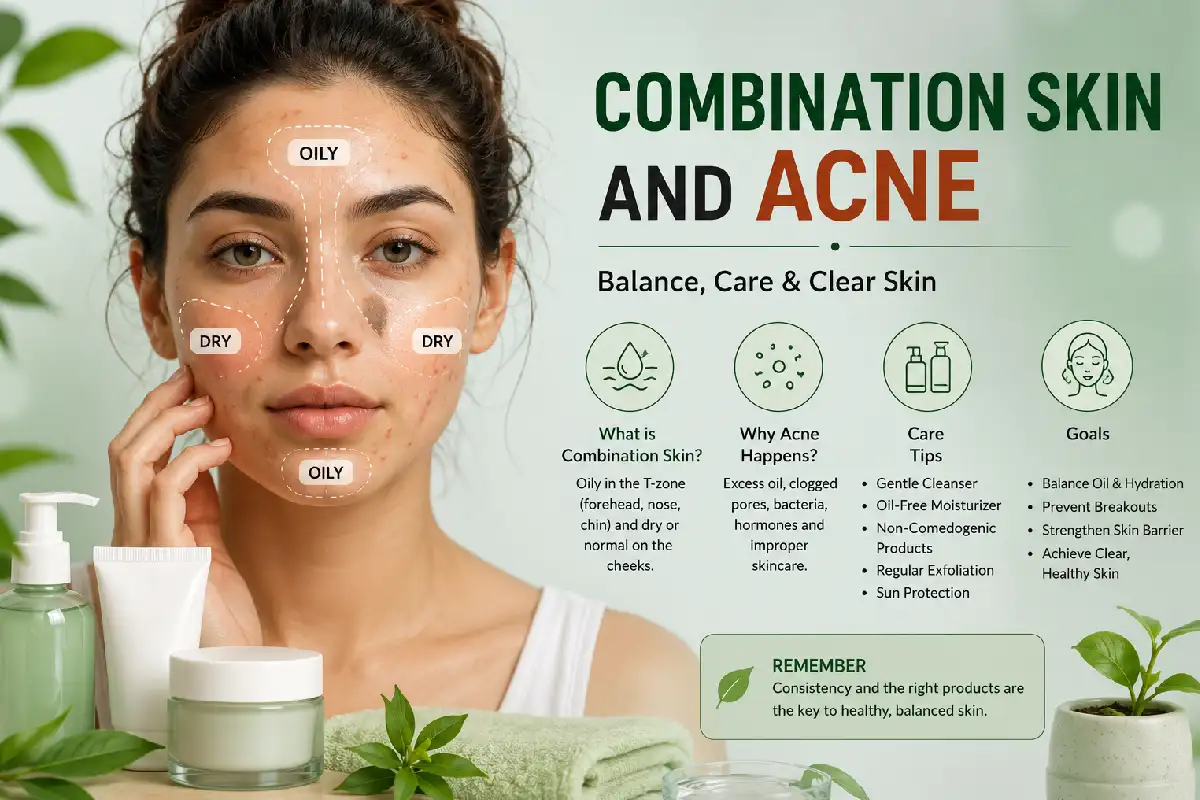
Combination Skin and Acne: Coping with combination skin is no small feat. On one hand, part of your face can feel oily, shiny, and on the other hand, dry and flaky or tight. Adding in some acne, however, and skin management gets even more complicated.
Most of us that have combination skin find it difficult to manage oily and dryness at the same time with products, let alone with acne making a home on oily skin while drier skin continues to react.
Luckily, combination skin and acne can go hand in hand without issues if you focus on the right skin products and methods. Knowing how your skin behaves is the initial and biggest hurdle. In this article you’ll be provided with information that covers why combination skin experiences acne, cleansing, the right ingredients to choose, moisturizers, spot treatment and the preventative measures to keep you at bay.
Learn the basics of combination skin to better understand why some areas are oily while others remain dry.
❝
This article is a part of
Combination Skin Care Guide
What Is Combination Skin?
Combined Skin The most popular of all types of skin combined with it is the oily yet dry area, in a few areas.
Following the best skincare routine for combination skin can help reduce breakouts while maintaining skin balance.
Typically:
| Skin Area | Common Characteristics |
| T-Zone (Forehead, Nose, Chin) | Oily, enlarged pores, blackheads |
| Cheeks | Normal to dry |
| Jawline | May experience occasional breakouts |
| Around Eyes | Often dry and sensitive |
Because combination skin needs equilibrium, you will discover that the majority of merchandise formulated specifically for oily skin will likely leave parts of the face excessively dry while merchandise aimed at dry skin will leave your face oily with blemishes.
Understanding Acne in Combination Skin
If you’re unsure about your skin type, compare combination skin vs dry skin to choose the right treatment approach.
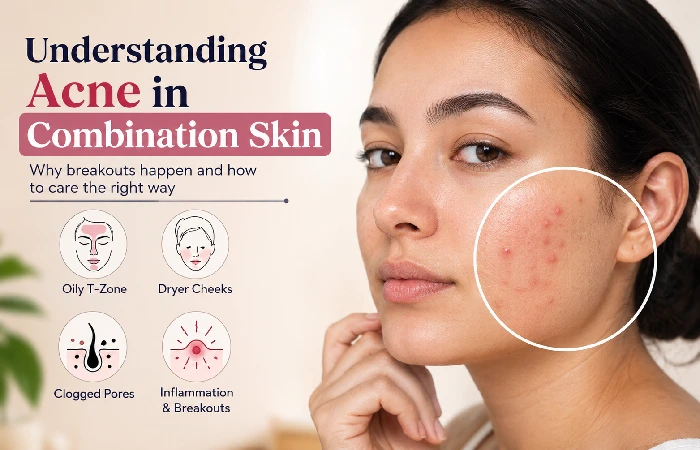
Acne develops when pores become clogged with:
- Excess oil (sebum)
- Dead skin cells
- Bacteria
- Inflammation
In the case of combination skin, the T-zone over-exerts sebum
. This excess oil often leads to:
- Whiteheads
- Blackheads
- Papules
- Pustules
- Occasional cystic acne
Simultaneously, very harsh acne treatments can cause irritation to dry areas on the face. As a result, treatment becomes a difficult battle to fight.
Using the right ingredients for combination skin can help control acne without causing dryness.
Why Combination Skin Is Prone to Acne?
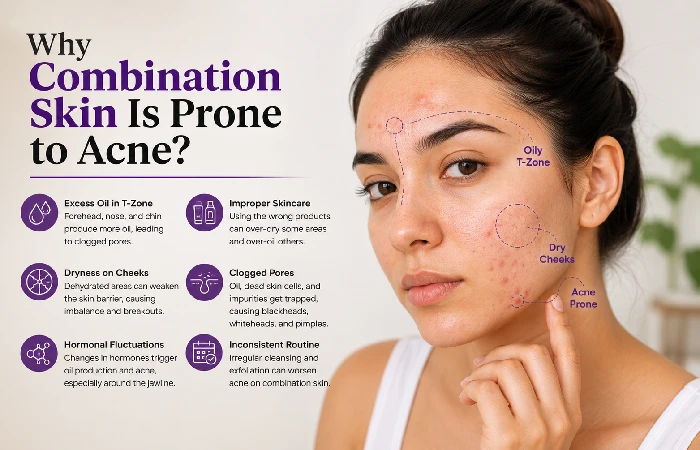
With combination skin, you have a perfect breeding ground for acne.
Excess Oil Production
Because there is a concentration of sebaceous glands in the T-zone of the face, the oil that those glands secrete can clog pores more easily.
Common Signs
- Shiny forehead
- Oily nose
- Enlarged pores
- Frequent blackheads
Skin Barrier Imbalance
Many people try to remove oil using harsh cleansers.
Unfortunately, over-cleansing can:
- Strip natural moisture
- Weaken the skin barrier
- Increase irritation
- Trigger more oil production
The cycle may sometimes result in having dry skin and breaking out at the same time.
Hormonal Changes
Hormones influence oil production significantly.
These makeup tips for combination skin can help you cover blemishes while preventing clogged pores.
Acne often worsens during:
| Trigger | Effect on Skin |
| Puberty | Increased oil production |
| Menstrual cycles | Hormonal breakouts |
| Pregnancy | Fluctuating skin changes |
| Stress | Increased cortisol levels |
| Poor sleep | Inflammation and oil imbalance |
Environmental Factors
External influences can worsen combination skin acne.
Examples include:
- Humidity
- Pollution
- Heavy makeup
- Sweat accumulation
- Dirty pillowcases
This factors can cause your pores to become clogged and the bacteria to grow.
Best Cleansing Practices
One of the most essential treatments for combo skin, and also to prevent pimples, is to properly wash your face.
Avoid these common combination skin mistakes that may worsen acne and skin irritation.
We’re trying to get rid of grime and build-up while still protecting the skin barrier.
Choose a Gentle Cleanser
Look for cleansers that:
- Remove excess oil
- Maintain hydration
- Support skin barrier health
- Are non-comedogenic
Ideal Ingredients
| Ingredient | Benefit |
| Glycerin | Hydrates skin |
| Ceramides | Protect barrier |
| Green Tea | Calms inflammation |
| Aloe Vera | Soothes irritation |
| Niacinamide | Balances oil |
Cleanse Twice Daily
Most dermatologists recommend:
Morning
Removes:
- Overnight oil
- Sweat
- Bacteria
Evening
Removes:
- Makeup
- Sunscreen
- Pollution
- Excess sebum
If you’re cleansing more than twice a day, this can make you skin feel dry as the moisture can be stripped from it.
Avoid Harsh Scrubs
Physical scrubs can make your acne-prone skin get more micro-tears on your face.
Avoid:
- Walnut scrubs
- Rough exfoliating brushes
- Abrasive particles
Instead, use chemical exfoliants occasionally.
Double Cleansing for Makeup Users
A two-step cleanse can be beneficial.
Step 1
Oil-based cleanser removes:
- Makeup
- Sunscreen
Step 2
Gentle water-based cleanser removes:
- Sweat
- Dirt
- Residue
This way the pores stay cleaner without rubbing it in so much.
Acne-Friendly Ingredients
Not all ingredients work with combination skin.
An ideal combo skin ingredient is going to keep oiliness under control without over-drying.
Salicylic Acid
For getting clear acne, Salicylic acid is best in this kind of formulation.
Benefits
- Penetrates pores
- Dissolves excess oil
- Reduces blackheads
- Prevents congestion
Best For
| Acne Type | Effectiveness |
| Blackheads | Excellent |
| Whiteheads | Excellent |
| Mild acne | Very Good |
| Cystic acne | Moderate |
Niacinamide
Niacinamide is a jack-of-all-trades ingredient.
Benefits include:
- Oil regulation
- Reduced redness
- Improved barrier function
- Smaller-looking pores
Especially effective in combination skin because it will create both of oily and dry skin.
Benzoyl Peroxide
It may contribute to removing some bacteria responsible for causing acne.
Advantages
- Reduces inflammation
- Clears active pimples
- Prevents future breakouts
Start with a lower concentration (2.5-5%) to prevent irritation.
Azelaic Acid
Azelaic acid is excellent for sensitive combination skin.
Benefits
- Reduces acne
- Fades post-acne marks
- Calms redness
- Improves skin texture
It is often better tolerated than stronger acids.
Retinoids
Retinoids assist normalize the cell turnover of skin.
Benefits:
- Prevent clogged pores
- Reduce acne lesions
- Improve skin texture
- Minimize acne scars
Start slowly to avoid dryness.
Acne Ingredient Comparison
| Ingredient | Controls Oil | Clears Acne | Gentle on Skin | Fades Marks |
| Salicylic Acid | High | High | Moderate | Low |
| Niacinamide | High | Moderate | Excellent | Moderate |
| Benzoyl Peroxide | Moderate | High | Moderate | Low |
| Azelaic Acid | Moderate | Moderate | High | High |
| Retinoids | High | High | Moderate | Moderate |
Moisturizing Without Clogging Pores
And a common response from acne sufferers is to not use moisturizer at all. You may be concerned it would clog up the pores on your skin.
That is not true at all, in fact this is probably one of the biggest skincare mistakes that people make.
When your skin is dehydrated it will in fact produce more oil.
Why Moisturizer Matters
Benefits include:
- Stronger skin barrier
- Reduced irritation
- Better acne treatment tolerance
- Improved hydration
Look for Non-Comedogenic Products
Comedogenic non-comedogenic What non-comedogenic means This product is formulated so that it is not likely to clog or block the pores.
Recommended Texture
| Skin Condition | Best Texture |
| Oily T-Zone | Gel |
| Dry Cheeks | Lightweight lotion |
| Summer | Water-based gel |
| Winter | Light cream |
Best Moisturizing Ingredients
Hyaluronic Acid
Draws water into the skin.
Ceramides
Repair the skin barrier.
Squalane
Provides lightweight moisture.
Panthenol
Soothes irritated skin.
Ingredients to Use Carefully
While ingredients like this may not actually break out people who don’t suffer from acne, they still have this issue.
Examples:
- Heavy mineral oils
- Thick waxes
- Highly fragranced creams
Everybody has a different tolerance, hence why a patch test is necessary.
Spot Treatments
Instead of a spot treatment for you entire face, you can apply one to your whole face!
It’s especially good for combination skin so you don’t have to go at the whole face.
Benzoyl Peroxide Spot Treatments
Works best on:
- Red pimples
- Inflamed acne
- Whiteheads
Apply directly to affected areas.
Sulfur Treatments
Sulfur helps:
- Absorb excess oil
- Reduce inflammation
- Dry active blemishes
Ideal for occasional breakouts.
Hydrocolloid Patches
These patches have become extremely popular.
Benefits
- Protect pimples
- Absorb fluid
- Reduce picking
- Speed healing
- They work particularly well overnight.
Tea Tree Oil
Tea Tree Oil Natural antibacterial Always Dilute correctly to avoid irritating skin
Spot Treatment Comparison
| Treatment | Best For | Speed | Irritation Risk |
| Benzoyl Peroxide | Inflamed acne | Fast | Moderate |
| Sulfur | Oily pimples | Moderate | Low |
| Hydrocolloid Patch | Surface pimples | Moderate | Very Low |
| Tea Tree Oil | Mild acne | Moderate | Moderate |
Preventing Future Breakouts
Treat acne and prevent future ones is better in the long run!
Consistency over time provides you the greatest results!
Never Sleep With Makeup
Leaving makeup on overnight can:
- Clog pores
- Increase bacteria
- Trigger inflammation
Always remove makeup before bed.
Use Sunscreen Daily
Sun damage can worsen:
- Acne marks
- Hyperpigmentation
- Skin inflammation
Look for a sunscreen that’s not oily, is a “light” formula, and that is non-comedogenic.
Recommended SPF
| Skin Type | SPF Recommendation |
| Combination Skin | SPF 30–50 |
| Acne-Prone Skin | SPF 30–50 |
| Outdoor Activities | SPF 50+ |
Change Pillowcases Frequently
Pillowcases collect:
- Oil
- Sweat
- Dirt
- Bacteria
Changing these every few days can significantly decrease potential causes of acne.
Avoid Touching Your Face
Hands transfer:
- Bacteria
- Dirt
- Oil
Touching skin often leads to breakouts.
Maintain a Healthy Diet
Diet affects skin health more than many people realize.
Foods That Support Clear Skin
| Food Category | Benefits |
| Fruits | Antioxidants |
| Vegetables | Vitamins and minerals |
| Fatty Fish | Omega-3 fats |
| Nuts | Healthy fats |
| Whole Grains | Stable blood sugar |
Foods to Limit
- Sugary drinks
- Excess processed foods
- Highly refined carbohydrates
- Excessive fast food
Manage Stress Levels
These are the stress hormones, they also raise cortisol, the hormone which causes oil to be made.
Helpful stress-management activities:
- Walking
- Meditation
- Yoga
- Deep breathing
- Quality sleep
Ideal Daily Routine for Combination Skin With Acne
Morning Routine
| Step | Product Type |
| 1 | Gentle Cleanser |
| 2 | Niacinamide Serum |
| 3 | Lightweight Moisturizer |
| 4 | SPF 30–50 Sunscreen |
Evening Routine
| Step | Product Type |
| 1 | Gentle Cleanser |
| 2 | Salicylic Acid or Retinoid |
| 3 | Moisturizer |
| 4 | Spot Treatment (if needed) |
Common Mistakes to Avoid
Several acne clients do not know they actually make skin problems worse
Avoid These Habits
- Overwashing
- Pimple Popping
- Skimping on the Moisturizer
- Overdoing the Actives
- Changing products too frequently
- Sleeping with makeup
- Ignoring sunscreen
- Using too many different products rarely achieves as much consistency as just using a couple.
Signs Your Routine Is Working
Improvement takes time.
Positive Signs
- Fewer breakouts
- Less redness
- Reduced oiliness
- Smaller-looking pores
- Improved skin texture
Typical Timeline
| Time Period | Expected Changes |
| 2 Weeks | Reduced irritation |
| 4 Weeks | Better oil control |
| 6–8 Weeks | Fewer breakouts |
| 12 Weeks | Significant improvement |
Final Thoughts
Dealing with the acne combination skin is the nightmare, you want the oil on your t-zone in control and you want to avoid those parched areas also feeling dried out and that’s exactly what you need to maintain with the combination and acne combination skin type, with which some parts on your face are oily and prone to clogged pores and acne, and some parts are totally the opposite, so a single product won’t do justice.
Managing the best of both worlds: consistency is key; maintain a facial wash with mild cleansers, add products that contain useful ingredients in your daily skincare routine like niacinamide and salicylic acid, choose a non-comedogenic moisturizer and apply sunscreen religiously.