

Complete Hair Growth Routine for Women (2026 Guide)
 Khizrana Begum
Beauty & Lifestyle Writer
Khizrana Begum writes clear and reader-friendly content covering beauty, lifestyle and related topics.
Read Full Bio of Author →
Khizrana Begum
Beauty & Lifestyle Writer
Khizrana Begum writes clear and reader-friendly content covering beauty, lifestyle and related topics.
Read Full Bio of Author →
 Sameena Begum
Health, Technology & Digital Content Reviewer
Sameena Begum reviews content for clarity, accuracy and overall reader usefulness.
Read Full Bio of Reviewer →
Sameena Begum
Health, Technology & Digital Content Reviewer
Sameena Begum reviews content for clarity, accuracy and overall reader usefulness.
Read Full Bio of Reviewer →
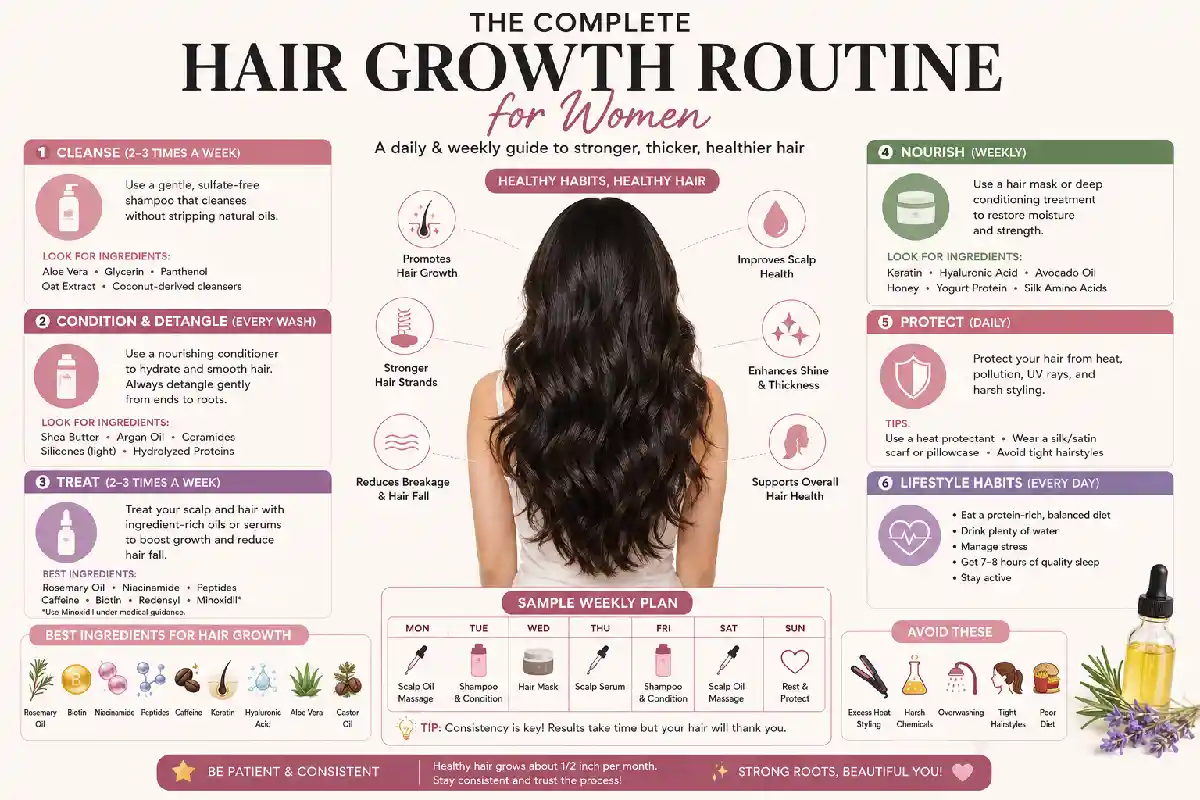
Complete Hair Growth Routine for Women – Stronger, healthier hair has nothing to do with the magic product you can find in the bottom of a jar. Holistic hair growth plans for women should include the right scalp, gentle daily maintenance and careful styling to protect and nurture what you‘re growing, combined with a good diet, patience, and a consistent routine for a period of at least 3 6 months.
No matter if you have thin, see-through hair, want to regain hair after giving birth, find that you shed overly due to stress or just want longer hair, this beginner routine, based on 2026 suggested practices, will set you up for success.
❝
This article is a part of
Women’s Hair Care Products Guide
Building an Effective Hair Growth Routine
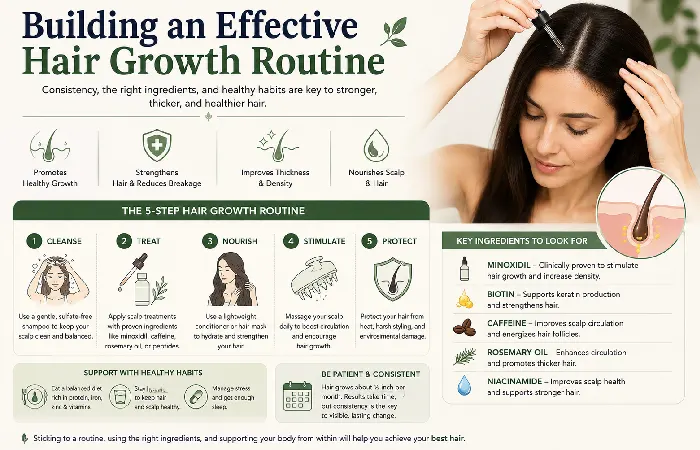
What can make or break your hair growth routine: consistency, not shortcuts Yes, your generation as well as your hormones affect your hair growth cycle but your lifestyle is instrumental in maintaining a healthy scalp and minimizing breakage, which will ultimately help you grow longer, stronger hairs in the long-term.
A successful hair care plan starts with choosing the best hair growth products for women that match your hair type, scalp condition, and long-term goals.
Since hair tends to grow around 0.5 inches (1.25cm) per month, you will need to continue using your regimen consistently for at least 3–6 months before any real results are visible.
Include hair growth serums in your daily routine to nourish the scalp and support stronger, healthier-looking hair over time.
A complete routine should include:
- Gentle cleansing
- Regular conditioning
- Weekly scalp treatments
- Balanced nutrition
- Heat protection
- Proper sleep
- Stress management
Daily vs Weekly Hair Care
| Routine | Daily | Weekly |
| Gentle brushing | ✓ | — |
| Hydration | ✓ | — |
| Hair serum | ✓ | — |
| Scalp massage | ✓ (5 minutes) | — |
| Hair oil | 1–2 times | |
| Clarifying shampoo | — | Once |
| Deep conditioning mask | — | Once |
| Trim split ends | — | Every 8–12 weeks |
Daily Hair Care Habits
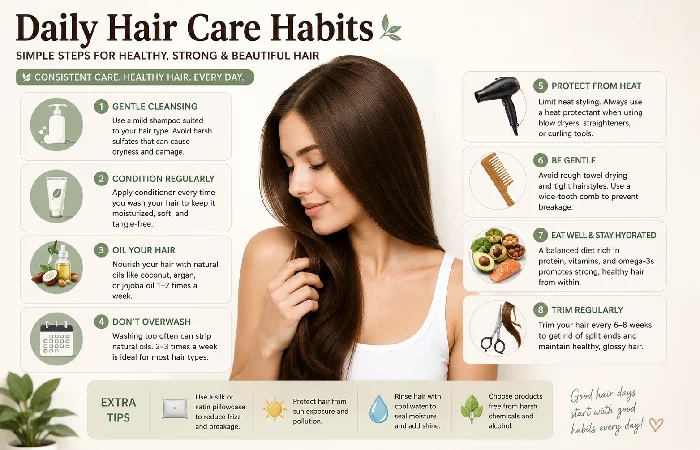
This sounds simple but in my experience everything develops better if you take the time and effort to maintain healthy habits in your daily routine. Nothing any daily routine can do will alter your natural growth rate substantially but regular care can reduce damage and breakage, keep the scalp healthy and make it easier and more likely for hair to grow thicker and longer. Practicing small positive care measures every day can, in my experience, have a greater impact than the use of a whole host of expensive products.
Morning Routine
- Detangle gently using a wide-tooth comb.
- Apply a lightweight hair serum.
- Use UV protection when outdoors.
- Avoid tight hairstyles.
Night Routine
- Brush gently.
- Sleep on a silk or satin pillowcase.
- Tie hair in a loose braid.
- Avoid sleeping with wet hair.
Daily Habits Comparison
| Good Habit | Habit to Avoid |
| Loose hairstyles | Tight ponytails |
| Air drying when possible | Excessive heat styling |
| Sulfate-free shampoo | Overwashing |
| Heat protectant | Flat ironing daily |
The fact that hair is easily broken when subject to repeated heat application and mechanical stress has been corroborated by research.
Weekly Scalp Treatments
Healthy hair begins with a healthy scalp. Daily washing and mild conditioning help protect and keep your hair and scalp clear, but a weekly treatment penetrates further to provide strengthen and nourishment, rid the scalp of debris, and enhance the health of your scalp.1-2 weekly treatments will help smooth such concerns as dryness and oiler excess, dandruff, and “fire” irritation and give you a healthy environment for your hair to thrive.
Wash your hair with a quality hair growth shampoo to keep your scalp clean and create the ideal foundation for the rest of your routine.
Weekly treatments include:
- Hair Oil Massage
Popular options include:
- Rosemary oil (diluted)
- Coconut oil
- Argan oil
- Jojoba oil
Massage for 5–10 minutes before washing.
- Deep Conditioning Mask
Improves:
- Moisture
- Elasticity
- Shine
- Breakage resistance
- Clarifying Shampoo
Once weekly removes:
- Product buildup
- Excess oil
- Pollution residues
Nutrition and Hydration
Good hair begins on the inside. Although shampoos, serums and scalp treatments can help to look after your hair externally, it is the cells in your body that make your hair, so these need to be kept nourished and well-hydrated by a healthy diet that gives your hair the nutrients it needs to grow strong and healthy. Hair follicles are highly active cells in the body and need a regular ‘fuel line’ of vitamins, minerals, protein and water to carry out their functions.
Support your hair from within by adding hair growth vitamins for women, which can complement your topical hair care products.
Best Nutrients for Hair Growth
| Nutrient | Benefits | Food Sources |
| Protein | Hair structure | Eggs, fish, beans |
| Iron | Oxygen delivery | Spinach, lentils |
| Zinc | Follicle health | Pumpkin seeds |
| Vitamin D | Hair cycle support | Fatty fish |
| Biotin | Keratin production | Eggs |
| Omega-3 | Scalp health | Salmon, walnuts |
Consuming about 2–3 liters of water per day (more or less depending on how active you are/what climate you live in).
There has also been recent advice from a professional perspective on nutritional deficiencies such as iron, B12, folic acid and protein as being a common cause of hair loss, particularly in women.
Apply one of the best hair growth oils regularly to improve scalp hydration, reduce breakage, and promote shinier, healthier hair.
Styling Habits That Protect Hair
Regular styling styles can have big implications on the health and growth of the hair. Products and tools are used in styling to create the style you want, however often applications of heat, hairstyles that are too tight and rough handling can cause damage to the hair shaft resulting in breakage and split ends. Due to hair growth from the scalp, minimizing damage to the lengths means you are retaining more of the growth.
Hair-Friendly Styling
- Use heat protectant
- Blow dry on medium heat
- Use microfiber towels
- Trim every 8–12 weeks
- Choose satin scrunchies
Avoid:
- Daily straightening
- Tight buns
- Wet brushing with force
- Excessive bleaching
Product Comparison (2026)
| Product Type | Best For | Frequency |
| Sulfate-free shampoo | Regular cleansing | 2–3× weekly |
| Scalp serum | Thinning hair | Daily |
| Hair growth oil | Dry scalp | Weekly |
| Deep conditioner | Damaged hair | Weekly |
| Heat protectant | Styling | Every use |
For hair loss identified in a medical setting, topical minoxidil is still one of the most validated choices for women, but it must be used as advised by a doctor.
If you’re experiencing hormonal hair thinning, explore these hair growth products for menopausal women to add targeted support to your complete hair growth routine.
Tracking Progress
Hair growth takes time.
Track monthly using:
- Photos in consistent lighting
- Hair density at the part line
- Hair shedding count
- Length measurements
Expected Timeline
| Time | What to Expect |
| 1 Month | Healthier scalp |
| 2 Months | Reduced breakage |
| 3 Months | Less shedding |
| 4–6 Months | Noticeable new growth |
| 6–12 Months | Improved density and length |
Frequently Asked Questions
What is the time lag?
For most people, healthier hair can be observed after 2–3 months and regrowth of longer hair can be seen after 3–6 months with continuous use.
Can I oil my hair daily?
Not really. Most hair responds well to oiling 1–2 times per week.
Are biotins sufficient for growing hair?
Biotin will only help if you actually have a lack of it. Having a good diet and being aware of the reason of the hair loss is more important.
Will trimming help my hair grow faster?
No. Triming doesn‘t influence the follicle growth but it does stop the split in ends. It would help the hair to look healthier and longer.
Conclusion
A complete routine for optimal hair growth successful for women would consist of applying a few basic principles in her routine everyday, a weekly scalp Treatment, a healthy diet, healthy hair practices, and good protection styling not just a one product “solution”. Over a period of time if you would use this standardize routine meanwhile correcting issues like stress, nutrition and the root, most women would see their hair become stronger and thrive and experience a decrease in breakage. Pair this routine up with any of your related articles on hair growth shampoos, vitamins, oils and natural hair care mistakes to make the ultimate topical hub to appeal to users and search engines.