

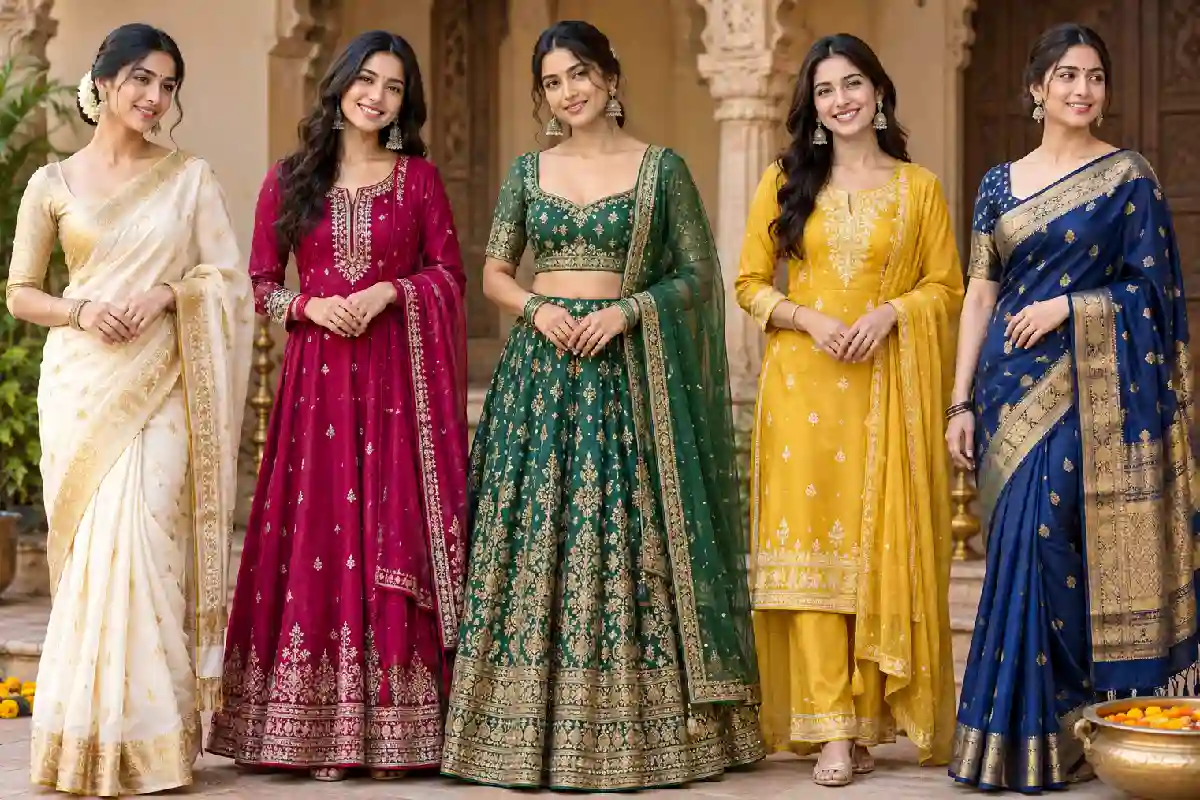
Indian Traditional Wear: A Complete Guide to Timeless Indian Clothing
 Khizrana Begum
Beauty & Lifestyle Writer
Khizrana Begum writes clear and reader-friendly content covering beauty, lifestyle and related topics.
Read Full Bio of Author →
Khizrana Begum
Beauty & Lifestyle Writer
Khizrana Begum writes clear and reader-friendly content covering beauty, lifestyle and related topics.
Read Full Bio of Author →
 Sameena Begum
Health, Technology & Digital Content Reviewer
Sameena Begum reviews content for clarity, accuracy and overall reader usefulness.
Read Full Bio of Reviewer →
Sameena Begum
Health, Technology & Digital Content Reviewer
Sameena Begum reviews content for clarity, accuracy and overall reader usefulness.
Read Full Bio of Reviewer →
Indian Traditional Wear: Traditional Indian clothing is so much more than just what one wears. Traditional clothing in India showcases not only India’s vast history but also every region’s crafts, festivals, celebrations, family values, and ethnicity. From beautiful sarees to colorful lehengas, from comfortable Kurtis to classic Salwar Suits, there is a form of traditional wear that would suit practically any occasion.
The richness of Indian clothes comes from their variation. The fabric, embroidery, color, and the drape and silhouette are quite diverse from region to region. Once again, these clothes could always be worn with, say, Western accessories and shoes easily.
❝
This article is a part of
Indian Fashion Guide
What Is Traditional Indian Wear?
Indian wear describes traditional clothing in terms of Indian traditions and various cultures and communities residing across India. Traditional Indian wear is typically worn on occasions like festivals, weddings, celebrations, religious functions, or any function of cultural importance. While some of these styles are traditional, others have also become increasingly popular with the fluctuating fashion trends in India. Traditional garments are generally made from the hand woven textile/fabric along with designs of embroidery, block prints, mirror-work, zari, sequins, and so forth, or regional crafts.
Traditional Indian fashion reflects the country’s rich cultural heritage through timeless clothing, fabrics, patterns, and craftsmanship. Explore our complete Indian fashion guide for broader style inspiration.
| Outfit | Common Occasion | Popular Fabrics |
| Saree | Weddings, festivals, formal events | Silk, cotton, chiffon, georgette |
| Salwar suit | Daily wear, work, festivals | Cotton, rayon, silk |
| Lehenga | Weddings, parties, festivals | Silk, velvet, georgette |
| Kurti | Casual, office, everyday wear | Cotton, linen, rayon |
| Sherwani | Weddings and formal events | Silk, brocade, velvet |
| Anarkali | Festive and formal occasions | Georgette, silk, chiffon |
Types of Traditional Indian Clothing
Indian clothing traditions vary greatly in style and the degree of formality they suggest. The traditional garments of India differ from one place to another and one style to another, which in turn provides different kinds of looks in terms of formality and look of the dress. One common example is the saree – it’s a long piece of material that you’ll find wrapped and draped around your body with other garments.
Salwar suits are a versatile part of Indian fashion and can be styled in different ways for everyday wear and special occasions. Explore our salwar suit fashion guide for helpful ideas.
Another one is Salwar Kameez, which features a Kameez- a tunic-style top matched with the Salwar – Indian pants and a scarf that adds extra flair to the Salwar suit as a stylish complement.
Generally, lehengas feature a skirt-an ultra-flowy, flared piece of clothing around the hip and waist along with some adornments, which makes it popular for festive occasions like Indian weddings.
Short Kurtis are worn with any kind of bottomwear like leggings, palazzos, trousers, and skirts, etc. Men may consider kurta-pajama, sherwanis, dhotis, or bandhgala outfits and Regional dress for men.
Traditional Sarees of India
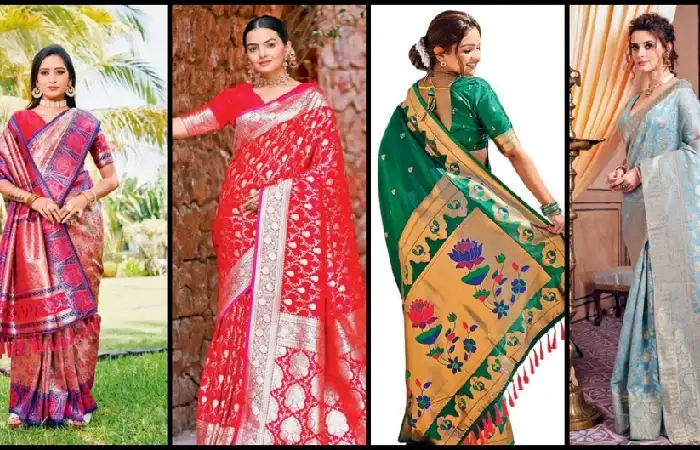
In the different parts of India, there are a lot of variations found between the sarees. Weaving techniques, Fabrics, motifs, and embellishments differ from state to state, and some parts of India are quite renowned for it.
Blouses play an important role in many traditional Indian outfits, with different designs offering unique ways to personalize a look. Explore our Indian blouse design guide for practical inspiration.
The well-known types are:
- A Banarasi Saree – Noted for its Luxurious silk and ornate zari work.
- A Kanjeevaram Saree – These are traditional South Indian silk Sarees that are mostly found during auspicious celebrations or weddings
- A Chanderi Saree – these are fine and lightweight sarees carrying a long, old tradition originating in Madhya Pradesh
- A Paithani saree – Traditionally famous in Maharashtra, with detailed border work and its own unique symbols.
- A Bandhani Saree – It’s manufactured by knotting & dyeing, which are mostly observed in states like Gujarat and Rajasthan.
- A Chikankari Saree – Embellished by subtle embroidered work, this saree traditionally finds its roots in Lucknow.
- A Tant Saree – These Lightweight Bengali cotton sarees can be a great choice for hotter climes.
A festival often has a designated choice of saree, as silk ones suit occasions like weddings and celebrations, and cotton Sarees can be chosen for everyday Wear.
Traditional Salwar Suits
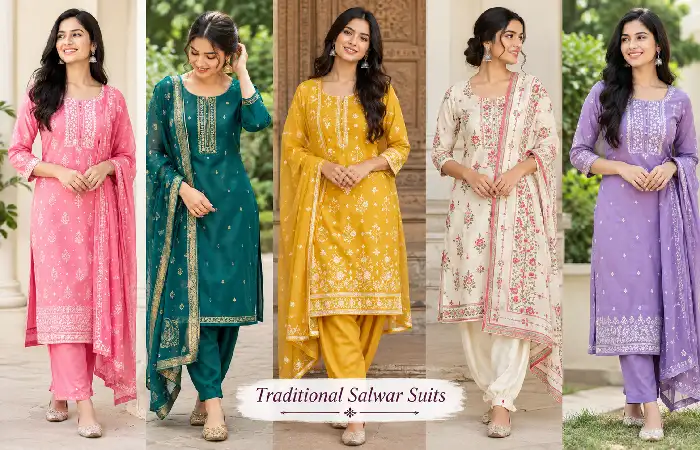
Salwar suits are undoubtedly the best in their own ways and practical in Indian traditional wear. They consist of a long tunic, trousers, and often a scarf.
Traditional clothing varies widely across India, with each region showcasing its own textiles, patterns, silhouettes, and cultural influences. Explore our regional Indian fashion guide to discover diverse styles.
These are usually available in popular types such as:
- Straight-cut salwar suits
- Anarkali suits
- Punjabi suits
- Patiala suits
- Palazzo suits
- Churidar suits
- Sharara-style suits
Everyday Cotton salwar suits could be useful as they keep you cool and are simple to clean. Silk, brocade, embroidered or embellished ones would be great party clothes. The Anarkali suit, for use at a party or celebration, is popular as the tailored fit and flared fullness in the bottom look very feminine.
Traditional Lehengas
The lehenga itself has become closely tied to the essence of Indian wedding, festivals and occasions. Typical comprises 3 separate items – the skirt, the choli and the dupatha.
Wedding lehengas may feature:
- Zari work
- Zardozi embroidery
- Mirror work
- Sequins
- Thread embroidery
- Beading
- Brocade fabrics
If you are going for daytime, the use of slightly lighter material and plainer colors would seem ideal as an easily achievable look. More luxurious colors and metallic detailing could be very suitable for evening events. You are permitted to wear heavy embroidery too.
Traditional Kurtis
Kurtis: From India, the one I would say I have put to use the most in a contemporary way is the Kurti; depending on the work on the weave, they can fit any situation.
Festivals provide an opportunity to celebrate Indian culture through colorful traditional outfits and occasion-ready styling. Explore our Indian festival fashion guide for festive outfit inspiration.
Simple cotton kurtis paired with churidars and flat chappals are the look for a casual day outfit. Embroidered kurtis paired with palazzos, with a huge pair of earrings and jeweled sandals, would look absolutely sensational on an official day.
| Kurti Style | Best For | Styling Idea |
| Cotton kurti | Everyday wear | Leggings + flats |
| A-line kurti | Casual outings | Straight pants + sandals |
| Anarkali kurti | Festivals | Palazzo + jhumkas |
| Embroidered kurti | Parties | Trousers + statement jewelry |
| Long kurti | Formal occasions | Palazzo + heels |
Regional Traditional Outfits
Many aspects of Indian traditions also affect its attire, the most impactful being its immense variety. In every Indian state, clothing has its own unique form that relates to traditions of local people, weather patterns, as well as fabrics and craftsmanship used locally.
Ethnic wear combines traditional influences with versatile styling options suitable for cultural events, celebrations, and everyday occasions. Explore our Indian ethnic wear guide for useful fashion ideas.
| Region | Traditional Clothing Examples |
| Punjab | Punjabi suit, Patiala salwar |
| Rajasthan | Ghagra choli, odhani |
| Gujarat | Chaniya choli |
| Maharashtra | Nauvari saree, Paithani saree |
| West Bengal | Bengali saree, dhoti-kurta |
| Tamil Nadu | Kanjeevaram saree, veshti |
| Kerala | Kasavu saree, mundu |
| Assam | Mekhela chador |
| Kashmir | Pheran |
| Odisha | Sambalpuri saree |
Not only clothes; in many, they usually embrace the meaning from history, skillful art, festivals, as well as tradition.
Traditional Wedding Clothing
Indian weddings are quite famous for flashy attire and festive colors. The type of wedding attire varies according to region, religion, event, and personal preference, etc.
A bride normally chooses between bridal lehengas, silk or embroidered sarees, shararas, and anarkali suits. A groom most commonly opts for a Sherwani, kurta pajama, Bandhgala, or country-specific clothing.
>The bride’s clothing is heavily embroidered and can sometimes incorporate metallic threads and detailing along with matching accessories.
>Wedding dresses have been selected in order to ensure an optimum appearance as well as optimal comfort. In India, wedding ceremonies are lengthy; hence, it is crucial to select comfortable footwear, easy and breathable fabrics, and skillfully draped garments for a trouble-free event.
Traditional Festive Wear
Festivals constitute another key occasion for dressing up in Indian ethnic. Festivals like Diwali, Navratri, Eid, Durga Pooja, Onam, Pongal, etc call for a flamboyant mix of Indian ethnic fashion.
You don’t always need too much for festive dressing either; a silk kurti, an embroidered salwar suit, a printed saree, or a simple lehenga can be elegant with accessory selection. While bright colors like red, pink, orange, green, yellow, and blue are great, it might be smart to wear neutral tones or jewel colors for a chic look.
How to Style Traditional Indian Outfits
However, there are so many ways to mix and match a few of these traditional items with accessories, other garments, and footwear, or even with a few modern elements.
1. Choose the Right Jewelry
Ethnic attire can immediately be elevated with an array of jhumkas, bangles, necklaces, maang tikkas, and statement earrings. Don’t wear too many statement pieces together if the outfit has rich embroidery on it.
2. Pair Traditional and Modern Pieces
Try on an ethnic kurti with a pair of jeans or a classic drape, or a saree with a modern choli. Gives a subtle Indo-Western look.
3. Pay Attention to Footwear
Juttis, kolhapuris, ornate sandals, and flats complement Indian attire seamlessly. Heels might add convenience to formal sarees and lehengas.
4. Coordinate Your Colors
Your accessories don’t need to be part of the actual outfit in the same shades of color. Contrasting or complementary colors can add more style to the combination.
5. Consider the Occasion
A heavily embroidered lehenga may be well suited for a wedding; however, it may be quite unnecessary for an informal get-together with family. Dress according to the dress code of the occasion.
6. Keep Comfort in Mind
Indian wear should be aesthetically pleasing yet comfortable at the same time. Wear them in fabrics appropriate for the weather and ensure they are arranged neatly and tidily, like sarees, dupattas, and other wear.
Final Thoughts
With the fusion of history, culture, and tradition as well as craftsmanship, traditional wear in India is rooted in a particular region yet adaptable to current times and fashion statements. Be it any occasion or mood, from a traditional classic sari to a cozy salwar suit, from graceful kurtis to embellished lehengas, one can always experiment to bring out a traditional yet personal and wearable look. The best thing is to select according to occasions, comfortable materials, and a good choice of accessories. Experiment more, and then you can always wear traditional outfits regularly as well as at functions like weddings, festivals, or parties.