

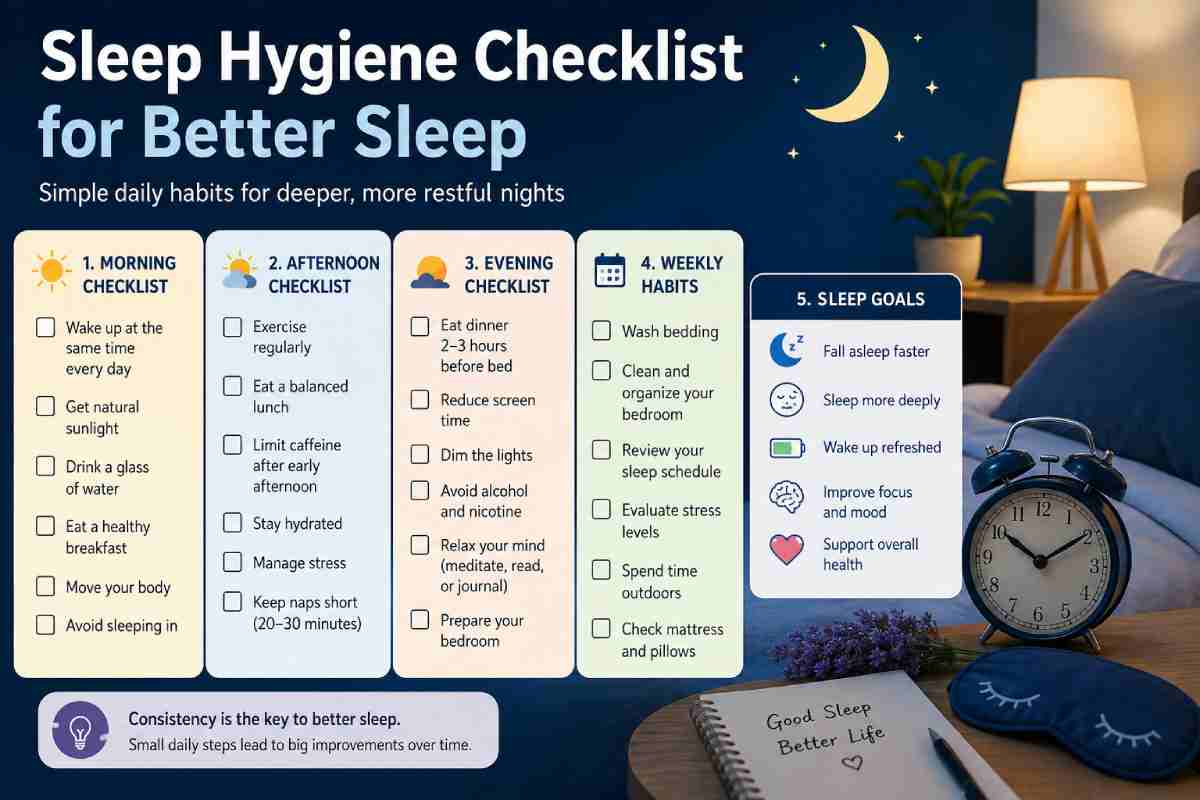
Sleep Hygiene Checklist for Better Sleep: Daily Routine for Quality Sleep
Last Updated: August 8, 2026
Getting quality sleep doesn’t have anything to do with lying in bed in silence and counting sheep from dusk until dawn, but really about so many small things you do on a daily basis that will impact how quickly you can fall asleep, how deeply you do, and whether you actually feel rested the next day. In other words, the 100 tiny little routines and behaviors that make up the foundation of what health professionals call sleep hygiene.
A lot of people confuse good sleep with just the routine right before you lie down to rest, but it really has a whole lot to do with exposure to the sun during the daytime hours, the caffeine you consume in the afternoon, and the media you have exposure to during the evening before you hit the hay.
Because of that, having a good list of how you can create better sleep hygiene practices throughout the course of a day is important because not everybody wants to commit to a 7:00 pm bedtime, so it’s a great opportunity to figure out ways to help ease into sleeping and not be jarring with it.
❝
This article is a part of
Sleep Health Guide
What is Sleep Hygiene?

What are the best practices for a sleep-friendly lifestyle? Sleep hygiene- best habits and practices: environmental changes, as well as daily behaviors and routines to promote sleep. Instead of medications that manage only your symptoms, good sleep hygiene practice will target root life habits, which affect the natural rhythms of our body, controlling wakefulness and sleeping times- our.
Looking for a complete resource? Explore our sleep hygiene guide to learn simple habits that can improve your sleep quality every night.
Good sleep hygiene includes:
- Maintaining a consistent sleep schedule
- Creating a comfortable sleep environment
- Limiting caffeine late in the day
- Managing stress
- Exercising regularly
- Reducing evening screen exposure
- Developing relaxing bedtime rituals
As these habits become part of the daily grind, the body starts making itself ready for going off to sleep as per time without conscious action.
Why is a Sleep Hygiene Checklist Helpful?
While some healthy sleep habits seem obvious as a individual – keeping bedtime and wake up times consistent – all of them can be somewhat harder to maintain day after day.
Before using this checklist, establish a consistent sleep hygiene bedtime routine to help your body prepare for restful sleep.
A checklist serves several purposes:
- Creates consistency
- Builds healthy habits gradually
- Makes progress measurable
- Reduces forgetfulness
- Encourages accountability
- Helps identify behaviours affecting sleep
Instead of stressing about why their sleep is different each morning, a checklist enables us to figure out which habits might be influencing how well we sleep.
If you’re searching for age-specific recommendations, these sleep hygiene tips for adults can help you create healthier and more consistent sleep habits.
Daily Sleep Hygiene Comparison Table
| Time of Day | Primary Goal | Recommended Habits | Benefits |
| Morning | Reset body clock | Wake up consistently, sunlight exposure, hydrate | Improves circadian rhythm |
| Afternoon | Maintain energy | Exercise, adequate food intake, caffeine reduction | Helps avoid daytime hyperarousal |
| Evening | Get ready for bed | Darker screens, lighting, ease off. | Triggers melatonin synthesis |
| Weekly | Maintain long-term sleep health | Bedroom cleaning, schedule review, stress management | Builds lasting sleep habits |
Morning Checklist

Following healthy nighttime habits can make it easier to achieve deep, restorative sleep and improve how you feel each morning.
The importance of morning habits Many of us simply do not seem to understand why morning rituals or habits actually have that much impact in our nighttime routines, but really, first few hours in the morning dictate pretty much anything throughout the day. How long is your body rhythm?
Wake Up at the Same Time Every Day
Consistency is the cornerstone of healthy sleep. Having varying wake times day-to-day jumbles up the body’s natural alarm and the body’s alarm clock, so it is difficult to doze off to sleep later. You do well if you wake up at the same time every day (even on weekends) and stick to within an hour of one another; it can soon begin to remember both bedtime and wake-up time.
Get Natural Sunlight Within 30 Minutes
Morning light informs the brain that is not time for sleep! The sunlight inhibits the production of the natural sleep hormone, Melatonin. Get yourself outside for 15-30 minutes each morning and this can work wonders in boosting the quantity and the quality of your sleep at night time. You can just sit near the window if going out is not an option, just make sure there is plenty of light.
One of the easiest ways to sleep better is by reducing evening device use, so review these screen time and sleep hygiene tips before bedtime.
Drink Water
The body loses water each day through both respiration and sweat when you’re sleeping. Drink a glass of water when you wake to keep your blood flowing and fuel your metabolism-plus, you’ll stay energetic and may even curb daytime slumbering too much.
Eat a Balanced Breakfast
Stay in balance of your blood sugar with a healthy breakfast which brings you high energy.
Choose foods rich in:
- Protein
- Whole grains
- Healthy fats
- Fruits
Balanced meals support consistent energy throughout the day, helping regulate your sleep cycle.
Move Your Body
Morning movement doesn’t have to be intense.
Simple activities include:
- Walking
- Stretching
- Yoga
- Light cycling
Activity boosts your happy feeling but also strengthens the alertness of your body for the day activities
Avoid Sleeping In
Although you might want to go back to bed for a couple of extra hours the morning after a particularly difficult night’s rest. You actually run the risk of prolonging your insomnia by doing so. Wake up like you normally would and try to stick to your normal day.
If stress or anxious thoughts interfere with your sleep, these sleep hygiene strategies for anxiety and stress can help you relax and unwind before bed.
Afternoon Checklist
The afternoon bridges your active day and restful evening. Choices made during this period greatly affect nighttime sleep.
Exercise Regularly
Regular exercise is one of the strongest natural sleep aids.
Aim for:
- Walking
- Swimming
- Cycling
- Strength training
- Moderate cardio
Working up a sweat is believed to have the dual effect of minimising stress hormones and building up sleep pressure, which aids in falling asleep and staying asleep through the night. Try not to overexert yourself in the two or three hours prior to dozing.
Limit Caffeine
Caffeine can remain in the bloodstream for six to eight hours.
Many people unknowingly reduce sleep quality by drinking:
- Coffee
- Tea
- Energy drinks
- Cola
- Chocolate-based beverages
Try avoiding caffeine after early afternoon.
Eat Balanced Lunches
A large lunch will knock you out asleep on you’re on the toilet; although- extremely tiny lunch- you’ll get hungry later and a very handy excuse to forgo sex that night.
Lunch is good- an energising lunch would include an allotment of protein, plenty of greens, a few healthy fat types and a serving of whole grains
Manage Afternoon Stress
Mental stress often accumulates throughout the day.
Healthy stress-management techniques include:
- Deep breathing
- Short walks
- Stretching
- Journaling
- Mindfulness exercises
Less stressful evenings begin before going home in the evening.
Limit Long Naps
Take Short Naps To Re-Energise. Although Naps Of More Than 30 minutes and taking a nap late on the afternoon could disrupt nighttime sleep, if your nap can’t be shorter, perhaps just not too late.
Stay Hydrated
Proper hydration supports concentration and overall health.
Reduce excessive fluid intake close to bedtime to minimize nighttime bathroom visits.
Evening Checklist
Evening actions help in the night: A night routine signal. Getting Ready in Bed time helps you know you know time it’s going to time that time.
Eat Dinner at a Consistent Time
Eating large meals immediately before bed can lead to:
- Acid reflux
- Indigestion
- Restlessness
Aim to finish dinner two to three hours before sleeping.
Reduce Screen Time
Device Blue light from our screens: phones, tablets, laptops, TVs … Produce blue light that inhibits your melatonin secretion and makes it hard to fall asleep, Make every possible effort to do everything possible to limit this and exclude screens 1 hour before your sleep time.
Instead, consider:
- Reading
- Listening to calming music
- Meditation
- Gentle stretching
Keep Lighting Dim
Lower lighting encourages the brain to begin producing melatonin.
Use:
- Warm lamps
- Soft bedside lights
- Dim lighting
Avoid bright overhead lighting whenever possible.
Avoid Nicotine and Alcohol
Alcohol – while inducing sleep at first, it typically ruins deep sleep later in the night. Nicotine – a stimulant which elevates your state of arousal. Limit your intake of either before bed.
Relax Your Mind
Mental relaxation is just as important as physical relaxation.
Helpful techniques include:
- Meditation
- Progressive muscle relaxation
- Gratitude journaling
- Slow breathing
- Prayer
- Calm reading
These practices reduce racing thoughts before bed.
Make Your Bedroom Comfortable
Your sleeping environment should encourage uninterrupted rest.
An ideal bedroom includes:
- Comfortable mattress
- Supportive pillows
- Cool temperature
- Minimal noise
- Darkness
- Clean bedding
Small environmental improvements often produce noticeable sleep benefits.
Go to Bed at the Same Time
Stick to the same bedtimes to support your circadian rhythm. In addition to that, you will be far less reliant on being tired when you go to bed, in that your body begins to feel tired naturally around 10-11 pm during just weeks and weeks of staying as committed.
Weekly Sleep Habits
Daily care for your body and lifestyle are important, but developing good weekly habits will benefit your long-term sleep.
Wash Bedding
Fresh bedding helps with comfort while decreasing dust, allergens and skin sensitivities.
A clean change of sheets creates an inviting space to sleep.
Clean the Bedroom
A clutter-free bedroom promotes mental relaxation.
Weekly cleaning includes:
- Vacuuming
- Dusting
- Organising surfaces
- Removing unnecessary electronics
A peaceful space often encourages a peaceful mind.
Review Your Sleep Schedule
Ask yourself:
- Am I waking consistently?
- Am I sleeping enough?
- Am I relying on naps?
- Am I consuming caffeine too late?
Weekly reflection helps identify habits needing adjustment.
Evaluate Stress Levels
High stress frequently causes poor sleep.
Consider:
- Workload
- Family responsibilities
- Emotional concerns
- Financial pressures
Addressing stress proactively supports healthier sleep.
Replace Worn Pillows or Mattresses When Needed
Old sleep equipment may contribute to:
- Neck pain
- Back pain
- Frequent waking
- Poor posture
Buying supportive bedding can be another solution to having a comfortable night’s sleep.
Spend Time Outdoors
Exposure to natural, daytime light can also help reset sleep patterns. As much as possible, try to head outdoors into the natural light a couple of days a week to do something you like, such as gardening or walking. Natural daytime light helps to regulate sleep rhythms.
Printable Sleep Checklist
You can print or save this checklist and review it each day.
Morning
- Wake up at the same time
- Get 15–30 minutes of sunlight
- Drink water
- Eat a healthy breakfast
- Exercise or stretch
- Avoid sleeping in
Afternoon
- Exercise if not completed earlier
- Eat a balanced lunch
- Limit caffeine after early afternoon
- Stay hydrated
- Manage stress
- Keep naps under 30 minutes
Evening
- Eat dinner 2–3 hours before bed
- Reduce screen time
- Dim household lights
- Practice relaxation
- Keep bedroom cool and quiet
- Avoid alcohol and nicotine
- Go to bed at the same time
Weekly
- Wash bedding
- Clean bedroom
- Review sleep schedule
- Evaluate stress
- Spend time outdoors
- Check mattress and pillows
Common Mistakes That Hurt Sleep Hygiene
Many people unknowingly sabotage their sleep despite spending enough hours in bed.
Common mistakes include:
- Using the bed for work or watching television
- Drinking caffeine late in the day
- Sleeping at inconsistent times
- Using electronic devices before bedtime
- Taking long evening naps
- Eating heavy meals immediately before sleep
- Ignoring stress and anxiety
- Keeping the bedroom too warm or noisy
Being aware of these sleep destroyers is your biggest step toward a more solid night’s sleep.
Benefits of Following a Sleep Hygiene Checklist
You can obtain a bunch of benefits when performing consistent good quality sleep hygiene.
These include:
- Falling asleep faster
- Sleeping more deeply
- Waking refreshed
- Better concentration
- Improved memory
- Higher energy levels
- Stronger immune function
- Better mood regulation
- Reduced daytime fatigue
- Lower risk of chronic sleep problems
Small improvements practised consistently often produce significant long-term results.
Final Thoughts
The key to building a healthy sleep habit system is taking small, consistent steps — not a quick fix for your problems. A properly created sleep hygiene checklist can organise and structure those steps for you. From morning sunlight exposure and caffeine restriction to a peaceful bedtime ritual and consistent weekly patterns, each element contributes to your body’s inherent rhythm.
Understand that lasting solutions to improving sleep don’t appear overnight, but rather develop as these healthy habits start to be incorporated into your day and week on a routine basis.
FAQs
1. What is the most important sleep hygiene habit?
Sticking to a regular sleep and wake routine is probably your most important habit. It also regulates the brain’s “biological clock”.
2. How long does it take for sleep hygiene to work?
Most individuals begin to see results between one to three weeks of consistent sleep habit practice, however, results can range depending on your personal situation.
3. Can sleep hygiene help with insomnia?
Practicing good sleep hygiene to treat sleep difficulty. Many people with mild sleep difficulty sleep much better. If you regularly can’t get sleep, ask a medical professional to check if you need treatment.
4. Is it okay to nap during the day?
Yes. For early afternoon nap should not have a lasting effect on nighttime sleep (short and not lasting effect lasting more than 20-30 min.).
5. What bedroom temperature is best for sleeping?
Sleep experts typically agree that ideal bedroom temperature for the perfect sleep is at 16 to 19 degrees Celsius (60 to 67 degrees Fahrenheit).