

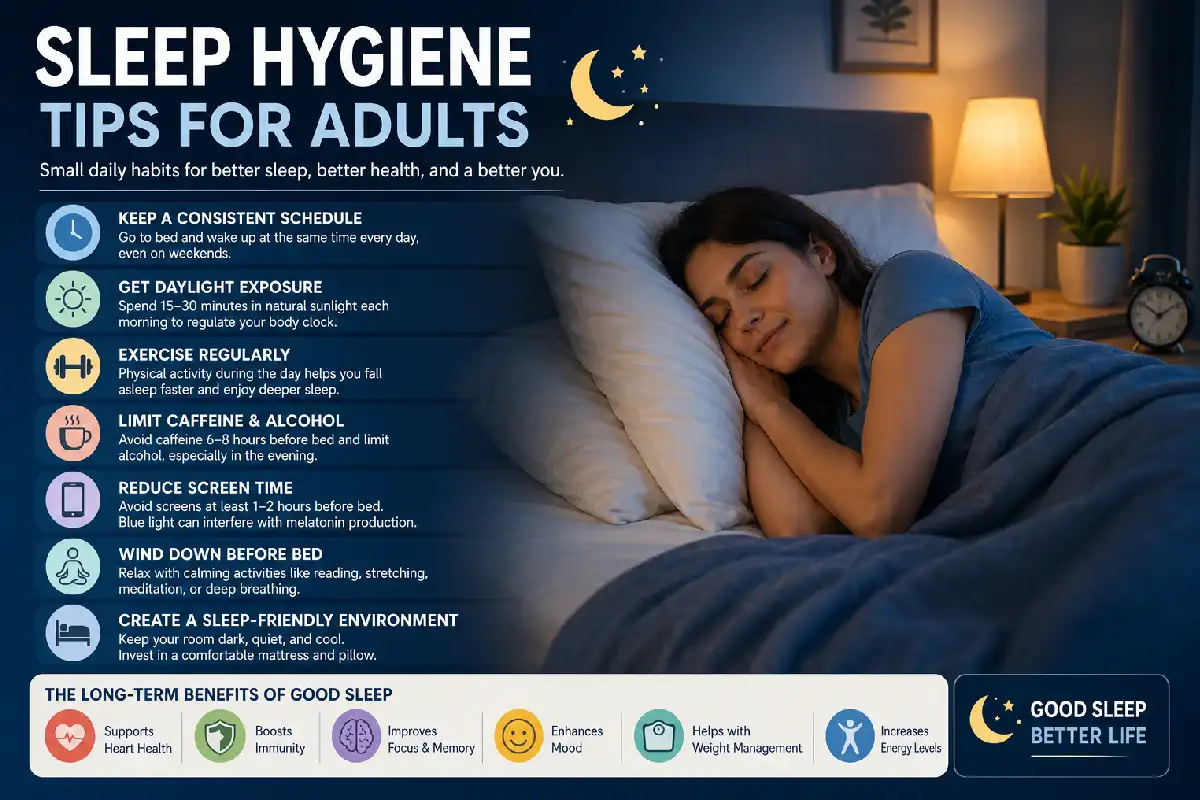
Sleep Hygiene Tips for Adults: A Complete Guide to Better Sleep and Better Health
Last Updated: August 8, 2026
Sleep Hygiene Tips for Adults: These Sleep Hygiene Tips for Adults Can Be The Key To a Great Night’s Rest! Losing quality sleep today doesn’t even make parents look twice. After all, adults have tough days and schedules these days juggling kids, work, too much screen time, junk foods, late hours etc. There is every chance that if your sleep is often disturbed, or you go to bed really late at night the consequences that this has on health may not concern you that much either.
Luckily, sleep hygiene isn’t about big complicated changes.
In fact, even making small daily changes can help make a real difference to your sleep experience. This post contains sleep hygiene tips for adults you can easily add to your day, common sleep issues adults encounter and health benefits associated with good sleep habits.
❝
This article is a part of
Sleep Health Guide
What is sleep hygiene?
“Sleep hygiene” is defined by the American Academy of Sleep Medicine as the variety of habits, behaviours and environmental factors you use to make sleep time optimal and a quality of your day you actually look forward to; making falling asleep, remaining asleep, and awake again more readily and feeling refreshed.
Looking for a complete resource? Explore our sleep hygiene guide to learn healthy habits that can improve your sleep quality every night.
The practices include: Keeping your sleep schedule consistent Creating a conducive sleep environment Minimizing pre- bedtime stimuli Reducing your stress level Establishing healthy day habits Good sleep hygiene isn’t just for one night only – it’s for ongoing improvement.
Why does quality sleep matter for adults?
Quality sleep touches upon nearly everything our body does while we are sleeping. When you’re sleeping, the body takes time to do everything from healing the cells of your body, managing your levels of the right hormones, building strong defence within your immune system, and moving memories throughout your brain for better cognition and recollection.
Recommended Sleep Duration by Age
| Age Group | Recommended Sleep |
| 18–25 Years | 7–9 Hours |
| 26–64 Years | 7–9 Hours |
| 65+ Years | 7–8 Hours |
Regularly having less sleep can elevate the chances of getting into certain kinds of health issues.
A consistent sleep hygiene bedtime routine can help adults fall asleep faster and wake up feeling more refreshed.
Benefits of Good Sleep
| Physical Benefits | Mental Benefits |
| Better immunity | Improved mood |
| Healthy weight management | Better focus |
| Lower blood pressure | Reduced stress |
| Faster recovery | Enhanced memory |
| Improved heart health | Better decision-making |
Common Adult Sleep Problems
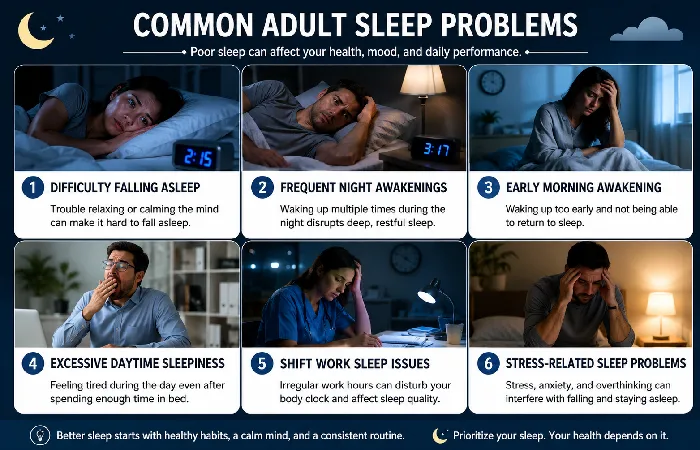
If your goal is to sleep more soundly, discover proven techniques for achieving deep, restorative sleep through healthy nighttime habits.
A lot of adults suffer from difficulties getting enough sleep that prevent them to perform the basic functions of life on day-to-day basis.
1. Problems getting to sleep
There is a range of problems people face.
- Sleep difficulty (trouble falling asleep)
- Stress & Anxiety
- Too Much Screen Time
- Consumption of Caffeine
- Overthinking at bedtime
Signs
- Difficulty Falling Asleep
- Takes you more than 30 minutes to get to sleep
- Restlessness in bed
- Racing your mind at the close of the day
2. Sleep disruptions
There are some people who awaken few times over the course of the night and may have a hard time going back to sleep.
Reducing evening device use is an important step, so follow these screen time and sleep hygiene tips to support better rest.
Common Causes
| Cause | Description |
| Stress | Mental tension disrupts sleep cycles |
| Alcohol | Reduces sleep quality |
| Sleep apnea | Causes breathing interruptions |
| Noise | Disturbs deep sleep |
| Medical conditions | Pain or discomfort affects sleep |
3. Waking Up Too Early
There’s nothing quite as annoying as waking up well ahead of what you had planned. Possible culprits:
- Depression
- Aging-related sleep changes
- Chronic stress
- Poor sleep schedule
4. Excessive daytime sleepiness
You are still tired even after sleeping enough hours. You get tired during the day, though you manage to get enough time sleeping Symptoms .
- Difficulty concentrating
- Trouble paying attention to things
- Losing focus
- Falling asleep during meetings and classes
- Frequent yawning
- Reduced productivity
- Low motivation
5. Night Shift or Shift Work Sleep Problems for Adults.
A person who works night hours and rotating hours will frequently have a disturbance in their sleep wake cycle. Their cycle may struggle to adapt and include problems like difficulty sleeping during the day hours, inconstant sleep patterns, higher degrees of tiredness as well as difficulties establishing excellent routine habits .
If anxiety or daily stress affects your sleep, explore these sleep hygiene strategies for anxiety and stress to help you relax before bed.
6. Stress and the Adult sleep disturbances.
A number of and in all aspects of our day-to-day tasks have put a strain or stress on adult. Areas contributing to stress include:
- Work pressure
- Financial concerns
- Family responsibilities
- Health worries
When stressed, your body turns into a “fight or flight” mode and preventing you from sleep comes extremely tough!
Daily Habits That Improve Sleep
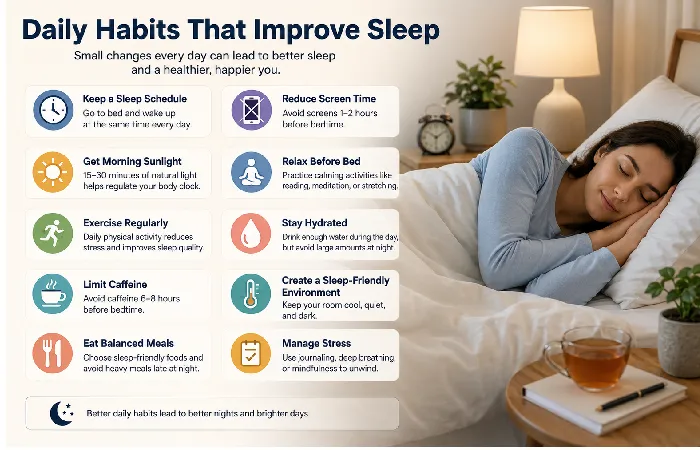
Stay on track with healthy sleep habits by using this sleep hygiene checklist as part of your nightly routine.
Healthy daytime habits reflect good quality sleep at night. Have a schedule Sleep at a consistent hour There’s a host of effective sleep hygiene recommendations for adults, such as aiming to wake and go to sleep within similar hours of the clock, daily.
Benefits
- Regulates the body clock
- Improves sleep quality
- Reduces insomnia symptoms
- Makes waking easier
Example Schedule
| Activity | Time |
| Wake Up | 6:30 AM |
| Breakfast | 7:00 AM |
| Exercise | 6:00 PM |
| Begin Wind-Down | 9:30 PM |
| Bedtime | 10:30 PM |
Enjoy the First rays of Sunrise
It’s true, mother nature can assist you simply by helping you get in sync with your circadian clock and thus restoring normal sleep/wake times.Benefits of exposure to the early morning sun enhances alertness.
- Supports melatonin production later
- Enhances mood
- Improves sleep timing
Take 15-30 Minutes Outside in an Hour to Two Hours After Waking Up
Get Moving Regularly to Combat 8am Brain fog with better sleep: Exercise can actually lead to better, deeper sleep.
How exercise impacts sleep the most.
| Exercise Type | Benefit |
| Walking | Reduces stress |
| Cycling | Improves endurance |
| Yoga | Promotes relaxation |
| Strength Training | Supports deeper sleep |
| Swimming | Reduces tension |
No vigorous exercise just before you go to sleep.
Avoid the Coffee Jitters
The caffeine stays in your body all day, in a few different forms Sources of Caffeine
- Coffee
- Tea
- Energy drinks
- Soft drinks
- Chocolate
Cut Back on Coffee. Try and not consume caffeine any more than 6-8 hours prior to bedtime.
Get adequate nutrient to improve the way you sleep
Foods that help promote the perfect sleep
| Food | Benefit |
| Bananas | Magnesium and potassium |
| Oats | Support melatonin production |
| Almonds | Rich in magnesium |
| Turkey | Contains tryptophan |
| Kiwi | May improve sleep quality |
Avoid heavy meals close to bedtime.
Maintain adequate hydration
Sleep duration and sleep quality can be impacted by dehydration; however, consuming beverages shortly prior to retiring to bed may lead to several trips to the restroom throughout the evening. Instead, maintain good hydration over hours that are distributed during the day.
Minimize screen time in hours before bed
- Blue light emission comes from cell phone, laptop, tablet, and TV monitors, and can contribute to delays in falling asleep because of: Suppression of melatonin.
- Delayed onset of sleep
- Increased wakefulness
Doctors advise shutting down all these electronic devices between 1 and 2 hours before you go to bed.
Implement a soothing routine
The right bedtime rituals send the body signals that it’s time to turn off.
Relaxing activities
A few enjoyable activities to incorporate are:
- Reading a good novel
- Gentle stretching
- Exercises
- Practice some deep breathing
- Enjoy listening to quiet music
- Try to be consistent.
Optimize Your Sleep Environment
Your bedroom should support sleep.
Ideal Sleep Environment
| Factor | Recommendation |
| Temperature | 60–67°F (15–19°C) |
| Lighting | Dark |
| Noise | Quiet |
| Mattress | Comfortable |
| Pillow | Supportive |
(use blackout curtains and a white noise machine as needed).
Work-Life Balance and Sleep
Work can and will get in the way of your ability to sleep well, too, as well. Here’s How Work Disrupts Sleep. If the amount of hours you work have gone up, and if stress is mounting up, you also need to figure out how to “disconnect,” and the glow of an electronic device is a killer for healthy sleep.
| Factor | Impact |
| Overtime | Shorter sleep duration |
| Stress | Difficulty falling asleep |
| Shift work | Circadian disruption |
| Late-night emails | Increased mental stimulation |
| Travel | Sleep schedule changes |
Set Boundaries Around Work
Creating boundaries helps protect sleep.
Healthy Boundaries
- Stop work at a designated time
- Avoid checking emails before bed
- Separate workspace from sleeping area
- Schedule relaxation time
Manage Stress Effectively
Stress management supports better sleep.
Stress Reduction Techniques
- Mindfulness meditation
- Journaling
- Deep breathing
- Yoga
- Time management
Even 10 minutes of relaxation can make a noticeable difference.
Avoid Bringing Work to Bed
The bed should be associated with sleep and intimacy only.
Avoid:
- Working on a laptop in bed
- Watching stressful news
- Reviewing work documents
This strengthens the brain’s association between bed and sleep.
Take Breaks During the Day
Regular breaks improve productivity and reduce stress accumulation.
Healthy Break Ideas
- Short walks
- Stretching
- Deep breathing
- Outdoor time
These habits support better nighttime recovery.
Weekend Sleep Schedule
If you get used to going out late on weekends and then sleeping in until 10AM (or much later!), try to avoid letting this become a habit, as it seriously confuses your body’s natural cycle.
What exactly is this “social jet lag”?
It is the term for the kind of sleep deprivation you experienced on weekends, as your sleeping schedule there became vastly different to those week’s work hours.
Example
| Day | Sleep Time | Wake Time |
| Weekday | 10:30 PM | 6:30 AM |
| Weekend | 1:00 AM | 10:00 AM |
This shift can create Monday morning fatigue similar to jet lag.
Should You Sleep In on Weekends?
A little extra sleep can help recover from occasional sleep debt.
However:
- Limit sleeping in to 1 hour
- Maintain similar bedtimes
- Avoid drastic schedule changes
Consistency remains the most effective strategy.
Weekend Sleep Schedule
Do:
- Wake up around the same time
- Get sunlight early
- Stay active
- Keep bedtime consistent
Avoid:
- Sleeping until noon
- Excessive napping
- Late-night binge watching
- Heavy alcohol consumption
Napping Guidelines
Short naps can improve alertness.
Recommended Nap Lengths
| Nap Duration | Effect |
| 10–20 Minutes | Increased alertness |
| 30–60 Minutes | Improved learning |
| 90 Minutes | Complete sleep cycle |
Avoid naps late in the afternoon.
Long-Term Benefits
Good sleep hygiene provides benefits that extend far beyond simply feeling rested.
Improved Heart Health
Quality sleep supports:
- Healthy blood pressure
- Reduced inflammation
- Better circulation
- Lower cardiovascular risk
Stronger Immune Function
Sleep allows the immune system to function effectively.
Adults who consistently sleep well often experience:
- Fewer infections
- Faster recovery
- Better vaccine response
Better Weight Management
Sleep influences hunger hormones.
Hormonal Effects
| Hormone | Effect of Poor Sleep |
| Ghrelin | Increases hunger |
| Leptin | Reduces fullness signals |
| Cortisol | Increases stress and cravings |
Good sleep supports healthier food choices.
Enhanced Mental Health
Sleep and mental health are closely connected.
Benefits include:
- Reduced anxiety
- Improved emotional resilience
- Better mood stability
- Lower stress levels
Improved Cognitive Performance
Adults with healthy sleep habits often experience:
- Better concentration
- Improved memory
- Faster problem-solving
- Enhanced creativity
Increased Productivity
Well-rested individuals generally:
- Make better decisions
- Have more energy
- Maintain focus longer
- Experience fewer workplace errors
Healthy Aging
Long-term healthy sleep habits may contribute to:
- Better brain health
- Improved physical function
- Reduced chronic disease risk
- Greater quality of life
FAQS Frequent Questions,
Q1: How Many Hours a Night to adults require for sleep?
Nearly a majority of all adults require anywhere from 7 to9 hrs of sleep per day to maintain there physical and mental abilities, with less amounts of rest leading to health complications later in ones life.
Q2: What is the Premier Sleep Hygiene Tip?
The practice generally regarded as the premier and strongest for an individual to adapt towards a sound nights rest is the upkeep of a sleeping routine.
Q3: Does Using a Phone at Bedtime Have Bad Effects?
It’s indeed bad. Using your phones before going to bed, for example, might prevent you from sleeping as it might disrupt your production of a natural hormone called melatonin which signals you to sleep.
Q 4: Does Exercise Help Improve Sleep?
Moderate exercise might deepen and extend the time of deep sleep.
Q 5: Is Napping Good or Bad?
Short naps for 10 to 20 minutes might make you more alert, though extended naps and taking it at late afternoon or evening hours would negatively affect your sleep at night.
Q 6: Can Stress Cause Insomnia?
Yes, it’s one of the most significant causes of poor sleeping condition.
Q 7: Should Adults Sleep More On Weekends?
Light sleep catch-up on the weekend might be ok, though consistency in your sleep and wake schedules is still optimal.
Q 8: What Foods Help With Sleep?
Some examples of food you might want to eat include almonds, bananas, oats, turkey and dairy product-rich foods as they contribute to increasing magnesium, potassium, and tryptophan which is associated with higher amounts of melatonin in the brain.
Q 9: How Can I Fall Asleep Faster?
Set out time to relaxing sleep habits, keep screens away from the bed during bedtime, ensure your bedroom is cool and dark, as well as maintain a consistent sleep schedule.
Q 10: When Should I Seek Medical Help For Sleep Problems?
If you have trouble sleeping and these issues last for weeks; are significantly impacting your waking days; involve snoring, stopping of breathing, and excessive fatigue during the day time. –Then it’s time for you to see a doctor.
Final Thoughts
Employing these important sleep hygiene tips can help boost sleep quality for all adults.
This improvement leads to an increase in vitality, performance at work, as well as over-all well being and health of all individuals. When you practice good habits and give yourself plenty of cool and refreshing sleep every night, it shows! Sleeping helps wonders, give these good sleeping tips a try!