

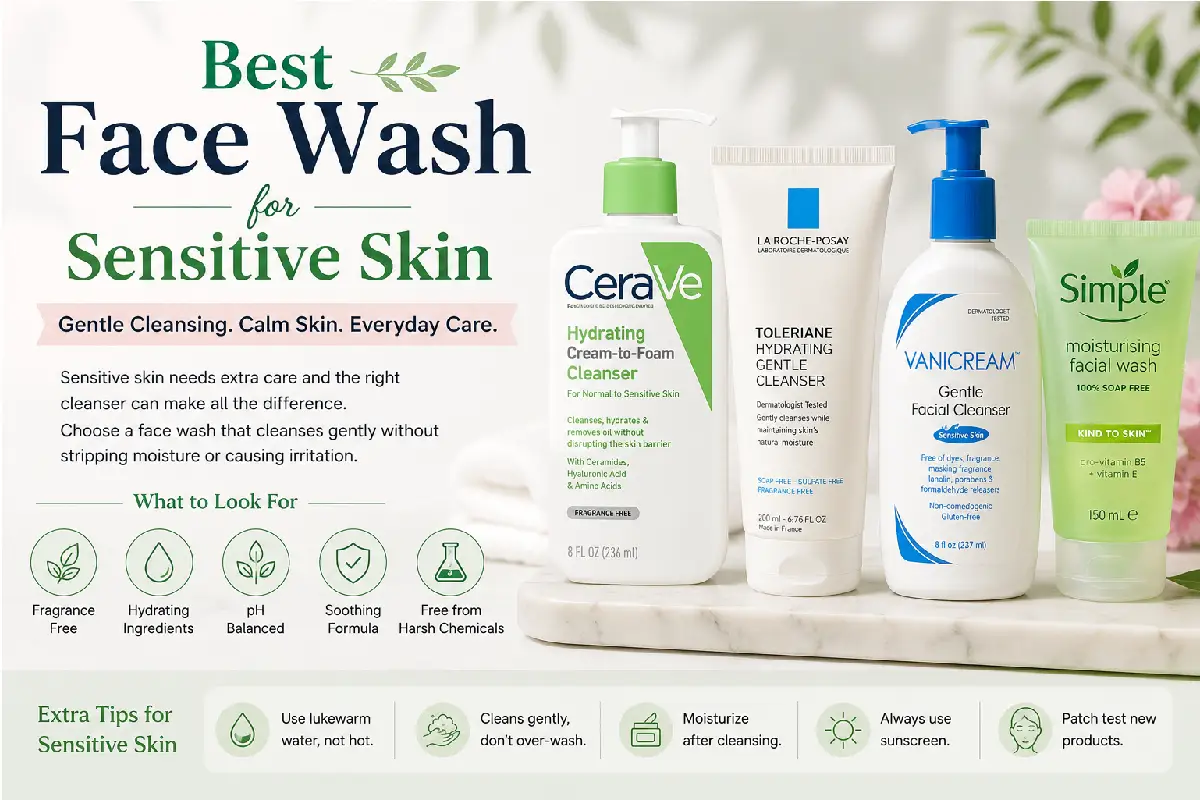
Best Face Wash for Sensitive Skin: How to Choose the Right Gentle Cleanser
Last Updated: August 10, 2026
Best Face Wash for Sensitive Skin: Buying a suitable facial cleanser to address sensitive skin is often a frustrating endeavor. There are deep-cleaning, anti-aging, and illuminating face cleansers and a host of options that can contain a plethora of drying, irritating compounds that can tighten, itch, or sensitize your skin.
When you have sensitive skin doesn’t need vigorous cleaning. You just want clean skin, while taking care to protect that uppermost defensive barrier of skin from the world around you by removing dirt, grime, oils – essentially dirt, oil, SPF, makeup & poll.
Looking for a complete skincare routine? Explore our sensitive skin products guide to find gentle products that help protect and soothe delicate skin.
❝
This article is a part of
Sensitive Skin Care Guide
What is Sensitive Skin?
Sensitive skin is a term used for the skin condition that reacts in an excess manner to the stimuli which comprises of external elements, perfume, particular ingredient used for skincare products, shifting weather or hazardous chemical.
If your skin feels dry after cleansing, discover the best sensitive skin products for dry skin to restore hydration without causing irritation.
It can sometimes affect everyone, regardless of their skin tone type. Rather than a type itself – as is oil, or dry, sensitive is a trait.
Common Symptoms
- Redness
- Burning sensation
- Itching
- Tightness
- Dry patches
- Flaking
- Stinging after applying skincare
- Increased reaction to fragrances
More likely culprits include eczema, rosacea, dermatitis and even allergies.
Signs You Need a Gentle Face Wash
Your current cleanser may not be suitable if you experience:
- Skin feels tight immediately after washing
- Frequent redness
- Burning after cleansing
- Dry flakes around the nose and cheeks
- Breakouts after switching cleansers
- Excessive oiliness after washing (a sign of over-cleansing)
- Irritation when using active ingredients
If any of those sound like you, a gentle cleanser could be in your future!
Comparison Table: Best Types of Face Wash for Sensitive Skin
| Cleanser Type | Best For | Texture | Benefits | Possible Drawbacks |
| Cream Cleanser | Dry sensitive skin | Rich cream | Deep hydration | Less effective on heavy makeup |
| Gel Cleanser | Combination sensitive skin | Lightweight gel | Fresh feeling without dryness | Some formulas may contain sulfates |
| Lotion Cleanser | Daily use | Milky lotion | Very gentle | Doesn’t remove waterproof makeup alone |
| Micellar Cleanser | Light cleansing | Water-like | Optional no-rinse | I had to rinse because sensitive skin |
| Oil Cleanser | Makeup removal | Lightweight oil | Removes sunscreen softly | For some may need a double wash |
| Hydrating Foam Cleanser | Normal sensitive skin | Soft foam | Comfortable cleansing | Choose sulfate-free formulas |
Why Cleansing Matters?
Everything you use as the base to your routine. Face accumulation: Over the day, grime on the face becomes accumulated like:
- Sweat
- Oil
- Dust
- Pollution
- Dead skin cells
- Sunscreen
- Makeup
- Bacteria
If it gets left on, the skin pores get clogged up, can cause aggravation and won’t allow skincare products to have their effect! But be careful not to over clean!
Pair your cleanser with a consistent morning and night routine for sensitive skin to keep your complexion healthy and balanced.
Definition: Skin Barrier
A healthy skin barrier is simply an external defence mechanism for your skin; this layer is essential in sealing and hydrating your skin, while protecting the skin against environmental aggressors, allergens, and bacteria. You’ll notice that dryness, skin sensitivity and discomfort are generally more prominent on damaged skin barriers. Gently wash, so as to not strip away and disturb these protective layers of the skin barrier.
Benefits of Proper Cleansing
- Maintains healthy skin barrier
- Removes environmental pollutants
- Prevents clogged pores
- Supports hydration
- Helps skincare products absorb better
- Reduces irritation over time
- Improves overall skin texture
Your cleanser essentially acts as an ideal canvas upon which you can apply anything else. What we’re talking about here is using a proper cleaning method that offers your skin a clean slate, ready to accept moisturisers, serums, and sunscreen.
Ingredients to Look For
Instead of catchy packaging and flashy claims, what your cleanser contains-that’s what’s really going to matter, and especially if your skin feels pretty high maintenance.
If your skin reacts easily to new products, consider using hypoallergenic skincare products for sensitive skin to reduce the risk of irritation.
So let’s break down some of the top cleansers for easily aggravated complexions…
1. Glycerin
Definition: A powerful humectant that attracts water into the skin.
Benefits:
- Deep hydration
- Prevents dryness
- Supports skin barrier
- Suitable for daily use
2. Ceramides
Definition: Natural lipids that strengthen the skin’s protective barrier.
Benefits:
- Repairs damaged skin
- Prevents moisture loss
- Reduces irritation
- Improves resilience
3. Hyaluronic Acid
Definition: A moisture-binding agent that can bind great amount of water
Benefits:
- Keeps skin hydrated
- Reduces tightness
- Leaves skin soft
- Works well with sensitive skin
4. Aloe Vera
Known for its calming properties.
Benefits include:
- Soothes redness
- Reduces irritation
- Provides light hydration
- Refreshes inflamed skin
5. Colloidal Oatmeal
Favoured ingredient for comfort, calm, and soothing sensitive eczema and reactive skin
To avoid unnecessary irritation, choose fragrance-free products for sensitive skin that are free from added perfumes and harsh ingredients.
Benefits:
- Relieves itching
- Reduces inflammation
- Restores comfort
- Supports skin healing
6. Panthenol (Vitamin B5)
Moisturizes your skin while managing and keeping skin texture; Panthenol is added with a moisturizing ingredient.
Benefits include:
- Calms irritation
- Supports healing
- Softens rough skin
- Improves barrier function
Ingredients to Avoid
If you suffer from sensitive skin, you should try and avoid products which don’t include:
- Strong sulfates
- High alcohol content
- Artificial fragrance
- Essential oils (if reactive)
- Harsh exfoliating acids in cleansers
- Strong scrubbing particles
Ingredients that have a simple, short list usually are more suitable for sensitive skin.
Sulfate-Free vs Regular Cleansers
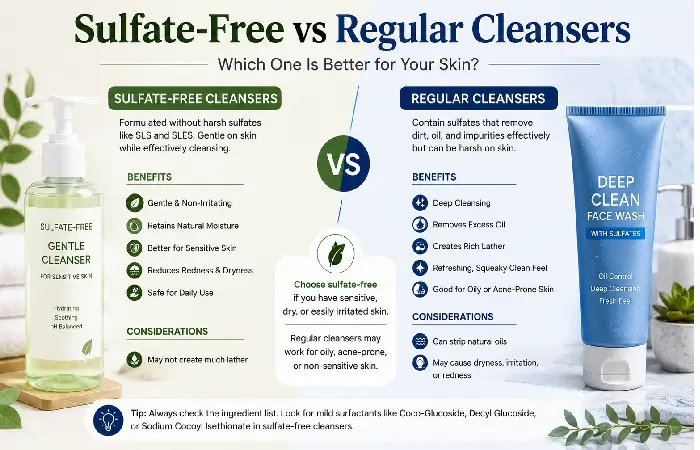
Choosing products with the best ingredients for sensitive skin can help soothe irritation and support a healthier skin barrier over time.
Everyone wants to know sulfate-free cleansers Are “Better” The simple answer – it depends, but for the vast majority of sensitive skin-type individuals, the answer is most often.
| Feature | Sulfate-Free Cleanser | Regular Cleanser |
| Cleansing Power | Gentle | Strong |
| Natural Oil Removal | Minimal | High |
| Skin Barrier Protection | Better | Lower |
| Risk of Dryness | Low | Higher |
| Suitable for Sensitive Skin | Excellent | Depends on formula |
| Daily Use | Yes | May be drying |
What are Sulfates?
Sulfates are also known as a type of foaming cleanser; they are superb at removing oiliness of your scalp by making a good amount of foam to create such a cleansing wash.
However, sulfates cleanse and strip our natural oil from the scalp and may sometimes give your scalp a stripping and tingling feeling if it’s sensitive
Advantages of Sulfate-Free Cleansers
- Maintain natural moisture
- Lower risk of irritation
- Less redness
- Better barrier protection
- Comfortable after washing
- Suitable for everyday use
Foam does not necessarily mean better cleansing. A cleanser can work extremely well even with very little lather.
Morning vs Night Cleansing
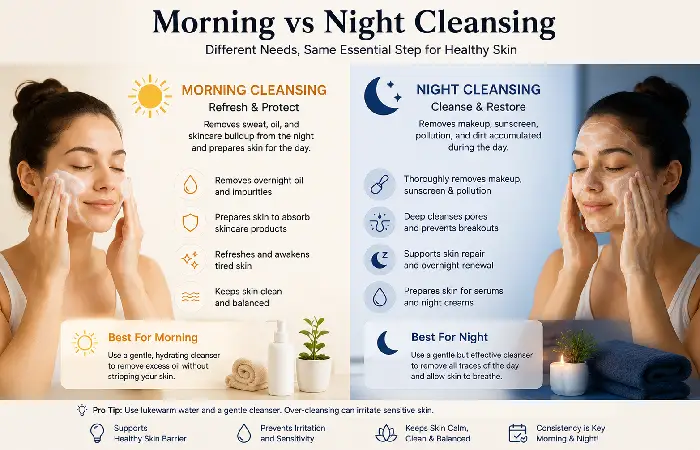
Most people follow the same cleansing regimen over their entire days and have no consideration for the condition their skin is experiencing for certain parts of it.
Morning Cleansing
Your skin accumulates:
- Sweat
- Overnight oil
- Dead skin cells
- Nighttime skincare residue
Apply it to your skin so it is ready to be moisturized and to be covered by sunscreen. You will only need to use moisturizer or a calming cream.
Night Cleansing
Night cleansing is more important because it removes:
- Makeup
- Sunscreen
- Pollution
- Dirt
- Excess oil
- Environmental particles
Left overnight, it can cause skin and pore aggravation and blockage.
If you wear SPF that is, or have on makeup I would suggest you wash (double clean:)
- Gentle cleansing oil or micellar water
- Mild sulfate-free face wash
This method removes impurities thoroughly without harsh scrubbing.
Should You Wash Twice a Day?
Most dermatologists recommend cleansing:
- Morning
- Night
However, your skin could probably tolerate a spritz of lukewarm water in the morning, then some moisturiser
Best Cleansing Tips
Even the best cleanser won’t perform well if it’s used incorrectly.
1. Use Lukewarm Water
- Hot water removes protective oils and increases redness.
- Cold water doesn’t effectively dissolve oil.
- Lukewarm water provides the ideal balance.
2. Wash for About One Minute
Massage gently using circular motions.
Avoid excessive rubbing.
3. Don’t Over-Cleanse
More washing doesn’t mean healthier skin.
Twice daily is sufficient for most people.
4. Pat Dry
- Never rub your face with a towel.
- Instead, gently pat until slightly damp.
5. Moisturize Immediately
- Within a few minutes of having washed your face. Apply your moisturizer.
- It helps lock in moisture and also helps to support the skin barrier.
6. Avoid Physical Scrubs
- Your skin usually doesn’t do so great being scrubbed by hard grains.
- Delicate chemical exfoliants are generally better, to be used every so often with directions.
7. Patch Test New Products
Before applying a cleanser to your whole face for the very first time, try the product on a small, isolated portion of your skin for 24–48 hours to see if any negative symptoms emerge and spread, just to avoid unpleasant reactions to the cleanser.
8. Keep Your Routine Simple
Sensitive skin often responds best to fewer products.
A basic routine can include:
- Gentle cleanser
- Moisturizer
- Broad-spectrum sunscreen (daytime)
Switching from a brand to another always yields worse results than sticking to one brand, though.
Common Cleansing Mistakes
Many people unknowingly worsen sensitivity by making avoidable mistakes.
- Using very hot water
- Washing more than twice daily
- Choosing heavily fragranced cleansers
- Scrubbing with washcloths or brushes every day
- Skipping moisturizer after cleansing
- Trying multiple new products at once
- Using cleansers designed for oily skin when skin is actually sensitive
Making corrections to these habits almost always leads to immediate changes. Within weeks, you should also notice a change for the better.
How to Choose the Right Face Wash?
When shopping for a cleanser, consider these points:
- Unscented if possible
- Fragrance-free
- With moisturizing ingredients like glycerin and ceramides
Non-comedogenic, if acne is your concern - Dermatologist-approved for sensitive skin
- pH-balanced with a short ingredient list, if you have sensitive skin
As it goes, the amount the soap costs or how pretty it looks displayed is a dead set, wash up & see what happens & the overall effect is the whole issue.
Frequently Asked Questions (FAQs)
1. What is the best face wash for sensitive skin?
A good cleanser will cleanse properly but gently, lifting oil dirt and grime off the face of the skin but feeding it everything needed to avoid stripping it and losing its conditioning effects.
Choose sulfate-and fragrance-free versions, as well as ones containing ingredients essential for skin construction – think glycerides, ceramides, hyaluronic acid and panthenol.
2. Should sensitive skin use foaming cleansers?
Yes – as long as they’re sulfate-free and for sensitive skin! Most low-foam, gentle cleansing products can gently and efficiently purify your skin without leaving you feeling tightened, itchy, or raw.
3. How often should I wash sensitive skin?
How many times should you cleanse per day? For most people: twice is optimal. Once in the morning and once in the evening. You can go for a gentler routine in the morning if your skin dry so dry with doctor.
4. Is micellar water enough to cleanse sensitive skin?
Micellar water is for you if light makeup or daily cleansing is something you will want, and even if waterproof sunscreen or heavy makeup is what you want, then you should follow it up with a mild face cleanser.
5. Can cleansing too much damage my skin?
If you exfoliate with too much vigor you get rid of the most important type of moisture in your skin, leaving the barrier on your skin compromised causing dry, red, and sensitive skin.
6. Should I exfoliate sensitive skin?
Yes, but with care. Not scrubs, or scrubs on any hard part, but sensitive-skin-formula-type cleansers that you can use as tolerate and do so.
Final Thoughts
Finding the right face wash for sensitive skin shouldn’t have much to do with following the latest fads, but a lot to do with keeping your skin in check. Cleanser must clean up all that dirt while still feeling happy-not tight and mean and that has the following: glycerin, ceramides, Hyaluronic Acid and, colloidal oatmeal, panthenol, so we don’t strip anything that the skin needs…and no harsh sulfates and overbearing fragrances that just send flare-ups into overdrive.