

Hypoallergenic Skincare Products: A Complete Guide for Sensitive Skin
Last Updated: August 10, 2026
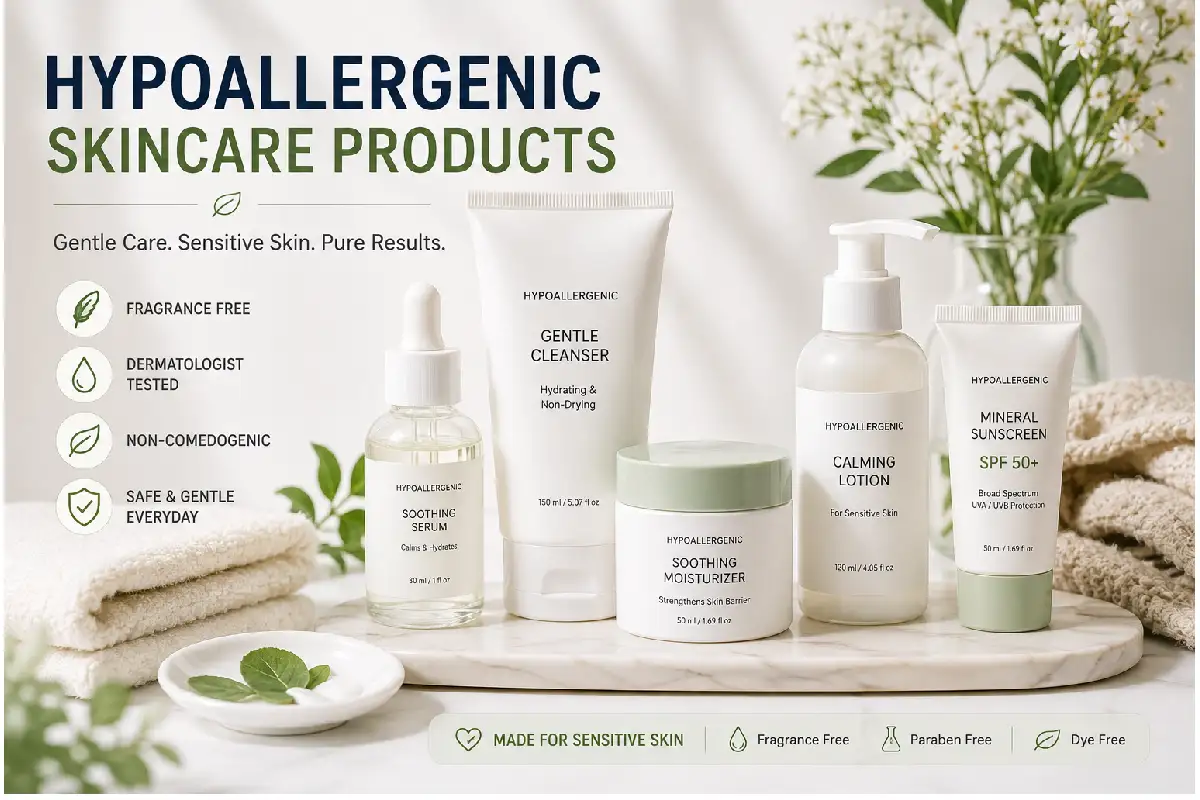
Hypoallergenic Skincare Products – The best hypoallergenic skincare products are one of your biggest friends when it comes to keeping smooth and healthy skin, because at the end of the day, the key is for your skincare products to complement your skin type and its features-and not work against your skin. You have surely gotten some itching, burning, stinging, or red finish on your skin after a failed skincare routine on your face as well; hence, you can give a chance to a few more hypoallergenic skincare alternatives. But will there ever be a guaranteed perfectly 100 percent hypoallergenic cream?
What are considered to be safe ingredients, and how do I build a suitable skincare routine without my skin reacting?
These and many other important questions will be answered within this beginner guide to hypoallergenic skincare products that will support you in finding exactly the product that works perfectly for your everyday routine.
❝
This article is a part of
Sensitive Skin Care Guide
What Does Hypoallergenic Mean?
All I know is I don’t have an allergic reaction; that is it. Normally, companies don’t include fragrance or preservatives, and sometimes something irritating for you.
Want to build a gentle skincare routine? Explore our complete sensitive skin products guide for expert recommendations and product tips.
Characteristics of Hypoallergenic Products
| Feature | Description |
| Gentle Formula | Fewer irritating ingredients. |
| Fragrance-Free | Usually avoids synthetic perfumes. |
| Dermatologist Tested | Often evaluated for skin compatibility. |
| Minimal Ingredients | Reduces the chance of irritation |
| Great for Sensitive Skin | For skin susceptible to reactivity |
What Hypoallergenic Doesn’t Mean
| Myth | Reality |
| Allergy-free | No skincare product can guarantee this |
| Chemical-free | Everything contains chemicals, including water. |
| Organic | Hypoallergenic and organic are different terms |
| Works for everyone | Individual skin reactions vary. |
Clarifying these can guide consumers as to what the best decisions to make concerning their skin care, and not based on just marketing terminology.
Why Sensitive Skin Needs Special Care?
Protective barrier Protective Barriers have a weakened state in sensitive skin which allows irritants, the most frequent reason why redness, itching, dry or burning skins occur, to penetrate.
If your skin is both sensitive and dehydrated, discover the best sensitive skin products for dry skin to restore moisture while minimizing irritation.
.Common triggers include:
- Artificial fragrances
- Alcohol-based toners
- Essential oils
- Harsh cleansers
- Strong exfoliating acids
- Certain preservatives
- Excessive skincare layering
A simplified routine often works better than using too many products.
Who Should Use Them?
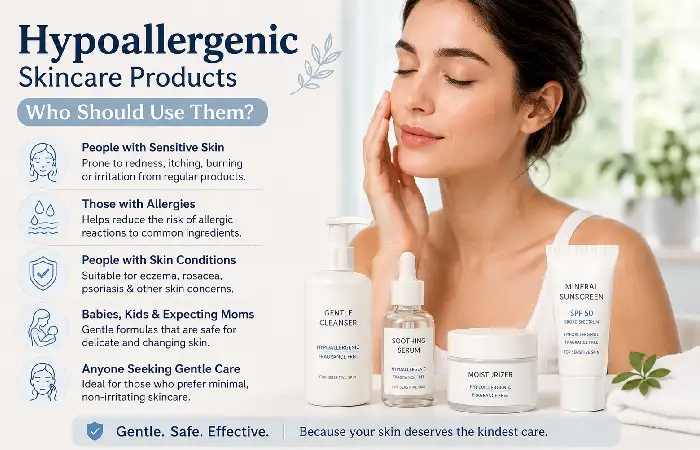
Those people to who usage of safe and allergy-free cosmetics can appear useful are, by all means, not only people who have been definitely diagnosed with a specific allergy. Yes some of them really can enjoy better effects when using smoother and less irritating skin products.
For consistent results, follow this morning and night routine for sensitive skin to keep your complexion calm and healthy every day.
People Who Benefit Most
| Skin Type | Reason |
| Sensitive Skin | Easily aggravated by ingredients. |
| Dry Skin | Barrier protection compromised. |
| Eczema-Prone Skin | Needs calming care |
| Rosacea | Reduces flare-ups |
| Acne-Prone Sensitive Skin | Prevent further irritation |
| Mature Skin | Supports Mature, aging skin |
| Post-Treatment Skin | Assists healing after procedures. |
Common Signs You Need Hypoallergenic Products
- Frequent redness
- Tightness after cleansing
- Burning sensation
- Random itching
- Skin peeling
- Constant dryness
- Rash after trying new products
If you’re prone to the above, consider trying the gentler products.
Benefits of Hypoallergenic Skincare
Choosing mild skincare products offers several advantages.
| Benefit | Explanation |
| Less Irritation | Fewer harsh ingredients |
| Better Skin Barrier | Supports natural protection |
| Reduced Redness | Calms inflammation |
| Improved Hydration | Gentle moisturizers retain moisture. |
| Comfortable Daily Use | Suitable for long-term routines |
| Lower Risk of Reactions | Avoids common allergens |
Common Ingredients
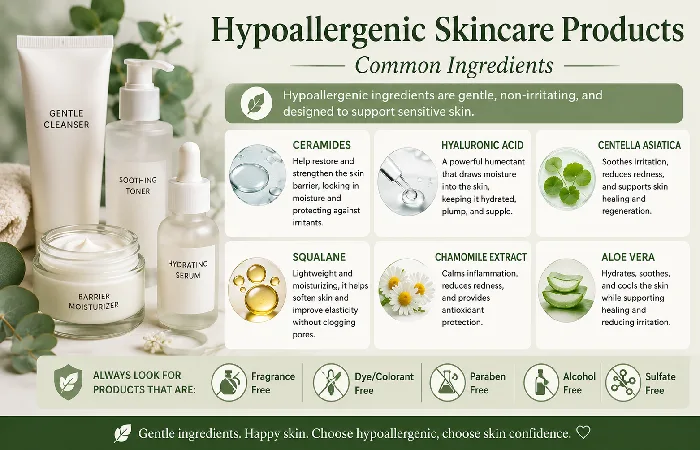
To further reduce irritation from everyday skincare, consider using fragrance-free products for sensitive skin that avoid added perfumes and unnecessary ingredients.
I like these ingredients as well as they are more calming and more anti-inflammatory and less harsh to the skin.
Skin-Friendly Ingredients
| Ingredient | Benefits |
| Glycerin | Deep hydration |
| Hyaluronic Acid | Moisture retention |
| Ceramides | Heals skin cells |
| Panthenol (Vitamin B5) | Calms irritation |
| Aloe Vera | Cooling property |
| Colloidal Oatmeal | Helps relieve itching. |
| Squalane | Lightweight moisturizer |
| Allantoin | Aids healing |
| Niacinamide | Strengthens barrier and reduces redness |
Ingredients Often Avoided
| Ingredient | Why It’s Avoided |
| Artificial Fragrance | Common allergen |
| Denatured Alcohol | Can dry skin |
| Sulfates | Harsh cleansing |
| Essential Oils | May trigger irritation |
| Formaldehyde Releasers | Potential allergens |
| Strong Dyes | Unnecessary skin exposure |
Choosing Safe Products
When looking to buy skincare products, it’s very confusing as each brand has a gentle tagline attached to them. Believe the back with the ingredients list rather than the front.
Every gentle routine starts with the right cleanser, so choose a face wash for sensitive skin that removes impurities without disrupting your skin barrier.
Checklist Before Buying
- Fragrance-free
- Alcohol-free (when possible)
- Dermatologist-tested
- Non-comedogenic (if acne-prone)
- Minimal ingredient list
- Suitable for sensitive skin
- Patch-test recommended
Reading Ingredient Labels
The first five ingredients usually make up most of the formula.
Look for:
- Ceramides
- Glycerin
- Hyaluronic acid
- Panthenol
- Squalane
Choose products that don’t contain fragranced ingredients, or drying alcohol in the first several items of the ingredients list.
Daily Routine
A complicated routine simply isn’t conducive to natural health and the natural way of living as much.
Morning Routine
| Step | Product Type |
| Step 1 | Gentle Cleanser |
| Step 2 | Hydrating Serum |
| Step 3 | Moisturizers |
| Step 4 | Mineral Sunscreen SPF 30+ |
Evening Routine
| Step | Product Type |
| Remove Makeup | Micellar water |
| Gentle Cleanser | Low-foam cleanser |
| Treatment | Barrier-repair serum |
| Moisturizer | Rich nourishing cream |
Patch Testing Is Essential
Even the gentlest product can cause a reaction.
How to Patch Test?
- Apply a small amount behind your ear or inside your arm.
- Wait 24–48 hours.
- Observe for redness or itching.
- If no reaction occurs, begin using it on your face gradually.
It can avoid much greater upset as with an innocent act.
Tips for Sensitive Skin
- Rinse it off in lukewarm water
- No scrubbing for you on your face. Please, thank you.
- Instead of a massage, dab it
- Use a moisturizer right after
- Only one scrub per week (if your face tolerates it)
- Introduce one thing at a time
- Never forget sunscreen
Common Mistakes to Avoid
| Mistake | Better Choice |
| Using many products | Keep routine simple |
| Skipping moisturizer | Hydrate daily |
| Over-exfoliating | Gentle exfoliation occasionally |
| Ignoring sunscreen | Use SPF every morning. |
| Trying multiple products together | Introduce slowly |
| Choosing scented products | Prefer fragrance-free options |
Can Natural Products Still Cause Allergies?
Yes.
A Lot of us will think that because ingredients were grown naturally, they are safe or won’t cause problems, but not everything that comes off plants or the essential oil are going to be of any benefit for you it can still lead to allergic reactions.
Examples include:
- Lavender oil
- Tea tree oil
- Peppermint oil
- Citrus oils
- Eucalyptus oil
And…just ‘cause something is natural does not mean that it does not get the best of everyone sometimes!
Knowing the best ingredients for sensitive skin products can help you select formulas that soothe redness and support long-term skin health.
How Long Does It Take to See Results?
Skin barrier repair takes time.
| Time | Expected Changes |
| 1 Week | Reduced irritation |
| 2 Weeks | Improved hydration |
| 4 Weeks | Stronger skin barrier |
| 6–8 Weeks | Healthier, calmer complexion |
Consistency matters more than using expensive products.
Hypoallergenic vs Regular Skincare
| Feature | Hypoallergenic | Regular Products |
| Fragrance | Usually absent | Often included |
| Irritation Risk | Lower | Moderate to High |
| Sensitive Skin | Suitable | May not be suitable |
| Ingredient List | Simplified | Often complex |
| Barrier Support | Excellent | Varies |
| Everyday Use | Ideal | Depends on formulation |
Building a Minimal Routine
A simple routine often produces better long-term results.
| Product | Frequency |
| Gentle Cleanser | Twice daily |
| Hydrating Serum | Morning and night |
| Moisturizer | Twice daily |
| Sunscreen | Every morning |
Adding unnecessary products rarely improves skin health.
Expert Tips for Healthier Skin
- Drink enough water.
- Sleep at least 7–8 hours.
- Manage stress levels.
- Avoid hot showers.
- Wash pillowcases regularly.
- Keep makeup brushes clean.
- Replace expired skincare products.
Healthy skin depends on lifestyle as much as skincare.
Frequently Asked Questions (FAQs)
- What does hypoallergenic mean in skincare?
It means it has been created in a way that it has cut out many things that people can react to. This means less chance of allergic reaction, but not zero.
2. Are hypoallergenic products good for acne?
Yes, all products not likely to clog and/or that are gentle/ fragrance free I’m not sensitive to are usually fine
. If your skin is also sensitive, that is ideal.
- Can oily skin use hypoallergenic products?
But just take a look at any kind of lighter gel, lotion or moisturizer, if it is non oily it most likely is formulated specifically for oily skin.
- Are fragrance-free and hypoallergenic the same?
‘Fragrance-free’ does not mean hypoallergenic ‘”. Fragrance-free simply means you won’t have fragrance or perfume components included in the formula — they don’t always go as a package deal together, but they aren’t the same as one another.
- Should I patch-test hypoallergenic skincare?
Patch Testing – If it is a new product, I would absolutely recommend that you patch test it, and I have recommended you patch test all new Skincs products regardless of any of the ingredients in it due to the chances of a reaction.
- Can children use hypoallergenic skincare?
If their sensitive products are just for tiny people, always choose the right one based on the child’s age, and if eczema, major allergies, or any skin condition is present, seek advice from a medical practitioner.
Final Thoughts
Hypoallergenic Skincare to the rescue! Anyone with sensitive, reactive, and allergy-prone skin knows how difficult it is to find products that are non-irritating for your skin. Luckily, although there isn’t a ‘product on the market that will guarantee you’ll never experience an allergic reaction ever, we can benefit greatly from Hypoallergenic-friendly alternatives which can make all the difference! Here are some key tips for keeping your skincare routine simple and soothing: – Always opt for fragrance-free & dermatologist-tested products. – Focus on products with fewer, effective, skin-helping ingredients such as Ceramides, Glycerine, HA, Panthenol, etc.