

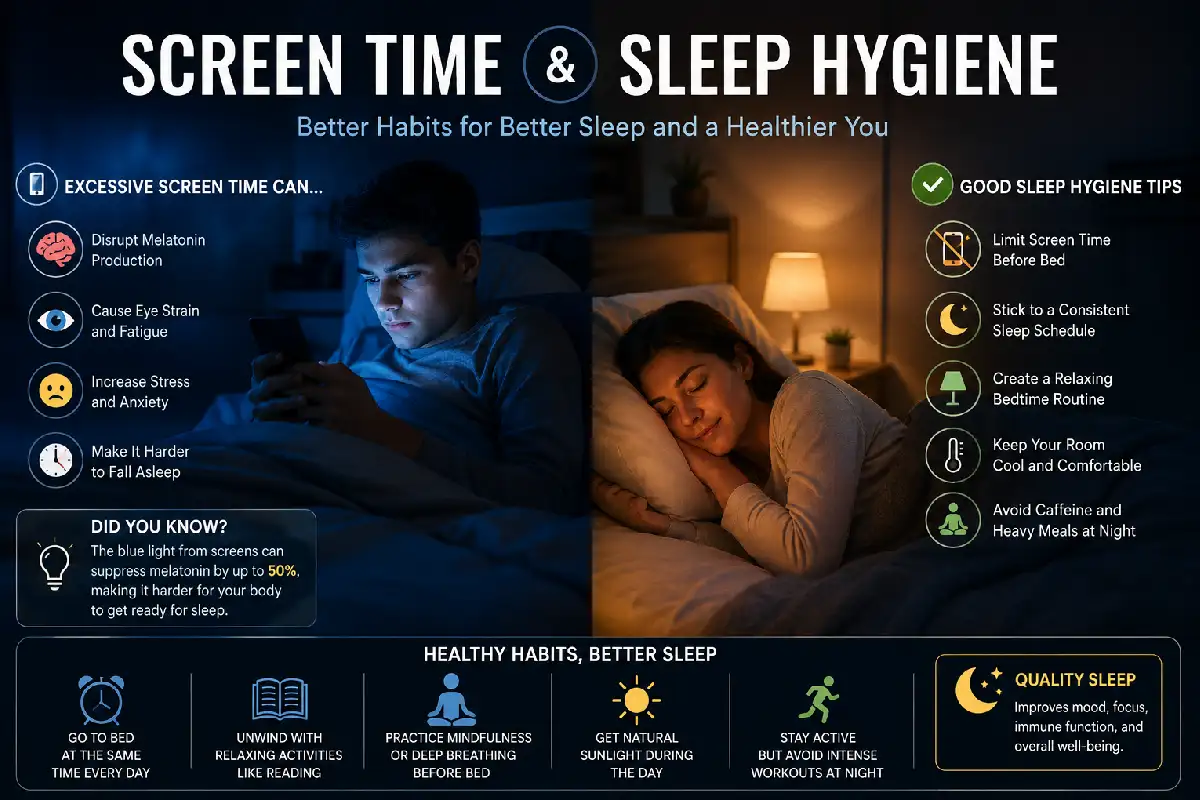
Screen Time and Sleep Hygiene: How Digital Habits Affect Your Sleep Quality
Last Updated: August 8, 2026
Screen Time and Sleep Hygiene: In our connected modern world, screens are all around. From our smartphones and computers to tablets and TVs, most people will spend several hours each day staring at a screen. And while the modern convenience of technology brings many benefits, that added screen time-particularly before bed-can also be detrimental to sleep.
Sleep hygiene is basically the collection of habits you use to achieve consistent, restorative sleep, and a huge part of modern sleep hygiene involves limiting screen exposure in the hour leading up to bedtime.
According to numerous studies, electronic devices such as screens emit light that interferes with the body’s natural schedule called your “circadian rhythm”. It tricks the body, causing it to think that the day is coming, rather than the night to begin. In this guide, read about why decreasing time spent in front of electronics before bed helps your sleep, information about blue light, and additional tips to help good sleep.
Want to improve your sleep naturally? Explore our complete sleep hygiene guide for expert advice on creating healthier sleep habits.
❝
This article is a part of
Sleep Health Guide
Why Better Sleep Hygiene Matters?
Tips to practice good sleep hygiene:
- Go to sleep faster
- Stay asleep more reliably
- Sleep better
- Have more energy during the day
- Better focus and concentration
- Stronger immune system
- Less stress
Poor Sleep Hygiene Consequences
Many of Sleep disorders (insomnia & excessive sleepiness) are typically caused from a lack of good sleep habits and often results in numerous damaging health effects to both your body and brain. But what’s “truly “ damaging the foundation of your sleep hygiene – too much screen time in the hours immediately before you go to sleep.
How blue light affects your sleep?
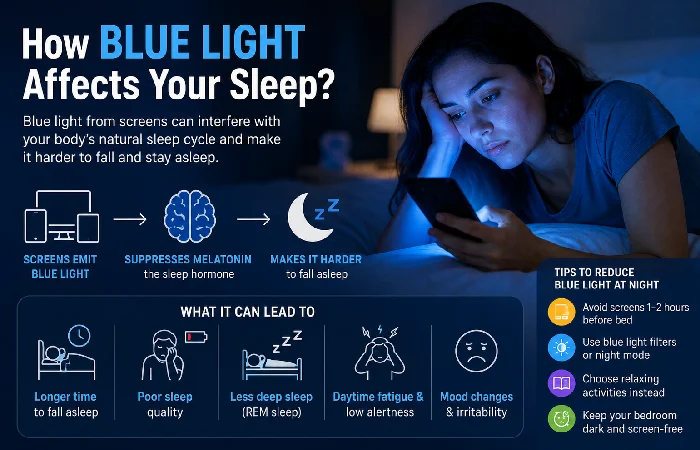
A consistent sleep hygiene bedtime routine can make it easier to fall asleep after reducing screen use in the evening.
Blue light is the shortest wavelength, highest-energy form of light, and the body needs it, from sunlight, in order to trigger biological processes such as setting our wake and sleep schedules and the alert/ drowsy systems.
But we produce excess blue light with smart devices and computer devices as well – and by overloading our brain’s sleep centers with artificially made blue light at bedtime, we are able to mislead the body.
Understanding the Sleep-Wake Cycle
Your body operates on a 24-hour internal clock called the circadian rhythm. This biological clock controls:
- Sleep and wakefulness
- Hormone production
- Body temperature
- Alertness levels
Around time to turn lights down, our brain, produces melatonin which is designed to make us want to sleep. In doing so the blue light from screens stops melatonin which works as sleep promoter by postponing the cycle of awaken and sleeping of our body.
If you’re looking for practical advice, these sleep hygiene tips for adults can help improve your nightly routine and overall sleep quality.
Common Sources of Blue Light
- Smartphones
- Tablets
- Laptops
- Computer monitors
- Televisions
- Gaming consoles
- LED lighting
So, sleeping near this electronic gadget before you turn down for the night, your brain feels like it’s still daytime.
How do some wavelengths of blue light block production of melatonin?
If you direct blue light from your device toward your eyes then, a portion of specialized light-sensitive cells in your retina will receive signal.
Reducing screen exposure before bed is one of the best ways to promote deep, restorative sleep and wake up feeling refreshed.
This process:
- Reduces melatonin production
- Increases alertness
- Delays sleep onset
- Disrupts circadian rhythms
As a result, people often:
- Take longer to fall asleep
- Experience lighter sleep
- Wake up more frequently
- Feel less rested in the morning
Even a single hour of screen exposure before bed may affect sleep quality.
The Impact on Different Age Groups
Children and Teenagers
Young people are especially sensitive to blue light.
Excessive evening screen time can:
- Delay bedtimes
- Reduce total sleep duration
- Affect academic performance
- Increase daytime sleepiness
Adults
Adults often use screens for work and entertainment.
Nighttime device use can contribute to:
- Falling asleep is a struggle
- Chronic sleep deprivation
- Decreased productivity and focus at work
- Higher stress and anxiety
Older Adults
Melatonin production also decreases with age and thus older individuals’ exposure to blue light exacerbates problems with disrupted sleep.
What Screen Time Besides Blue Light Does to Your Sleep: Melatonin is not the only offender.
The content you consume before bed can also affect sleep.
If stress makes it difficult to disconnect from devices at night, these sleep hygiene strategies for anxiety and stress can help you relax before bedtime.
Mental Stimulation
The use of mobile device late night, playing gaming, watching thriller movie can provide stimulus which make the mind fresh and awake .this will lead to delay the start of sleeping
Emotional stimulation
Some people gets: Emails, Social site update News update etc can cause anxiety etc
- Stress
- Anxiety
- Excitement
- Emotional reactions
These emotions can make it difficult to relax.
Continuous Notifications
Late-night notifications interrupt:
- Sleep preparation
- Deep sleep cycles
- Overall sleep quality
Many people wake up during the night to check messages or alerts.
Best Time to Stop Using Devices
It is broadly suggested by professionals that you switch off screens for no more than two hours and at the minimum, one hour before sleeping at night. Doing this, encourages the build-up of melatonin in the body.
The 60-minute guideline
The ideal way to begin to implement a no-screen rule near to bed-time is to switch off at least 60 minutes prior to you’re heading to bed.
Stay consistent with healthy evening habits by following this sleep hygiene checklist to support better sleep every night.
Benefits include:
- Faster sleep onset
- Improved relaxation
- Better sleep quality
The 90-Minute Rule
Those suffering from sleep difficulties can expect better results, though, by ceasing device use 90 minutes prior to bedtime. This period of time gives the brain time to shift gears into the sleep state.
The Two-Hour Rule For Those Who Have Chronic Insomnia
If you often suffer from bouts of insomnia it might be worthwhile to cease the use of all device products 2 hours before sleep to drastically limit the blue light that can interfere with your body’s sleep cycle, along with the amount of information that the brain is consuming.
Sample Evening Screen Schedule
| Time | Activity |
| 7:30 PM | Finish work-related screen tasks |
| 8:00 PM | Reduce social media use |
| 8:30 PM | Activate digital detox period |
| 9:00 PM | Reading, stretching, relaxation |
| 10:00 PM | Bedtime |
This routine helps prepare the brain for sleep naturally.
Night Mode vs Blue Light Glasses
Many people rely on technology solutions to reduce blue light exposure.
Two popular options are night mode settings and blue light blocking glasses.
Let’s compare them.
What Is Night Mode?
Also referred to as night viewing mode or “dark mode” the night mode changes your color to warmer tones; the color of the light emitted by your screen turns more in yellow or amber so it emits fewer bluish rays.
Benefits of Night Mode
- Easy to activate
- Available on most devices
- Reduces blue light exposure
- More comfortable for nighttime viewing
Limitations
- Does not eliminate all blue light
- Does not reduce mental stimulation
- May not completely prevent sleep disruption
Night mode can assist you, yet it’s definitely not suitable for healthy bed times.
What Are Blue Light Glasses?
When you put on blue light glasses, lenses in those spectacles try to block some wave lengths of blue light. You wear them to view a monitor at night time.
Potential Benefits
- Reduce blue light reaching the eyes
- Improve visual comfort
- May support melatonin production
Limitations
- Results vary among individuals
- Not all products provide equal protection
- Cannot eliminate stimulating screen content
Which Option Works Better?
The best approach combines multiple strategies:
- Use night mode.
- Lower screen brightness.
- Wear blue light glasses if desired.
- Limit screen exposure before bed.
No technology can fully replace reducing nighttime device use.
Digital Detox Before Bed
Taking a digital detox means giving yourself a break from electronic devices.
A digital detox on your bedtime can enhance sleep quality.
Why It Helps
Taking some time screens down for a bit can:
- Decrease blue light exposure
- Lower stress levels
- Improve relaxation
- Enhance melatonin release
- Prepare the brain for sleep
Your sleep will probably start to improve even within a few days of limiting evening screen use.
Make Bedroom a Device-Free Space
This is how you can trick your brain into associating your bedroom with rest instead of technology.
Consider removing:
- Televisions
- Laptops
- Tablets
- Gaming systems
Keep phones away from the bed whenever possible.
Use an Alarm Clock Instead of Your Phone
Many people keep phones nearby because they use them as alarms.
A traditional alarm clock reduces the temptation to:
- Check notifications
- Scroll social media
- Read emails
These small, easy steps can make huge differences to the way we sleep.
Swap the technology for an unwinding task
Instead of staring at the mobile phone, do the following:
Read a Physical Book
This form of reading has benefits beyond providing stimulating words; it doesn’t emit blue light to interfere with sleep-inducing hormones.
Perform Stretches Lightly
This process can decrease the tightening in your muscles to promote rest.
Meditation
Meditation helps calm racing thoughts and prepare the brain for sleep.
Journaling
Write it Down and Clear your Head Write down the worries and the plans for the next day to help mentally declutter.
Listen to some Calm Music
Listening to calm music might aid relaxation and preparing for sleep. _
Establish a Bedtime Wind-Down Routine
Brains just work so much better on habits and knowing what’s next. A nightly routine might look like this:
- Dimming lights
- Washing your face
- Stretching
- Reading
- Going to bed at the same time
Repeating this each evening tells your brain that bed is coming.
Sleep better – and live better too
Getting a good night’s sleep goes beyond cutting down on screens – though that’s an important step for many.
Tips for Better Sleep
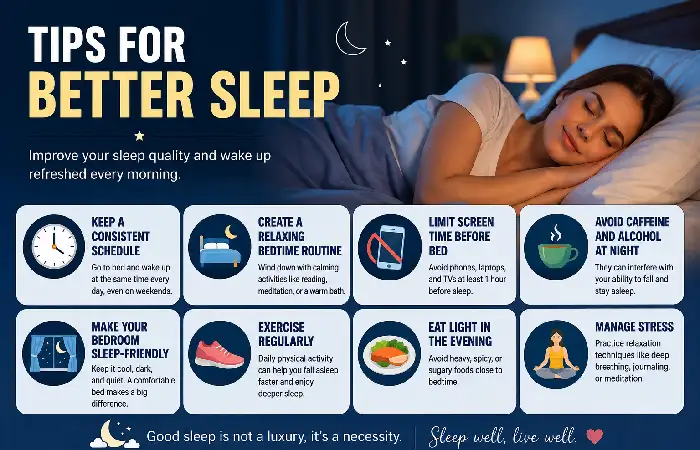
Stick to a Regular Sleep Routine
Every day – weekdays, weekends, holidays – go to bed and wake up at the exact same time. Why? Regularity reinforces your body’s internal clock (your circadian rhythm).
Catch some Morning Light
Soak up Some Sunlight You can actually help set your internal clock-the system that governs how your body creates and releases melatonin (the sleep-inducing hormone)-just by getting 15 to 30 minutes of sunshine, according to sleep researchers.
Watch Your Caffeine Intake
Just so you know, it can actually take the body up to four hours ( or longer!) to process and eliminate caffeine.
Avoid:
- Coffee
- Energy drinks
- Strong tea
- Pre-workout supplements
Especially during the afternoon and evening.
Exercise Regularly
Physical activity supports deeper sleep.
Good options include:
- Walking
- Running
- Cycling
- Strength training
- Yoga
Avoid intense exercise immediately before bedtime.
Set Your Sleep Environment
Establish a bedroom that helps you sleep.
Keep it Dark
Blockout curtains can help.
Keep it Quiet
Block noise from the outside by using earplugs or white-noise machines.
Keep it Cool
People generally sleep best in a cool room.
Eat Light At Night
Large amounts of food right before bed can result in:
- Indigestion
- Heartburn
- Discomfort
Finish eating at least two to three hours before bedtime.
Manage Stress Effectively
Stress is one of the leading causes of poor sleep.
Helpful strategies include:
- Deep breathing exercises
- Meditation
- Journaling
- Counseling
- Relaxation techniques
Stop Watching the Clock
Every time you look at the time, the anticipation about falling asleep builds up! Try placing your clocks out of sight if needed. The same idea applies to not checking online every time you wake during the night – in 15 minutes you’ll be able to start afresh on 15 more minutes of sleeping, but when you see it has only been 3 you begin counting up as if that is going to magically help you feel even more tired for no.
It’s not the quantity of time sleeping when you wake it’s when your brain turns on that adds the worry.
Take your time with these changes These things will improve sleep after a period, but aren’t a magic bullet. Typically you’ll notice results after a few weeks of following new sleep habits consistently.
Long term benefits of cutting screen out before going to bed As well as giving you peace of mind over sleep, it’ll…
- Better sleep quality
- Faster sleep onset
- Increased daytime energy
- Improved mood
- Better memory and focus
- Reduced stress
- Stronger immune function
- Improved overall health
Small changes to evening technology habits can have a significant impact on long-term well-being.
Conclusion
Screen time and sleep hygiene are accordingly deeply related. Using too many devices before sleep distorts eyes with blue light, limits melatonin production and excites cortex when we want our brain to turn off. While night mode and blue light glasses could offer some reassurance, the best result could be achieved by reducing activities associated with devices at night.
Avoiding this disconnection from technology before sleep, adhering to a schedule for sleep and healthy lifestyle choices help you to live and sleep well. Manage the time you spend using tech devices, establish good sleep habits so that you obtain the restorative sleep you crave every night.
FAQs
Does blue light really Affect Your Sleep?
Yes. Blue light will prevent production of melatonin and cause ofsleep delay.. Why Is Far Away Should We Put Screens From Our Bedtime? Numerous sleeping specialists suggest no screens inside a to two, or possibly up to 120, minutes prior to going to sleep.
Are blue light glasses effective?
Blue light glasses might reduce blue light exposure but they should be used along with reduced screen time.
Is night mode enough to protect sleep?
While you will be using less blue light you won’t be using no blue light. Limiting your use of devices before bed is just as important as reducing blue light.
- Any recommendations other than phone before sleep.
Taking a walk and preferably to the park to sit, - Taking a bath,
- Reading an offline book,
- Doing a low stress workout (a simple form of yoga),
- Writing a diary,
- Meditation,
- Listen to relaxing music
Will screen time affect you and can it cause sleeplessness.
Screen time too late at day may affect your hormones such as causing a slowdown in the production of melatonin, which causes and encourages sleep and may make your brain stay overly active
Do TV has the same effect on us, like mobile?
Yes because the same kind of light source used at TVs can create interference similar to mobiles.
For some, the benefits can be seen within one day or a few days to a few weeks of consistently practicing health sleep habits and decreasing the hours of screen exposure in the evening.