

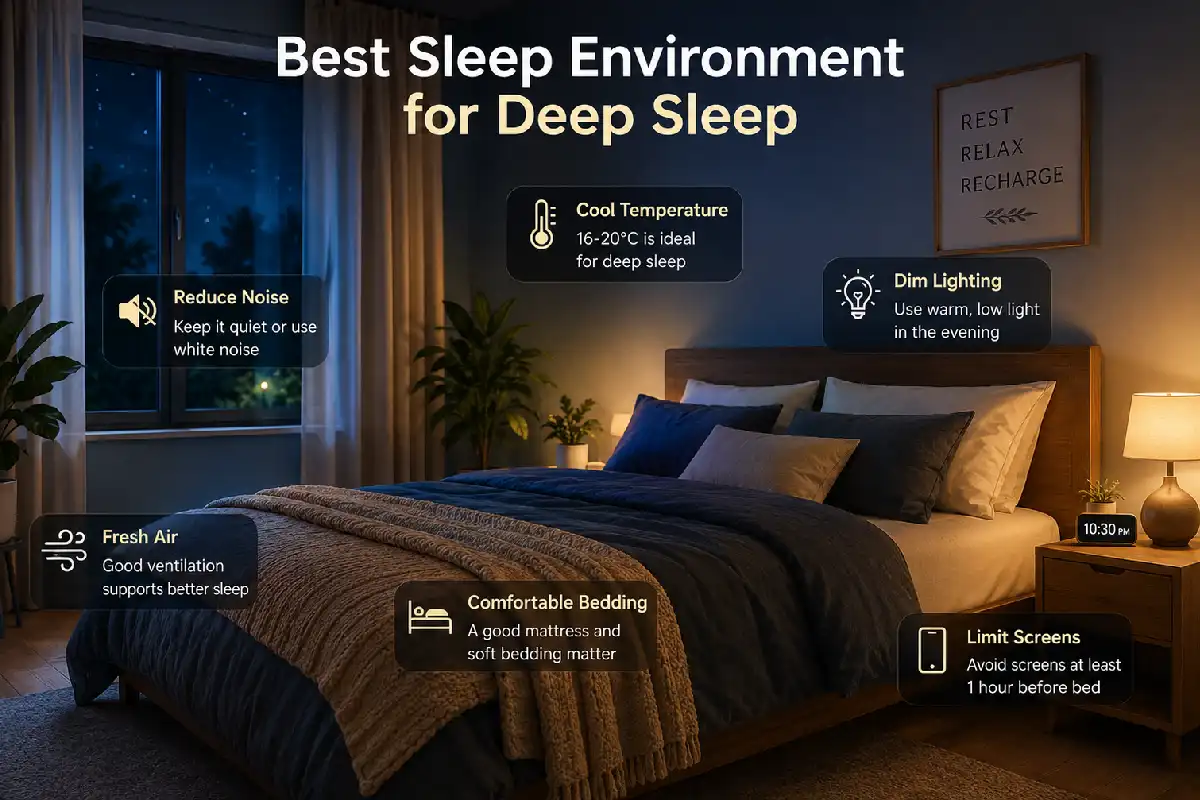
Best Sleep Environment for Deep Sleep and Better Recovery
Last Updated: August 8, 2026
Best Sleep Environment for Deep Sleep – Getting a good amount of sleep is important; the same goes for the quality of sleep. Having said that, you can get a total of 8 hours of sleep and still feel exhausted if you did not build a conducive sleeping environment. Good, conducive sleep will allow your body to drift into a deep sleep from which your body can fully utilize the rest you got.
Healthy Muscles and Body. By now you know that the better quality your sleep is, the more your body comes into repair mode through the process of deep tissue reconstruction and immune function rejuvenation, as well as restoring adequate storage for your body to have all the energy you need for the next day.
No amount of serious bedroom renovation required –just a few thoughtful additions would turn your bedroom into a well-needed abode for you. Inside this guide, you should learn what the necessary basics of a great sleep conducive to a deep sleeping session are: temperature and your bedroom’s sleep-inducing darkness, noises you need to eliminate and perhaps minimize in the bedroom, the best kinds of bedroom furniture, and finally your well-arranged room and everything in between.
❝
This article is a part of
Sleep Health Guide
Why Your Sleep Environment Matters
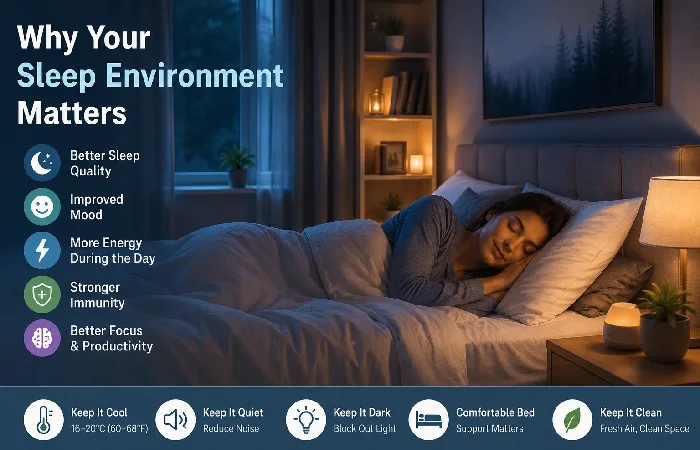
Your bedroom’s role in falling asleep fast and getting back to it quickly.
Environmental factors such as:
- Room temperature
- Light exposure
- Noise levels
- Mattress comfort
- Pillow support
- Air quality
- Bedroom cleanliness
all work together to influence sleep quality.
An ideal bedroom makes your body release melatonin, relax your nervous system & avoid nightly awakening.
For a complete approach to better sleep, explore our sleep hygiene guide to learn healthy habits that support restful nights.
Comparison Table: Good vs Poor Sleep Environment
| Feature | Ideal Sleep Environment | Poor Sleep Environment |
| Temperature | 18–20°C (65–68°F) | Too hot or too cold |
| Lighting | Dark room with blackout curtains | Bright lights and screens |
| Noise | Quiet or white noise | Traffic, TV, loud sounds |
| Mattress | Medium support with comfort | Old, sagging mattress |
| Pillow | Proper neck alignment | Too flat or too high |
| Air Quality | Fresh and ventilated | Stuffy or dusty |
| Bedroom Organization | Clean and clutter-free | Messy and overcrowded |
Ideal Bedroom Temperature
A lot of the time, it comes down to the atmosphere and how you have created it in your room, and one of the main contributors? Your bedroom temperature.
A relaxing sleep hygiene bedtime routine can prepare your body for deeper, more restorative sleep every night.
Your core body temperature begins to cool as your mind and body anticipate an evening sleep. The room needs to be consistent with that change. That cool and chilly sleep environment temperature is your room for those difficulties in drifting off to sleep and getting caught up in the deep sleep cycles.
Recommended Bedroom Temperature
| Age Group | Ideal Temperature |
| Adults | 18–20°C (65–68°F) |
| Older Adults | 18–21°C |
| Babies | 20–22°C |
Sleeping in a room that is too warm may cause:
- Night sweats
- Frequent waking
- Restlessness
- Reduced REM sleep
- Lower deep sleep duration
A chilly bedroom can keep muscles tight which can certainly make your sleep disrupted.
Tips for Maintaining the Ideal Temperature
- Use breathable cotton bedding.
- Choose lightweight blankets during summer.
- Keep good airflow with a fan.
- Use an air conditioner if necessary.
- Wear comfortable sleepwear made of natural fabrics.
Lighting for Better Sleep
Maybe one of the best examples of a time cue out there is light. Light dramatically affects your internal clocks. Using light before bed will block the natural production of the sleep hormone called Melatonin. Reducing your exposure to light at night can help you get quality sleep.
These practical sleep hygiene tips for adults can help improve sleep quality and create a more consistent nightly routine.
Best Bedroom Lighting Practices
| Lighting Type | Effect on Sleep |
| Warm yellow light | Encourages relaxation |
| Soft bedside lamp | Good before bedtime |
| Bright white LED | May delay sleep |
| Blue light from screens | Reduces melatonin |
Evening Lighting Tips
- Dim lights one hour before bed.
- Avoid smartphones in bed.
- Turn off television at least 30 minutes before sleeping.
- Install blackout curtains.
- Cover bright electronic indicators.
Natural darkness tells your brain it’s time to sleep.
Morning Light Matters Too
Morning sunlight helps reset your biological clock.
Try to spend:
- 15–30 minutes outdoors after waking.
- Open bedroom curtains immediately.
- Eat breakfast near a window.
Morning light improves nighttime sleep quality.
Noise Reduction Tips
Noise interrupts sleep even if you don’t fully wake up.
Your brain continues processing sounds during sleep, especially sudden noises.
Common Sleep Disruptions
| Noise Source | Solution |
| Traffic | White noise machine |
| Dogs barking | Earplugs |
| Television | Turn off before bed |
| Neighbors | Soundproof curtains |
| Household appliances | Close bedroom door |
Effective Noise Reduction Strategies
Use White Noise
White noise masks sudden environmental sounds.
Examples include:
- Fan
- Air purifier
- White noise machine
- Rain sounds
- Ocean waves
Wear Earplugs
A foam plug will quiet the background hum of irritating noise.
Soundproof Your Room
Simple improvements include:
- Thick curtains
- Carpets
- Rugs
- Door seals
- Bookshelves against shared walls
Quiet Bedtime Routine
Lower household noise during the final hour before bedtime.
Activities include:
- Reading
- Gentle stretching
- Meditation
- Listening to calming music
Choosing the Right Mattress and Pillow
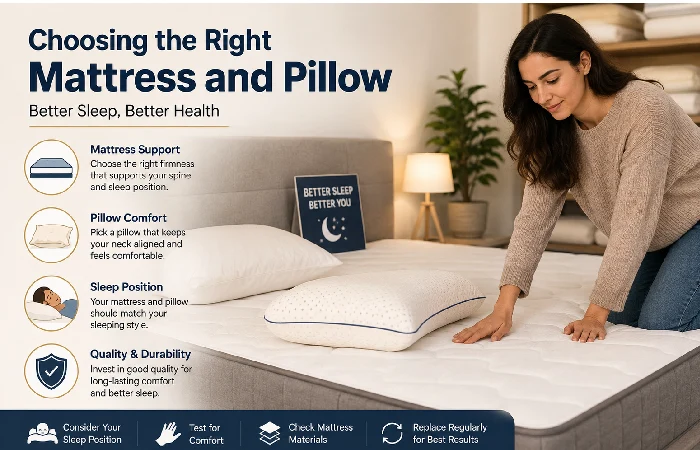
Spend the night on a bed with a mattress that balances out my body weight and pressure.
A backache from an unpleasant bed leaves you with restless nights.
| Mattress Comparison: Mattress Type | Best For | Advantages |
| Memory Foam | Side sleepers | Pressure relief |
| Hybrid | Combination sleepers | Balanced comfort |
| Latex | Hot sleepers | Cooling and durable |
| Innerspring | Budget buyers | Better airflow |
How Often Should You Replace a Mattress?
| Mattress Type | Average Lifespan |
| Memory Foam | 8–10 years |
| Latex | 10–15 years |
| Hybrid | 7–10 years |
| Innerspring | 6–8 years |
Choosing the Right Pillow
The ideal pillow depends on your sleeping position.
| Sleep Position | Recommended Pillow |
| Side Sleeper | Thick pillow |
| Back Sleeper | Medium loft |
| Stomach Sleeper | Thin pillow |
A supportive pillow reduces:
- Neck pain
- Shoulder stiffness
- Morning headaches
Mattress Buying Checklist
- Proper spinal support
- Comfortable firmness
- Breathable materials
- Motion isolation
- Warranty
- Trial period
Bedroom Organization
A clean bedroom creates a calm mind.
Too much clutter to have a relax end of the day?
Cutting back on devices before bed is important, so follow these screen time and sleep hygiene tips to reduce blue light exposure and promote better sleep.
Everyone is surprised by just how much the clutter in the visual sphere affects quality sleep.
Benefits of an Organised Bedroom
| Benefit | Impact |
| Less clutter | Reduced stress |
| Cleaner air | Better breathing |
| Easy cleaning | Healthier room |
| Better relaxation | Improved sleep |
Organization Tips
Keep Surfaces Clean
Do not use night tables, or bedside table, to stack books, electronic, and clothes.
Store Electronics Away
Smart devices encourage poor bedtime usage. In case the charge level permits, get devices out of the bedroom.
If stress or anxious thoughts are keeping you awake, explore these sleep hygiene strategies for anxiety and stress to help you unwind before bedtime.
Use Soft Colors
Relaxing colors include:
- White
- Beige
- Light gray
- Soft blue
- Sage green
- Your love of brights probably means the colors will keep your mind buzzing.
Improve Air Quality
Fresh air supports better breathing.
Consider:
- Opening windows daily
- Using an air purifier
- Cleaning bedding weekly
- Vacuuming regularly
Plants That May Improve Bedroom Atmosphere
| Plant | Benefit |
| Snake Plant | Air purification |
| Peace Lily | Humidity support |
| Aloe Vera | Easy maintenance |
| Spider Plant | Removes pollutants |
Additional Tips for Better Deep Sleep
Now for the healthy habit part.
Maintain a Consistent Sleep Schedule
Make sure you go to sleep, get up, and do the same things day in and day out.
Avoid Heavy Meals Before Bed
Big meals might trigger pain and problems with your tummy.
Limit Caffeine
Keep it away six hours before you try to hit the hay.
Exercise Regularly
Exercise every day, but remember to don’t work out late before sleep.
Reduce Stress
To build healthier nighttime habits, use this sleep hygiene checklist as a simple guide for improving your sleep routine.
Practice:
- Deep breathing
- Meditation
- Journaling
- Gentle yoga
| Common Bedroom Mistakes to AvoidMistake | Better Alternative |
| Sleeping with TV on | Read a book |
| Using bright lights | Warm bedside lamp |
| Messy bedroom | Organized storage |
| Checking phone repeatedly | Keep phone away |
| Too many pillows | Use one supportive pillow |
Sample Ideal Bedroom Setup
| Item | Recommendation |
| Temperature | 18–20°C |
| Curtains | Blackout curtains |
| Mattress | Medium-firm |
| Pillow | Based on sleep position |
| Noise | White noise or earplugs |
| Lighting | Warm bedside lamp |
| Bedding | Cotton sheets |
| Air | Well ventilated |
Benefits of Creating the Best Sleep Environment
Long term positive health benefits of optimising your environment for sleep. These benefits may include:
- Better deep sleep
- Faster sleep onset
- Increased daytime energy
- Improved mood
- Stronger immune system
- Better memory and focus
- Reduced stress
- Healthier heart
- Balanced hormones
- Improved productivity
It could even simply be made by lowering the room temperature slightly or even taking electronics away from the room, so that they weren’t an obvious distraction from sleeping in the day.
Frequently Asked Questions (FAQs)
- What is the best temperature for deep sleep?
Adults get the best night’s sleep in a cool environment- cool 18- 20 °C (65-68F)-this helps the body toregulate it body’s cooling mechanisms throughout the night.
- Does complete darkness improve sleep?
Sure. When you are sleeping in a pitch dark, your body may produce more melatonin, which will help you sleep better.
- Is a firm mattress better than a soft mattress?
Depends• How can I choose the right mattress for me The best mattress for you depends on a combination of size, shape and the way that you like to sleep. Almost all medium or soft beds are fine for most of us.
- Can noise affect sleep even if I don’t wake up?
Yep. Your brain actually does not turn “off” when you’re asleep. Persistent sound is documented to lessen time in deep sleep, making you wake up not feel so much like yourself.
Conclusion
Designing the ultimate environment to achieve deep sleep, one of the best self-improvement strategies available to promote good health, could change your life-and you don’t necessarily have to change a lot at one time. Whether you’re using cool room temperature, low lights, or the dark settings with Quiet, you’re tapping into the power of sleep and lifestyle changes on Bed. From there, start simple and scale gradually by addressing the changes you will get will improve the quality of your sleeping patterns, and the increase will bring benefits like energy, concentration, and general well-being.