

Hair Growth Cycle Explained: Understanding the 4 Stages of Hair Growth
 Khizrana Begum
Beauty & Lifestyle Writer
Khizrana Begum writes clear and reader-friendly content covering beauty, lifestyle and related topics.
Read Full Bio of Author →
Khizrana Begum
Beauty & Lifestyle Writer
Khizrana Begum writes clear and reader-friendly content covering beauty, lifestyle and related topics.
Read Full Bio of Author →
 Sameena Begum
Health, Technology & Digital Content Reviewer
Sameena Begum reviews content for clarity, accuracy and overall reader usefulness.
Read Full Bio of Reviewer →
Sameena Begum
Health, Technology & Digital Content Reviewer
Sameena Begum reviews content for clarity, accuracy and overall reader usefulness.
Read Full Bio of Reviewer →
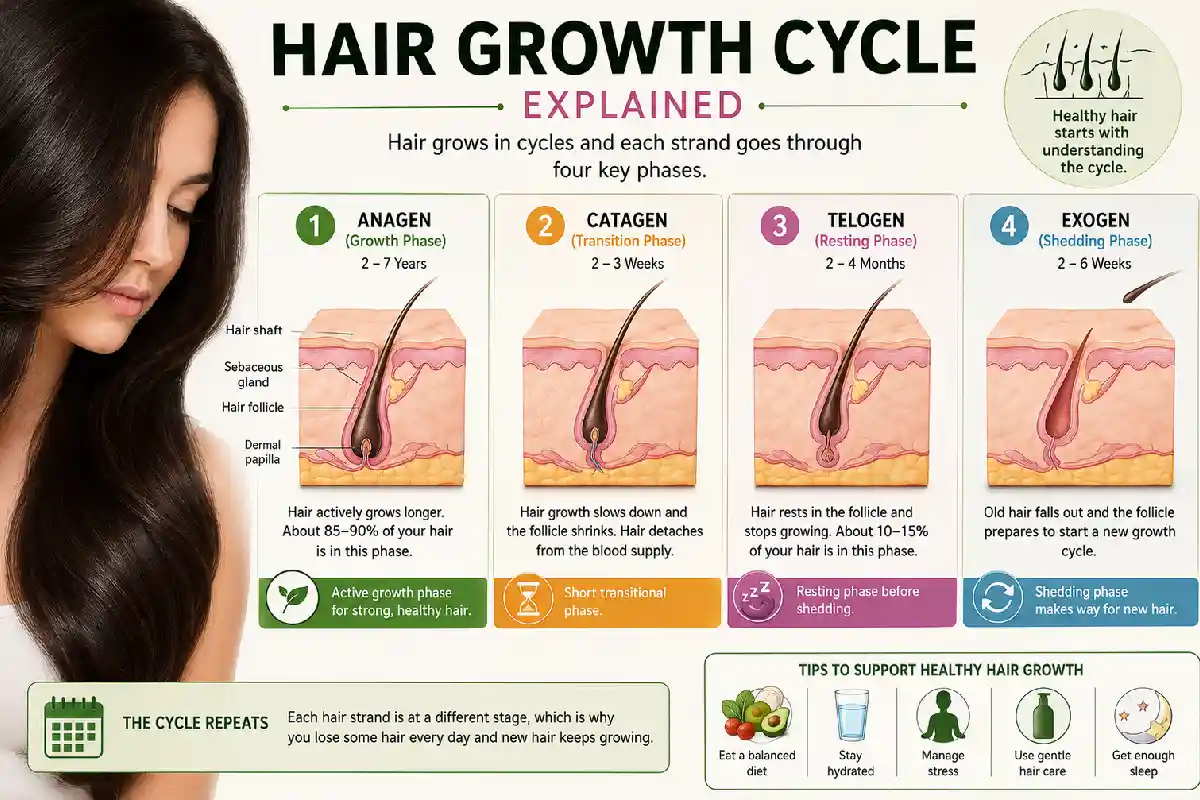
Hair Growth Cycle Explained – Ever wondered why your hair seems to spurt up and then seem like it stops growing completely for a while? Or why shedding a few strands of hair a day is considered normal? Well, the reason is the hair growth cycle, a perpetual process every single hair follicle on your scalp undergoes your whole life.
Knowing about this cycle can help you make healthier hair decisions, know what normal hair shedding is and when to take notice if your hair starts falling in bunches.
So if you’re someone who wants long luscious locks or just interested in knowing how the scalp works to give rise to hair, this article on the four stages of hair growth cycle is a good read! At any point of time, not all hair on your scalp is in the same stage of growth cycle. This is the reason why you do not wake up bald each morning. The hair on your scalp is a constant renewal system of which some hairs have aged and fallen and some are in process of new birth and some are growing at a healthy rate.
❝
This article is a part of
Natural Hair Care Guide
Here’s a rundown of the stages of the hair growth cycle, factors contributing to healthy growth and simple tips for healthy thick and long hair:
Understanding the Hair Growth Cycle
Hair Regrowth cycle consist of repetitive cycle, each of our hair follicles goes through the different four phases. Each follicle functions at individual paces to confirm that only portion of our hair falls out at a time.
Understanding the natural hair growth process helps you set realistic expectations for healthier, stronger hair.
The Four Stages of Hair Growth
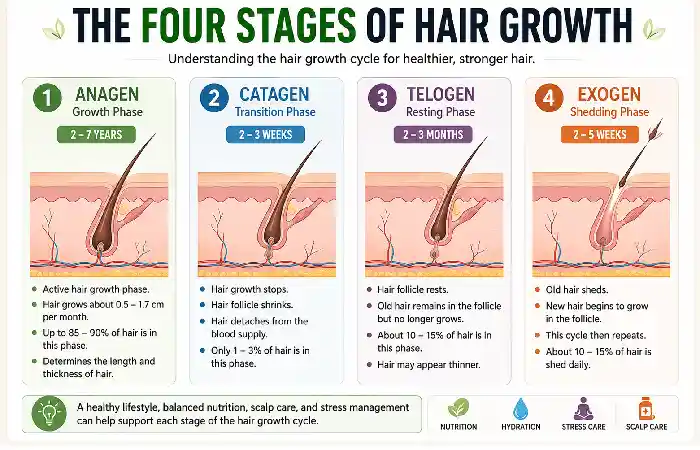
Supporting each stage of growth with natural hair growth remedies may improve your overall hair care routine.
| Hair Growth Stage | What Happens | Average Duration |
| Anagen | Active hair growth | 2–7 years |
| Catagen | Transition stage | 2–3 weeks |
| Telogen | Resting stage | 2–4 months |
| Exogen | Hair shedding | Several weeks |
This whole cycle repeats continuously so you can maintain strong, healthy hair your whole life.
Applying natural hair growth oils can help nourish the scalp throughout the hair growth cycle.
Anagen Phase
The Active Growth Stage
The growth phase called the anagen stage is one the hair has during the life of the hair cycle and also the longest and most active phase, cells within the hair follicle grow at a fast rate and create new strands of hair which move old hairs upwards
This stage typically contains around 85-90% of all of the hair in your head.
Eating the right foods for natural hair growth provides essential nutrients during every stage of hair development.
What Happens During Anagen?
- Hair follicles actively produce new hair.
- Blood vessels deliver oxygen and nutrients.
- Hair grows approximately 1–1.5 cm per month.
- Protein (keratin) production remains high.
- Hair becomes longer and stronger.
The maximum hair length will depend heavily on the duration of your growth phase (also referred to as anagen). If you have a growth phase of 7 years you are more likely to achieve long hair as compared to someone with a growth phase of just 2 years.
If you’re hoping for quicker results, learn how to grow hair faster naturally with healthy lifestyle habits.
Factors That Influence Anagen
- Genetics
- Hormones
- Age
- Nutrition
- Overall health
- Scalp condition
Signs Your Hair Is in the Anagen Phase
Most healthy hairs remain in this stage for years.
You may notice:
- Continuous hair growth
- Strong hair strands
- Healthy shine
- Minimal breakage
- Thick appearance
Catagen Phase
The Transition Stage
Catagen stage (or intermediate phase) – This is the resting phase in hair growth. Active growth of hair has stopped. The catagen stage is brief and transitions into telogen.
Using the right hair growth supplements may help support healthy hair growth when combined with a balanced diet.
Only 1-3 percent of hairs are generally in this stage.
What Happens During Catagen?
- Hair growth stops.
- The follicle shrinks.
- Blood supply disconnects.
- Hair root hardens into what is known as a club hair.
- The follicle prepares for dormancy.
This phase generally lasts only 2–3 weeks.
Although growth has stopped, the hair remains attached to the scalp.
Characteristics of Catagen Hair
| Feature | Description |
| Growth | Stops completely |
| Hair Root | Shrinks |
| Blood Supply | Disconnects |
| Hair Length | Remains unchanged |
| Duration | About 2–3 weeks |
Telogen Phase
The Resting Stage
The following phase after catagen, the telogen phase. In the telogen phase, the hair follicles lie dormant. The hair remains attached but no longer grows.
Roughly 10–15% of scalp hairs are in the telogen stage.
During This Stage
- Hair follicles rest.
- No new growth occurs.
- Hair stays anchored.
- New follicle activity begins underneath.
This phase usually lasts 2–4 months before shedding begins.
Some assume it’s telogen causing hair loss. It’s just the usual phase the hair goes through to rest.
What Can Trigger More Telogen Hair?
Several conditions can push extra hairs into the telogen stage, including:
- Emotional stress
- Illness
- Surgery
- Childbirth
- Nutritional deficiencies
- Rapid weight loss
- High fever
- Hormonal changes
This temporary condition is often called telogen effluvium.
Exogen Phase
The Natural Shedding Stage
The exogen phase is when old hairs naturally fall out, making room for new growth.
This is the stage responsible for the hair you notice on:
- Hairbrushes
- Shower drains
- Pillows
- Clothing
Losing 50–100 hairs daily is generally considered normal.
What Happens?
- Old hair releases from the follicle.
- New hair begins emerging underneath.
- Shedding occurs gradually.
- The cycle starts again.
Healthy shedding is essential because it allows new hairs to replace older ones.
Normal vs Excessive Hair Shedding
| Normal Shedding | Excessive Hair Loss |
| 50–100 hairs/day | More than 150 hairs/day |
| Even distribution | Noticeable thinning |
| Temporary | Lasts several months |
| Hair regrows | Regrowth slows |
| No bald patches | Visible scalp areas |
Factors Affecting the Hair Cycle
There are both internal and external causes that can prevent your hair from growing properly.
1. Genetics
Genes largely determine:
- Hair thickness
- Growth speed
- Hair color
- Maximum length
- Hair density
2. Hormones
When it comes to the follicles, the hormone’s influence can be overwhelming.
Examples include:
- Thyroid hormones
- Estrogen
- Testosterone
- DHT
- Cortisol
These hormonal changes may trigger shorter growth phase and more loss of hair.
3. Nutrition
Hair follicles require nutrients every day.
Important nutrients include:
| Nutrient | Role in Hair Growth |
| Protein | Builds keratin |
| Iron | Delivers oxygen |
| Zinc | Supports follicle repair |
| Biotin | Supports keratin production |
| Vitamin D | Helps follicle function |
| Vitamin C | Boosts collagen |
| Omega-3 | Nourishes scalp |
4. Age
As we grow older:
- Hair grows more slowly.
- Follicles become smaller.
- Growth phases shorten.
- Hair becomes finer.
- Density gradually decreases.
5. Stress
Long-term stress increases cortisol levels, which may:
- Push hairs into telogen early
- Increase shedding
- Slow regrowth
- Affect scalp health
Managing stress supports healthier hair growth over time.
6. Scalp Health
A healthy scalp provides the ideal environment for follicles.
Poor scalp conditions such as:
- Excess oil
- Dandruff
- Inflammation
- Product buildup
Hair growth can be negatively effected.
How to Support Healthy Growth?
Genes & Your Hair Type may determine your maximum length, but the actually length you will get your hair is dependent on the quality of care.
Eat a Balanced Diet
Prioritize foods rich in:
- Lean protein
- Eggs
- Fish
- Nuts
- Seeds
- Leafy vegetables
- Berries
- Whole grains
Your active follicles need proper nutrition.
Keep Your Scalp Clean
Regular cleansing removes:
- Dirt
- Oil
- Sweat
- Dead skin
- Product buildup
A clean hair allows healthy growth.
Massage Your Scalp
Gentle scalp massage may:
- Improve blood circulation
- Relax scalp muscles
- Enhance nutrient delivery
- Support follicle activity
Make a few minutes part of your daily routine to get better hair.
Reduce Heat Styling
Frequent use of:
- Flat irons
- Curling irons
- High-temperature blow dryers
Can be drying, weakening hair shafts and cause them to break more easily.
To ensure hair’s quality, the lower temperature use of heat stylers and heat protectors are necessary.
Avoid Tight Hairstyles
Constant tension from:
- Tight ponytails
- Braids
- Buns
- Extensions
may contribute to traction-related hair loss.
Choose loose styles whenever possible.
Stay Hydrated
Cells of all types – even the cells in our body that can generate new healthy hair are supported by water.
Keeping properly hydrated supports the better functioning of the scalp.
Get Enough Sleep
When you get a quality night’s sleep your body takes the time to fix cells as well as stabilize the hormones you’d expect for healthy hair growth.
Adults should aim for 7–9 hours of sleep each night.
Protect Hair from Environmental Damage
Daily exposure to:
- UV rays
- Pollution
- Chlorinated water
- Saltwater
can weaken hair over time.
Protective hats and nourishing conditioners help reduce damage.
Hair Growth Timeline
| Month | What You May Notice |
| Month 1 | Healthy follicles begin active growth |
| Month 2 | Small increase in hair length |
| Month 3 | Improved strength and reduced breakage |
| Month 4 | Visible fullness for many people |
| Month 5 | Noticeably longer strands |
| Month 6 | Significant improvement with consistent care |
Hair grows gradually, so patience and consistency are key.
Common Myths About the Hair Growth Cycle
| Myth | Reality |
| Cutting hair makes it grow faster | Cutting stops splitting ends but doesn’t affect hair growth follicles. |
| Washing hair causes hair loss | The only thing shampoo removes is the hair that has already begun falling. |
| Brushing 100 times daily boosts growth | There may be extra harm than good with going overboard. |
| Hair grows continuously forever | Each strand cycles through a phase of growth, rest, and eventually shedding. |
| Natural oils alone can regrow hair | Oil may condition your hair, but cannot ensure the growth of new follicle. |
Tips for Maintaining a Healthy Hair Cycle
- Eat enough protein every day.
- Maintain a balanced intake of vitamins and minerals.
- Keep your scalp clean and healthy.
- Avoid excessive heat styling.
- Save your hair from the effects of strong sunlight.
- Limit cosmetic processes whenever you can.
- Relieve stress with physical activity or other relaxing routines.
- Practice adequate rest, maintain healthy hydration.
- Exercise patience while brushing wet hair.
- Visit a doctor when you have excessive and abrupt hair loss.
Final Thought
A hair’s growth cycle is amazing as the hairs continually shed, grow and rest throughout your entire life. Anagen, catagen, telogen and the exogen stage each play a unique and important part in the life of a hair and your hair will never be in the same stage simultaneously. As well as being aware of how normal hair shedding occurs, understanding hair cycle can help you dispel common misconceptions, encourage a healthier head of hair, maintain optimal health and well-being for improved results.
While you cannot change your genetics through diet, good hair-care and stress and sleep management alone, healthy habits such as healthy eating habits, a well maintained scalp, effective stress coping strategies, good sleep hygiene and caring habits for your hair will encourage it to reach its’ full potential.