

How to Grow Hair Faster Naturally? : A Complete Guide to Healthy Hair Growth
 Khizrana Begum
Beauty & Lifestyle Writer
Khizrana Begum writes clear and reader-friendly content covering beauty, lifestyle and related topics.
Read Full Bio of Author →
Khizrana Begum
Beauty & Lifestyle Writer
Khizrana Begum writes clear and reader-friendly content covering beauty, lifestyle and related topics.
Read Full Bio of Author →
 Sameena Begum
Health, Technology & Digital Content Reviewer
Sameena Begum reviews content for clarity, accuracy and overall reader usefulness.
Read Full Bio of Reviewer →
Sameena Begum
Health, Technology & Digital Content Reviewer
Sameena Begum reviews content for clarity, accuracy and overall reader usefulness.
Read Full Bio of Reviewer →
How to Grow Hair Faster Naturally? – You can promote faster natural hair growth. People whether young or old may be dealing with hair lost due to a bad haircut, experiencing thinning or loss of hair, or simply have long hair. People often wonder if you can accelerate hair growth. Unfortunately, there’s no miracle ‘pill’ that magically grew your hair back in seconds, though it would be awesome, wouldn’t it? Luckily, you CAN encourage healthy scalp and hair that promotes healthy growth and texture, as well as proper length at the right time.
❝
This article is a part of
Natural Hair Care Guide
Start with our complete guide to natural hair growth to understand the habits that support healthier, faster-growing hair.
How Much Hair Does Hair Grow Per Year?
According to human hair growth chart information, most humans grow about 6 inches of hair each year and 0.5 inch each month. However, rate of growth vary from one individual to another. Factors like genes, stress, hairstyles and etc also can cause influence.
If you’d like to encourage your hair to grow more quickly, there are numerous activities you can carry out in order to ensure the healthy growth of your hair and scalp. The following is a comprehensive guide that describes scientifically supported ways you can try to help promote the growth of healthier and longer hair.
Hair Growth at a Glance
| Hair Growth Factor | Impact on Hair Growth | Natural Solution |
| Genetics | Determines growth speed | Cannot be changed |
| Nutrition | Supports healthy follicles | Balanced diet |
| Stress | Can trigger hair shedding | Stress management |
| Scalp Health | Encourages stronger growth | Massage and scalp care |
| Sleep | Supports cell repair | 7–9 hours nightly |
| Hair Damage | Causes breakage | Gentle hair care |
| Hydration | Maintains a healthy scalp | Drink enough water |
Can Hair Grow Faster?
Short answer is no, not really. Your genetics control hair growth speed to an extent.
Many things can prevent hair growth as well, like an improper diet, extreme heat, stress, and an unhealthy scalp.
Simple natural hair growth remedies can complement your routine and improve scalp health over time.
Rather than speeding up your hair’s growth biologically, these natural hair growth methods try to accomplish the following goals.
- Keeping hair follicles healthy
- Reducing hair breakage
- Supporting the hair growth cycle
- Improving scalp circulation
- Providing essential nutrients
- Preventing premature shedding
How Your Hair Grows?
Understanding your Hair Growth cycle. Your Hair has 3 main phases
| Growth Phase | Duration | What Happens |
| Anagen | 2–7 years | Active hair growth |
| Catagen | 2–3 weeks | Growth slows |
| Telogen | 2–4 months | Hair rests before shedding |
More hair can stay in the anagen stage for a long time. – a healthy scalp.
Healthy Hair Growth Habits
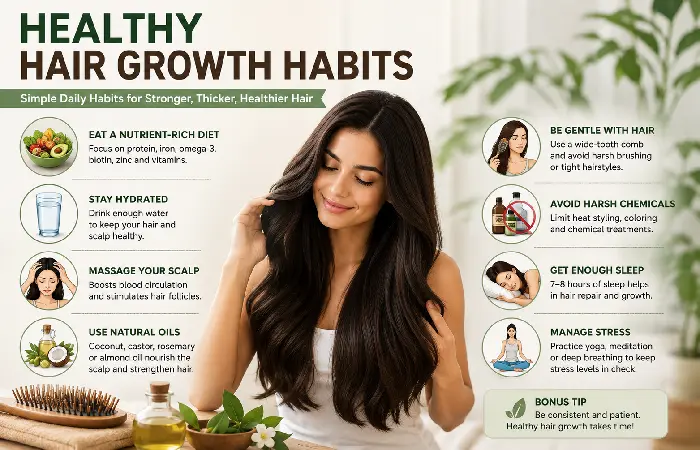
Using nourishing natural hair growth oils may help reduce breakage and create a healthier environment for hair growth.
It’s possible to greatly impact your hair’s texture and thickness with consistent daily healthy habits, but to encourage faster growth, try these suggestions to give your hair its greatest chance to thrive. Wash your hair. Clean hair washing away all the dirt and build-up. – Find shampoo suited to the hair and scalp type.
- Oily scalp: wash every 1–2 days
- Dry scalp: wash 2–3 times weekly
- Normal scalp: wash every 2–3 days
Avoid washing excessively, as this may strip natural oils.
Use Conditioner Regularly
Conditioner helps:
- Reduce breakage
- Prevent split ends
- Improve elasticity
- Lock in moisture
Healthy ends mean you’ll retain more hair length over time.
Limit Heat Styling
Excessive use of:
- Hair dryers
- Straighteners
- Curling irons
can weaken hair proteins and increase breakage.
Tips:
- Use heat protectant sprays
- Choose lower temperatures
- Air dry whenever possible
Avoid Tight Hairstyles
Constant pulling from:
- Tight ponytails
- Braids
- Buns
- Hair extensions
Which might lead to traction alopecia which means hair thinning because of tension. Choose relaxed hairstyles instead, when possible Trim Split Ends It is a myth that haircuts can promote hair growth. However getting the ends of your hair trimmed every 8-12 weeks will ensure the splits don’t work their way further up the length of your hair, resulting in less breakages and healthy-looking hair.
Eating the right foods for natural hair growth provides essential nutrients needed for stronger, healthier hair.
Protect Hair While Sleeping
Consider:
- Silk pillowcases
- Satin pillowcases
- Silk hair wraps
These will reduce frizz and tangling and also breakage overnight.
Drink your water
Your hair has moisture that help it to be stronger and more pliable. You should ensure you are drinking sufficient amount of water throughout the day.
Scalp Stimulation Techniques
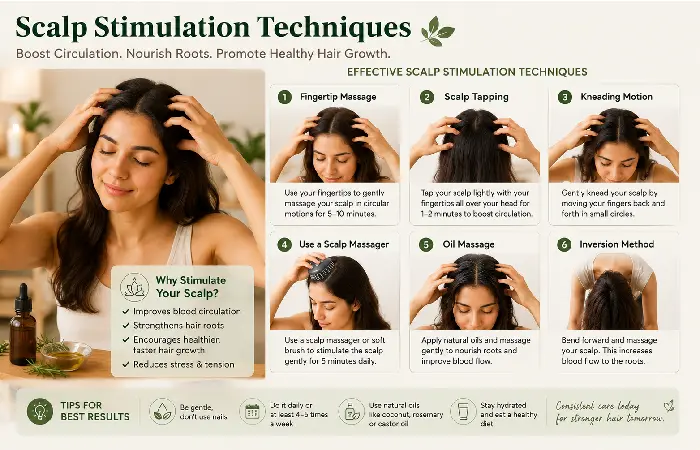
Healthy hair stems from a healthy scalp. Scalp stimulation can be the solution for creating a healthier scalp for you hair follicles.
Adding the right hair growth supplements may support faster hair growth when dietary intake is insufficient.
Scalp Massage
One of the simplest natural methods is scalp massage.
Benefits
- May improve blood circulation
- Helps relax scalp muscles
- Supports healthy follicles
- Reduces stress
How To Massage?
- Utilize your fingertips.
- Apply light to moderate force.
- Utilize round motions.
- Massage on an everyday basis (5-10 minutes)
Pressure not nearly as crucial as regularity.
Essential Oils
Some essential oils have demonstrated excellent promise in a few studies when appropriately diluted.
Cases consist of:
Examples include:
- Rosemary oil
- Peppermint oil
- Lavender oil
Always dilute essential oils with a carrier oil such as:
- Coconut oil
- Jojoba oil
- Sweet almond oil
Never apply concentrated essential oils directly to the scalp.
Scalp Exfoliation
Occasional exfoliation removes:
- Dead skin
- Excess oil
- Product buildup
Use gentle scalp scrubs or exfoliating shampoos once every one to two weeks.
Keep the Scalp Healthy
Watch for signs of scalp problems:
- Persistent itching
- Heavy dandruff
- Redness
- Pain
- Flaking
- Excessive oiliness
Treating a condition of the scalp in the early stages promotes healthy hair follicles.
Do not overload your hair with styling products
Gels and hairsprays can sometimes be so stiff that they coat your hair and scalp to the extent that they do not let healthy development of your follicles to grow properly. Rinse these types of products thoroughly.
Balanced Diet
Because hair follicles grow faster than most other cells of the body, they need to be nourished continuously. Unhealthy eating habits cause follicles to develop slower and may lead to thinning of hair as well as breakage and increased loss of strands.
Understanding the hair growth cycle helps explain why healthy hair growth takes time and consistency.
Protein
Your hair is actually made of a type of protein called keratin. Best protein sources for hair are:
- Eggs
- Fish
- Chicken
- Greek yogurt
- Beans
- Lentils
- Tofu
Iron
A tendency to lose hair rapidly is also associated with a deficiency in iron. Foods rich in iron:
- Lean red meat
- Spinach
- Lentils
- Pumpkin seeds
- Fortified cereals
Vitamin C
Vitamin C improves iron absorption. It aids the creation of collagen, while boosting the iron-carrying abilities.
Good sources include:
- Oranges
- Kiwi
- Strawberries
- Bell peppers
- Broccoli
Healthy Fats
Healthy fats support scalp moisture and cell function.
Choose:
- Salmon
- Walnuts
- Chia seeds
- Flaxseeds
- Avocados
Zinc
Zinc supports tissue growth and repair.
Food sources include:
- Pumpkin seeds
- Chickpeas
- Oysters
- Beef
- Cashews
Biotin
False Biotin deficiency is rare but biotin does play an integral part in natural hair health. Natural sources:
- Eggs
- Nuts
- Seeds
- Sweet potatoes
- Mushrooms
Vitamin D
Vitamin D plays a role in hair follicle function.
Sources include:
- Safe sunlight exposure
- Fortified dairy products
- Fatty fish
- Egg yolks
Foods That Support Healthy Hair
| Nutrient | Food Sources | Hair Benefit |
| Protein | Eggs, fish, chicken | Hair structure |
| Iron | Spinach, lentils | Oxygen delivery |
| Zinc | Pumpkin seeds | Follicle repair |
| Vitamin C | Citrus fruits | Collagen production |
| Vitamin D | Salmon, sunlight | Follicle support |
| Omega-3 | Flaxseed, walnuts | Scalp health |
| Biotin | Eggs, nuts | Hair strength |
Foods to Limit
Although no food directly causes hair loss in healthy individuals, excessive consumption of the following may negatively affect overall health:
- Highly processed foods
- Sugary beverages
- Excess alcohol
- Trans fats
A balanced eating pattern is more beneficial than restrictive diets.
Stress Management
Stress has been shown to influence a variety of body functions and the hair growth cycle is no exception. Whether emotional or physical stress, has been known to induce telogen effluvium – which is a state when excess hair enters the resting stage and sheds. Typically, hair is restored to normal following recovery from the stress factor.
Physical Activity
Exercise has been proven to
- Improve circulation
- Reduce stress hormones
- Improve sleep quality
- Support overall wellness
Sleep well
Your hair follicles repair themselves while you are asleep. Adults are recommended 7-9 hours of sleep each night. But when you aren’t getting enough shut-eye, the levels of hormones that trigger hair shedding in your body rise.
Relaxation Exercise
Take time to relax There are a number of techniques to help us relax such as:
- Meditation
- Deep breathing
- Yoga
- Reading
- Nature walks
- Journaling
Take a Mini-Break
Even 10 to 15 minutes a day to manage some stress goes a long way. Control Your Stressor When you recognize some of the factors creating a lot of stress, see if there’s a way to exert some control. If it becomes too overwhelming, you shouldn’t hesitate to seek the help of a therapist.
Talking with:
- Friends
- Family
- Support groups
- Mental health professionals
can improve emotional well-being and indirectly benefit hair health.
Avoid Crash Diets
When you lose a lot of weight too quickly, it’s a real shock to your body – If your body is losing a lot of weight, it will start cutting back nutrients on less important body functions. It might cause your body to cut back on growth in your hair. Crash diets may lead to temporarily excessive shedding.
Typical Timeline
| Time | Expected Changes |
| 1 Month | Improved scalp care habits |
| 2–3 Months | Reduced breakage and healthier appearance |
| 3–6 Months | Noticeable improvement in hair strength |
| 6–12 Months | Greater length retention and fuller-looking hair |
Results vary depending on genetics, age, nutrition, overall health, and consistency.
What Natural Methods Can Do
Natural hair care can help:
- Improve scalp health
- Reduce breakage
- Strengthen hair
- Support healthy follicles
- Improve shine
- Increase the thickness of the appearance
What Natural Methods Cannot Do
Natural remedies cannot:
- Double your hair growth rate
- Permanently change genetics
- Instantly reverse hereditary hair loss
- Produce overnight results
Claims promising several inches of growth in a month are not supported by scientific evidence.
When to See a Healthcare Professional
Consult a healthcare provider or dermatologist if you experience:
- Sudden hair loss
- Bald patches
- Excessive daily shedding
- Scalp pain
- Persistent itching
- Redness
- Hair loss after illness lasting several months
Although there are some medical reasons behind hair loss, including but not limited to hormonal imbalance, thyroid diseases, lack of nutrients and/or intake of particular medication.
Daily Hair Growth Checklist
| Habit | Recommended Frequency |
| Eat protein-rich meals | Daily |
| Drink enough water | Daily |
| Scalp massage | 5–10 minutes daily |
| Gentle shampoo | As needed |
| Conditioner | Every wash |
| Exercise | Most days of the week |
| Sleep | 7–9 hours nightly |
| Limit heat styling | Whenever possible |
| Trim split ends | Every 8–12 weeks |
| Manage stress | Daily |
FAQs
Can I brush my hair faster for quicker growth?
No, brushing hair does not enhance the rate at which it grows, but if done lightly, it will spread oils from your scalp throughout the entire length of your hair and avoid any tangles.
Over-brushing your hair can lead to hair breakage.
Will oils make my hair grow faster?
Although some natural oils (like coconut or rosemary) can have some benefit in terms of improving the health of the scalp and reducing hair breakage, they do not affect the biology behind the rate of hair growth.
How long before I will notice healthier hair?
Most people can expect to see a difference in hair texture and in breakage reduction in 2 to 3 months.
The growth rate can generally take longer for noticeable gains.
Do supplements work for everyone?
It depends on what the deficiency is and whether a deficiency exists. A supplement may help a portion of individuals promote hair growth, yet not on the off chance that you already maintain higher, nutritious eating methodologies in key nutrients.
Conclusion
Figuring out how to grow hair faster in nature requires more than a fix for a fast fix – it involves making sensible assumptions and laying out the right conditions. Genetics is what controls the essential pace of hair development, however a well-balanced eating regimen, plentiful rest, stress regulation, and scalp rub can all diminish damage, making more sound hair emerge. Knowing that it is a slow and steady procedure may lead you closer to more extended strands and a less damaged texture.