

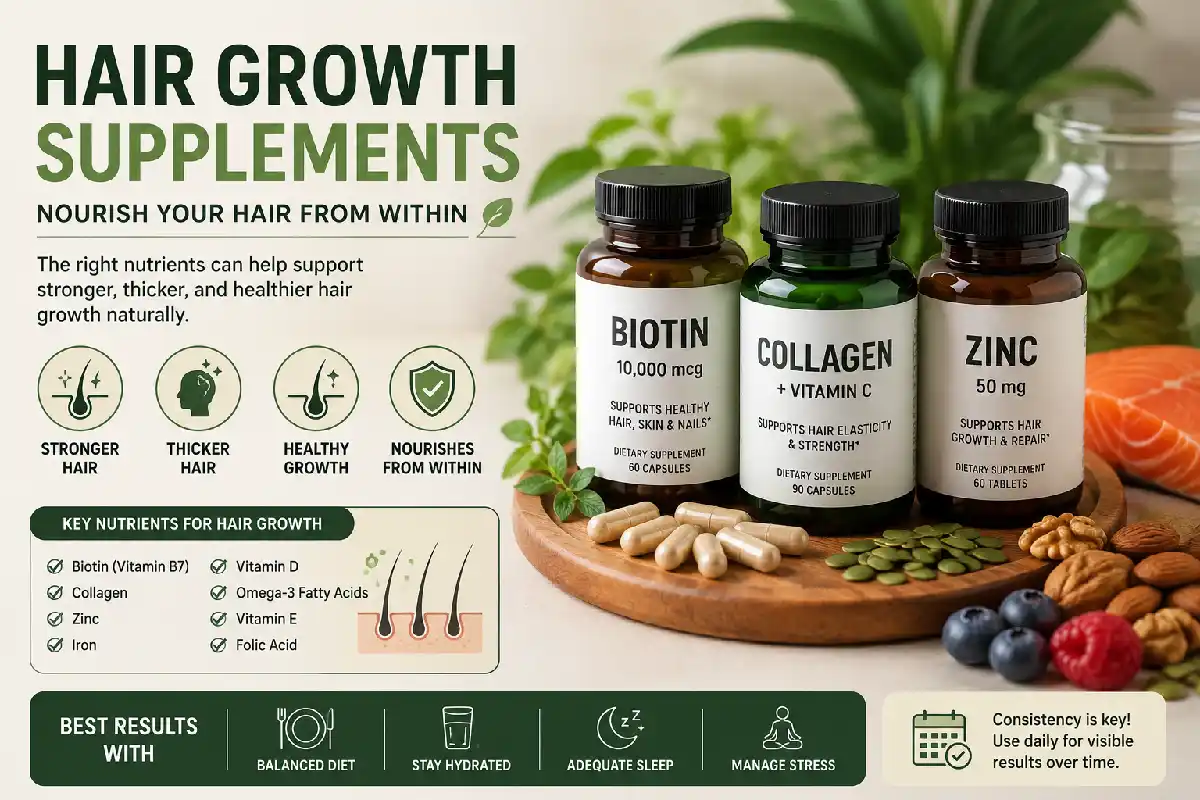
Hair Growth Supplements: Benefits and Considerations
 Khizrana Begum
Beauty & Lifestyle Writer
Khizrana Begum writes clear and reader-friendly content covering beauty, lifestyle and related topics.
Read Full Bio of Author →
Khizrana Begum
Beauty & Lifestyle Writer
Khizrana Begum writes clear and reader-friendly content covering beauty, lifestyle and related topics.
Read Full Bio of Author →
 Sameena Begum
Health, Technology & Digital Content Reviewer
Sameena Begum reviews content for clarity, accuracy and overall reader usefulness.
Read Full Bio of Reviewer →
Sameena Begum
Health, Technology & Digital Content Reviewer
Sameena Begum reviews content for clarity, accuracy and overall reader usefulness.
Read Full Bio of Reviewer →
Hair Growth Supplements: A lustrous and thick hair typically implies that your body is in good health. As genes dictate your hair density, growth rate, and texture to an extent, nutrition holds a sway in your hair’s strength and vitality. Insufficient vitamins and minerals can result in thinning and loss of hair, thereby reducing hair’s strength.
One of the key reasons behind the recent rise of popularity of hair growth supplements, they promise to strengthen hair, minimise split ends, encourage better growth of the hair follicles, and make hair denser and healthier. Do they really work? Is everyone fit for it? And, how do I choose the correct supplement?
Explore our complete guide to natural hair growth to learn how nutrition, lifestyle, and scalp care work together.
Here is a guide covering everything about hair growth supplements; what they deliver, which nutrient does the magic, the precautions you should take, and the natural alternates that may help you attain your hair goals.
You can pair supplements with these natural hair growth remedies for a well-rounded hair care routine.
❝
This article is a part of
Natural Hair Care Guide
What Are Hair Growth Supplements?
Nutritional supplements for hair growth What are hair growth supplements? Health food supplements which include vitamins, minerals, amino acids, herbs as well as plant essences that are thought about great for hair health, as well as they will supplement nutrition that is currently missing from your daily diet plan.
Using nourishing natural hair growth oils alongside supplements may help support healthier hair and scalp.
Unlike creams, which operate topically on your hair, supplements stimulate your body from the inside to make additional hair.
These supplements are available in several forms:
- Capsules
- Tablets
- Gummies
- Powders
- Liquid formulas
These supplements group a lot of your vitamins into one easy daily capsule.
Why Nutrition Matters for Hair Growth?
Each hair in our body is made from a small cell sac that is known as the hair follicle. Our hair needs a continuous and nutritious supply to stay in a healthy condition.
A balanced diet rich in foods for natural hair growth provides the nutrients your hair needs to thrive.
Poor nutrition may lead to:
- Increased hair shedding
- Dry and brittle hair
- Slow hair growth
- Thinning hair
- Weak hair shafts
The reason why healthy hair grows from your body, that the nutrients you are fueling is also feeding to your hair follicle which is why over time, your hair may feel more substantial as well as robust.
Common Causes of Hair Loss
Some supplements may also support hair growth by treating hair loss that results from dietary inadequacies.
To maximize your results, follow these tips on how to grow hair faster naturally with healthy daily habits.
However, hair loss has many possible causes.
| Cause | Description |
| Genetics | Male and female pattern hair loss |
| Hormonal changes | Pregnancy, menopause, thyroid disorders |
| Nutrient deficiencies | Iron, Vitamin D, Zinc, Protein deficiency |
| Stress | Physical or emotional stress |
| Medical conditions | Autoimmune diseases, scalp disorders |
| Medications | Some high blood pressure medications or chemotherapy drugs |
| Poor diet | Lack of required nutrient ingestion |
Before taking any supplement, it’s good to know what causes the problem.
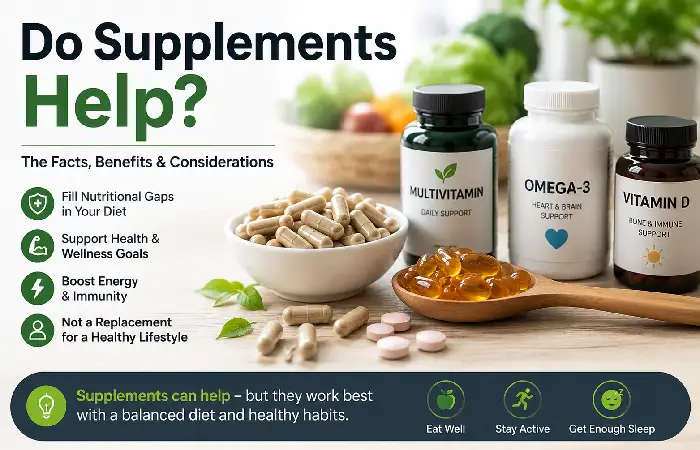
Do Supplements Help?
Learning about the hair growth cycle can help you understand when supplements are most effective.
I’ll take a shot at answering this most popular of questions… and it all comes down to why your hair is thinning.
Supplements can help in instances where your hair loss is related to a nutritional deficiency Restoring an adequate supply of nutrient in the body can help to create better quality hair and reduce excessive shedding in many cases.
On the other hand, if hair loss is mainly hereditary, a supplement is unlikely to yield massive results. It might be able to boost overall hair health but unlikely to reverse inherited hair loss.
Research suggests supplements may help by:
- Supporting healthy hair follicles
- Improving hair strength
- Reducing breakage
- Promoting healthier scalp function
- Correcting vitamin and mineral deficiencies
Don’t forget hair takes time to grow, and you may notice improvements after 3-6 months of consistent application.
Benefits of Hair Growth Supplements
You will gradually see improvements once you have a proper nutrition alongside your supplementation.
- Stronger Hair
Protein-building nutrients help reduce breakage and improve strand strength.
- Reduced Hair Shedding
Some deficiencies of vitamin result in excess of fall of hair. If these deficiencies are treated this hair fall may be reduced down.
- Healthier Hair Follicles
The active growth cycle of the hair follicle needs nourishment.
- Better Hair Thickness
While others observe a fuller-looking style because more robust follicles contribute to stronger strands.
- Improved Hair Texture
Naturally healthy hair, more or less, will simply appear shinier, stronger and so much smoother than it normally would.
Key Nutrients
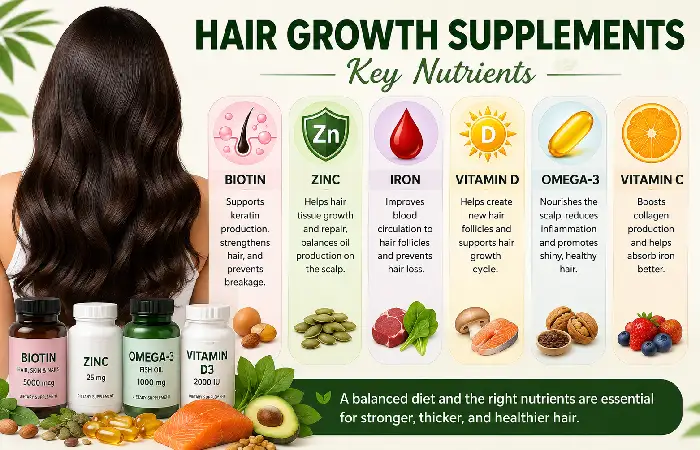
The composition of various supplements differs widely. Ideally, the best and the strongest include nutrients which are supported by research.
| Nutrient | Primary Role | Food Sources |
| Biotin | Supports keratin production | Eggs, nuts |
| Vitamin D | Hair follicle function | Sunlight, fish |
| Iron | Oxygen delivery to follicles | Spinach, meat |
| Zinc | Tissue repair | Pumpkin seeds |
| Vitamin C | Collagen production | Citrus fruits |
| Vitamin E | Antioxidant protection | Almonds |
| Selenium | Scalp health | Brazil nuts |
| Protein | Hair structure | Chicken, lentils |
| Omega-3 | Scalp nourishment | Salmon |
| Folate | Cell growth | Leafy vegetables |
Biotin
One Google search for the best hair vitamin will likely lead to biotin (which helps make up the protein your hair is mostly composed of – keratin). However, a biotin supplement may do very little for your hair if you don’t actually have a deficiency in the vitamin.
Iron
Iron deficiency One of the main nutritional causes of hair loss, particularly in women is an insufficient intake of iron. The reduced iron levels may affect the amount of oxygen supplied to the hair follicles which influences the growth of healthy hair.
Vitamin D
There is ongoing research to link Vitamin D and hair follicles. Most hair loss individuals have deficient levels of Vitamin D for a specific kind of hair loss.
Zinc
Zinc also assists with tissue health, repair, and the functioning of the immune system. Poor zinc levels have also been associated with greater hair loss.
Protein
Your hair is composed of protein. Low protein in the body’s diet could mean less protein produced.
Comparison of Popular Hair Growth Nutrients
| Nutrient | Best For | Evidence Level | Deficiency Common? |
| Biotin | Brittle hair | Moderate | Rare |
| Iron | Hair shedding | Strong | Common |
| Vitamin D | Follicle support | Moderate | Common |
| Zinc | Hair repair | Moderate | Moderate |
| Omega-3 | Dry scalp | Emerging | Moderate |
| Protein | Hair strength | Strong | Common in poor diets |
Choosing Quality Supplements
Not every product on the market offers the same quality.
Here are some important things to consider.
Look for Transparent Labels
Choose products that clearly list:
- Ingredient amounts
- Daily serving size
- Manufacturing information
- Expiration date
Avoid products with “proprietary blends” that hide ingredient quantities.
Third-Party Testing
Independent testing helps verify product quality and purity.
Look for certifications from recognized quality organizations whenever possible.
Appropriate Dosages
More is not always better.
Extremely high doses of vitamins may not improve hair growth and could even cause unwanted side effects.
Reputable Manufacturers
Purchase supplements from established companies with positive quality standards and transparent manufacturing practices.
Ingredients Worth Looking For
| Ingredient | Why It Matters |
| Biotin | Keratin production |
| Zinc | Hair tissue repair |
| Iron | Healthy oxygen supply |
| Vitamin C | Collagen formation |
| Vitamin D | Follicle support |
| Marine Collagen | Hair structure support |
| Saw Palmetto | May support hormonal balance |
| Amino Acids | Protein building blocks |
Safety Considerations
Although some products might be regarded safe if used responsibly, they don’t guarantee security.
Possible Side Effects
Some people may experience:
- Upset stomach
- Nausea
- Headaches
- Allergic reactions
- Acne (with excessive biotin intake)
Medication Interactions
Certain supplements may interact with medications including:
- Blood thinners
- Thyroid medication
- Diabetes medicines
- Antibiotics
If you are taking prescription drugs you should always check first with your doctor.
Avoid Excessive Doses
Too much of the nutrients that is good for health can become negative and could cause health issues.
For example:
| Nutrient | Too Much May Cause |
| Vitamin A | Hair loss |
| Selenium | Brittle hair |
| Iron | Digestive problems |
| Zinc | Copper deficiency |
Following the recommended dosage is essential.
Natural Food Sources
Supplements should complement—not replace—a healthy diet.
Many nutrients that support hair growth can be obtained naturally.
| Food | Important Nutrients |
| Eggs | Protein, Biotin |
| Salmon | Omega-3, Vitamin D |
| Spinach | Iron, Folate |
| Greek Yogurt | Protein |
| Sweet Potatoes | Beta-carotene |
| Almonds | Vitamin E |
| Pumpkin Seeds | Zinc |
| Lentils | Iron, Protein |
| Citrus Fruits | Vitamin C |
| Avocados | Healthy fats |
Lifestyle Habits That Support Healthy Hair
Supplements are most effective when supported by healthy daily practices.
Consider:
- Eating balanced meals
- Staying hydrated
- Getting enough sleep
- Managing stress
- Exercising regularly
- Avoiding excessive heat styling
- Limiting harsh chemical treatments
- Protecting hair from excessive sun exposure
Healthy choices can often do just as much as any supplements.
How Long Does It Take to See Results?
Hair grows slowly.
Most people should expect:
| Time | What You May Notice |
| 1 Month | Little visible change |
| 2–3 Months | Reduced shedding |
| 3–6 Months | Stronger hair growth |
| 6–12 Months | Improved thickness and overall appearance |
Take medicine regularly to get maximum benefits; not doing this can minimize the results you’re looking for.
Who May Benefit Most?
Hair supplements may be suitable for:
- People with diagnosed nutrient deficiencies
- Individuals recovering from illness
- Women after pregnancy (under medical guidance)
- People following restrictive diets
- Older adults with nutritional gaps
- Individuals experiencing stress-related shedding
They are not a guaranteed solution for every type of hair loss.
Common Myths About Hair Supplements
| Myth | Reality |
| Supplements work overnight | Hair growth takes months. |
| More vitamins mean faster growth | Excess nutrients can be harmful. |
| Everyone needs biotin | Only some people are deficient. |
| Supplements cure genetic baldness | They may support hair health but rarely reverse inherited hair loss on their own. |
| Gummies are always better | Effectiveness depends on ingredients, dosage, and quality—not the form. |
Tips Before Buying Hair Supplements
- Identify the possible cause of your hair loss.
- Check the ingredient list carefully.
- Don’t get caught up in inflated and unscientific marketing language.
- Select high quality supplement manufacturers and brands.
Follow recommended dosages for any product. - Consume a healthy and balanced diet along with the supplement.
- Give any supplement adequate time to deliver its benefits.
Frequently Asked Questions
Do hair growth supplements really work?
They can work for those who are suffering from deficiencies that have an impact on hair health. How effective are they and it depends on the cause of hair fall.
Can I take hair supplements every day?
Although most products are made to be taken everyday, ensure that you follow manufacturer directions and your health provider’s suggestion.
How long before I see results?
The time frame varies but, it generally takes three to six months of diligent, consistent use to achieve any notable changes.
Are hair supplements safe?
Mostly yes, but some ingredients may interact with other medications or can cause some side effects and therefore consult your physician for advice if you have existing medical conditions.
Final Thoughts
How can Hair growth supplements help Hair growth supplements can be a part of an effective hair care regimen. The use of supplements can be helpful when there’s an element of nutrient deficiency playing a role in your thinning hair and hair loss issues. Essential vitamins and nutrients found in hair supplements that can aid in strengthening your hair strands and also follicle health include iron, zinc, vitamin D, protein, vitamin C and biotin.