


At-Home Nail Care: A Simple Guide to Healthy and Beautiful Nails
Last Updated: September 21, 2026
At-Home Nail Care: There is no reason to make an expensive trip to the salon to maintain your nails – healthy, neat, and clean nails can be achieved at home. With a small investment of time and some basic supplies, practicing good nail care at home can be part of your monthly self-care routine. Beautiful nails are just the Beginning. Removing or tearing off the nail can dry and crack skin and nails that are exposed to water, soap, or other chemicals.
Why is Nail Care at Home Important?
What you do at home to clean, cut, file, moisturize, and protect your fingernails and toenails can help reduce problems with broken nails, ragged nails, hangnails, excess dryness, and trapped dirt. Home nail care also allows you to notice what’s happening to your nails and nail beds – there are many problems where the nail changes suddenly or begins to hurt chronically; for example, those problems should be seen by your doctor or a podiatrist rather than having a manicure.
Additionally, home nail care allows you to choose products and instruments and leave your nails in the most natural state possible.
| Benefit | How It Helps |
| Keeps nails clean | Reduces dirt and buildup |
| Regular trimming | Prevents long, damaged edges |
| Filing | Smooths rough or sharp corners |
| Moisturizing | Helps reduce dryness |
| Cuticle care | Keeps surrounding skin comfortable |
| Regular inspection | Helps you notice unusual changes |
Essential Tools and Products for Nail Care at Home
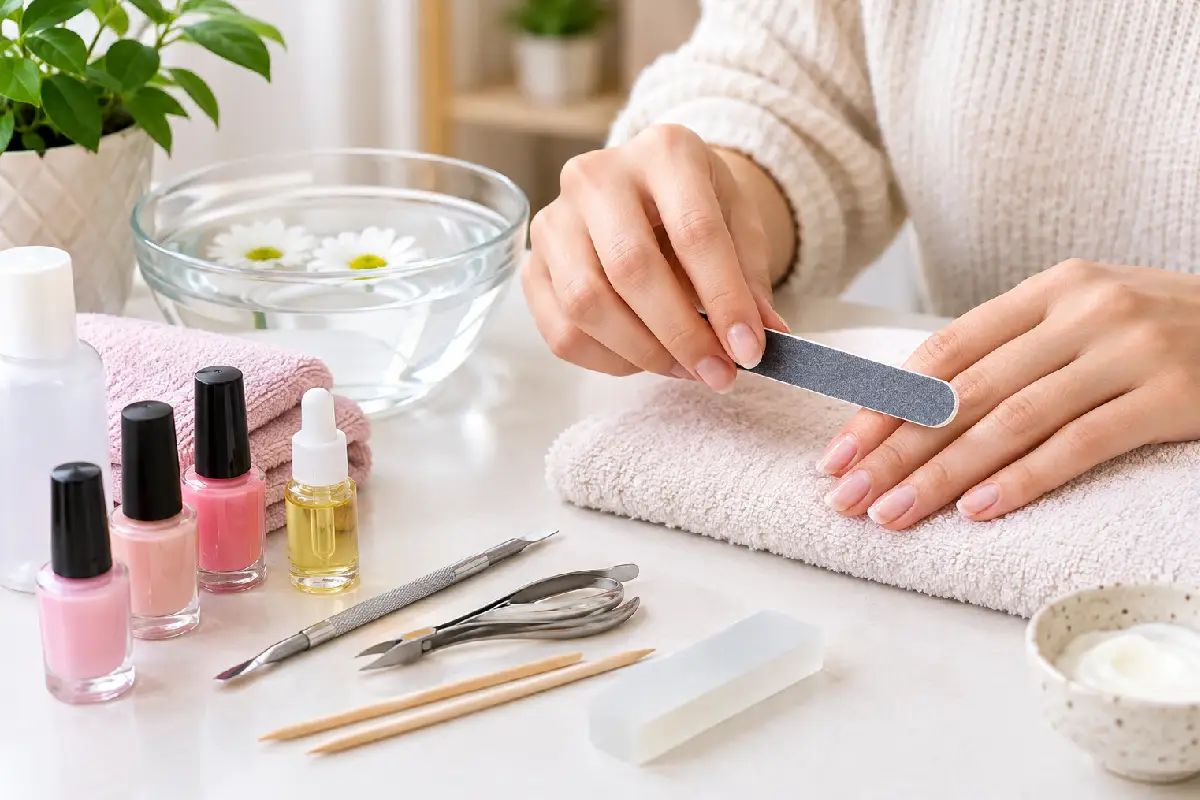
You don’t need tons of beauty products. But these tools will eliminate almost all of your manicuring needs. For general maintenance, a small, neat manicure set should do the trick.
Tools: Nail clippers: To cut back the length of your nails without tearing or peeling the nail. Nail file: To smooth out the rough edges of your nails once you cut them.
. Smaller grits are easier on your natural nails.
Cuticle stick: You can push back cuticles as needed with this, but don’t push or cut your cuticles too hard since they serve as a barrier to the skin around your nails.
Nail brush: To remove nail surface debris and nearby skin. Nail oil or hand cream: Keeping your hands moisturized will help keep the skin smooth and prevent dry skin. Clean towel: Use a separate, clean towel to dry your hands and instruments.
Basic Home Nail-Care Kit
| Tool/Product | Main Purpose |
| Nail clipper | Trimming nails |
| Nail file | Smoothing edges |
| Soft nail brush | Gentle cleaning |
| Cuticle oil | Conditioning surrounding skin |
| Hand cream | Moisturizing hands |
| Clean towel | Drying hands |
| Nail polish remover | Removing old polish when needed |
Always clean your nail tools properly on a regular basis, rotating your own tools with clients, etc. Sharing unclean tools can lead to cross-infection.
Steps of Home Nail Care
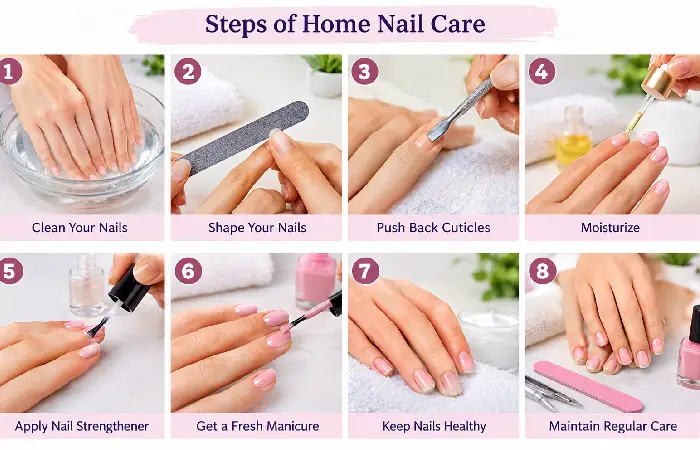
A good routine does not need to take a long time. The key is to be gentle rather than aggressive.
1. Wash Your Hands
When washing the patient’s hand, you need to do so with ‘mild’ soap and water. You must keep a special focus on the areas underneath and around the nails. Refrain from digging sharp objects under your nails. This may lead to skin irritation and can even lead to small injuries.
2. Dry Your Hands Properly
Dry Your Hands After Washing. Once you have finished with the hand washing process, make sure to pat your hands dry, including around the nails. Sitting in water can set things up for irritation; hence, dryness is very important, even around the nails.
3. Trim Your Nails
Clean nail clippers should be used, and your nails should be cut slowly. Do not cut your nails too short, as it can make the skin sensitive. Toenails tend to be cut fairly straight across rather than cut deep into the corners.
4. File Rough Edges
After trimming, gently file any sharp or uneven edges.
Move the file carefully instead of aggressively sawing back and forth. Stop when the edge feels smooth to the touch.
5. Care for the Cuticles
Instead of cutting cuticles, keep them moist. Push them back gently if you must, when the skin is soft after a shower.
6. Moisturize
Use hand cream or some nail or cuticle oil around the nails. Massage a little bit into the nail folds and the skin around your nails. This little touch can really help when your hands are dry all the time.
7. Apply Nail Polish If You Want
If you must wear polish – make sure you take it off before re-applying it. Allow your nails to get some rest from the polish – especially if they are feeling a bit dry and sore.
How Often Should You Do Nail Care at Home?
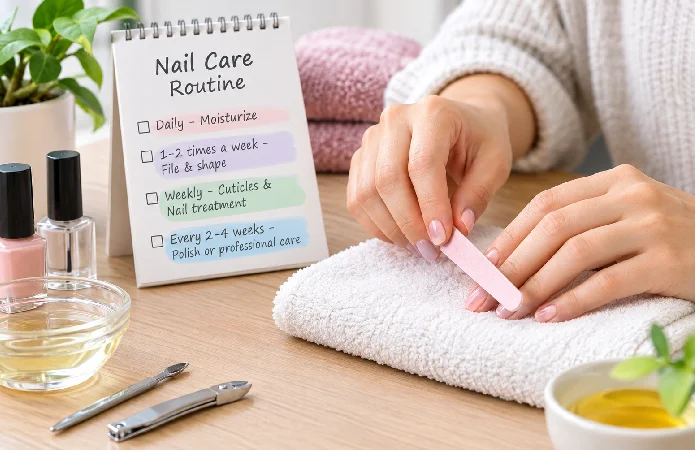
No set routine is right for everyone. The frequency of a routine depends on the rate of nail growth, day-to-day activities, and when your hands begin to appear dry. Basic cleansing and moisturizing can be carried out at any interval, but filing and trimming less so.
| Nail-Care Activity | Suggested Frequency |
| Hand washing | Throughout the day as needed |
| Moisturizing | Daily or whenever skin feels dry |
| Nail inspection | Several times a week |
| Filing | As needed |
| Fingernail trimming | About every 1–2 weeks |
| Toenail trimming | As needed, often every few weeks |
| Deeper nail-care routine | Once a week |
They are not strict rules as they are only guidelines. If your nails grow quickly you will need to cut them more often.
Simple Weekly Nail Care Routine
A weekly routine doesn’t have to be too daunting and might only take 10-15 minutes. Here are some suggested steps:
- Take the polish off if you’re wearing any.
- Wash your hands and fingernails – softly.
- Cut your nails if they have grown out too long.
- File any jagged or sharp edges.
- Carefully put them back – remember not to cut the cuticles.
The aim is not to have your nails looking perfect every single week. The aim is to keep your nails looking reasonably good from week to week.
Common At-Home Nail Care Mistakes to Avoid
Some habits that seem harmless can actually make nails weaker or the surrounding skin more irritated.
Cutting Nails Too Short
Very short nails may leave the surrounding skin vulnerable to irritation. Leave enough nail to protect the fingertip.
Cutting Cuticles Aggressively
The cuticle serves a protective function. Repeatedly cutting or damaging it can create openings around the nail.
Peeling Off Nail Polish
Scrubbing or peeling off polish will take off small portions of the nail‘s surface. Use a suitable nail polish remover.
Using Dirty Tools
Clippers and Files can accumulate bacteria, skin cells, and residue from products. Wash reusable equipment after use.
Biting Nails
Nail biting can damage the nail and surrounding skin. It can also transfer germs between your hands and mouth.
Filing Too Aggressively
Excessive filing can thin the nail. Use gentle pressure and stop once the edge is smooth.
Tips to Promote Healthy-Looking Nails
These habits do not take a lot of effort, but over time, will give your nails a healthy appearance. Follow these tips
- Wash and cut your nails short.
- If you have dry skin, always apply moisturizer to your hands after washing.
- Wear gloves when cleaning your house.
- Do not open cans or scratch your hair or furniture with your nails.
- Avoid biting your nails.
- Wash your nail tools and use your personal nail tools.
- Do not overbuff your nails, as this can cause your nails to become thinner.
- Rest your nails if they are damaged or brittle.
- Maintain a balanced diet.
- Visit your doctor if you notice changes in color, shape, texture, or thickness.
Answers to common questions about at-home nail care
How do you keep your nails healthy at home?
For maintenance, the answer is yes. Most nails can be groomed, trimmed, buffed slightly, and moisturized. Some abnormal nails may require a physician’s assessment.
Should I cut my cuticles at home?
Cuticle cutting should not be routinely performed. The cuticle serves as a biological barrier and should be carefully tamed using very gentle moisturizers.
How can I make my nails look healthier?
Maintain clean nails kept in good, clean, even shapes. File rough edges and then use the cream into the cuticle and below the nail. Do not bite or chew, and do not rub with a nail buffer more than once a week.
How often should I trim my fingernails?
Most people, I have learned, do well every one to two weeks, though some people can go longer, based on growth. Cut nails when they are hard to keep clean, hard to get comfy, or become too long.
Is nail oil necessary?
Nail oil is not necessary but can be helpful in providing moisture to the dry cuticles and skin around the nail. Any hand cream can achieve this.
Can I do nail care every day?
Basics like hand washing and moisturizing can be incorporated into your daily routine with ease, but that does not mean you have to cut, file, or buff them every other day. In fact, that can actually backfire and irritate.
Final Thoughts
Getting your nails done at home can be simple- no need for ‘beauty stalkers’ or ‘specialists’ and unwieldy piles of products. Good equipment, gentle, patient, moisturizing, and trimming and polishing.
Most importantly, be consistent. Instead of waiting until your nails are broken, thick, and hard to control, take a few minutes each week to keep your nails. Over time, your nails can be so simple, but naturally beautiful.