

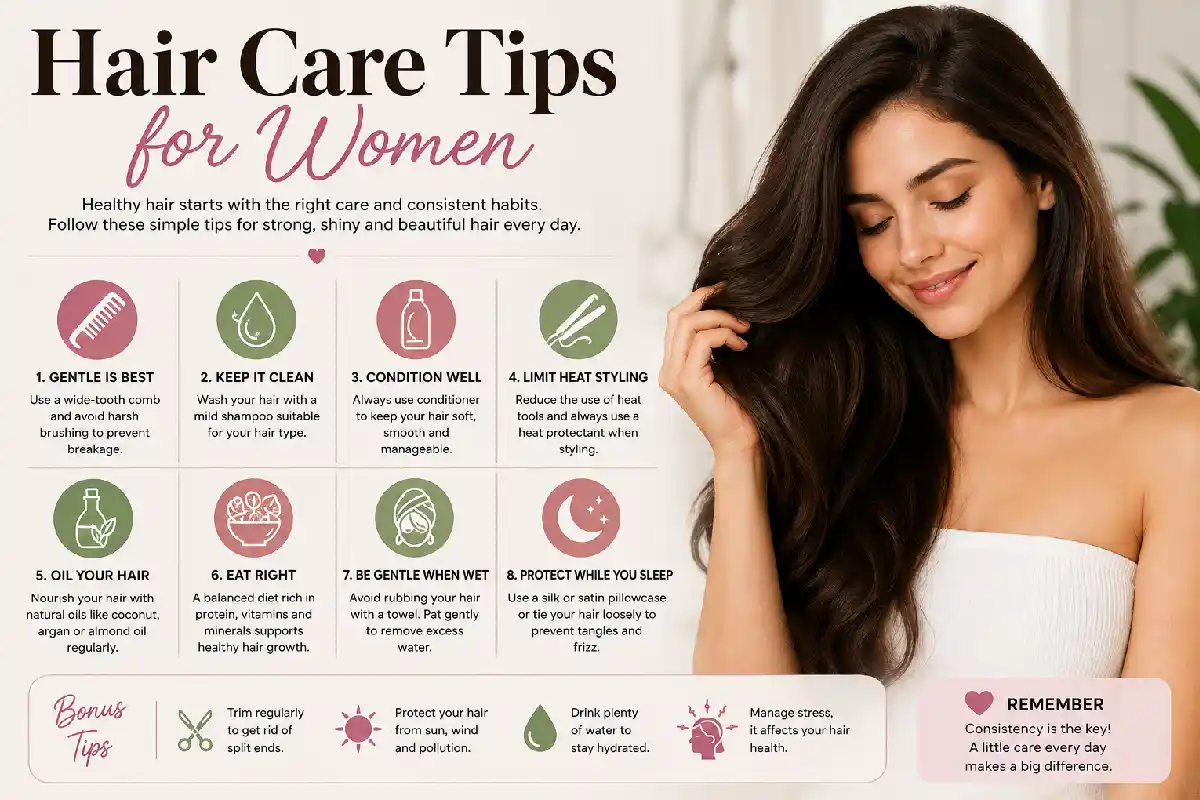
Hair Care Tips for Women: A Simple Guide to Strong, Shiny, Healthy Hair
 Khizrana Begum
Beauty & Lifestyle Writer
Khizrana Begum writes clear and reader-friendly content covering beauty, lifestyle and related topics.
Read Full Bio of Author →
Khizrana Begum
Beauty & Lifestyle Writer
Khizrana Begum writes clear and reader-friendly content covering beauty, lifestyle and related topics.
Read Full Bio of Author →
 Sameena Begum
Health, Technology & Digital Content Reviewer
Sameena Begum reviews content for clarity, accuracy and overall reader usefulness.
Read Full Bio of Reviewer →
Sameena Begum
Health, Technology & Digital Content Reviewer
Sameena Begum reviews content for clarity, accuracy and overall reader usefulness.
Read Full Bio of Reviewer →
Hair Care Tips for Women: Proper hair care is more than just buying a slew of products at your local beauty supply. It comes down to giving your hair what it genuinely needs – and we, as females, know how unpredictable this can be! Texture of your hair, scalp issues, lifestyle, hormones, age, diet and styling practices all contribute to how it looks and feels. The best hair care tips for women generally aim toward maintaining a healthy scalp, preserving the integrity of the hair shaft, preventing excessive breakage and finding a routine that works for you.
❝
This article is a part of
Hair Care Tips Guide
Women’s Hair Care Essentials
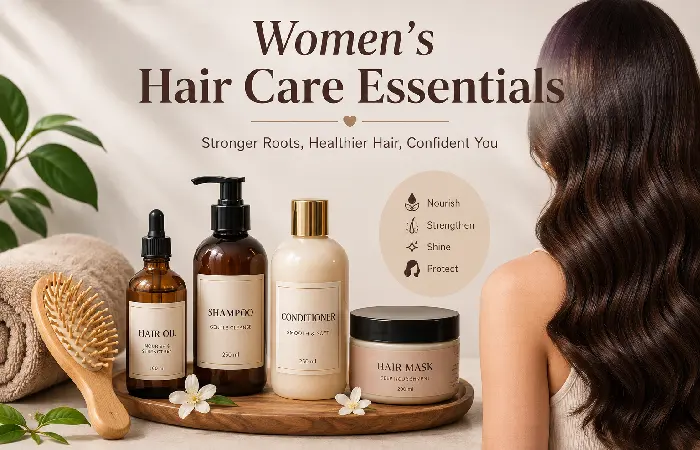
The hair care process does not have to be so complex. Simply cleanse with a mild shampoo, apply a matching conditioner, carry out regular care for the scalp and make provision for avoiding the damage of external factors as well as the heat effects.
1. Choose Shampoo Based on Your Scalp
Your scalp dictates how often your hair may need washing.
Women’s hair care can vary depending on hair texture, styling habits, and individual hair concerns. For a broader overview of practical hair care routines, explore our complete hair care tips guide.
Oily scalp: Light or clarification shampoos will aid in the removal of extra oil and build up.
Dry scalp: select a mild, moisturizing shampoo and don’t wash too much.
Normal scalp: a moderate shampoo as needed should suffice.
Dandruff-prone scalp: an anti-dandruff shampoo can come in handy with any kind of effective ingredient.
Don’t vigorously rub the shampoo in along the length of hair. The focus of the shampoo should be on the scalp.
2. Don’t Skip Conditioner
Conditioner enhances softness and detangling and manageability. Apply primarily on the mid section of your hair to the ends-especially if you tend to get an oily scalp.
Women with curly hair may need extra moisture and gentle styling techniques to maintain definition and reduce frizz. Explore our curly hair care guide for practical tips.
3. Detangle Carefully
When hair is wet, it’s more prone to stretching and breakage. Comb through wet hair with a wide-toothed comb, starting at the ends and working upward – you can’t just pull through knots from the scalp.
4. Protect Hair From Heat
Too much time in the with a blow dry bar, curling irons, and flat irons can dry and weaken the hair.
| Hair Care Essential | Why It Matters |
| Gentle shampoo | Removes sweat, oil, and buildup |
| Conditioner | Improves softness and manageability |
| Wide-tooth comb | Helps reduce pulling and breakage |
| Heat protectant | Helps reduce heat-related damage |
| Deep conditioner | Provides extra conditioning for dry hair |
| Scalp care | Supports a clean, comfortable scalp |
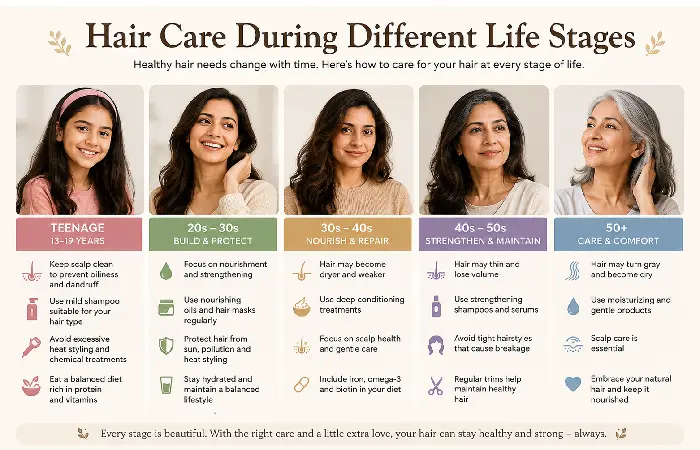
Hair Care During Different Life Stages
Color-treated hair can require additional moisture and careful maintenance to help preserve its appearance. Explore our color-treated hair care guide for practical advice.
Throughout the life stages of a woman, the changes their hair need varies. The hair routine and style they implemented at the 20’s could not fit their life during pregnancy, menopause and aging.
Hair Care in Your Teens and 20s
This is an excellent time to try picking up new habits in hair-care. If you have a tendency for your scalp to oily within a matter of hours, you may need to cleanse regularly. Steer clear of overly processed chemicals as well as a hot-styling routine several times this week. If you are dyeing your hair, bleacing or use extensins, let hair recover for several months between processes.
Hair Care During Pregnancy and After Childbirth
Hormonal changes do influence the normal growth cycle of hair. Changes in hair texture, thickness and the rate of loss often occur for many women during and after pregnancy. Following childbirth it is common to see an increase in hair loss for the majority of women, as the remaining hairs transition into the resting phase.
Men’s hair care routines can differ based on hair type, scalp needs, and styling preferences. Explore our hair care guide for men for useful tips and guidance.
This does normally resolve spontaneously, however any hair loss that continues or is excessive should be investigated.
Prioritise using care, eating a good diet and tying your hair back simply in order to avoid it continually tugging at the roots.
Hair Care During Your 30s and 40s
Hair may also gradually develop dryness, thinning, or becoming less manageable. Conditioning is becoming a must.
Color-treated? Avoid additional chemical treatments as much as you can. Opt for treatments formulated for colored hair.
Hair Care During Menopause and Later Life
Hormonal changes during menopause can affect your hair volume and texture as your locks may feel more brittle or dry than usual. Maintain a mild routine.:
- Wash your hair with conditioners that will provide hair with essential moisture.
- Don’t let your hair suffer excessive amounts of high heat,
- Wear hairstyles that don’t cause you to put your hair very tightly,
- Brush your hair carefully and don’t leave it too long under the scorching sun.
- Do inform your dermatologist about severe hair thinning and hair loss if you notice the same symptoms for quite some time.
| Life Stage | Common Hair-Care Focus |
| Teens | Scalp cleansing and gentle styling |
| 20s | Damage prevention and healthy routines |
| Pregnancy/postpartum | Gentle handling and monitoring shedding |
| 30s–40s | Conditioning and chemical-damage control |
| Menopause | Moisture, density, and scalp care |
| Later adulthood | Gentle styling and breakage prevention |
Preventing Hair Fall
Shedding some hair each day is a normal. According to the American Academy of Dermatology, the average shedding can be somewhere between 50 and 100 hairs a day – while shedding rates are different from one person to another. You Don’t Need to Say Goodbye to Every Shed Shed, it’s the goal is to manage preventable breaking and to alert your hair’s routine changes.
Natural hair care can focus on gentle routines, moisture, and simple practices that support healthier-looking hair. Explore our natural hair care guide for practical ideas.
Avoid Tight Hairstyles
Repeated strain: Wearing tight ponytails, buns, braids or extensions may put continued pressure and tension on your hair follicles. This can lead to a traction hair loss after while. Wear more loose hairstyles if you can and vary the position of your ponytail or hair accessories.
Be Gentle With Wet Hair
Don’t rub your hair dry! Squeeze it instead Instead of rubbing your hair around using a towel, squeeze out all the excess moisture using a gentle towel or even a t-shirt which may help prevent excess friction on your hair.
Eat a Balanced Diet
To promote hair growth you need to incorporate the correct nutrients into your diet. Make sure you are eating plenty of foods that contain protein, fruits, vegetables, whole grains, and healthy fats.
It is advised that you do not take a large amount of high dose hair supplements unless it is necessary to do so as too many nutrients may have a detrimental effect on the body.
Know When Hair Loss Needs Attention
Speak with a dermatologist if you notice:
Rapid or heavy hair loss The parting on your head is visibly becoming wider You can see a receding hair line You have bald spots There’s continuous itching and scales of skin on the scalpHair loss for an extended duration.
Hair loss can be a symptom of numerous conditions-genes, hormones, nutrition, medications, lifestyle (stress and other lifestyle factors), and scalp disorder. The more beneficial to determine exactly why you are losing your hair and solve it, rather than run and buy the next hair growth cream or shampoo.
Maintaining Shine and Volume
Your hair will often appear more lustrous and more reflective. The outer layer of hair, otherwise called your hair cuticle, needs to be fairly smooth in order for it to reflect light to a more even degree. You can also easily make your hair look more radiant with some affordable tips.
For More Shine
Wash with conditioner regularly, and minimize heat. Don’t forget to rinse thoroughly. If you don’t, product residue can dim your shine. Lightweight conditioner A light, leave-in conditioner can calm frizzy ends and make dried hair look more uniform.
For More Volume
For finer or flatter hair types: Because such hair can be easily weighed down by thick oils and heavy styling products, light products and strategically placing conditioner onto the ends is best. If you like to blow-dry, you can temporarily boost roots: Part sections, lifting strands as you direct cool to medium-temperature air just to the root area (but don’t put the nozzle too near!).
| Goal | Helpful Habit | What to Avoid |
| More shine | Regular conditioning | Excessive heat |
| More volume | Lightweight products | Heavy product buildup |
| Less frizz | Gentle drying | Rough towel rubbing |
| Fewer split ends | Regular trims | Picking or pulling damaged ends |
| Better manageability | Careful detangling | Aggressive brushing |
Healthy Hair Habits
For your everyday lifestyle, day to day routines may in fact even be more effective than those treatments concentrated on a given period.
Build a Consistent Washing Routine
It’s not “every person washes their hair on x day.” The frequency at which each individual washes their hair is based on the oilyness of their scalp, activity level of their person, their hair type, or how many styling products they use.
Different hair types have different needs when it comes to washing, conditioning, styling, and maintenance. Explore our hair care guide by hair type for more targeted recommendations.
Protect Hair While Sleeping
For hair that tangles quickly, sleep with it loosely braided or in a protective hairstyle. Try not to sleep with tight elastics.
Trim When Needed
Your hair will not start growing longer and thicker from the scalp if you keep trimming it. All trimming does is to cut off split or broken strands so the hair appears more tidy.
Limit Chemical Processing
Constant bleaching, relaxing, perming, or coloring may break the hair strand. Should you proceed with chemical treatments, have them applied according to a professional guideline and spread out them with appropriate timing.
Protect Hair From the Environment
Your hair may be in poorer condition as a result of the sun, chlorine, salty sea water or a dry climate. A hat is important during long periods in direct sunlight and hair should be washed thoroughly after swimming.
Don’t Chase Every Hair Trend
Your hair may be in poorer condition as a result of the sun, chlorine, salty sea water or a dry climate. A hat is important during long periods in direct sunlight and hair should be washed thoroughly after swimming.
FAQs
How often should women wash their hair?
This depends on your scalp, and the type of hair you have. Oily scalps may need washing more often, and those with dry or textured hair may find they should wash less.
How can I reduce hair breakage?
Utilize conditioner, handle with care to untangle strands, trim down those high-heat styling days, refrain from wearing extremely tight hairstyles and avoid brushing or teasing wet hair.
Does trimming make hair grow faster?
Does trimming help hair grow? It doesn’t work any way, in trimming off broken pieces it does nothing at all with rate hair is grew out of the hair follicle.
What is the best oil for women’s hair?
No one oil really works all around! It seems that a lot of us can get away with using oil to treat an oily scalp, while dry hair really seems to Benefit more from oils to help with looks and feel- even if this isn’t going to address the loss.
Can stress cause hair shedding?
That can indeed contribute as well. So while stressing about hair loss can actually increase physical or emotional stress-which in turn can cause hair to fall out, you want to be sure that stress is not the solely culprit if hair loss is happening on a constant and very noticeable basis.
How can I make my hair look thicker?
The volume comes from using the right kind of products-things that are light. They don’t weigh the hair down with built up product so this is why we’ve added products that build to create some lift. Try to lift from the roots: “If you are experiencing actual hair loss, then you need to determine the cause by going to your doctor.”
What is the most important hair care tip for women?
The first thing you need is consistency. Wash out your scalp and condition the lengths of your hair, protect hair from heat, be easy on your hair when it comes to tying it, stick to a nutritious diet, and watch out for hair falling out disproportionately.