

Latest Blouse Designs for Sarees – Trendy, Modern & Traditional Styles
Last Updated: September 15, 2026
The blouse no longer plays a supporting role. Both designers and the household ones who are wearing it are making it the star of it all the one garment that can transform a whole look. This is a blend of traditional handcraft (zardozi, gota, threadwork) and proceeds to the drastic western tailoring (corsetry, princess seams, high-waisted necks) in 2025-26.
Even the modern version has been in existence since 2015, when EL assembled an online poll and experimented with it as far back as 2020. That is: larger stories in smaller canvases. Everything has two distinct changes in boutiques and bridal showrooms that can be seen in both the runways nowadays and in market roundups corset/boned blouses and exaggerated sleeves.
Quick visual glossary
- Corset / boned blouse — a structured bodice with internal boning or stays; sculpts the waist and bust.
- Statement sleeve — sleeve made to be noticed: puff, bishop, layered ruffles, or balloon.
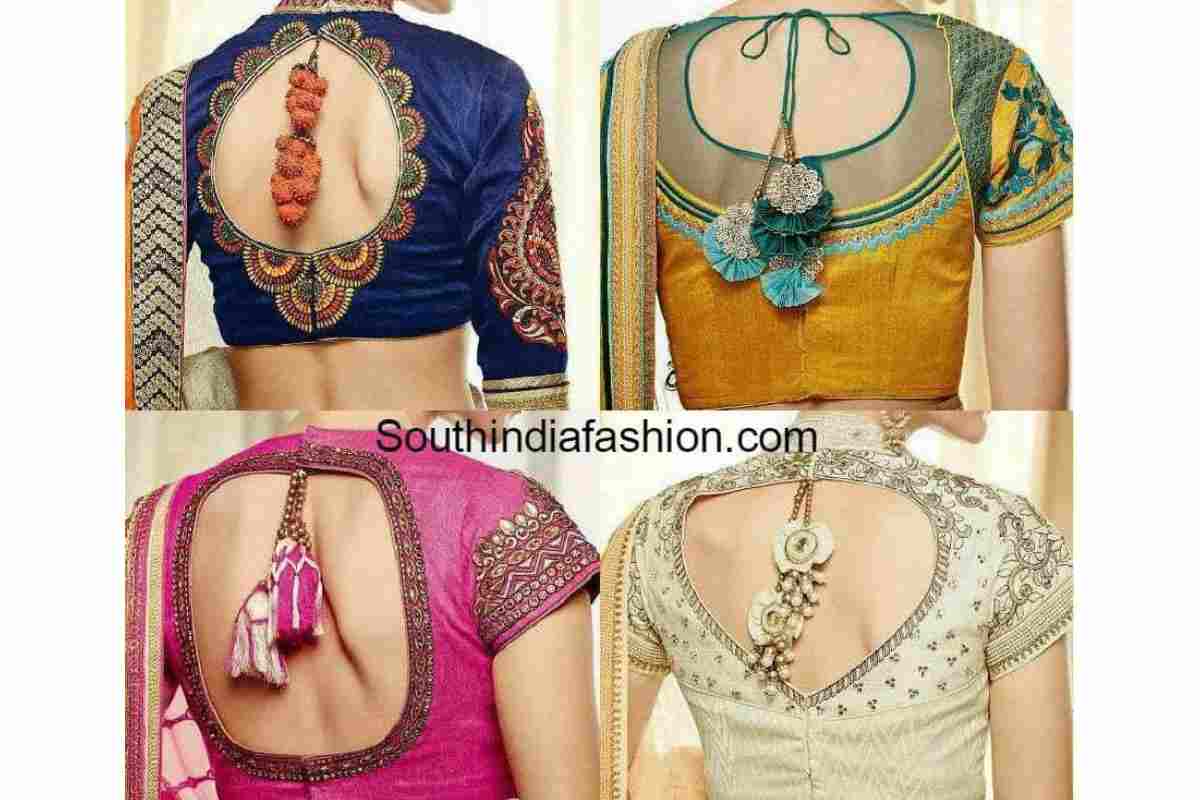
- Back drama — low-back cuts, sculpted cutouts, tie-ups and tassel details.
- Sheer/illusion yoke — net or organza insert that preserves modesty while showing embroidery.
- Peplum blouse — flared panel at the waist; blends blouse with a mini top.
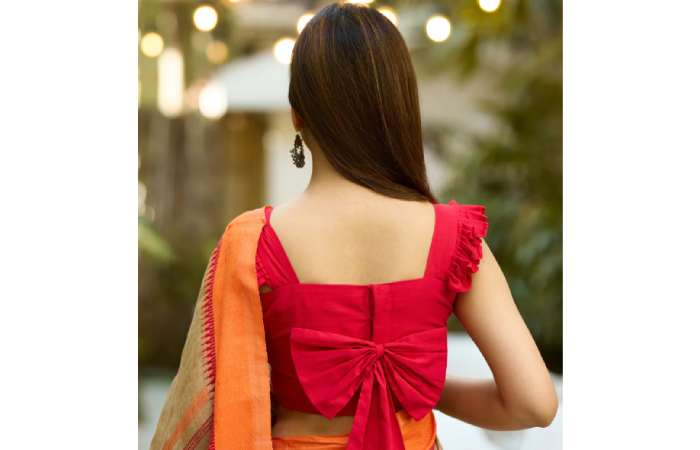
At-a-glance comparison: 12 blouse designs (readable, practical)
| Design | Key features | Best for | Stitching/difficulty | Styling tip |
| Corset / boned | Boning/bustier structure, sweetheart or deep V | Bridal, reception, editorial | High | Pair with simple drape and minimal necklace |
| Puff / statement sleeve | Full volume at sleeve-head or full arm | Sangeet, day parties | Medium | Keep torso fitted to avoid bulk |
| Back-tie with tassels | Loop dori, decorative tassels | Festive, wedding | Low–Medium | Use contrasting tassels as colour pop |
| Peplum | Flared waist panel | Indo-western, lehenga pairings | Medium | Works with high-waist skirt or drape |
| Halter / racer | Neck-tie or clasp around neck | Cocktail, fusion looks | Medium | Avoid heavy necklaces |
| Cold-shoulder | Shoulder cutout while sleeve remains | Casual to semi-formal | Low | Great with printed sarees |
| Sheer yoke / illusion | Net panels, high collars | Formal functions | Medium | Layer embroidery on net for depth |
| Backless / low-back | Deep cut-outs at back | Red carpet, reception | High | Use good body tape or fitted support |
| Jewelry-integrated | Built-in chainwork, pearls | Couture bridal | High | Keep rest of outfit understated |
| Cape / overlay | Short cape or drape attached to blouse | Editorial, fusion | Medium–High | Ideal for grand entrances |
| Mandarin / Victorian collar | High neck, closed forms | Formal bridal, winter | Medium | Pair with stud earrings |
| Wrap / crossover | Overlapping front panels, often with tie | Casual chic | Low | Comfortable & versatile |
Why these specific designs? (short cultural + market read)
Two things are driving choices: social-media aesthetics and versatility. A dramatic sleeve or sculpted back makes for a clear focal point in photos; a corset blouse turns the blouse into an anchor piece that defines the outfit’s silhouette. Market roundups from designer blogs and online boutiques show all of these trending styles across both bridal and ready-to-wear categories.
Fabric & finish matchmaking (table + explanation)
Choice of fabric determines whether a design reads luxe or casual — and whether it will behave well when worn.
| Fabric | Best designs with | Recommended finish/embroidery | Practical tip |
| Kanjivaram / Banarasi silk | Structured corsets, traditional backs | Zari borders, heavy brocade motifs | Use a light lining for comfort |
| Raw silk / tussar | Corset, peplum, halter | Hand-thread, antique buttons | Slight stiffness helps shape |
| Crepe / soft silk | Halter, wrap, minimalist corset | Fine threadwork, small sequins | Drapes well with sarees |
| Organza / net | Sheer yokes, ruffles, overlays | Sequins, 3D florals | Great for sleeves — light and floaty |
| Velvet | Winter corsets, heavy reception blouses | Dense zardozi, stones | Heavy — reserve for cold events |
| Cotton / linen | Casual cold-shoulder, wrap blouses | Block print, simple embroidery | Breathable; easy to wash |
| Georgette / chiffon | Puff sleeves, statement drape | Light beadwork, thread motifs | Flows; pair with lighter sarees |
Why fabric matters: a structured corset needs body (raw silk, tussar, velvet) so boning sits and sculpts. Sheer yokes and ruffles need lightweight organza or net so the volume doesn’t drag the saree down. For everyday festive wear, breathable cotton and linen blends keep you comfortable without sacrificing style.
Deep-dive: corset blouses — what tailors do differently
Corset blouses feel glamorous, but their construction is what makes them wearable.
Construction notes for tailors (and for clients to ask about):
- Boning / stays: plastic spiral boning or flat steel stays stitched into channels. Gives vertical support.
- Interfacing and canvas: internal canvas layer is used to prevent stretch and keep the silhouette stable.
- Seams & princess lines: vertical seams (princess seams) curve to fit the bust without darts.
- Closures: zipper at the side/back or lacing; for bridal, laces with inner and outer closures are common.
- Lining: soft mulmul or cotton lining is essential for comfort.
- Fitting rounds: minimum two fittings: first for structural alignment, second for final adjustments.
Styling tip: Corset blouses work best with sarees in lighter drape fabrics (georgette/chiffon) or with lehengas; they create a defined waist and are a natural match for reception or editorial looks.
Sleeve play: how to choose volume wisely
Volume at the sleeve can make or break the silhouette.
- If you’re petite: avoid extremely long puff sleeves; pick cap puff or moderate bishop sleeves.
- If you’re curvy: a longer cuffed bishop sleeve draws the eye lengthwise and balances proportions.
- If the saree is heavy: prefer lighter sleeve volumes (organza puff rather than densely embroidered velvet puff).
- Photo rule: sleeves photograph as shapes — choose a sleeve that complements your movement (dancing? choose tighter sleeves; photo moments? pick statement sleeves).
Quick sleeve guide (mini-table):
| Sleeve type | Visual effect | Works with saree type |
| Short puff | Playful, youthful | Cotton, light silks |
| Long bishop | Regal, elongated | Velvet, heavy silk |
| Layered ruffle | Romantic, boho | Organza, chiffon |
| Pleated cuff | Structured elegance | Banarasi, silk blends |
Back details — the new focal point
Where collars and fronts once held attention, the back now often serves as the photographable moment.
Popular back motifs: deep U-back with dori (tie), geometric cutouts, illusion net with embroidered motifs, tassel drops with beads or bells. For heavy embroidery at the back, plan hairstyles (low bun, side sweep) that keep the work visible.
Safety & comfort: for low backs, suggest inner support (built-in short corset panel) or transparent straps/body tape for security.
Tailoring difficulty and cost realities (table + explanation)
Real-world checks: how much skill and money are required?
| Category | Difficulty | Typical India price (INR) | Notes |
| Simple cotton stitched blouse | Low | ₹800–2,000 | Minimal embellishment; quick turn-around |
| Ready-to-wear designer blouse (simple silk) | Medium | ₹2,500–6,000 | Better finish; small trims |
| Structured / corset blouse | High | ₹6,000–20,000 | Boning, multiple fittings |
| Hand-embroidered couture | Very high | ₹8,000–40,000+ | Hand labour & materials escalate cost |
| Bridal couture (heavy zardozi) | Very high | ₹25,000–2,00,000 | Designer label + extensive handwork |
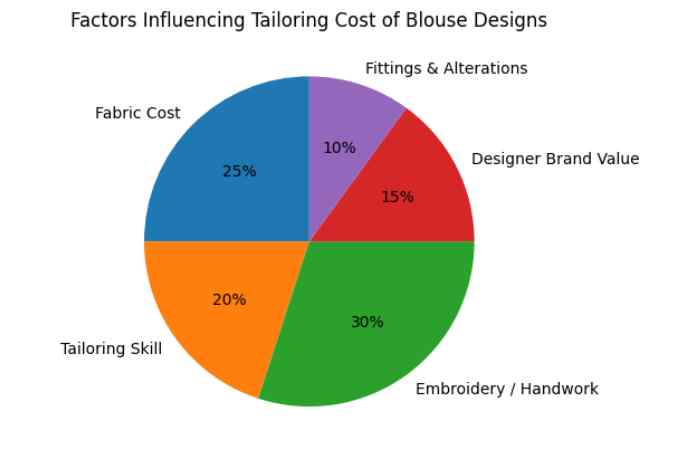
Explanation: cost depends on fabric, handwork hours, designer value, and internal structure (boning/interfacing). A corset uses more time and specialized skill than a simple stitched blouse, which is why prices increase substantially.
Measurements: exact checklist (copyable for your tailor)
- Bust (fullest point): measure with a normal bra on.
- Underbust: directly under bust line.
- Waist (for peplum/corset): narrowest point of torso.
- Shoulder width (bone to bone): across top of back.
- Front length (neck to waist): from base of neck to waistline.
- Back depth: from nape (or shoulder seam) to desired low-back point.
- Sleeve length: from shoulder seam to wrist/cuff.
- Armhole circumference: around arm where sleeve meets.
- Upper arm width: at fullest part for fitted sleeves.
Pro tip: take measurements twice and note whether you prefer tight, close-fitting, or relaxed. For corset blouses, expect your tailor to ask for measurements both in regular and “sitting” posture. https://www.vogue.in/fashion
Care & longevity: keep your blouse looking new
- Hand-embroidered blouses: store flat with acid-free tissue; dry clean only.
- Sequins/stones: spot-clean; heavy beading needs professional cleaning.
- Boned blouses: do not wring; store with tissue padding to maintain shape.
- Organza & net: avoid sharp rings and nails that can snag.
A little care after purchase makes couture-level blouses last for years.
DIY & budget hacks that still look luxe
- Detachable sleeves: an ordinary blouse is provided with no-snip organza ruffles that can be removed or attached quickly.
- Tassel upgrade: ₹200-500 upgrades includes drying plain doriri ends with beads/mirrors.
- Faux boning: this technique adds an additional stay padding in stitch form to create a corset appearance on a low cost corset (not worn on afterwards).
- Contrast piping Add piping around neck/back to give finished designer at low cost.
- Repurpose depress6: Usually, full-sleeve blouses turn cold-shouldered or are made into an illusion yoke with net.
Final Thoughts
The designs of blouses have changed way beyond what they were used to as a mere accessory item to sarees or lehengas. The blouse today serves as the accolade to an outfit and is in a position of making even the simplest saree a trendy contemporary appearance. As fashion always changes, designers are combining old style craftsmanship with modern shapes, giving women more freedom to play with silhouette, materials, and detailing.