

 Khizrana Begum
Beauty & Lifestyle Writer
Khizrana Begum writes clear and reader-friendly content covering beauty, lifestyle and related topics.
Read Full Bio of Author →
Khizrana Begum
Beauty & Lifestyle Writer
Khizrana Begum writes clear and reader-friendly content covering beauty, lifestyle and related topics.
Read Full Bio of Author →
 Sameena Begum
Health, Technology & Digital Content Reviewer
Sameena Begum reviews content for clarity, accuracy and overall reader usefulness.
Read Full Bio of Reviewer →
Sameena Begum
Health, Technology & Digital Content Reviewer
Sameena Begum reviews content for clarity, accuracy and overall reader usefulness.
Read Full Bio of Reviewer →
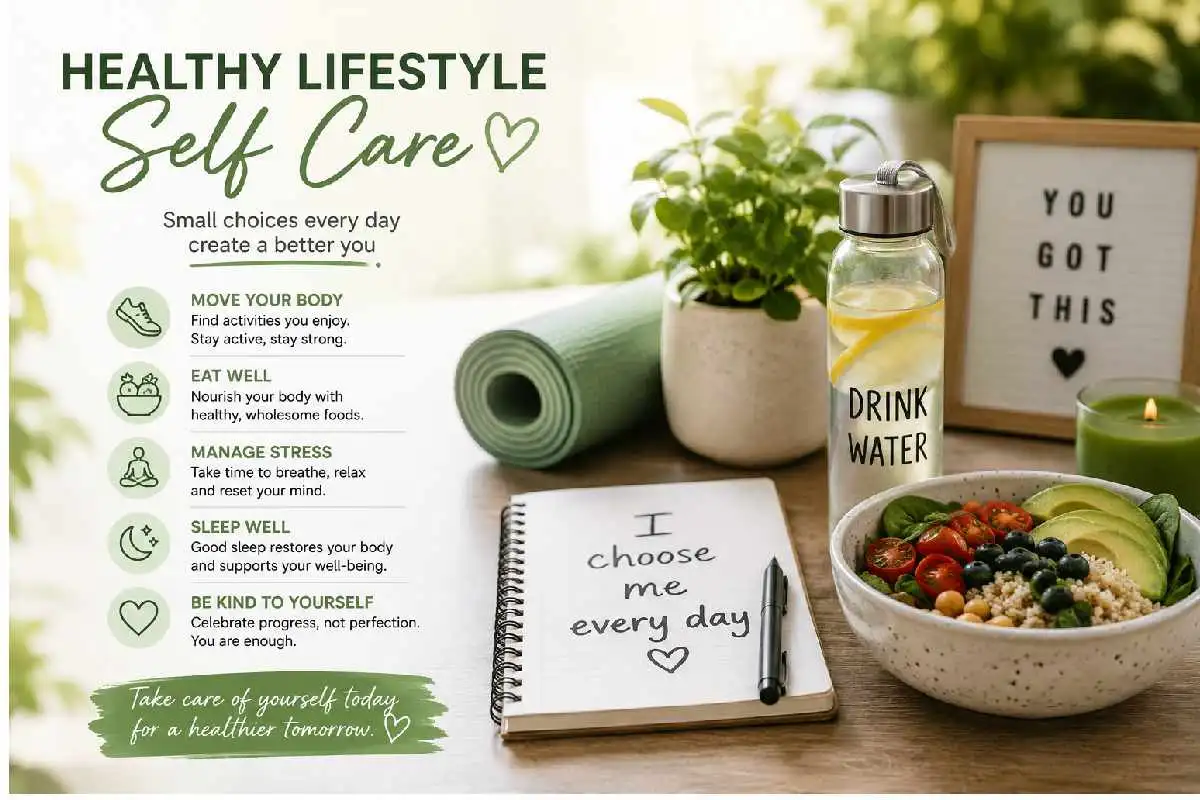
Healthy Lifestyle Self Care – In today’s busy world of 21st-century life, it seems impossible to live a healthy lifestyle. The business of life: our friends, family, jobs and the sound of technology mean it’s easy to overlook your mental, physical and emotional well-being. This is where self-care for a healthy lifestyle is important. Self-care does not require a high-end spa and a number of spa treatments, but to take active and caring control of your mind and body in the present and the future.
Build lasting wellness habits by exploring practical self-care ideas for everyday life.
❝
This article is a part of
Self Care Ideas Guide
What is a Healthy Lifestyle?
A healthy lifestyle self-care plan is a combination of daily practices that benefit your physical health, emotional well-being, mental well-being, and overall well-being. An exercise a day, healthy eating a day, enough sleep, stress management, adequate water intake, a healthy relationship with other people, and consuming healthy food would constitute a healthy lifestyle habit. Self-care being practiced regularly may help improve your energy levels, decrease the chance of getting sick and benefit the way you live and work.
Many people believe that to look after yourself properly it takes time and a good chunk of money, however many of the most effective self-care activities need no money or time and can be woven into your routine. When making a change to how you live the biggest steps are taken in the smallest, daily ways.
This guide has more information on the easiest and most effective ways to promote a healthy lifestyle, starting with self-care, either now or to build upon a current lifestyle.
Looking and feeling your best starts with simple beauty self-care tips that support healthy skin.
Healthy Self Care Habits for Beginners
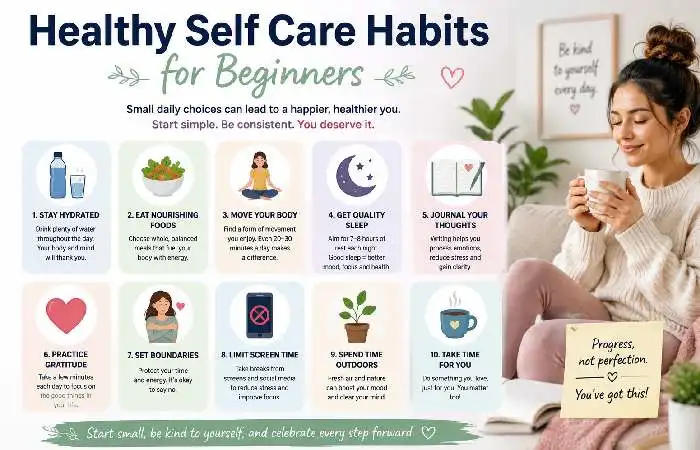
It’s really not as daunting to build sustainable self care habits as you may think. The one thing that is evident with all effective self care habits, it that it’s better to begin small and simple instead of making major life changes. Small, daily habits build habits and reinforce positive behavior.
Drink Water Every Day.
This is by far the easiest habit to build into your daily life, as well as one of the most beneficial. It plays such a significant role in various bodily functions. It helps regulate body temperature, aids blood circulation, regulates body temperature and brain functionality and is key to many digestion-related aspects. Many people may already feel the symptoms of the frustration from tiredness, headaches, or not being able to concentrate solely because of the fact that they aren’t getting enough water a day.
This is where you must remember to have a reusable water bottle with you at the office, or even in the home to sit on your desk and remember to take small sips throughout the day. In need of more incentive to drink water, throw some lemon in it, or even some cucumber.
A balanced lifestyle includes caring for your emotional health through effective mental wellness practices.
The Daily Morning Routine
Setting up a beneficial morning routine may make it much easier to begin the day on a productive and positive note. By setting up a simplistic and easy morning routine for your day, you will create habits of order and gain a sense of purpose, all the while reducing the stress levels of your day.
A great morning routine that is great for beginners would include:
- Drinking a glass of water
- A five minute stretch
- Some quick moments of gratitude
- Having a healthy breakfast
- Reflecting on the day ahead
Setting a thoughtful, measured tone to the start of the day can positively affect focus and the general sense of well being.
Healthy habits become easier to maintain when you follow consistent daily self-care routines.
Engage in mindfulness
Mindfulness refers to paying attention non-judgmentally to the present moment experience. It involves being aware of one’s thoughts, emotions and body and one’s environment. It assists in managing stress, reduces emotional reactivity and increased self-awareness.
Activities for beginners may include:
- Controlled breathing (deep and slow)
- Mindful observation of surroundings.
- Focusing on body sensations while communicating with someone.
- Spending 5 minutes engaging in any of these activities can help.
Practice the establishment of healthy boundaries
Care of oneself has an element of also taking care of the self in an emotional sense – by guarding our energy. “No” to excessive demands, energy-consuming requests, and unwanted expectations of yourself will ward off burnout.
Stay motivated with the latest trending self-care ideas for modern wellness.
Examples of healthy boundaries:
- Working reasonable hours.
- Limiting your time with those that bring out the negativity, and
- Carving out personal time devoted entirely to you.
- Being respectful of your own personal limits is one of the fundamental aspects of a self-care habit.
Consistency is the Key
You’re not going to reach your goals through big, infrequent, perfect actions. In order to make self care a routine you need consistency through small, achievable actions.
Fitness & Wellness Self Care Ideas
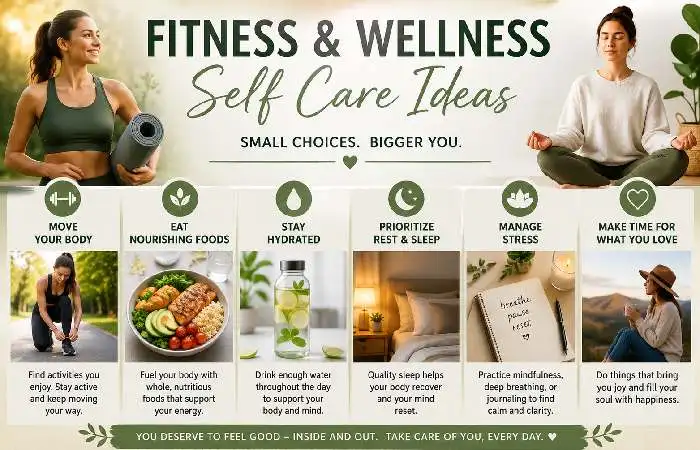
An other one of my self care habits is fitness and moving my body. It utilizes the whole of my physical self and is a wonderful emotional and mental practice. Fitness is not always about overpriced gym memberships and grueling workout routines; it can be as easy as just moving my body in a fun way frequently.
Walking for Better Health
Walking is one of the most accessible, and simple forms of exercise. Moving the body in this manner on a consistent basis has benefits in improving; cardiovascular function, muscular/joint function, weight control, reduced anxiety/stress levels, and increased energy levels. Even a simple daily 30 minute walk has myriad benefits.
Strength Training
As individuals age, strength training increases in importance as a way to improve bone density and maintain muscular integrity as well as promote the metabolism.
As a beginner you may utilize; body weight squats, push-ups, lunges, resistance bands, light weights, etc., and even working out two to three days a week with some basic strength exercises has incredible benefits for your overall physical fitness.
Yoga & Stretching
Yoga can be a fantastic source to help you develop flexibility, posture, relieve muscular tension and pain, induce a feeling of calm and increase body awareness using body postures, breathing and the mind; A weekly stretching program can also prevent muscle strains and enhance mobility.
Outdoor Activities
The many perks of including the outdoors into your self-care plan range both from the mind, as well as the body;
Being in nature by going out for a walk or hike, taking out the bike, or gardening, can be a pleasant way of de-stressing and feeling less tense as well as enhancing one’s psychological well-being, reducing stress and increasing one’s levels of energy and improving health.
Make Movement Fun
In order to be able to utilize self-care it must be incorporated into your lifestyle, so choose movements that you actually enjoy!
Dancing, swimming, playing a team sport, martial arts, fitness classes, leisure cycling, etc., are all great options!
Create a peaceful environment by adding relaxing home self-care ideas to your daily schedule.
Healthy Eating as Self Care
Nutrition is an extremely important part of self-care. Every system within your body relies on foods in order to thrive, and good nutrition improves energy levels, enhances mood and cognitive function, and many other aspects of the body.
A healthy diet isn’t necessarily a crash diet or a need to be perfect. What you are trying to do here is simply to fuel your body so that it can operate at its best.
Focus on whole foods
These foods haven’t been altered and have lots of nutrients: fruits, vegetables, whole grains, lean protein, nuts, seeds and legumes are the main ones and these provide the body with all the nutrients, vitamins, antioxidants and fiber needed.
Balanced meal
A balanced meal will contain everything your body requires to function properly. Generally these will be: Protein (to repair muscles and assist in various bodily functions), complex carbohydrates (to give the body fuel), healthy fats (to aid in the production of hormones) and vegetables (to provide nutrients and fiber). This helps your body regulate its energy levels.
Practice mindful eating
This is an awareness of eating behavior and it involves focusing on being present during meal times, and acknowledging the body’s response during eating. Slow eating without any distractions leads to being more aware of fullness.
Tips include: chewing slowly, eating without distractions, recognizing food textures and tastes and only eating when the body is signaling that it is hungry.
Plan snacks
An unhealthy snack is that which is not going to make you extremely hungry between meals. Examples of healthy snacks include fresh fruit, greek yogurt, nuts, vegetables, hummus, whole grain crackers and cottage cheese. Being organized eliminates unhealthy options.
Reduce processed foods
Although, in theory all food types can produce an adverse result if eaten too much or instead of other healthy foods, there are added ingredients within food that may be doing the body some harm. Highly processed foods can have ingredients added which have the possibility of having side effects. They often contain a large amount of sugar, simple carbohydrates, poor fats and artificial elements. Cutting down on processed foods will only benefit the body both emotionally and mentally.
Stay hydrated
As important as nutrition and they assist overall health. They help the body operate and will assist with Digestion, movement of nutrients, temperature regulation and keeping your mind functioning at an appropriate rate.
Support healthy skin with practical skincare and wellness ideas that complement your lifestyle.
Sleep Hygiene Tips for better wellness
Sleep is so important to our wellbeing but is an area where everyone fails so it cannot be said enough! It heals us physically, and helps with brain function, mood regulation and immunity.
An inability to get enough sleep can be blamed on:
- Fatigues
- Bad moods
- Difficulty concentrating
- Increase of stress levels
- Chronic health problems
Good sleep hygiene will help your overall health immensely:
Stick to a strict sleep and wake up schedule
By going to bed and getting up at the same time every day, even on weekends, will ensure that your internal clock is functioning properly and you should find falling asleep a little easier.
Establish a wind-down routine
A wind-down routine can signal to your brain and body that it’s time to sleep. Things like meditation, a nice warm bath, reading a good book, light stretching, or deep breathing exercises are all good ways to signal that it’s time for sleep, as you should not be undertaking any stimulating activity at this time.
Limit screen time before bed
The blue light emitting from your electronic gadgets can affect the production of melatonin in your body. In order to ensure a good night’s sleep, try and avoid screen time in the few hours leading up to bedtime, especially try and avoid your gadgets out of the bedroom altogether.
Optimize your bedroom for sleep
A comfortable bedroom will help with sleep, the ideal temperature is normally cool and using a light blocking blind in the window will ensure less light. It would be advisable to get a good supportive mattress, which would also do a lot to help you get more out of your sleep.
Watch what you eat and drink
If you do drink tea, try to opt for an herbal tea rather than one that contain caffeine which can remain in your body for many hours and could result in you not being able to get to sleep when you want. You must always check with your doctor or pharmacist if you are able to drink it or not though if you have any health conditions.
Get adequate hours of sleep
Adults need 7-9 hours of sleep per night, so you need to ensure that you are giving yourself the appropriate amount of sleep so that your mind and body can recover properly. Treat sleep like food, and make sure that you are fitting it into your diet each day; there really is not that many better forms of self-care you can undertake!
Adapt your wellness habits throughout the year with helpful seasonal self-care ideas.
Daily wellness habits that improve your life
Lifestyle self-care will benefit you long term because it will make it easier to stay in good shape and also make it easier to be motivated and happy within yourself.
Practice gratitude
This is not about being grateful for all of the amazing things in your life like your family or house, but just for small things, like getting a day of good weather when the weather was meant to be bad, or the nice taste of a cup of coffee that you had earlier on. This will be beneficial because you’ll tend to concentrate more on what you’ve got in life rather than what you lack, and will make you more content. You can do this just by having to think of three things, writing them down in a journal, or telling your friends and family you are grateful for them in your life.
Manage stress effectively
Stress is something everyone has to face occasionally and to keep yourself safe from the problems that it can induce like having heart attacks; there are things that we should have readily available as coping mechanisms to combat stress. Things such as meditation, breathing techniques, taking a light jog/ walk, writing a diary entry and nature are all great for keeping stress at a minimum.
Socialize!
As humans are creatures of habit, we are social beings who need to interact with other humans to keep our emotional state regulated. Regularly meeting up with family and friends to talk, call or just to have food will improve any social life drastically.
Continue to learn
Learning a new skill, language or even reading up about a certain subject can help with your self-care as it keeps the brain occupied. Learning how to use a new program, how to cook, how to communicate, or simply learning how to do something useful can be greatly beneficial to yourself in many ways; there are many places online that can help you learn things if you’ve not got access to learn these things through a college.
Spend time in nature
Spending even a small amount of time in nature is good for you, be it having a walk in the local park, go on a hike up a mountain, relax on a beach at a seaside town or even grow your own plants or flowers at home, nature is an extremely good way to manage stress levels and be healthier, it doesn’t take too much effort to incorporate nature into your routine.
Reflect on personal goals
It may be useful to sit back at the end of the day and have a thought about what you’ve achieved that day whether that be personal goals or things like making sure that you are drinking enough water or not eating unhealthy food. This helps you stay focused, and can be beneficial as the more of the things that you wish to be seen as doing, the more likely you are to continue with those traits.
Celebrate small wins
By taking some time at the end of each day to acknowledge what you have achieved, you will become more motivated and your confidence levels will also rise, you might want to celebrate the completion of a task that you find difficult or you may simply celebrate because you have remembered to do your stretches and kept fit and healthy.
Find personalized self-care ideas for women that encourage long-term health and confidence.
Conclusion
Healthy lifestyle self-care is never going to help us get to a point of perfection but what it can help with is with leading a healthy lifestyle with things such as exercising, having healthy food at home so it is always there for you, getting plenty of sleep each night, and trying to lead a more healthier life in general. If you continue to add one or two small new healthy habits, you’ll become motivated, have less stress, better health and a more fulfilled life.
Remember, as self-care is a part of a lifestyle, it is okay to fail as long as we remember what it is we have to do in the future and if this means that you are able to achieve some amazing results, then it is all worth the effort of having to try once again.
Maintain healthy habits without spending a fortune by trying budget-friendly self-care ideas.