


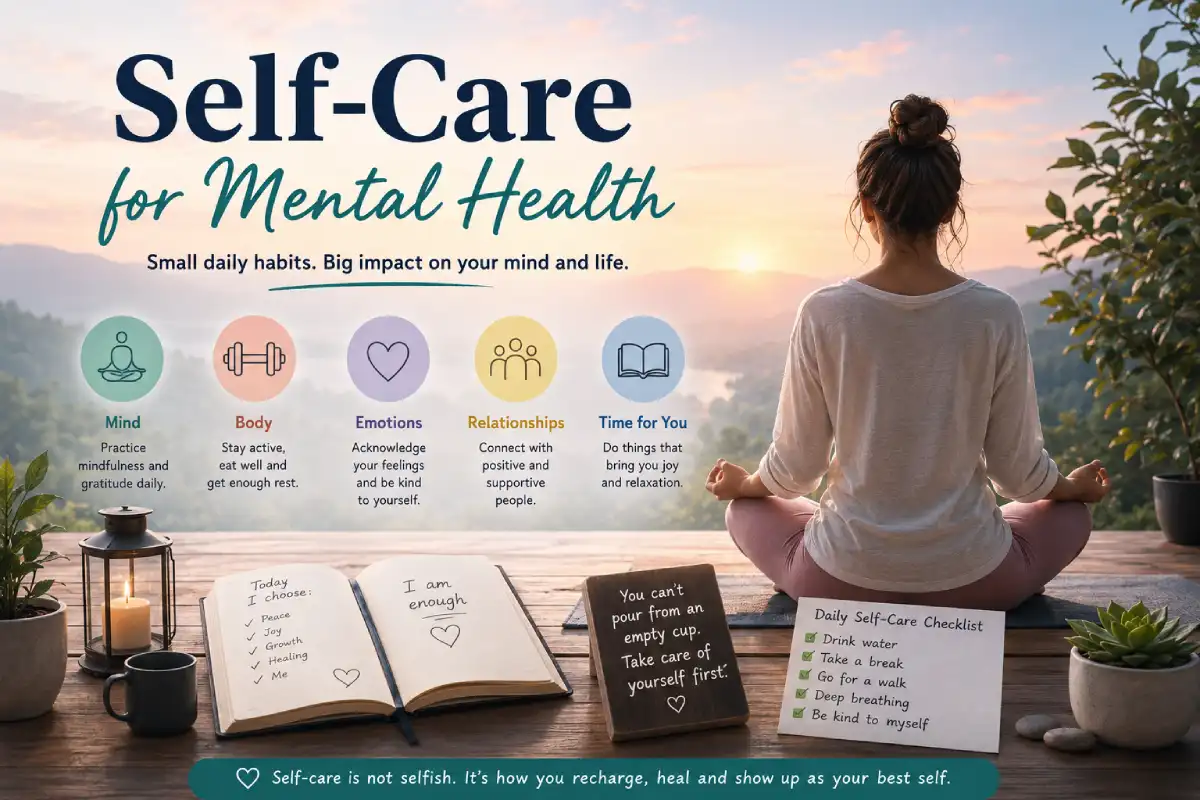
Self-Care for Mental Health: Daily Habits to Improve Emotional Well-Being
Last Updated: July 6, 2026
Mental wellbeing is very significant in this hectic and crazy modern day world as physical wellbeing. Work stress, family responsibilities, finances, and being exposed to the screens almost 24/7 people get emotionally, financially and professionally exhausted. This situation leads towards self-care.
Mental health self-care doesn’t consist of pampering and extravagant getaways. These involve fundamental practices and routines to improve mental well-being, lessen the impact of stress on your life, and improve your overall sense of well-being. Self-care practices can form the foundation of a resilience system to keep you feeling great, healthy, and productive throughout all of life’s challenges.
What Is Self-Care for Mental Health?
The Self-Care I Practice and Recommendations to Get Started With your Own Self-Care routine Self-Care is defined as any activity that allows us to take care of our mental, emotional, physical, and social health. We need to recharge our mind, handle stress and start being kinder to ourselves through these kinds of rituals.
Mental health self-care includes:
- The effective control of stress
- Sleep is enough.
- Carry out mindfulness.
- Building healthy relationships
- Setting personal boundaries
- Engaging in enjoyable activities
- Maintaining physical health
Self care shouldn’t be about pampering yourself and indulgence but rather caring for your future well-being and mental health.
Why Self-Care Matters
The truth is that most of us are simply doing what we can, putting all of our focus into work, kids, obligation, and life in general and shoving our own desires, needs and wants to the very bottom of our list. The accumulation of this way of functioning can lead to long term stress, exhaustion and anxiety.
Benefits of Self-Care for Mental Health
| Benefit | How It Helps |
| Reduced Stress | Reduces cortisol and promoting relaxation |
| Better Mood | Invokes a state of happiness and Emotional wellbeing. |
| Improved Sleep | Can aid recovery and cognitive performance |
| Increased Energy | Increases Energy & Sharpens Concentration |
| Enhanced Resilience | Aids in better handling of adversities |
| Stronger Relationships | Increases connection and ability to be emotionally available |
| Greater Self-Esteem | Builds a sense of self-value and inner belief |
When combined together, they work like the shield we wear to battle daily struggles and exhaustion of emotional resources.
Signs You May Need More Self-Care
- Constant fatigue
- Difficulty concentrating
- Irritability
- Feeling emotionally drained
- Frequent anxiety
- Lack of motivation
- Sleep disturbances
- Social withdrawal
Early warning signs identified can serve as a measure to prevent it
Physical Self-Care Habits

The mind and the body are in sync. When the body is healthy, the mind too will be healthy as will the state of emotional wellness.
1. Prioritize Quality Sleep
Rest is a really significant form of self-care.
Benefits include:
- Better emotional regulation
- Improved memory
- Reduced stress levels
- Enhanced concentration
Healthy Sleep Habits
| Sleep Habit | Benefit |
| Consistent bedtime | Supports body clock |
| Limiting screen time | Improves sleep quality |
| Dark, quiet room | Encourages deeper sleep |
| Avoiding caffeine late | Reduces sleep disruptions |
Aim for 7–9 hours of sleep each night.
2. Stay Physically Active

As you strain and work you secrete a enzyme into your brain called an Endorphin which is sometimes called a happy hormone.
Mental Health Benefits of Exercise
- Reduces anxiety
- Improves mood
- Increases confidence
- Enhances energy levels
- Supports stress management
You do not need strenuous workouts. Some simple activities like the following can also burn calories effectively:
- Walking
- Yoga
- Dancing
- Cycling
- Stretching
can provide significant mental health benefits.
3. Nourish Your Body
What we consume will have effects on how we are thinking and feeling.
Brain-Healthy Foods
| Food Group | Examples |
| Healthy Fats | Avocados, nuts, seeds |
| Lean Proteins | Fish, eggs, chicken |
| Whole Grains | Brown rice, oats |
| Fruits | Berries, oranges, apples |
| Vegetables | Spinach, broccoli, kale |
Boost your energy and mood by eating less sugar and processed foods whenever possible.
4. Practice Relaxation Techniques
Any physical relaxation activities which lead to reduction in the amount of anxiety or loosening up of the rigidity of mind.
Popular methods include:
- Deep breathing
- Progressive muscle relaxation
- Meditation
- Gentle stretching
- Nature walks
Even only ten or minutes a day spent meditating and doing breathing exercises would improve your emotional stability
Emotional Self-Care Strategies
Dealing with, making sense of, and managing your emotions is emotional self-care.
1. Practice Mindfulness
The most basic definition of mindfulness means simply noticing what it is that you notice without making any judgements about it at all.
Benefits
- Reduces anxiety
- Improves focus
- Enhances emotional awareness
- Encourages self-compassion
Simple mindfulness activities include:
- Mindful breathing
- Body scans
- Guided meditation
- Mindful eating
2. Journal Your Thoughts
You’ll find writing can help structure your thinking and remove any dross.
Journaling Prompts
| Prompt | Purpose |
| What am I grateful for today? | Builds positivity |
| What stressed me today? | Identifies triggers |
| What did I accomplish? | Boosts confidence |
| What do I need right now? | Encourages self-awareness |
The 5–10 minutes of journal writing every day may allow you to increase awareness of and the ability to gain better insight into emotions.
3. Practice Self-Compassion
Nearly everybody hates themselves except someone other love you.
- Self-compassion consists of:
- Learning to love and accept your flaws
- Growing from your mistakes
- No beating yourself up
4. Set Healthy Boundaries
Your boundaries protect your aura, mental, emotional, and physical energy.
Examples include:
- Saying no when necessary
- Limiting toxic interactions
- Protecting personal time
- Managing work-life balance
Set a Healthy boundary not being as exhausted, the more you level up your health state.
Social Self-Care Practices
Human beings crave belonging. Your connections resulting from your social and physical self-care practices are capable of resulting in a mentally happier environment.
1. Strengthen Relationships
Positive relationships provide:
- Emotional support
- Encouragement
- Reduced loneliness
- Greater happiness
Make time for:
- Family gatherings
- Phone calls
- Coffee meetups
- Shared hobbies
Little interactions do make a difference
2. Ask for Support
Help-seeking is strength. Not a weakness.
Support can come from:
- Friends
- Family members
- Mentors
- Support groups
- Mental health professionals
Expressing challenges helps unload emotional load and gain perspective
3. Limit Negative Influences
Some relationships and places can affect the way you feel.
Consider reducing exposure to:
- Toxic relationships
- Constant negativity
- Excessive social media comparison
- Unhealthy peer pressure
Take a load off yourself mentally by guarding your sacred head-scape.
4. Engage in Community Activities
A strong sense of belonging and purpose can be experienced through collaboration as a community.
Examples include:
| Activity | Mental Health Benefit |
| Volunteering | Increased fulfillment |
| Group fitness | Social connection |
| Hobby clubs | Shared interests |
| Local events | Reduced isolation |
Connecting with other individuals generally leads us to feel more positive and happier overall.
Creating a Self-Care Routine
It is consistency that can make a self care practice become a way of life rather than a occasional activity.
1: Assess Your Needs
Ask yourself:
- What areas of my life feel neglected?
- What activities make me feel refreshed?
- What causes the most stress?
Learning your specific requirements makes a tailored strategy more attainable.
2: Start Small
Don’t make massive changes right away.
Begin with:
- 10-minute walks
- Daily gratitude practice
- Earlier bedtime
- Weekly social activity
Small habits are easier to maintain long term.
3: Schedule Self-Care
Treat self-care like any important appointment.
Example Weekly Self-Care Plan
| Day | Self-Care Activity |
| Monday | Evening walk |
| Tuesday | Journaling |
| Wednesday | Yoga session |
| Thursday | Call a friend |
| Friday | Digital detox |
| Saturday | Hobby time |
| Sunday | Weekly reflection |
Scheduling increases consistency and accountability.
4: Be Flexible
Life evolves and your personal care practices ought to keep up.
Some days you may need:
- More rest
- More social connection
- Extra relaxation
- Additional support
Actively listen to your needs when implementing self-care practices.
Measuring Self-Care Success
So people often wonder if all the effort they are put into their self care is even worth it.
The intention is not perfection but the path toward a perfect destination.
Indicators of Positive Progress
| Indicator | Sign of Improvement |
| Stress Levels | Reduced tension and worry |
| Mood | More positive outlook |
| Sleep Quality | Better rest and recovery |
| Energy Levels | Increased daily motivation |
| Relationships | Improved communication |
| Productivity | Better focus and efficiency |
| Emotional Awareness | Greater self-understanding |
Monthly Self-Care Check-In
Ask yourself:
- Do I feel less stressed than last month?
- Am I sleeping better?
- Have I maintained healthy boundaries?
- Do I feel emotionally supported?
- Am I making time for activities I enjoy?
By tracking the growth in these regions we can then measure and monitor what may be or is working and may need changing.
Common Self-Care Mistakes to Avoid
| Mistake | Better Approach |
| Waiting until burnout | Practice prevention |
| Comparing your routine to others | Personalize your approach |
| Overloading your schedule | Focus on manageable habits |
| Ignoring emotional needs | Address feelings regularly |
| Expecting immediate results | Stay consistent |
Self-care isn’t an emergency band-aid that only comes in to help when you’re burning down.
Final Thoughts
Self-care – looking after our mind is one of the best investments we can make for our body, mind and us. By taking care of the body, mind, spirit, relationships, and routine, we can build greater resilience, which helps us support ourselves and deal with challenges in life. And it is about taking small steps everyday that help you to feel better and strong. And feel better connection to yourself, to people around and so on. It’s not necessarily about taking a long break or buying lots of things; we should rest, exercise, breathe, learn boundaries, communicate, etc.