


Indian Wedding and Festive Fashion: Traditional & Modern Outfit Ideas
Last Updated: September 9, 2026
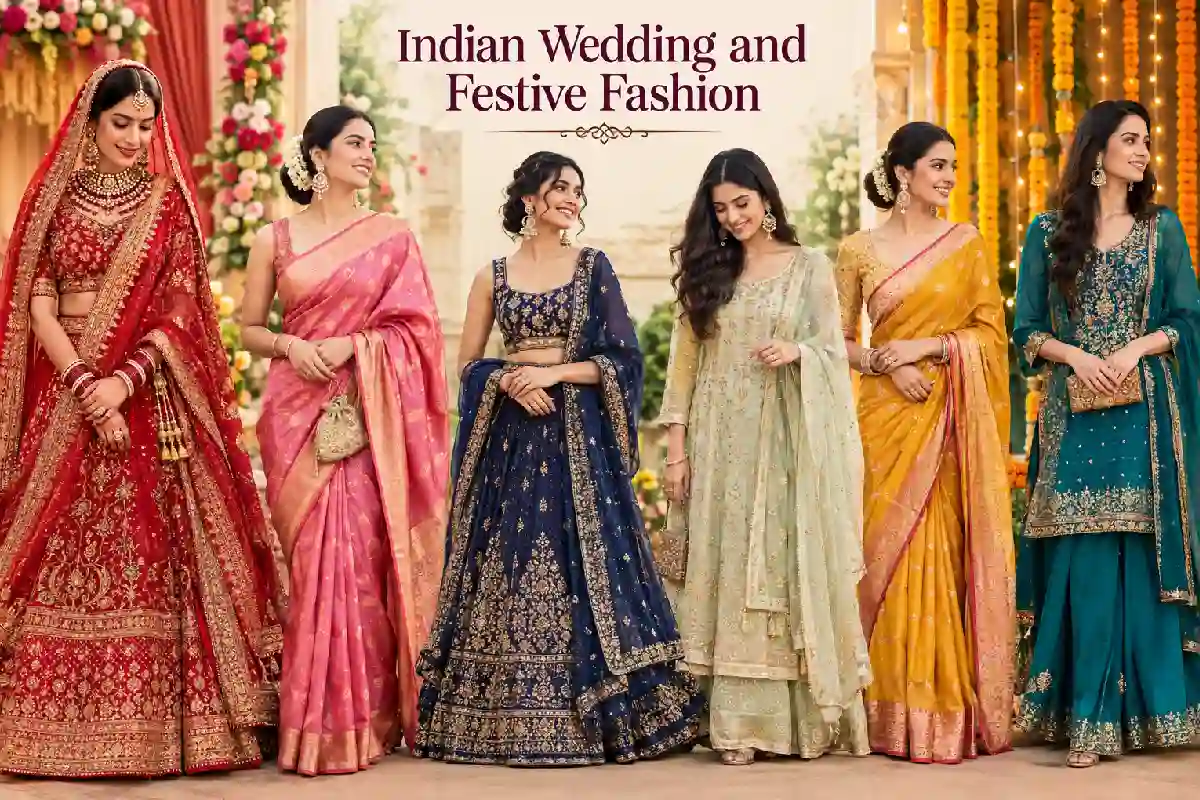
Indian Wedding and Festive Fashion: The focus is on vibrant colors, artisanal detailing, tradition, and personal choices to suit everyone. Indian ethnic wear includes beautifully embroidered lehengas and opulent traditional sarees, as well as subtle & sleek Anarkalis, and not to mention chic Indo-Western designs suitable for every function and occasion, all being offered across various types and fabric choices for anyone to adore and flaunt while attending an Indian festivity or, the grandest of all, an Indian wedding.
The correct selection of Indian Wedding & Festive attire is based on the ceremony itself, your designated role at the event, along with the weather and your comfort level to pull off throughout the function. Below is a practical guide to the selection of Indian Wedding & Festive Attire for Brides, Wedding Guests, or anyone attending an Indian fiesta.
What is Indian Wedding Fashion?
Indian wedding clothing refers to the attire worn by both the bride and groom for the wedding, and also pre- and post-wedding occasions like engagement parties, receptions… The apparel may have different styles within different parts and communities in India.
Some common clothing items include:
- Sarees
- Lehenga cholis
- Anarkali suits
- Sharara and gharara sets
- Salwar kameez
- Indo-Western outfits
- Traditional silk outfits
- Embroidered suits and dresses
Embroidered silk, velvet, georgette, chiffon, organza, brocade & satin are generally used for wedding outfits. Some popular embellishments for wedding attire are traditional embroidery, zari work, sequin work, mirror work, thread work, and traditional motifs.
| Occasion | Popular Outfit Choices |
| Engagement | Saree, lehenga, Anarkali |
| Mehendi | Bright lehenga, sharara, floral outfits |
| Haldi | Yellow saree, lightweight suit, festive lehenga |
| Sangeet | Embroidered lehenga, Indo-Western outfit |
| Wedding ceremony | Silk saree, bridal lehenga, traditional suit |
| Reception | Designer saree, embellished lehenga, gown |
Indian Bridal Outfit Ideas
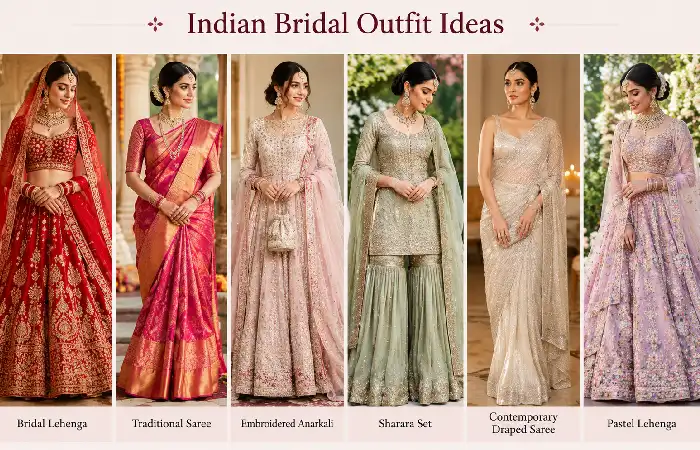
Bridal attire is generally a more flamboyant version of the outfits that wedding guests wear. Brides choose attire according to whether it follows specific regions or family traditions, as well as the Bride’s personal choices and the style of wedding the Bride chooses to wear for her wedding day.
Still the most traditional wear to be carried on your special day is the bridal lehenga.
These are always a combination of an embellished lehenga or skirt, a blouse or choli, and a dupatta. Colors never changed from what have they been traditionally preferred; Red, Maroon, pink, golden, burgandy always been chosen colors, nowadays pastel, ivory, cream, champagne, green colors as well as two tones colors are also preferred.
A traditional bridal saree continues to be another timeless choice. Silk Kanjeevaram sarees are widely loved for South Indian wedding events. Banarasi silk, Paithani, as well as other textiles related to distinct states in India, are preferred wedding attire.
Brides also opt:
- Embroidered Anarkali suits
- Sharara sets
- Contemporary draped sarees
- Silk sarees with statement jewelry
- Minimalist pastel lehengas
- Heavily embroidered reception outfits
The aim is the integration of tradition, comfort, and individual tastes – not adopting it because it is the current trend.
Indian Wedding Guest Outfits
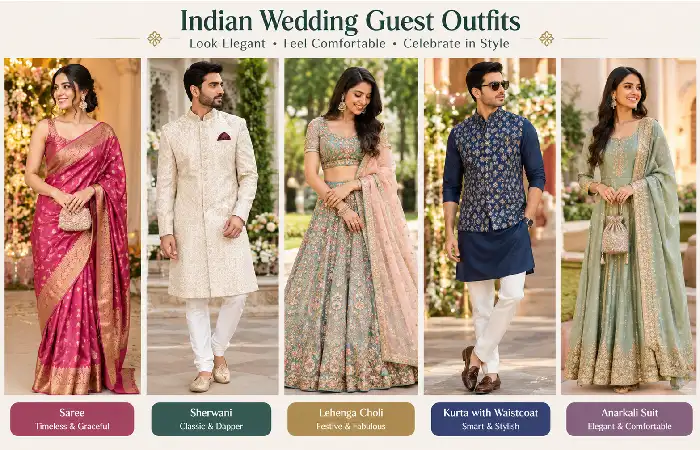
Wedding guests have a lot of freedom in terms of what to wear. As a guest, the outfit should feel festive without “competing” with the bride or groom’s wedding outfit.
For daytime weddings, you will likely want to wear light, airy fabrics in bright colors. In the evenings, feel free to dress in jewel tones, metallics, embroidery, and bold accessories.
Some common guest outfits are:
- Lightweight sarees
- Printed Anarkalis
- Embroidered shararas
- Simple lehengas
- Silk suits
- Palazzo sets
- Indo-Western dresses
- Pre-draped sarees
For an informal family gathering, cotton or a printed ethnic set would suffice. A formal wedding reception, however, is a chance for something a lot more detailed.
| Wedding Event | Guest Outfit Idea | Style Direction |
| Mehendi | Printed sharara | Colorful and playful |
| Haldi | Cotton saree or suit | Light and comfortable |
| Sangeet | Lehenga or Anarkali | Glamorous |
| Wedding | Silk saree or embroidered lehenga | Traditional |
| Reception | Designer saree or fusion outfit | Elegant and modern |
Wedding Saree Styles
Despite the availability of many garments, a saree continues to be a prominent and adaptable Indian attire for weddings. The variety of textiles used and the various weaving techniques practiced across regions in India offer a drastically different look for each garment.
Banaras weaves are recognized by their silken texture and their zari work with elaborate designs. A suitable pick for weddings, receptions, and formal functions.
Kanchipurams hold significant value in their use by South Indian women, brides, and during festivals. A combination of silks along with their traditional borders adds a ceremonial style statement.
Paithanis are of Maharashtrian origin and are also woven out of silk. It is a recognizable feature as it is widely acknowledged by the various woven patterns incorporated in the fabric of these garments, which are:
- Organza sarees
- Chiffon sarees
- Georgette sarees
- Chanderi sarees
- Tissue sarees
- Embroidered sarees
- Designer drape sarees
It’s only the blouse that changes the entire look of the same saree. It would be a traditional high-neck to an elaborately detailed sleeveless blouse to a modern-day blouse.
Wedding Lehenga Styles
These are widely popular among brides and for receptions. It’s an integral part of the engagement and sangeet ceremony. The appearance of the lehenga depends on the cut, embroidery, fabric, and color.
A traditional flared lehenga gives a classic grand look. An A-line lehenga makes for a sleek silhouette. The layered lehenga makes for a flowing design and also adds volume to it. Paneled lehengas also add to the volume.
Popular styles are:
| Lehenga Style | Key Feature | Best For |
| A-line lehenga | Gradual flare | Elegant wedding looks |
| Flared lehenga | Full volume | Bridal and reception wear |
| Panelled lehenga | Multiple fabric panels | Statement outfits |
| Pastel lehenga | Soft colors | Daytime weddings |
| Embroidered lehenga | Detailed embellishment | Formal events |
| Mirror-work lehenga | Reflective detailing | Mehendi and sangeet |
And choosing a lehenga not just by the skirt but by the blouse fit and dupatta style will equally affect your entire look.
Indian Wedding Blouse Designs
Change a heavy saree from a traditional Indian weave into a more modern statement: a blouse. Blouse designs for weddings range from opulent embroidered ones to clean silk designs.
Among the popular choices are:
- High-neck blouses
- Boat-neck blouses
- Square-neck designs
- Sweetheart necklines
- Elbow-length sleeves
- Sleeveless blouses
- Back-detail blouses
- Peplum-style blouses
- Embroidered designer blouses
For an elaborately designed saree a minimal blouse can balance it out, and for plain silk sarees a blouse with heavy embelishment like beads, or designer sleeve style work marvelously well.
Fit is significant too-an aesthetically pleasing yet tight blouse can make the lengthy wedding ceremony unbearable.
Indian Festive Outfit Ideas
Although festivals are less formal than weddings, they embrace the essence of traditional Indian looks.
When looking for festival attire, find something comfortable and flexible enough to allow movement and wear it for several hours. You could opt for a silk saree, cotton saree, kurta set, Anarkali, lehenga, or sharara according to what the festival is.
Light-colored or breathable fabrics are ideal for the daytime, while the evening festivities enable you to try richer tones with embellishments.
Some simple combinations are:
- Silk saree + statement earrings
- Printed Anarkali + juttis
- Kurta set + embroidered dupatta
- Sharara + short kurti
- Simple lehenga + traditional jewelry
- Cotton saree + handcrafted blouse
Festival Saree and Ethnic Wear
Festivals in India have always been a great way to play with Indian fabrics and ethnic clothes. If you want something that would give you a more ethnic, chic festive feeling in India, go for the silk saree. Cotton and Handloom sarees may make for a lovely bright daytime Indian festive affair. If an Indian formal suit or Kurta Pajama is too much comfort, just a simple Kurta Pajama or a Kurta Set matched with a bright-colored Dupatta and Indian shoes fits well for the festivals.
Keep the occasion in mind when choosing any Indian traditional dress. Daytime festivals with Indian dressing need brighter, cheerier colors, whereas evening festivals with such attire are perfect with royal colors that add depth and sparkle in the form of antique and metal borders. Mixing Indian and Western outfits is a fast-fashion styling concept as well. Wear your antique Saree with a contemporary blouse, or wear a traditional Indian Kurta with trousers for the day.
Traditional Wedding Accessories
The remaining pieces come under the accessory category that altogether would put your ethnic wear on the map. However, it doesn’t mean you should be a hoarder! The richly embellished outfit would surely benefit from bold accessories to make a statement.
Common wedding accessories are:
- Jhumka earrings
- Chandbali earrings
- Kundan jewelry
- Polki jewelry
- Bangles
- Maang tikka
- Statement necklaces
- Waist belts
- Potli bags
- Embellished clutches
- Juttis
- Embroidered sandals
| Outfit | Accessories That Work Well |
| Silk saree | Gold jewelry, bangles, traditional earrings |
| Bridal lehenga | Necklace, earrings, maang tikka |
| Anarkali | Jhumkas, clutch, embellished footwear |
| Sharara | Statement earrings, bangles, potli |
| Simple saree | Bold blouse, necklace, statement earrings |
Your wedding footwear also needs to be considered carefully! Wedding celebration days require standing, walking, dancing, etc.; therefore, comfortable footwear will be a big help to you.
How to Choose Indian Wedding and Festive Outfits?
This ease in choosing an outfit comes from considering the four components – occasion, weather, dress code, and personal style simultaneously.
1. Consider the Occasion
The needs of an outfit for a bridal occasion are not the same as a family function or a daylight puja. Consult the invitation or speak to the host if you are doubtful.
2. Think About the Weather
Summer days may warrant cotton, chiffon, georgette, or lightweight silks-perhaps velvet or more substantial materials will do better in winter or during formal summer evenings, indoors.
3. Prioritize Fit
Your attire should enable you to sit, walk, eat, dance, and move without discomfort. You do not want to find out on your wedding day that your top or heels aren’t comfortable for dancing!
4. Balance Colors and Embellishment
For sarees or lehengas with a lot of embroidery, accessories have to be kept low. If the Indian outfit is plain, the statement jewellery or the design on the blouse will take care of that aspect.
5. Match Your Accessories
Your accessories – like shoes, your purse, your rings, a belt or barrettes – don’t need to be an exact match. Coordination in tones and textures generally leads to your outfit looking more human.
6. Dress for Your Personality
Fashion changes rapidly; However, if it is a comfortable outfit, you are most likely to wear it with much confidence. Also, for us who are least bothered about trends, we definitely don’t have to wear a heavily embellished outfit simply because it’s a wedding
Final Thoughts
Indian wedding and festival fashion is incredibly diverse, from delicate silk saris to grander embellished lehengas to simpler kurta sets and fusion wear. We aim for you to choose something that is appropriate while also not compromising your comfort levels or personal style.
Ultimately, regardless of whether you are the bride, family member, or guest, success in dressing for any Indian wedding/celebration hinges on ensuring all of the above- fit, material, color, craftsmanship, adornments, and most importantly, comfort- are in good balance so you feel proud in what you are wearing without forgetting that it is still you!