


Best Combination Skin Care Routine
Last Updated: July 14, 2026
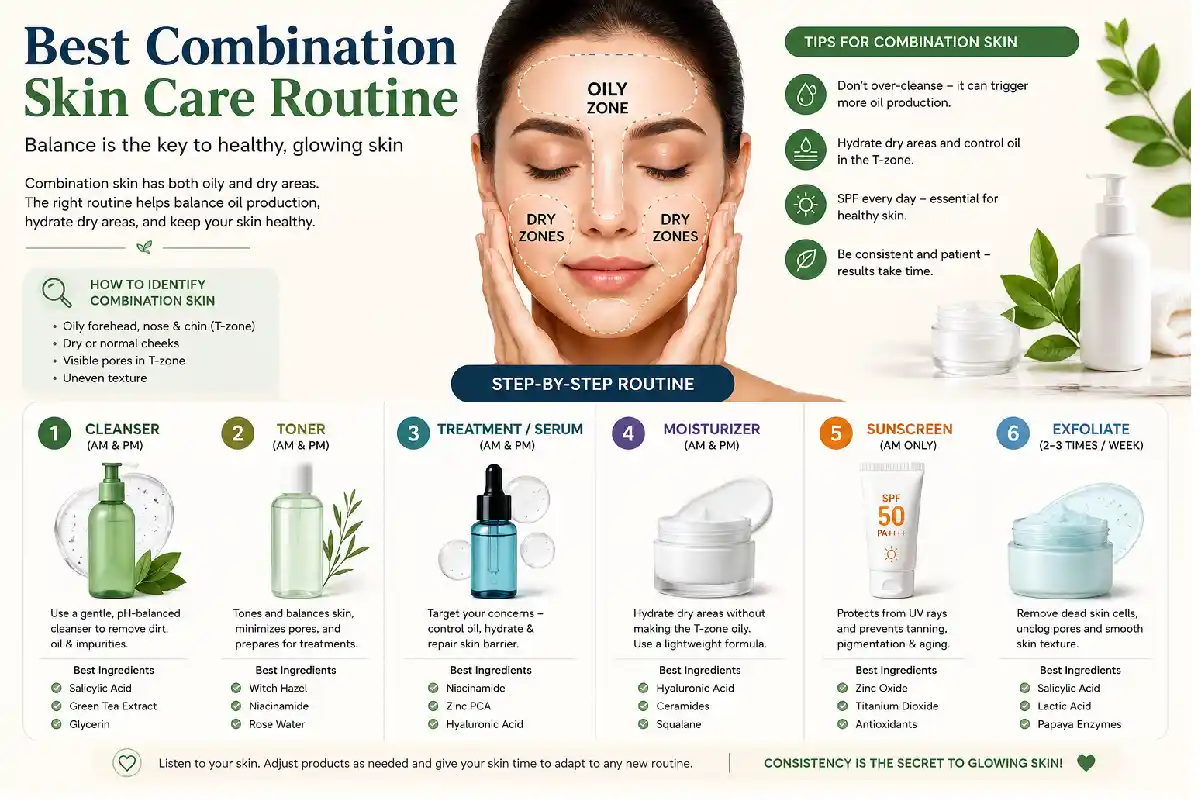
Best Combination Skin Care Routine – Perhaps one of the most frequent – and misdiagnosed – skin type, combination skin presents as an oily t-zone (that’s the forehead, nose and chin area to you) with normal to dry cheeks. That means any standard ‘dry’ skin advice will likely be drying you out and any ‘oily’ skin routine is likely leaving you shiny by 12pm. Thankfully, you can balance out both areas without the need for two individual routines for your face.
In this guide we’re breaking down a full routine for combination skin, morning, night, weekly, what product order, seasonal adjustments, and the mistakes that are secretly ruining your progress.
Morning Routine
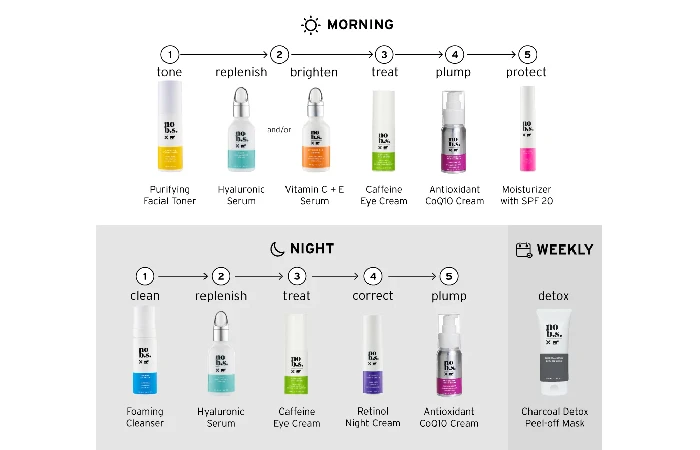
Mornings should be about safeguarding and balancing oil control without sacrificing the dry areas.
| Step | Product Type | Purpose | Recommended Frequency |
| 1 | Gentle gel or foaming cleanser | Wipes away overnight oil without over-drying your cheeks | Daily |
| 2 | Alcohol-free toner | Soften, pH-adjust, andprime forabsorption | Daily |
| 3 | Lightweight serum (niacinamide or vitamin C) | Controls oil in t-zone, Brightening | Daily |
| 4 | Oil-free moisturizer (gel-based) | Soothes dry areas without a greasy T-zone. | Daily |
| 5 | Broad-spectrum SPF 30+ | It prevents UV damage and premature ageing. | Daily |
Why it works: The gel formula is made to dissolve dirt and oil but it’s not tough on the skin on your cheeks that are most sensitive and can flare up and be angry with redness and dehydration. Niacinamide, one of the best all-rounders and one that works incredibly well oncombo skin, balances out the oil without compromising the integrity of your skin barrier.
Don’t forget to follow with an oil-free sunscreen that won’t clog your pores; you don’t want to add further insults to injury when it comes to this skin type!
Evening Routine
Evenings are your chance to treat, repair, and address the specific concerns of each zone — think of it as double-duty skincare for two skin types living on one face.
| Step | Product Type | Purpose | Recommended Frequency |
| 1 | Oil-based cleanser (first cleanse) | Dissolves sunscreen, makeup, and daily grime | Daily |
| 2 | Gel or foaming cleanser (second cleanse) | Deep cleans without disrupting moisture balance | Daily |
| 3 | Treatment serum (retinol, AHA/BHA, or peptides) | Targets texture, breakouts, and fine lines | 2–4x per week |
| 4 | Hydrating serum (hyaluronic acid) | Replenishes moisture lost during the day | Daily |
| 5 | Richer night cream or sleeping mask | Repairs barrier overnight, hydrates dry zones | Daily |
| 6 | Spot treatment (salicylic acid or benzoyl peroxide) | Targets active breakouts in the T-zone | As needed |
How it works: Double cleansing makes sure your t-zone gets the degreasing it needs, but using an oil first will prevent the dry bits on your cheeks feeling tight. Active ingredients – either retinol or acid-based ones – only need to be used on the area you need them, whether that’s all over or just your oily patches (depending on how tolerant you are).
Weekly Skincare Routine
How a combo skin type needs to tweak their weekly routine: As well as daily routine, combination skin also benefits from one or two of the following additions on a weekly basis to tackle the needs of each zone.
| Frequency | Treatment | Purpose |
| 1–2x per week | Clay mask (T-zone only or full face) | Absorbs excess oil, minimizes pore congestion |
| 1x per week | Hydrating sheet mask or overnight mask | Restores moisture to drier cheek areas |
| 1–2x per week | Chemical exfoliation (AHA/BHA) | Removes dead skin cells, smooths texture, prevents clogged pores |
| 1x per week | Facial massage or gua sha | Boosts circulation, reduces puffiness |
| As needed | Spot treatment for active breakouts | Targets emerging blemishes before they worsen |
Pro Tip: multi-mask! Slap a deep-pore, clarifying clay mask on the T-zone, while slathering on a hydrating, de-congesting mask on your cheeks simultaneously. You don’t need to meet in the middle with one all-purpose face mask. Layering Skin CareProducts Combining product order is crucial for combination skin, more so than practically any other type, as an ill-placed cream can clog your pores on the T zone, or leave your cheeks thirstier than they should be.
General rule of thumb: thinnest to thickest consistency.
| Order | Product Category | Example |
| 1 | Cleanser | Gel or foam cleanser |
| 2 | Toner | Alcohol-free hydrating toner |
| 3 | Treatment serums (water-based) | Niacinamide, vitamin C, hyaluronic acid |
| 4 | Treatment serums (oil-based or occlusive) | Retinol, facial oils |
| 5 | Eye cream | Lightweight formula |
| 6 | Moisturizer | Gel-cream or lotion |
| 7 | Sunscreen (AM only) | Broad-spectrum SPF |
| 8 | Facial oil (PM only, optional) | A few drops on drier areas |
Layering Skincare Products
Use lighter, water-based serums first and then layer your heavier creams to seal everything in. You may wish to use your targeted treatments separately and apply the oil-control serum to your T-zone and a hydrating one on the cheeks, rather than mixing them everywhere. Leave each product on your skin for between 30-60 seconds so each layer has time to absorb. Never apply rich, oil-based products directly to the T-zone, though you may use a small amount on the cheeks in the evenings to avoid dryness and flakiness.
Seasonal Routine Adjustments
Combination skin is more affected by seasons compared to other skin types. Hence, it may backfire to have the same routine for the whole year.
| Season | T-Zone Adjustment | Cheek Adjustment |
| Summer | Switch to a mattifying, oil-free moisturizer; increase clay masking to 2x/week | Use a lightweight gel moisturizer instead of cream |
| Winter | Reduce foaming cleanser use; opt for a gentler cream cleanser | Layer a richer moisturizer or facial oil to combat dryness |
| Spring | Reintroduce gentle exfoliation as skin sheds winter dryness | Gradually lighten moisturizer texture |
| Fall | Monitor for oil rebound as humidity drops | Begin adding hydrating serums before the cold sets in |
Why your changes over the year: the level of oil your T-zone produces will change with temperature and humidity, in the humid summer months the T-zone becomes prone to producing too much oil, in dry air during winter even the cheeks can be prone to dryness and flakiness.
Adjusting texture and frequency — rather than switching your entire routine — keeps both zones balanced without overcorrecting.
Routine Mistakes to Avoid
8 Mistakes to Avoid Even the most well-intentioned combination skin routine can easily go wrong. Such as: (Here are just some of them)
1. Over-cleansing your T-zone
If you find yourself cleansing your face more than two times a day, you’re probably stripping your face of all its natural oils. With that in mind, your T-zone will most likely overcompensate and begin to pump out even more oil.
2. Slapping one moisturizer
Slapping one moisturizer on your whole faceIt’s not a one-size-fits-all kind of world for skin products and especially moisturizers.
3. Heavy-Duty Moisturizer for the Cheeks.
Heavy-Duty moisturizer, the product that balances the dry zones of your cheeks, may also be the product that’s contributing to shine and blocked pores on your nose, forehead, and chin. Also, a mattifying formulation could just leave your dry skin feeling drier than it already is.Try multi-masking and a multi-product routine for different parts of your face.
4. Not Moisturizing your Face
In order to stop your oily skin from producing overproduced oil, it overproduces oil. Use a lightweight moisturizer without oil on oily skin!
5. Excessive Exfoliation.
Your T-zone and any dry areas of the face should be scrubbed no more than two to three times per week. If you begin to notice irritation, redness, breakouts or dry skin, you should cut back on the exfoliation.
6. Not wearing SPF
Even with a mix of oily and dry patches, you should be protected against damage caused by the sun, premature ageing and discolouration. Sticking to the same products throughout the year Your T-zone and dry cheeks will require a different range of products at various times of the year, such as changing to an oil-free cleanser in the hot weather and then to a more nourishing cleanser in winter.
7. Overdoing your active ingredients
Active ingredients, such as retinol or exfoliating acids (AHAs and BHAs) can be very drying on the skin and cause irritation and other side effects when applied daily. Apply at least every second night as they can be quite drying on the skin in particular.
8. Layering the products incorrectly
Always layer your products from the lightest to the richest. If you put a rich cream before applying a light serum, your skin cannot fully absorb the product’s active ingredients.
Conclusion
Your skin doesn’t have to be complicated and you can get balance back by using a combination of oil-absorbing, hydrating, and oil-free products. Apply oil-absorbing and oil-free cleansers and lotions to your oily skin, but also apply moisturizing, and hydrating cleansers and moisturizers to your dry skin, the simple but effective process of morning and nighttime. Simply use products and techniques that allow you to target and address both issues so that you can achieve a natural, healthy skin glow and the skin is not complicated in any way!
Your skin will benefit significantly in both the long term and the short term as well. Follow the products and techniques that have been outlined here and the simple combination skin routine will work wonder. You should now know that it doesn’t necessarily take much time for you to develop a great understanding and feel for what your skin needs!