


Combination Skin vs Dry Skin: Key Differences, Symptoms, Causes, and Care Guide
Last Updated: July 18, 2026
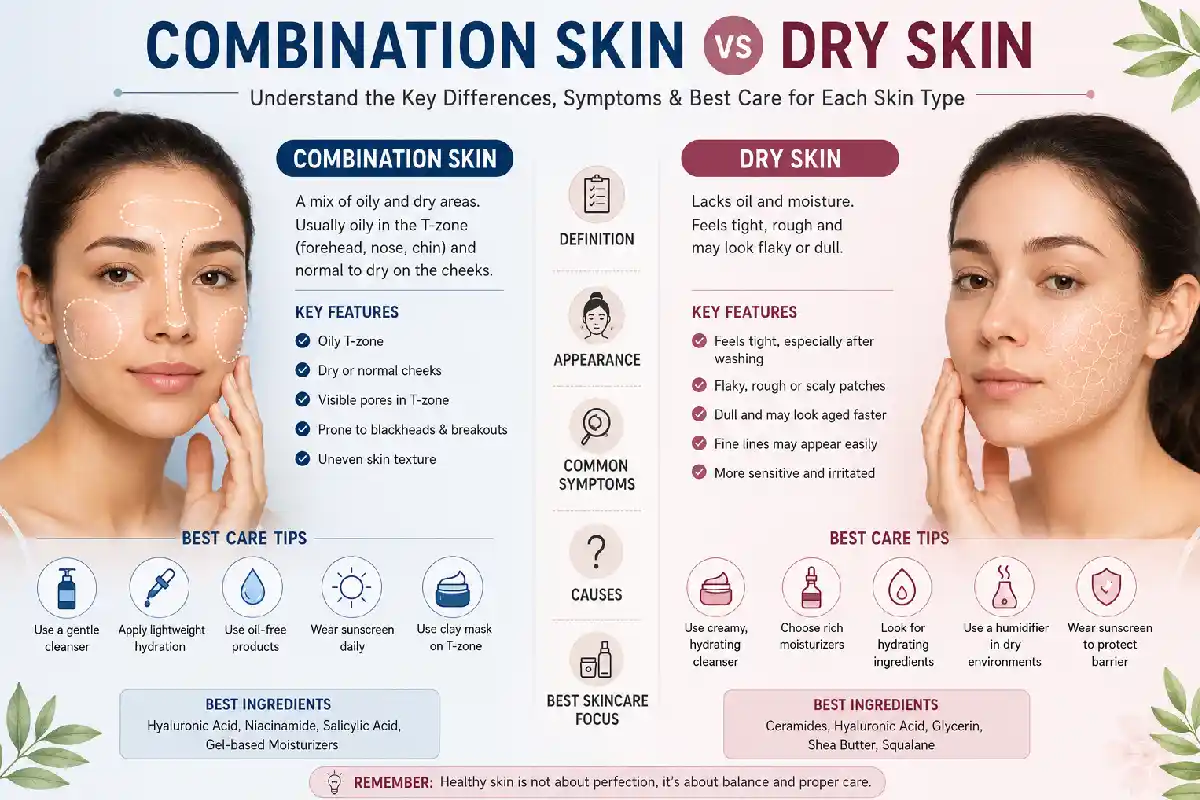
Combination Skin vs Dry Skin: A big first step in a skincare regimen is figuring out your skin type. One mistake many people make, however, is identifying combination skin as dry skin. Combination and dry skin can be easily confused since both have instances when they feel dry, flaky, or even sensitive.
Combination skin and dry skin, however, are completely different types. These types of skin require specific products and completely unique regimens. Inappropriate products can often lead to oilier or drier skin, clogs, and/or acne. Continue reading as we discuss combination skin vs dry skin – both in depth and with a comparison as to their causes and signs.
Combination Skin vs Dry Skin: Quick Comparison
| Feature | Combination Skin | Dry Skin |
| Oil Production | Oily in T-zone, normal or dry elsewhere | Low oil production all over the face |
| T-Zone | Usually shiny | Rarely oily |
| Cheeks | Normal or dry | Very dry and tight |
| Pores | Larger on nose and forehead | Small and barely visible |
| Breakouts | Common in oily areas | Less common but possible |
| Flakiness | Mostly on dry areas | Throughout the face |
| Best Moisturizer | Lightweight gel or lotion | Rich cream with ceramides |
| Cleansers | Gentle foaming or gel cleanser | Cream or hydrating cleanser |
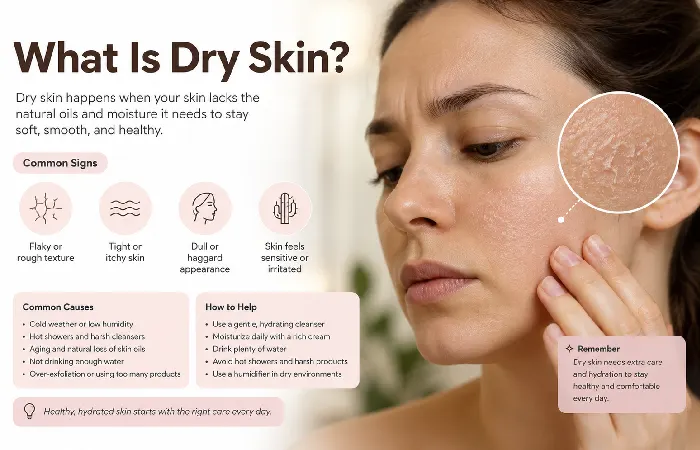
What Is Dry Skin?
If You’ve Wondered “Do I have dry skin?
Here’s How to Know: “What is dry skin?
Dry skin type defined by the low secretion rate of sebum(oily substance) is our skin which controls the moisture and the physical aspect that keep our outer layer of the skin safe against pollutants” skin is also controlled by skin.
Without enough oil in skin , your face can get feel dry and flaky and prone to irritants.
Dry skin is different from dehydrated skin, which is a temporary condition whereas dry skin is an established skin type with many genetic and environmental components to its expression. Signs You Have Dry Skin
- Tight skin following a wash
- Rough or uneven texture
- Flaky patches
- Dull complexion
- Small pores
- Fine lines appear more noticeable
- Increased sensitivity
Common Concerns
- Redness
- Itching
- Cracked skin
- Irritation
- Reduced skin barrier function
What is combination skin?
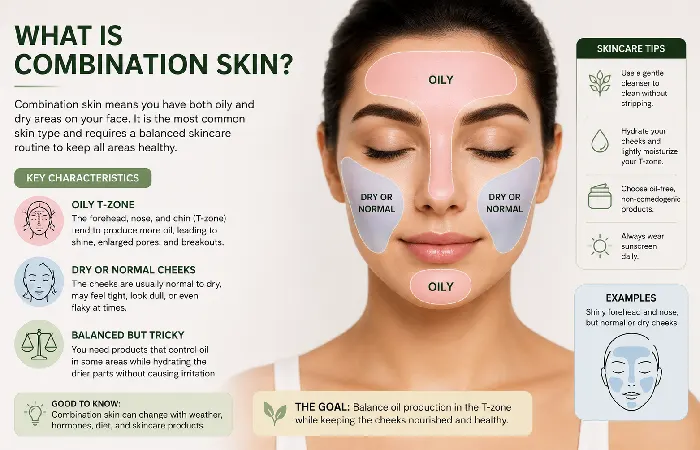
This is skin that features an oily and dry portion. It’s typical to get combination skin with an oily T-zone and dry or normal cheek area. In an effort to maintain a good balance between the areas of oily and dry skin, it usually requires a moisturizer that will offer a bit of dryness but will not add oil.
Common Characteristics
- Oily forehead
- Shiny nose
- Occasional chin breakouts
- Dry or normal cheeks
- Enlarged pores in the T-zone
- Makeup wears differently across the face
Combination skin is one of the most common skin types worldwide.
Symptoms Compared
Recognizing your symptoms is the easiest way to determine your skin type.
| Symptom | Dry Skin | Combination Skin |
| Tightness | Whole face | Mostly cheeks |
| Shine | Rare | Mainly T-zone |
| Acne | Less common | Common on nose and forehead |
| Flaky Skin | Entire face | Dry areas only |
| Enlarged Pores | Rare | Nose and forehead |
| Redness | Common | Occasional |
| Makeup Slips | Rare | Mostly oily areas |
| Skin Feels Uneven | No | Yes |
Signs You Have Dry Skin
- Your skin feels tight immediately after washing.
- Moisturizer absorbs quickly.
- Your face rarely becomes oily.
- Foundation emphasizes dry patches.
- Flakes appear around the mouth and cheeks.
Signs You Have Combination Skin
- Forehead becomes shiny by midday.
- Nose develops blackheads.
- Cheeks feel dry during winter.
- Only certain areas need blotting papers.
- Different skincare products seem necessary for different parts of your face.
Causes
It will improve your skin product selection to know the cause of why each skin type is experienced. The causes of dry skin Dry skin is when moisture loses at an accelerate rate that what the barrier can be replacing to maintain a level of moisture. Causes of dry skin Genetics Some people have always produced a lower amount of oil, even during their life. Age Production of oil has diminished at older ages resulting in dry skin.
Hot Showers
Long, hot showers strip away natural oils.
Harsh Cleansers
Strong soaps remove protective oils and weaken the skin barrier.
Medical Conditions
Conditions such as eczema or psoriasis can contribute to severe dryness.
Causes of Combination Skin
Combination skin develops because oil glands are more active in certain areas than others.
Genetics
Many people inherit uneven oil production.
Hormonal Changes
Hormones can increase oil production in the T-zone.
Overwashing
Using harsh cleansers may dry some areas while triggering more oil production elsewhere.
Wrong Skincare Products
Heavy creams may clog oily areas, while drying products may irritate cheeks.
Seasonal Changes
Combination skin often becomes oilier in summer and drier during winter.
Dry Skin vs Combination Skin: Causes at a Glance
| Factor | Dry Skin | Combination Skin |
| Genetics | ✓ | ✓ |
| Hormones | Less common | Very common |
| Weather | Major trigger | Moderate trigger |
| Aging | Common | Possible |
| Harsh Products | Yes | Yes |
| Excess Oil | No | Yes |
Product Recommendations
Using products made for your skin type makes a significant difference.
Best Products for Dry Skin
Cleanser
Choose:
- Cream cleansers
- Milk cleansers
- Hydrating cleansers
Look for:
- Ceramides
- Glycerin
- Hyaluronic acid
Avoid:
- Sulfates
- Alcohol-based cleansers
Moisturizer
The ideal moisturizer should repair the skin barrier.
Best ingredients:
- Ceramides
- Shea butter
- Squalane
- Hyaluronic acid
- Colloidal oatmeal
Sunscreen
Choose:
- Moisturizing SPF 30+
- Cream-based sunscreen
Serums
Helpful ingredients include:
- Hyaluronic acid
- Niacinamide
- Peptides
- Panthenol
Best Products for Combination Skin
Cleanser
Use a gentle foaming or gel cleanser that removes excess oil without drying the cheeks.
Look for:
- Niacinamide
- Green tea
- Mild surfactants
Moisturizer
Choose lightweight hydration.
Best ingredients:
- Hyaluronic acid
- Ceramides
- Glycerin
- Squalane
Avoid very heavy oils if your T-zone is oily.
Sunscreen
Ideal options include:
- Oil-free sunscreen
- Gel sunscreen
- Lightweight fluid sunscreen
Serums
Combination skin benefits from:
- Niacinamide
- Salicylic acid (T-zone only if needed)
- Hyaluronic acid
- Vitamin C
Product Comparison Table
| Product | Dry Skin | Combination Skin |
| Cleanser | Cream cleanser | Gel cleanser |
| Moisturizer | Rich cream | Lightweight lotion |
| Sunscreen | Cream SPF | Gel SPF |
| Exfoliant | Lactic acid | Salicylic acid |
| Face Mask | Hydrating mask | Clay mask (T-zone) |
| Serum | Hyaluronic acid | Niacinamide |
Which Skin Type Do You Have?
If you’re not sure if you have dry or combination skin type take this test:
The Bare Face Test
Step 1
Wash your face with a gentle cleanser.
Step 2
Pat dry without applying skincare products.
Step 3
Wait for 30–60 minutes.
Step 4
Observe your skin in natural light.
Results
You likely have dry skin if:
- Your entire face feels tight.
- No oily areas appear.
- Flaking develops.
- Skin looks dull.
You likely have combination skin if:
- Forehead becomes shiny.
- Nose feels oily.
- Cheeks remain dry or normal.
- Pores appear larger only in the T-zone.
Skin Type Self-Assessment Table
| Question | Dry Skin | Combination Skin |
| Is your whole face tight after cleansing? | ✓ | ✗ |
| Does your nose become oily? | ✗ | ✓ |
| Are your cheeks flaky? | ✓ | Sometimes |
| Do you get blackheads mainly on the nose? | ✗ | ✓ |
| Do you need different products for different areas? | ✗ | ✓ |
| Are your pores mostly small? | ✓ | ✗ |
Can Your Skin Type Change?
Your basic skin type is determined by your genetics, however it might appear like it’s transforming based on external elements that could be as follows:
- Seasonal weather changes
- Aging
- Hormonal fluctuations
- Pregnancy
- Menopause
- Certain medications
Updating Your Skincare routine You can make as many updates to your wardrobe for each season of the year as you should for temperature and humidity. That could mean that you combo skin feels a lot dryer in winter, and perhaps your dry skin feels a little more oilier in the humid climate of the summertime. Tips For Skincare on Both Skin Types Whether you struggle with dry skin or combination skin, you may benefit from adding the following to your skin regimen and healthy skin barrier.
You’ll want to wash your face delicately twice daily.
Your skin only really needs to be exfoliated as much as you need to exfoliate your skin. Moisturise your skin with the SPF 30+ (or 30, whichever) while your skin is still damp so it helps to seal it in! We know a healthy, water and vitamin-filled lifestyle and is good for everyone anyway. Introduce a new item into your regime gradually – introduce products one by one if they cause the skin to be sore or to become too dry check for drying alcohols or strong fragrances.
Common Mistakes to Avoid Mistake
1. Cleansers Too Harsh
If you’re using harsh cleansers with a lot of sulfates and alcohol, you may find your skin being deprived of its natural oils. If you already have dry skin, you will feel your skin will be tight and flaky.If you have combination skin, this can make the dry parts of your skin more dry, while making the oily parts of your T zone secrete even more oil.
2. Exfoliating Too Often
Exfoliating your skin more than usual weakens the outer skin layer, or barrier. This will result in dryness with red, itchy skin, or combination skin with irritated, yet oily areas.
3. Skipping Moisturizing
One of the biggest mistakes people with combination skin make: not using a moisturizer at all. Because you’re afraid you’ll turn into a grease slick, you omit the last step in your skincare routine – a major mistake! In fact, your skin may produce more oil in an attempt to compensate for its lack of hydration. All skin types need to have regular hydration to keep skin smooth.
4. Using the Incorrect Products
Cleansers meant for oily skin will cause dryness to skin prone to being dry. Conversely, creams made for the driest skin can be too heavy, potentially clog pores, and be uncomfortable for combo skin.
5. Using Hot Water
Hot water will also remove natural oils and make dryness worse than ever for dry skin types and even lead to redness forcombo skin types! You should be looking for a Lukewarm water for washing up.
6. Skimping on daily sun protection
UVA exposure can weaken your skin barrier, contribute to moisture loss and even speed up skin aging!
Final Words
Deciding between combination skin vs dry skin really all comes down to recognizing what your skin needs. Dry skin requires an ample supply of the natural oil it lacks all over the face and needs richer, more nourishing formulas that support a strong skin barrier. Combination skin needs the opposite.
What it means, is your t-zone is an oily t-zone that requires some oil control, and perhaps a lightweight oil-free moisturizer on the cheeks for hydration. With an understanding of your skin type, you’ll know what works and will prevent problems such as irritation, breakouts and dry skin while treating oily and dry zones of your skin.