


Makeup Tools: A Complete Guide to Choosing, Using, and Caring for Your Beauty Tools
Last Updated: September 21, 2026
Makeup Tools: The best makeup look is not just achieved with the perfect foundation, lipstick, or eyeshadow. It is, in fact, achieved with your makeup tools. Your makeup brush, sponge, eyelash curlers, or applicator have all been designed to help make the application of makeup easier, more comfortable for your face, and as natural as it can be! So as you are learning makeup skills or your makeup kit is getting bigger and bigger, knowing what your tools are for will help with less time and less waste!
1. What Are Makeup Tools?
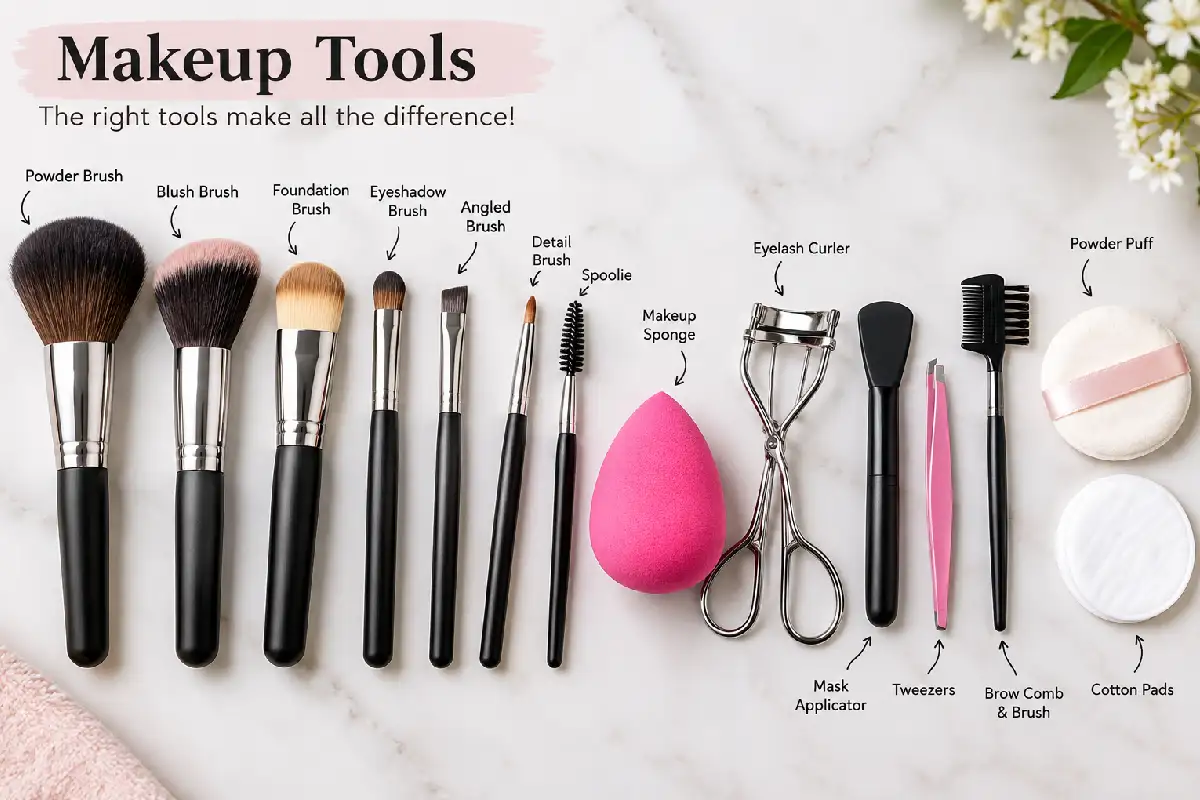
Makeup tools are beauty accessories and applicators that can be used to put on, blend, shape, define, and complete makeup. They can be makeup brushes, beauty blenders, powders, tweezers, eyelash curlers, powder puffs, sharpening accessories, or other small beauty accessories.
Each applicator or tool has a particular function, with makeup brushes used to distribute products such as liquid and cream foundation evenly on the face, while a fluffy powder brush is used to apply powdered makeup evenly on the face. There are tools made for a particular product, and applicators that can do different tasks.
| Makeup Tool | Main Purpose |
| Foundation brush | Applying and blending foundation |
| Concealer brush | Precise concealer application |
| Powder brush | Applying face powder |
| Blending brush | Softening eyeshadow edges |
| Beauty sponge | Blending foundation and concealer |
| Eyelash curler | Curling eyelashes |
| Tweezers | Shaping and grooming brows |
| Lip brush | Precise lipstick application |
2. Why Are Makeup Tools Important?
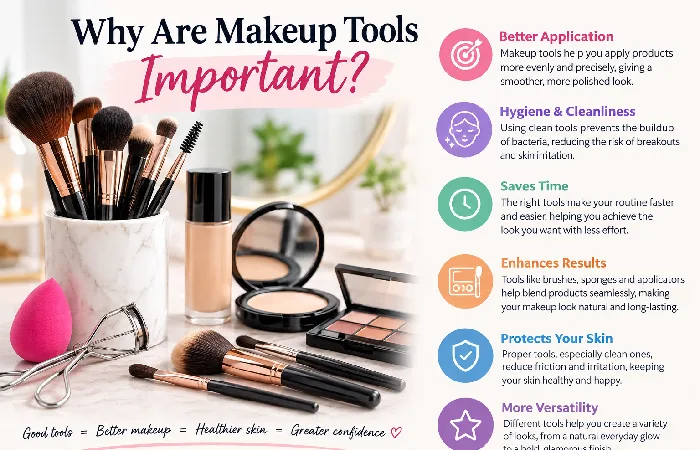
Cosmetics will look different depending on the makeup tools you use. Sometimes it’s perfectly acceptable to just apply a product with your fingers, but makeup tools can help give you more control and can help the product go on more smoothly and evenly.
Using brushes and sponges will allow you to blend out concealer, foundation, blush, and all your other favorite products in a natural way that minimizes undesirably visible lines of unflattering color. Quick tip: Achieving angles in your brow or eyeliner is much easier with small, angled brushes.
Benefit: More control. An appropriate makeup tool can help you spread the product more evenly for a thin, light application – especially beneficial if you are going for a more natural look.
Simple definition: Makeup tools are any kind of equipment you use to shape, define, blend, and finish your makeup.
3. Essential Makeup Tools for Beginners
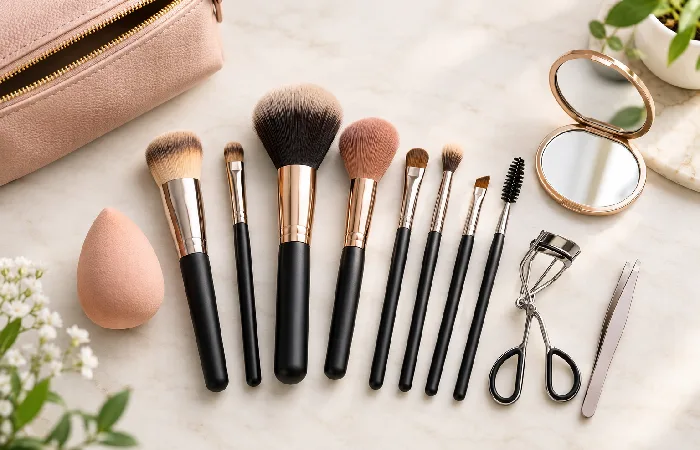
Beginners do not require a vast range of tools. A simple, convenient set of tools will often suffice to achieve daily makeup applications.
Basic tools worth having
- Base brush or makeup sponge – If you want a finish that is more layerable, you might want to opt for a brush, whereas if you are after a softer, skin feel, go for a wet sponge.
- Concealer brush – A small, stiff brush will make it easier to apply concealer around the nose, under the eyes, and over individual blemishes.
- Powder brush – A fluffy, soft powder brush will ensure you don’t overload the skin with powder.
- Blush brush – Opt for a medium-sized, soft-bristled blush brush to apply your color and then buff it out.
- Eyeshadow brushes – For this, you need a flat brush to lay down your eyeshadow, and a fluffy brush to buff it out.
- Eyelash curler – You don’t need to spend a lot of money for a good one, but it is worth getting one, and you can use it just before you do your mascara for an easy eye lift.
- Tweezers:
Useful for removing stray brow hairs and handling small beauty details.
A beginner’s collection can therefore remain simple:
| Tool | Beginner-Friendly Use |
| Makeup sponge | Foundation and concealer |
| Foundation brush | Liquid or cream foundation |
| Powder brush | Setting makeup |
| Blush brush | Blush and some bronzers |
| Eyeshadow brush | Applying eye color |
| Blending brush | Blending eyeshadow |
| Tweezers | Brow grooming |
| Eyelash curler | Lifting lashes |
4. Makeup Brushes and Their Uses
The size, shape, density, and bristle type of makeup brushes vary. The shape of a makeup brush can often indicate how it is meant to be used.
Foundation Brush
A foundation brush typically has densely packed bristles to help you spread liquid or cream foundation over the face. Thin out the layers of foundation as you go around the jawline and hairline to get rid of the edges.
Concealer Brush
Normally smaller than a foundation brush; its handy size enables application of fine lines around eyes, nose, and to cover any minor spots.
Powder Brush
A powder brush, a fluffy and soft one, is larger than blush brushes. They are used to delicately vanish powder, instead of packing a thick coating of powder onto the skin.
Blush Brush
A blush brush is generally slightly smaller than a powder brush so that you can apply the color more accurately onto the cheeks.
Eyeshadow Brushes
Defining eyeshadows using a flat eyeshadow brush. A fluffy brush can be used to blend the edges of the eyeshadow out and to merge shades.
Angled Brush
An angled brush has angled, flat bristles and can be used on eyebrows, gel eyeliner, or for precision work.
5. How to Choose the Right Makeup Tools
The priciest makeup tools may not be the most effective. Think about quality, feel, performance, and what’s easy to wash. For brushes, steer clear of scratchy things and opt for softer bristles.
Think about a cushty deal that is able to provide you with a lot of control once you are working on tiny spots.
For sponges, search for one thing that feels gentle and bouncy. If you are looking to obtain a pure, dewy, luminous end, a wet sponge will be used to press and mix the base.
Remember what you normally use – this will give you an idea of which tools are most necessary. If you predominantly wear powder makeup, you’ll need plenty of powder brushes, while if you wear mostly liquid and cream makeup, you’ll want to invest in good foundation and concealer brushes.
6. How to Use Makeup Tools Correctly
It’s not only what you are using. It is how you are using it. Foundation should be applied lightly, then buffed out rather than worked in circular motions. Do not rub the foundation into the skin, especially around the eye area.
Use a blending sponge or other sponge makeup applicator with a sponge – avoid dragging the makeup on your face. When using eyeshadow, blend using sweeping motions or small circular motions for the color payoff you’re looking for. Don’t skip cleaning your tools. Grab your brushes and other applicators and keep them clean and dry, as residual gunk that sticks on clean tools is one of the top culprits when it comes to pimples.
7. How to Clean Makeup Brushes and Sponges?
Makeup Brush Cleaning: The easiest thing by far to do to clean your makeup brushes is to wash them frequently. All brushes (face and eye) can be washed in warm water; moisten them with a gentle face or brush cleaner, massage the bristles, and rinse. Squeeze gently to help remove excess water.
Leave the brushes lying flat, or resting on something flat, to prevent the water from settling in the brush.
Sponge-based makeup brushes can be cleaned in the same way as brushes and rinsed off until clear. Hang to dry in a well-ventilated area. Never share your makeup brushes around the eye area or lips without cleaning the brushes.
8. How Often Should You Replace Makeup Tools?
That depends. It varies by tool. Replacement frequency depends on the tool’s makeup, age, how you clean and how often you use it, as well as the wear-and-tear it’s suffered in the process. Replace a brush when the bristles aren’t bristles (rough and misshapen), get heavily stained, or start falling out; replace a sponge when it gets tears, stains, and/ or smells, and when the feel ain’t right.
| Tool | Replace When |
| Makeup brush | Bristles shed, harden, or lose shape. |
| Makeup sponge | Tears, odor, or permanent discoloration appear. |
| Eyelash curler | Pad becomes worn, or the tool no longer works properly. |
| Tweezers | Tips become misaligned or lose grip. |
| Pencil sharpener | Blade becomes dull or damages pencils. |
9. Frequently Asked Questions About Makeup Tools
Can beginners use makeup brushes and sponges together?
Yes. Many people would use a brush to put it on, then a sponge to blend it out. Could be the best of both.
Are expensive makeup brushes better?
Not necessarily. Price alone does not speak to quality. A high price does not mean that a brush is well-made, comfortable, and long-lasting; it may not be what you need it to be.
Should I wash makeup brushes after every use?
Cleaning brushes does not always require a deep clean after every use, but brushes that are used with liquid or cream should be regularly cleaned. Eyes should also be cleaned on a regular basis.
Can I use my fingers instead of makeup tools?
Yes. Fingers do work quite well on some cream products where body warmth helps to melt and blend the product. A brush or sponge can add a little more precision and control.
How many makeup tools does a beginner really need?
Brushes for applying makeup can be washed in the same way as makeup brushes, and then rinsed until the water is clear. Let them air dry in an open room with plenty of fresh air. Do not allow sharing of makeup brushes around the eyes or lips without a prior clean, especially not between them.
Final Thoughts
Makeup brushes & tools. These might look like minor makeup kit items, but they actually are far more useful than just another item to hang onto. It’s not all about forking out a load of brushes or even overly expensive beauty gadgets.
Locate a few good cosmetics, select the kind, and know exactly how to implement them. Cleanse, shop, use them, and replace them when they show signs of wear… demonstrates that, with a little bit of care and cunning, even the cheapest type of makeup can create a suitable, amazing, and impressive identity.