


How Sleep Affects Mental Health? : Guide to Better Sleep and Emotional Wellness
Last Updated: July 6, 2026
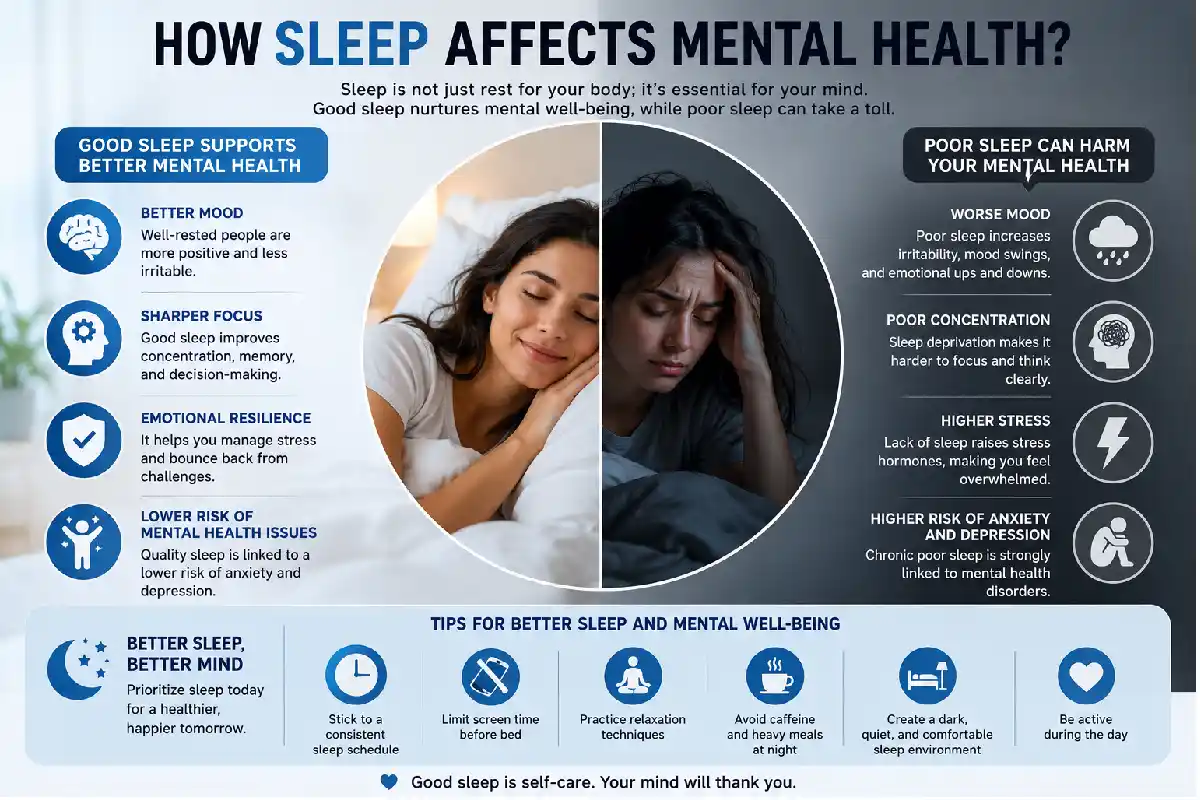
How Sleep Affects Mental Health? : Sleep is one of the best things that you can do for your brain to protect your mental health. How sleep effects mental health is actually one of the best-researched topics in neuroscience because a lack of sleep doesn’t just cause tiredness, it has effects on how your brain processes emotions, your memory, and how you handle stress and make decisions.
However, even as we reach 2026, other studies prove that those who get high quality sleep on a regular basis are less stressed, have more emotional stability, improved memory, less anxiety and depression. While those who are sleep deprived feel the opposite.
Whether it is stress, burnout, or feeling “unwell”, knowing how sleep and mental health are interconnected is the beginning towards positive change.
The Relationship Between Sleep and Mental Wellness
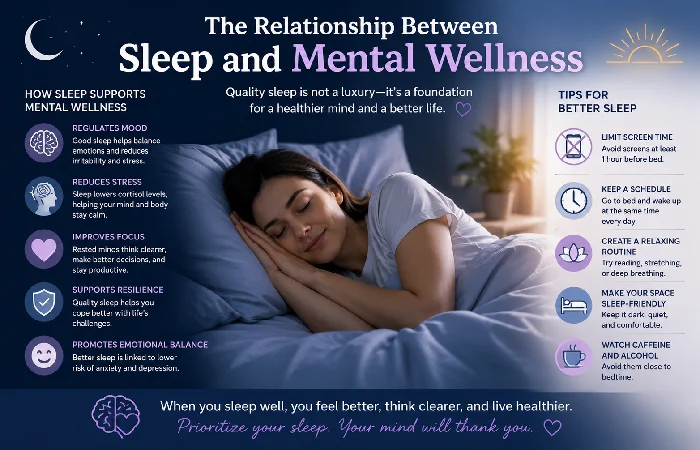
Sleep also has a direct link with your mental health. During sleep your brain is carrying out a number of critical activities that help to keep you emotionally healthy; enhance your memory; allow you to concentrate and learn and cope with the stressors of everyday life. A good night‘s sleep helps your mind recover from the stresses of the previous day so it is prepared for tomorrow.
Research indicates that a lack of sleep causes positive emotions, increases in concentration, improved reasoning ability and higher resistance to the everyday pressure. Conversely, long term insufficiency of sleep increases susceptibility to depression, anxiety and burnout.
During sleep, your brain:
- Processes emotions
- Stores memories
- Removes waste products
- Repairs neural connections
- Balances stress hormones
- Regulates mood
Mental Health Benefits of Quality Sleep
| Benefit | How Sleep Helps | Research Status (2026) | Resource |
| Better mood | Restores emotional balance | Strong Evidence | Sleep Foundation |
| Reduced anxiety | Lowers cortisol levels | Strong Evidence | NIMH |
| Better concentration | Improves cognitive function | Strong Evidence | Mayo Clinic |
| Emotional resilience | Supports healthy brain activity | Strong Evidence | Cleveland Clinic |
| Improved memory | Strengthens memory consolidation | Strong Evidence | NIH |
Effects of Sleep Deprivation
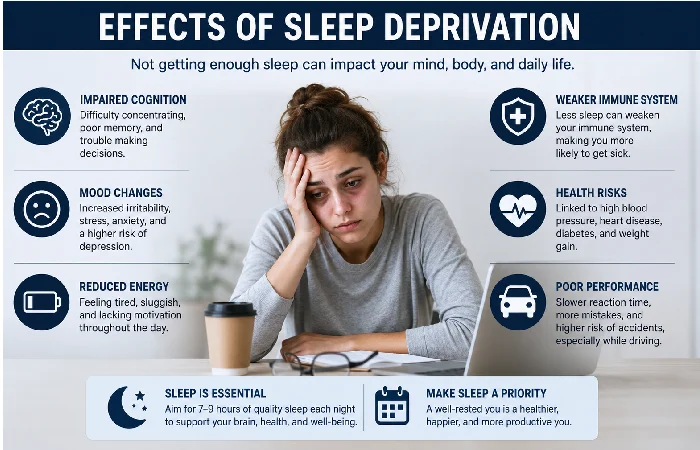
Sleep deprivation is when you consistently sleep less than your body requires or when your sleep quality is disrupted so you‘re not getting enough. One night of lost sleep can cause you to feel irritable and find it hard to concentrate. However, prolonged sleep deprivation can have a much more serious effect on your mental health, emotional health and quality of life.
Common Mental Effects
| Poor Sleep | Mental Impact |
| Less than 6 hours | Increased irritability |
| Interrupted sleep | Difficulty focusing |
| Chronic sleep loss | Higher anxiety |
| Poor REM sleep | Emotional instability |
| Irregular schedule | Increased stress |
Symptoms include
- Mood swings
- Brain fog
- Low motivation
- Difficulty concentrating
- Increased stress
- Reduced patience
- Feeling overwhelmed
Improving Sleep Hygiene
Sleep hygiene is the term used to describe normal daily habits and environmental influences that are conducive to good sleep. Sleep hygiene is not simply sleeping for the adequate number of hours.
It is providing your body and brain with the ideal environment that will allow it to rest, rejuvenate and ready itself for the following day. Simple steps taken in your daily routine can lead to not only an improvement in sleep quality but also many positive improvements for mental health and wellbeing.
Best Sleep Hygiene Practices
| Habit | Benefit |
| Keep a regular bedtime | Stabilizes body clock |
| Reduce screen time before bed | Supports melatonin production |
| Avoid caffeine late in the day | Easier to fall asleep |
| Exercise regularly | Better sleep quality |
| Keep the bedroom cool and dark | Deeper sleep |
| Limit alcohol before bedtime | Better REM sleep |
Helpful Sleep Products Comparison
| Product | Best For | Advantages | Resource |
| White Noise Machine | Light sleepers | Masks background noise | Manufacturer website |
| Sleep Tracking Watch | Monitoring sleep | Tracks sleep stages | Product website |
| Blue Light Blocking Glasses | Evening screen users | Reduces blue light exposure | Brand website |
| Memory Foam Pillow | Neck support | Improved comfort | Product website |
Creating a Healthy Sleep Routine
Healthy sleep habits is one of the most effective ways to improve your sleep and enhance mental health. We all have biological clock (circadian rhythm) that maintains our internal rhythms on a 24 hour cycle and helps us to know when to sleep or awake. Developing a routine can aid your body in determining when to become sleepy resulting in more restful sleep.
Example Evening Routine
| Time | Activity |
| 7:00 PM | Finish dinner |
| 8:00 PM | Reduce caffeine |
| 9:00 PM | Dim lights |
| 9:30 PM | Read a book |
| 10:00 PM | Meditation |
| 10:30 PM | Sleep |
Going through the same routine each day will start to ‘train’ your clock.
Sleep and Emotional Regulation
REMUP soun sleep the effects of REM sleep are believed to be related to your emotional equilibrium—the ability to remain in control of your emotions, to respond positively to stress, and to maintain an appropriate emotional balance.
“While you are asleep, particularly during the period of Rapid Eye Movement sleep, your brain is associating emotional experiences, strengthening positive memories, and diminishing negative emotions. This “reset” leaves you feeling content and ready for the day.
When you’re well-rested:
- You respond calmly to stress.
- You make better decisions.
- You recover faster from emotional setbacks.
- You communicate more effectively.
- You experience fewer mood swings.
Sleep helps the pathways of reasoning in our brain such as the prefrontal cortex to communicate better with the emotional parts of our brain, like the amygdala. If you haven‘t had enough sleep your emotions will become stronger, whereas your ability to think rationally will get weaker.
Common Sleep Mistakes
The sad fact is that most of us are just not getting enough sleep and we don‘t even realize that it is our lifestyle choices that are the cause. Just by making a few little errors in the way we live your life it can have a huge affect on your bodies natural sleep rhythm. This can cause you to find it hard to fall asleep and harder still to wake up refreshed and energized in the mornings. By knowing what these sleep errors are you will enjoy a much better experience.
| Mistake | Better Alternative |
| Using phones in bed | Read a printed book |
| Drinking coffee after dinner | Herbal tea |
| Sleeping in on weekends | Maintain a consistent schedule |
| Heavy meals before bed | Eat earlier |
| Watching TV until sleep | Relaxation exercises |
By avoiding these all habits, it would really help to improve sleeping and also mental health to a great extent.
FAQ
What is the impact of sleeping on mental well-being?
Sleep is very important for emotional regulation and management, memory, concentration and stress. If you don‘t get enough sleep this can raise the chance of developing an anxiety disorder, depression or mood issues.
Can circumstances of sleep deprivation trigger anxiety?
Yes. Longer term sleep deprivation results in increases in stress hormones and increased susceptibility to anxiety symptoms.
To what extent do most adults sleep?
The general adult needs between 7 and 9 hours of good quality sleep per night to stay mentally and physically well.
What is Sleep Hygiene?
Sleep hygiene is just another healthy habit, such as going to bed early on a consistent schedule, not having too much screen time before bed and sleeping in a good environment.
Can sleep deprivation lead to emotional well-being?
Yes. The overall benefits include having more energy, feeling less stress, improvement in mood, mental sharpness and a more resilient emotional state.
Conclusion
Getting enough quality sleep is, perhaps, one of the biggest foundations of good mental health. Understanding how sleep can benefit your mental health will help you to gain the knowledge to implement small, yet effective, changes to your lifestyle that will go a long way to supporting focus, mental stability and keeping anxiety and stress under control. sleeping at least 7-9 hours a night and waking up at the same time each morning, maintaining good sleep hygiene will become second nature to you.