

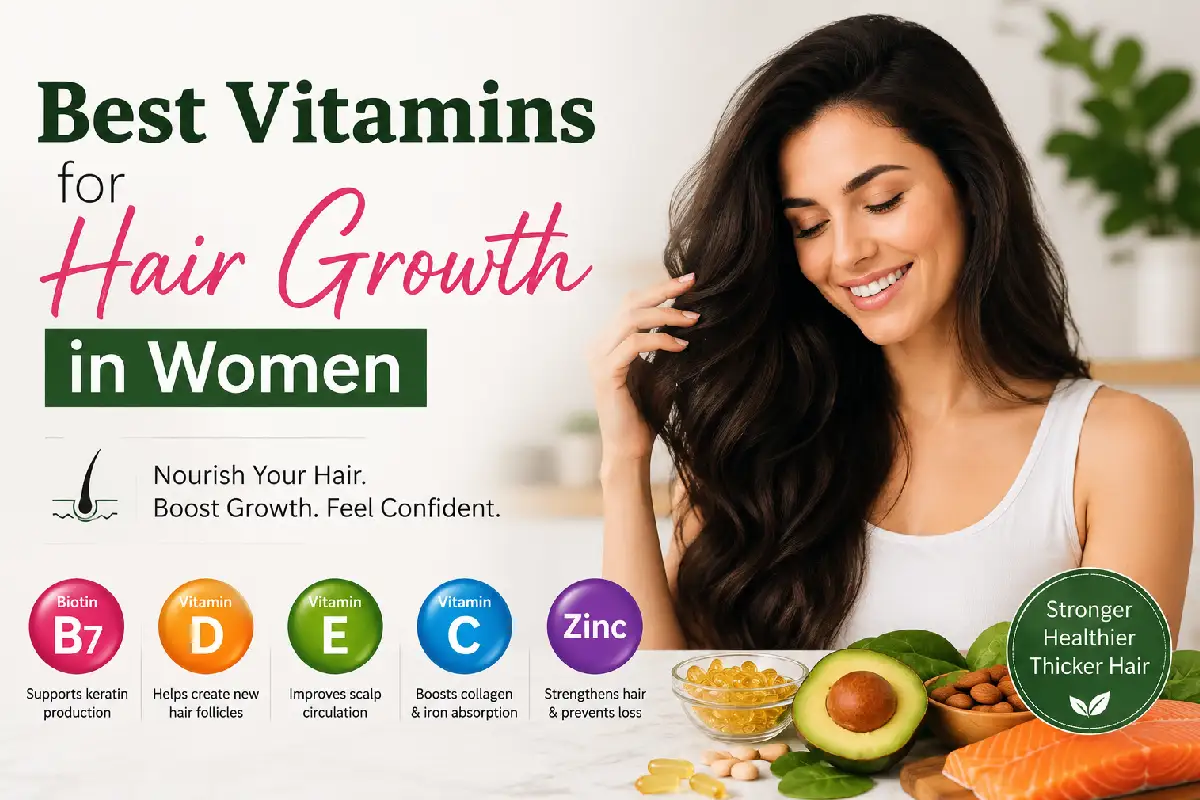
Best Vitamins for Hair Growth in Women: Guide to Healthy, Thicker Hair
 Khizrana Begum
Beauty & Lifestyle Writer
Khizrana Begum writes clear and reader-friendly content covering beauty, lifestyle and related topics.
Read Full Bio of Author →
Khizrana Begum
Beauty & Lifestyle Writer
Khizrana Begum writes clear and reader-friendly content covering beauty, lifestyle and related topics.
Read Full Bio of Author →
 Sameena Begum
Health, Technology & Digital Content Reviewer
Sameena Begum reviews content for clarity, accuracy and overall reader usefulness.
Read Full Bio of Reviewer →
Sameena Begum
Health, Technology & Digital Content Reviewer
Sameena Begum reviews content for clarity, accuracy and overall reader usefulness.
Read Full Bio of Reviewer →
Best Vitamins for Hair Growth in Women – When you are concerned about how to get your hair to grow healthier, thicker and shinier, you are actually most often referring to overall health in general. While you can’t change the way your body was designed in terms of how your hair grows, based on things such as genetics, the hormones your body produces, stress, the time of life and your grooming habits, there is one factor that you are able to influence- your diet.
Your hair follicle is one of the fastest-growing parts of your body; you need to be feeding it with minerals, vitamins, proteins and healthy fats so it is able to provide more strength to your hair and promote thicker, more luxurious hair growth. Thinning hair could actually be the symptom of a deficiency in essential nutrients. Your hair can thin as a result of hormonal imbalance, pregnancy or after your perimenopause or menopause years, poor diet, stressful life situations, the impact of dieting and even as the symptom of other physical conditions or health problems.
Even though your circumstances could be the culprit behind the condition, you may be able to help your hair start growing better with adjustments in the diet you are following. In this article, you will gain a better understanding of the relationship between the foods you are eating and how that can affect the hair on your head, the important minerals and vitamins for hair growth and what biotin does in the human body. We will also offer recommendations on how you will know how to select your hair supplement of choice, when you need to see a professional medical practitioner for your hair issues, and so much more.
For the best results, combine supplements with other best hair growth products for women to support stronger, healthier hair from every angle.
❝
This article is a part of
Women’s Hair Care Products Guide
How Nutrition Affects Hair Growth?
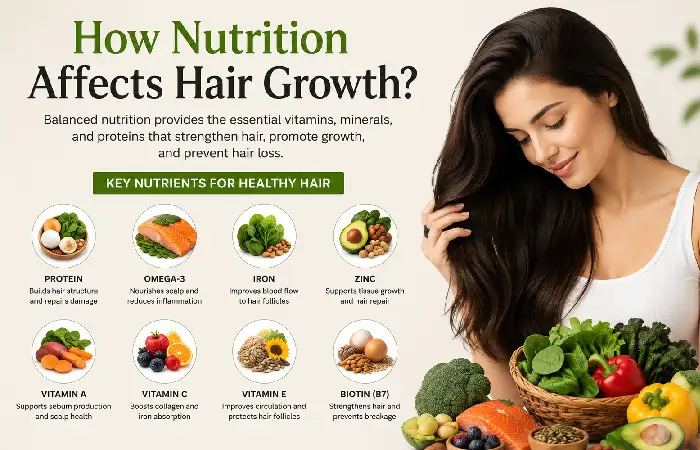
Your hair comes from hair follicle deep in the skin and relies on your constant intake of adequate amounts of proteins, vitamins, minerals, oxygen and the healthiest forms of fats and to continue growing and maintaining strong and beautiful strands of hair. When you fail to supply your body with the nutrition that it requires, your body cannot sustain the growth of healthy hair and will begin producing thin and weak hair which can be very easily snapped and broken.
Many women pair supplements with hair growth serums to nourish hair follicles both internally and externally for improved results.
The Hair Growth Cycle
Hair grows through three primary phases:
| Growth Phase | Description | Typical Duration |
| Anagen | Active growth stage | 2–7 years |
| Catagen | Transitional phase | 2–3 weeks |
| Telogen | Resting and shedding phase | 2–4 months |
During malnutrition, more hair could transition into the telogen phase faster, causing a noticeable increased hair loss.
Using a gentle hair growth shampoo alongside your vitamin routine helps maintain a clean, healthy scalp that supports stronger hair.
Nutrients Fuel Hair Follicles
Hair follicles require:
- Amino acids from protein
- Iron to transport oxygen
- Zinc for tissue repair
- Vitamin D for follicle function
- B vitamins for energy production
- Antioxidants to Combat Oxidative Stress
- Healthy Fats to Protect Scalp
Hair follicles can’t do what they are intended to do without nutrients such as these.
Signs Nutrition May Be Affecting Hair
Women with nutrient deficiencies may notice:
- Increased hair shedding
- Slow hair growth
- Hair thinning
- Dry, brittle strands
- Weak nails
- Pale skin
- Fatigue
- Poor wound healing
These symptoms often develop gradually.
Adding one of the best hair growth oils to your weekly routine can help reduce dryness and complement the benefits of hair growth vitamins.
Common Causes of Nutritional Hair Loss
- Crash diets
- Vegan or vegetarian diet not properly balanced
- Eating disorders
- Pregnancy
- Breastfeeding
- Heavy menstrual periods
- Digestive disorders
- Chronic illness
- Bariatric surgery
- Aging
Improving deficiencies can make your hair generally better.
Essential Nutrients for Hair Health
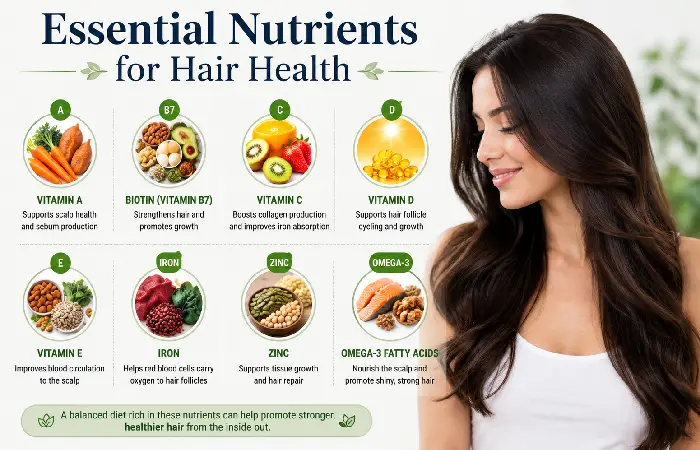
A wide range of vitamin options play a part in maintaining vibrant hair growth. In general, each type can impact the health of the hair follicles and scalp.
Vitamin A
Vitamin A also encourages production of sebum – your body’s natural moisturizer for your scalp.
Benefits
- Supports healthy scalp
- Encourages cell growth
- Helps maintain hair follicles
Food Sources
- Sweet potatoes
- Carrots
- Pumpkin
- Spinach
- Kale
- Eggs
Caution: Too much vitamin A might also even play a role in loss of hair especially supplements
Vitamin B complex
The b vitamins are essential for cellular health and cell growth and even for the generation of cell energy. Significant B vitamins that people may benefit from include:
- B1 (Thiamine)
- B2 (Riboflavin)
- B3 (Niacin)
- B5 (Pantothenic Acid)
- B6
- B7 (Biotin)
- B9 (Folate)
- B12
This Vitamin Ensures that your growing hair follicle receives the vitamins and nutrients required for hair growth.
The C vitamin
Vitamin C It is a powerful antioxidant.
If hormonal changes are contributing to hair thinning, these hair growth products for menopausal women offer targeted support in addition to nutritional supplements.
Benefits
- Supports collagen production
- Improves iron absorption
- Protects hair follicles from oxidative stress
Rich Sources
- Oranges
- Kiwi
- Strawberries
- Bell peppers
- Broccoli
Vitamin D
In certain cases, mild vitamin D deficiency is suspected to be responsible for particular types of hair loss.
To maximize the effectiveness of your supplements, follow a complete 2026 hair growth routine that includes proper nutrition, scalp care, and consistent hair care habits.
Vitamin D plays a role in regulating the following:
- Hair cycle
- Skin cell growth
- Immune function
Natural sources include:
- Sunlight
- Fatty fish
- Egg yolks
- Fortified dairy products
Vitamin E
Free radicals harm hair follicles. But Vitamin E keeps it at bay.
Benefits include:
- Improved scalp circulation
- Fighting the oxidative strain
- Healthier scalp barrier
Food sources include:
- Almonds
- Sunflower seeds
- Avocados
- Spinach
Folate (Vitamin B9)
Folate supports the production of new cells, including new hair cells.
Good sources:
- Lentils
- Beans
- Spinach
- Asparagus
- Citrus fruits
Vitamin B12
Vitamin B12 plays a crucial role in forming red blood cells which deliver oxygen to the roots of the hair. Most often this deficiency is noticed in vegan women. The other good food sources of vitamin B12:
- Fish
- Meat
- Dairy
- Eggs
- Fortified cereals
Summary of Essential Vitamins
| Vitamin | Main Benefit | Best Food Sources |
| Vitamin A | Sebum production | Carrots, spinach |
| Vitamin C | Collagen and iron absorption | Citrus fruits |
| Vitamin D | Follicle function | Sunlight, salmon |
| Vitamin E | Antioxidant protection | Almonds |
| B Complex | Cell growth | Whole grains, eggs |
| Folate | New cell production | Leafy vegetables |
| Vitamin B12 | Oxygen delivery | Meat, dairy |
Mineral Deficiencies and Hair Loss
Iron
Iron deficiency causes hair loss in women. Iron is required for transporting oxygen to your hair follicles.
Low iron levels may cause:
- Diffuse thinning
- Excessive shedding
- Fatigue
- Pale skin
Food sources:
- Lean beef
- Spinach
- Lentils
- Beans
- Tofu
Vitamin C improves iron absorption.
Zinc
Zinc aids in the repair of damaged tissues and promotes the creation of protein.
Benefits include:
- Hair follicle repair
- Reduced shedding
- Healthy scalp
Sources:
- Pumpkin seeds
- Beef
- Chickpeas
- Cashews
- Oysters
Selenium
Selenium aids the antioxidant enzymes that guard hair follicle cells.
Good sources:
- Brazil nuts
- Tuna
- Eggs
- Whole grains
Hair loss can be an unwanted symptom of excessive selenium supplementation, thus one should avoid over-supplementation.
Magnesium
The human body involves Magnesium in hundreds of chemical processes.
It supports:
- Protein synthesis
- Energy production
- Healthy scalp circulation
Food sources include:
- Almonds
- Spinach
- Black beans
- Avocados
Iodine
Iodine supports thyroid hormone production.
Poor thyroid function frequently causes:
- Hair thinning
- Dry hair
- Hair shedding
Sources include:
- Seafood
- Dairy
- Iodized salt
Copper
Help support collagen synthesis. Help with melanin production.
Good levels of copper intake can help support stronger shafts of hair.
Mineral Comparison
| Mineral | Hair Benefit | Deficiency Effect |
| Iron | Oxygen transport | Hair shedding |
| Zinc | Tissue repair | Hair thinning |
| Selenium | Antioxidant protection | Weak hair |
| Magnesium | Protein synthesis | Reduced growth |
| Iodine | Thyroid support | Hair loss |
| Copper | Hair strength | Brittle hair |
Biotin for Hair Growth Why this vitamin could be your mane’s best friend 1 Biotin is a popular buzzword in the world of hair-growth supplements, also known as vitamin B7. But is the hype all there is to it? What is biotin? Biotin is a water-soluble B vitamin used by your body for:
- Keratin production
- Fat metabolism
- Protein metabolism
- Energy production
Since hair is composed mainly of keratin, biotin is the nutritional component necessary.
Biotin and Hair Growth
Biotin supplements may be most effective if you’re truly biotin deficient – which is pretty rare. If your biotin level is normal, additional biotin will probably have a minimal impact on hair growth.
However, lots of hair supplements contain biotin as it can help maintain a normal amount of keratin and is generally safe to consume.
Who might have a risk of biotin deficiency?
Biotin deficiency isn’t prevalent, but can happen in:
- People with certain digestive disorders
- Individuals taking long-term antibiotics
- Those with rare genetic conditions
- People consuming excessive raw egg whites over long periods
Food Sources of Biotin
Natural sources include:
- Eggs
- Salmon
- Nuts
- Seeds
- Sweet potatoes
- Mushrooms
- Liver
Does Biotin Cause Any Side Effects?
Although excessive biotin is excreted through your urine, taking a lot of biotin in supplement form may interfere with some laboratory tests, like some for the thyroid and heart. Before any blood tests, be sure to let your doctor know you are taking high doses of biotin.
Does Biotin by Itself Work to Help Your Hair?
More than biotin is required to get your body the necessary stuff for getting you a healthy head of hair: maybe it’s your iron, your zinc, your vitamin D, your protein or your omega-3 that’s actually the key to it. Hair Growth Supplements on the Market: Options for supplements seem to be endless. But that does not mean all of the supplements are helpful or you even need one.
Consider your unique circumstances:
- Age
- Diet
- Medical history
- Pregnancy status
- Menopause
- Blood test results
- Addressing nutrient imbalances
Choosing a Hair Growth Supplement
If you have existing nutrient imbalances, use a supplement that targets these and avoid too much of any single vitamin.
Try Ingredients That Support Scientific Research. Many top hair growth products come with all of these helpful nutrients:
- Biotin
- Vitamin D
- Vitamin C
- Vitamin E
- Zinc
- Iron (if necessary)
- Selenium
- Folic acid
- Vitamin B12 L-cysteine and other amino acids
- Marine collagen or collagen boosting plant-derived nutrients
Read Labels Carefully
When comparing products, check for:
| Feature | Why It Matters |
| Third-party testing | Confirms quality and purity |
| Transparent ingredient list | Avoids hidden blends |
| Appropriate dosages | Reduces risk of excess intake |
| Trusted manufacturer | Better quality standards |
| Expiration date | Ensures potency |
Avoid Unrealistic Claims
Be cautious of products promising:
- Instant hair growth
- Permanent hair restoration
- Guaranteed results
- Miracle cures
Since your hair grows so slowly it can take months for the results to be truly evident.
Combine Supplements with Healthy Habits
Supplements work best when paired with:
- A protein-rich diet
- Adequate hydration
- Stress management
- Gentle hair care
- Regular exercise
- Quality sleep
Lifestyle factors has a profound affect on the health of your hair.
When to See a Healthcare Professional?
But even with normal seasonal loss there is something more you can’t ignore: if you’re seeing abnormal loss.
Seek medical advice if you experience:
- Hair shedding lasting more than three months
- Rapid thinning
- Bald patches
- Scalp pain or inflammation
- Severe itching
- Hair loss after starting a new medication
- Hair loss with fatigue or weight changes
- Heavy menstrual bleeding alongside thinning hair
By conducting a physical examination and, in some cases, using diagnostic lab tests, the doctor can find underlying reasons behind the symptoms.
Possible Tests
Depending on your symptoms, your healthcare provider may recommend tests for:
- Iron levels (including ferritin)
- Vitamin D
- Vitamin B12
- Folate
- Zinc
- Thyroid function
- Hormone levels
- Complete blood count (CBC)
These evaluations can help determine whether nutritional deficiencies, hormonal imbalances, or medical conditions are contributing to hair loss.
Additional Treatment Options
If supplements and dietary improvements are not enough, treatment may include:
- Prescription medications
- Topical hair growth treatments
- Management of thyroid disorders
- Treatment for anemia
- Hormonal therapies when appropriate
- Referral to a dermatologist specializing in hair disorders
Early diagnosis often leads to better outcomes.
Natural Ways to Encourage Hair Growth
In addition to food, certain habits can lead to the growth of hair:
- Eat more than enough of all foods and consume food rich in protein.
- Be sure to incorporate colorful vegetables and fruits which are loaded with antioxidants.
- Take iron if your doctor has recommended that you do.
Does Biotin Cause Any Side Effects?
Although excessive biotin is excreted through your urine, taking a lot of biotin in supplement form may interfere with some laboratory tests, like some for the thyroid and heart. Before any blood tests, be sure to let your doctor know you are taking high doses of biotin.
Does Biotin by Itself Work to Help Your Hair?
It takes more than one nutrient to encourage the growth of hair-not just biotin. Perhaps, iron, zinc, vitamin D, protein or omega-3 needs are important too. Available on the Market Hair Growth Supplements Options are seemingly infinite`. But that does not mean all of the supplements are helpful or you even need one.
Consider your unique circumstances: It goes without saying, you won’t get healthy hair growth overnight. Hair growth is a process that takes time and ongoing maintenance.
Conclusion
What we put into our body directly effects the hair on our heads. Several vitamins and minerals in hair development include vitamin D, iron, vitamin C, complex vitamins of group B, selenium, zinc, and biotin. As we understand it may be important to take supplementation for some females, this should supplement a balanced diet and seeing a doctor.
If you are suffering from severe or constant hair loss, you should visit a health care provider first to find the reason for the hair loss, then you may consider a supplement if deemed appropriate by your provider.