


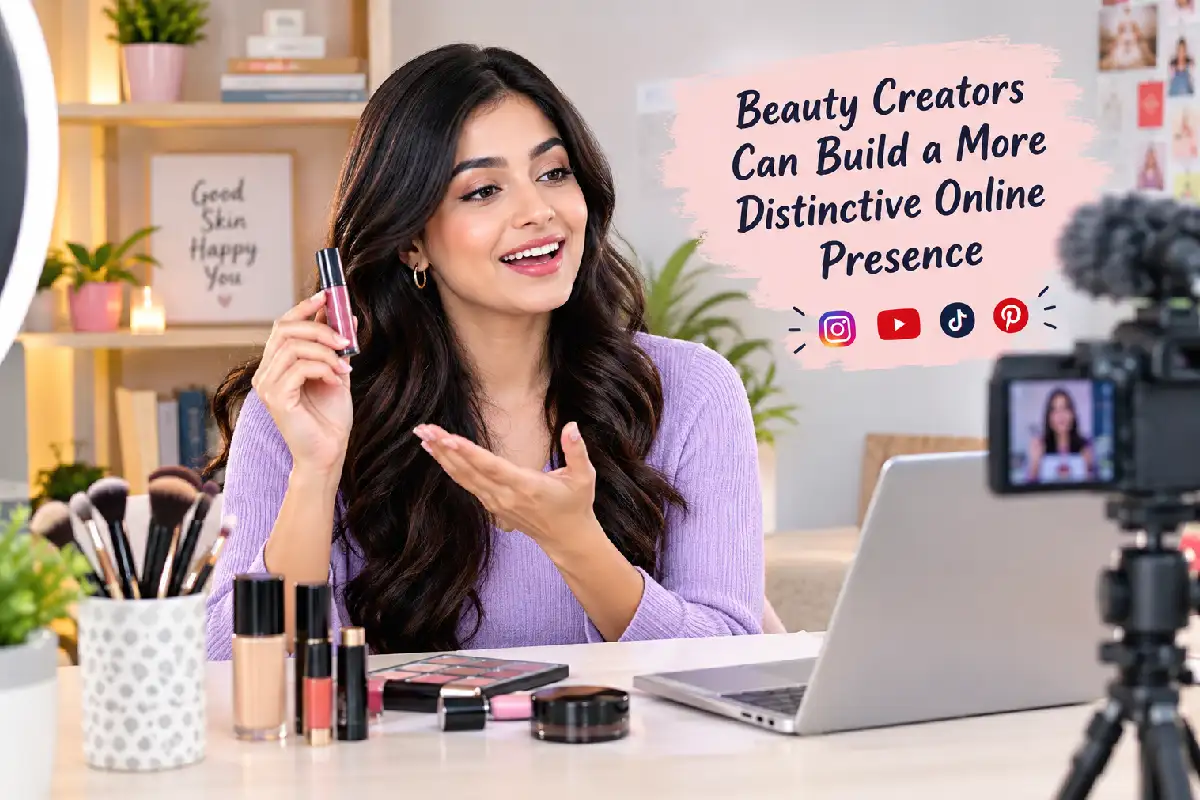
How Beauty Creators Can Build a More Distinctive Online Presence
 Khizrana Begum
Beauty & Lifestyle Writer
Khizrana Begum writes clear and reader-friendly content covering beauty, lifestyle and related topics.
Read Full Bio of Author →
Khizrana Begum
Beauty & Lifestyle Writer
Khizrana Begum writes clear and reader-friendly content covering beauty, lifestyle and related topics.
Read Full Bio of Author →
 Sameena Begum
Health, Technology & Digital Content Reviewer
Sameena Begum reviews content for clarity, accuracy and overall reader usefulness.
Read Full Bio of Reviewer →
Sameena Begum
Health, Technology & Digital Content Reviewer
Sameena Begum reviews content for clarity, accuracy and overall reader usefulness.
Read Full Bio of Reviewer →
How Beauty Creators Can Build a More Distinctive Online Presence: Beauty is visual, but a strong online presence takes more than polished photos. Makeup artists, independent beauty brands, stylists, and creative professionals need to show how they work, explain what inspires them, and help new audiences find their content. A thoughtful mix of written features and video can make that work easier to understand and remember—without turning every post into a sales pitch.
Whether you are sharing editorial makeup, a skincare routine, a fashion shoot, or the story behind a creative project, it helps to plan your content around what readers and viewers can learn from it. A few practical steps can make your work feel more consistent and give it a better chance of reaching people who are genuinely interested.
1. Decide What You Want to Be Known For
Before posting regularly, identify the ideas and skills you want your name or business to be associated with. You might focus on natural makeup for everyday wear, inclusive shade advice, beauty for mature skin, editorial looks, or the visual side of fashion and art. A clear focus does not mean you can only discuss one subject. It gives your content a recognizable center.
Try writing down three themes you can return to. For example, a makeup artist might share practical application tips, explain the inspiration behind finished looks, and discuss how products perform in different conditions. These themes help you choose topics when you are short on ideas and make it easier for a new visitor to understand your work.
2. Treat Each Post as a Useful Experience
Readers are more likely to stay with an article when it answers a real question. Instead of writing only about a finished look, explain how you chose the colors, prepared the skin, or adapted the technique for a particular occasion. Include useful details, such as the order in which products are applied, what can be simplified for a beginner, and what to do if a technique does not work as expected.
Clear organization matters too. Use descriptive section headings, short paragraphs, and lists when they make instructions easier to follow. Avoid presenting personal preferences as universal rules: skin, hair, comfort, and style vary, so offer options and explain who might find each one helpful.
3. Find Relevant Places to Share Your Expertise
Your own website or social profile is only one way to introduce your work. A guest article can put your advice in front of readers who already care about related subjects, such as art, photography, fashion, or design. For instance, a beauty professional could write about the role of color theory in makeup, how lighting changes the appearance of a look, or the collaboration between a makeup artist and a photographer.
Look for publications whose readers and subject matter make sense for your idea. A directory of art guest-posting sites can help you explore outlets in the art space. Before pitching, read several recent posts and check the publication’s contributor guidelines. Shape the idea for that readership rather than sending the same generic pitch everywhere. A useful contribution should stand on its own and give readers something they can apply, even if they never become a customer.
4. Use Video to Show What Words Cannot
Some beauty techniques are easier to demonstrate than describe. A short video can show the pressure used to blend a product, how a finish looks in natural light, or the steps involved in building a complete look. It can also give viewers a sense of your personality and working style.
Plan the video before filming. Decide what one question it will answer, make a simple shot list, and record clean audio in a quiet space. Use good, even lighting and keep the camera steady. You do not need elaborate equipment for every project; clear framing and understandable instructions usually matter more than complicated effects.
Editing is where the material becomes easier to follow. Remove long pauses, arrange the steps in a logical order, and add captions when they improve accessibility or help viewers follow product names and instructions. If you hire someone, discuss the intended audience, platform, length, style, revision limits, turnaround, and delivery format before work begins. These video editor interview questions offer a practical starting point for that conversation. Osdire is one place where buyers and freelancers connect across creative and other service categories, so being specific about the project can help both sides assess whether it is a good fit.
5. Keep Your Visual Identity Consistent
Consistency does not require every image or video to look identical. Instead, choose a few repeatable elements: a color palette, a preferred lighting style, a recognizable way of framing products, or a tone of voice that feels natural to you. These small choices help your content feel connected across articles, social posts, and videos.
Pay attention to how colors appear on different screens and avoid heavy editing that misrepresents makeup shades or skin texture. For beauty content in particular, viewers benefit from seeing realistic results. If you use filters or strong color grading, make that clear when it could change how a product or finish appears.
6. Make a Sustainable Publishing Plan
Posting constantly is not the only route to a meaningful audience. Choose a schedule you can maintain, then reuse ideas thoughtfully. A detailed article might become a short video, a set of step-by-step images, or a few social posts that point back to the full explanation. Keep the central information accurate in each format, and tailor the presentation rather than simply copying the same text everywhere.
After publishing, notice which questions people ask and which sections they find useful. Their responses can suggest follow-up topics or show where an explanation needs more clarity. Over time, a steady collection of helpful articles and videos can communicate your expertise more effectively than a stream of disconnected promotional posts.
Final Thoughts
A distinctive online presence grows from clear ideas, useful guidance, and visuals that support the message. Choose subjects that connect beauty with your particular skills, share your knowledge in relevant spaces, and use video when a demonstration adds value. With a consistent approach and realistic publishing pace, you can make your creative work easier to discover—and more rewarding for the people who find it.